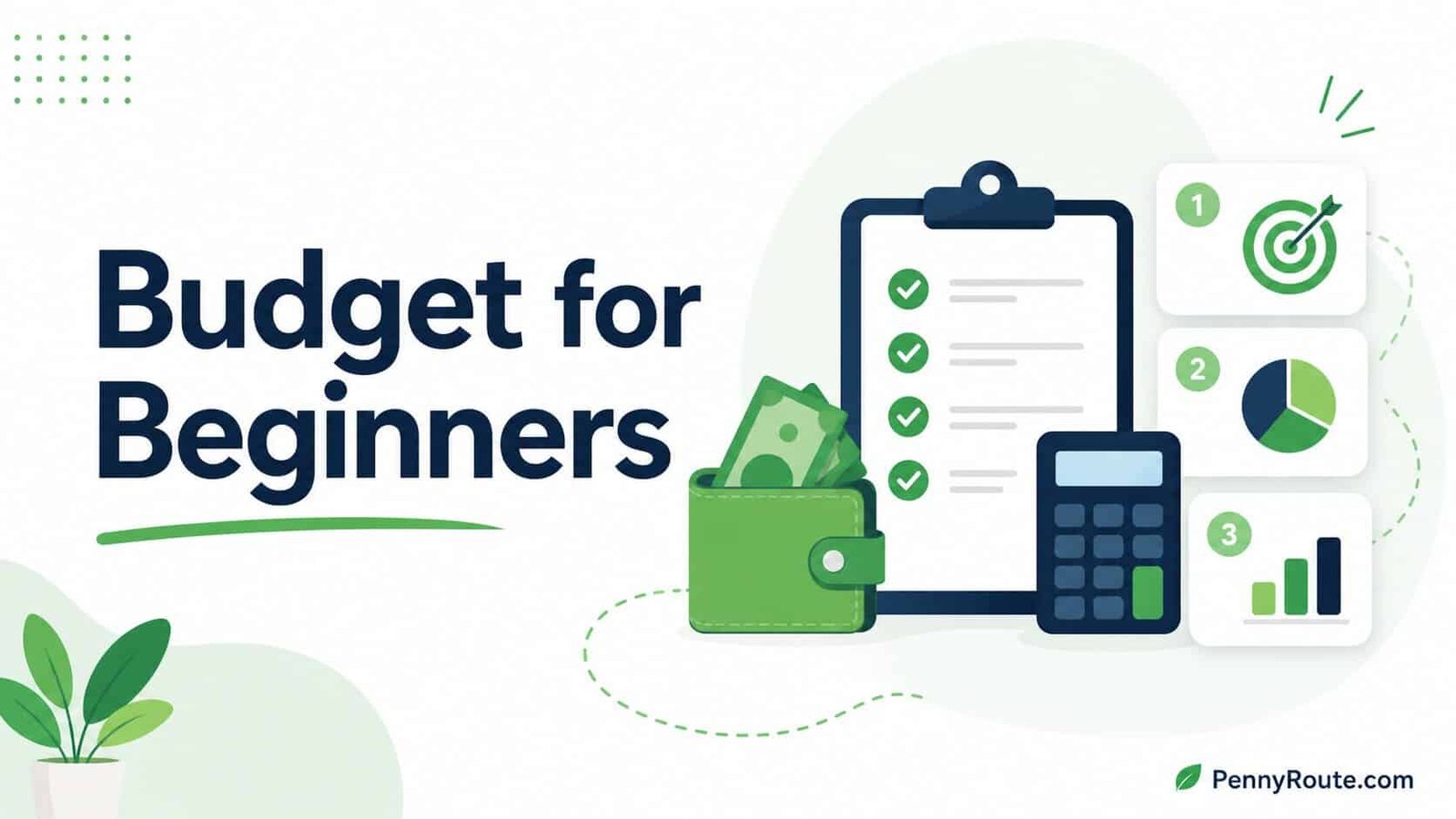
Making your first budget can seem complicated. Bills, everyday spending, savings, debt, and irregular expenses all compete for the same income.
A good beginner budget does not need dozens of categories or perfect numbers. It needs to show what income you have available, what your money needs to cover, and whether your current spending fits within that amount.
Once those basics are clear, you can decide how much room there is for savings, debt payments, and flexible spending, then adjust the plan as real expenses come in.
Disclaimer: This content is for informational purposes only and does not constitute financial advice. Build a budget that fits your financial situation, and consult a qualified professional when needed.
Quick Overview
- Start with your take-home income and the expenses that must be covered each month.
- Separate regular bills, variable spending, savings, debt payments, and irregular costs.
- Choose a budgeting method that gives you enough structure without making the plan harder to maintain.
- Review the budget as real expenses come in and adjust the numbers instead of expecting the first version to be perfect.
What Is a Budget? Simple Meaning for Beginners
A budget is a plan for how you will use your income across bills, everyday spending, savings, debt payments, and other financial priorities.
It does not have to predict every purchase perfectly. Its job is to show whether the money coming in can cover what you need and still leave room for the goals that matter to you.
The basic idea behind what a budget is stays the same whether you use a simple monthly plan, percentage method, or a more detailed budgeting system.
How to Make a Budget for Beginners in 7 Steps
A beginner budget works best when you build it in the right order.
Start with the money you actually receive, then list the expenses you already have, and only then decide where the remaining money should go. This keeps your budget grounded in real numbers instead of guesses.
Step 1: Income
Start with your take-home income, not your gross salary.
Gross income is what you earn before taxes and deductions. Take-home income is the amount that actually lands in your bank account. That is the number your budget should be built around.
Include income such as:
- paychecks from your job
- side hustle income
- freelance income
- child support or other regular payments
- any other money you can reasonably count on
If your income changes from month to month, avoid building the budget around an unusually strong month. Use an amount you can realistically plan around based on your recent income pattern.
For example, if you usually bring home between $2,700 and $3,200, $2,700 could be a reasonable starting point if that lower amount shows up consistently. When your pay varies more widely, budgeting with irregular income requires a little more care when choosing the baseline.
You can decide what to do with extra income when it arrives. Building the budget around money that may not show up can leave regular expenses short.
Step 2: List Your Fixed Monthly Expenses
Next, write down the expenses that stay the same or close to the same amount each month.
Fixed expenses are usually easier to plan for because you know roughly how much they will cost and when they are due.
Common fixed expenses include:
- rent or mortgage
- car payment
- insurance
- phone bill
- internet
- childcare
- subscriptions
- minimum debt payments
- regular loan payments
Use the actual bill amount whenever possible. If an expense changes slightly from month to month, use a realistic average or give yourself a small cushion.
For example, if your internet bill is usually $68, budgeting $70 gives you a little room without noticeably inflating the plan.
Once these expenses are listed, you can see how much of your take-home income is already committed before accounting for groceries, transportation, savings, and other spending.
Step 3: Estimate Your Variable Expenses
After fixed bills, list the expenses that change from month to month.
Variable expenses are less predictable because the amount depends on your habits, schedule, prices, and what comes up during the month.
Common variable expenses include:
- groceries
- gas or public transportation
- utilities
- eating out
- household items
- clothing
- personal care
- entertainment
- pet costs
- medical copays or prescriptions
Try not to rely on memory alone. Check your bank statements, credit card statements, or receipts from the last one to three months to get a more realistic starting point.
You might think you spend $350 a month on groceries, for example, but recent transactions could show that the average is closer to $475. That does not mean the budget is wrong. It means you now have a more accurate number to work with.
Use those recent spending patterns to choose a starting amount for each category. You can adjust the limits later, but your first budget should be realistic enough to reflect how you actually spend.
Step 4: Add Savings, Debt Payments, and Irregular Expenses
Once your regular spending is listed, add the money you want or need to set aside for savings, extra debt payments, and expenses that do not happen every month.
These costs are easy to overlook because they may not show up in the same way as rent or groceries, but they still need room in the budget.
Include categories such as:
- emergency savings
- planned savings goals
- extra debt payments
- car maintenance
- annual subscriptions
- school costs
- medical expenses
- gifts and holidays
- home repairs
- pet care
Even a small monthly amount can make future expenses easier to handle. Setting aside $25 a month for car maintenance, for example, gives you $300 after a year.
For larger planned costs, a sinking fund can help you spread the expense across several months instead of waiting until the full amount is due.
Giving savings and irregular expenses a place in the budget also keeps them from depending entirely on whatever happens to be left at the end of the month.
Step 5: Choose a Simple Budgeting Method
Once your numbers are listed, choose a budgeting method that gives you enough structure without making the plan harder to maintain.
A few common options include:
- 50/30/20 budget: Groups take-home income into needs, wants, and savings or extra debt payments.
- Zero-based budget: Assigns all available income to bills, savings, debt, and spending.
- Pay yourself first: Prioritizes a savings or other financial goal before flexible spending.
- Envelope budgeting: Uses separate limits for selected spending categories.
- No-budget budget: Keeps tracking lighter by protecting bills and financial goals first, then managing the remaining spending more simply.
You do not need to find the “perfect” method before you begin. Start with one that matches how much detail and control you want, then adjust if it becomes too loose or too difficult to maintain.
You can compare budgeting methods if you want a broader look at how the main approaches differ.
Step 6: Balance Your Budget
After you list your income, expenses, savings, and debt payments, check whether the plan fits.
Use this simple formula:
Monthly take-home income − planned monthly expenses = budget result
Calculation
Your result will usually fall into one of three places:
| Budget Result | What It Means | What to Do Next |
|---|---|---|
| Money left over | Planned expenses are lower than income. | Give the extra money a job, such as savings, extra debt payments, or a small buffer. |
| Exactly zero | All available income has been assigned. | Check that the amounts are realistic and leave enough room for normal month-to-month variation. |
| Negative number | Planned expenses are higher than income. | Review flexible spending, reduce nonessential costs, or adjust savings and extra debt goals carefully. |
For example, if your take-home income is $3,000 and your planned expenses total $2,850, you have $150 left to assign. You might put $75 toward savings, $50 toward extra debt payments, and keep $25 as a small buffer.
A negative result is useful information too. It shows that the current plan needs adjusting before the month begins, while you still have time to decide what can change.
Step 7: Track, Review, and Adjust Next Month
Your first budget is a starting point. Once the month begins, check your spending often enough that you still have time to adjust.
For many beginners, a quick review once a week works well. You can use a bank app, spreadsheet, budgeting app, or notebook to compare what you planned with what has actually happened.
Look for a few simple things:
- Are you staying reasonably close to your category limits?
- Did one expense come in higher or lower than expected?
- Did you forget a bill or irregular cost?
- Is there money left that needs a new job?
At the end of the month, compare the plan with your actual spending. If groceries were higher, gas was lower, or an annual expense appeared unexpectedly, use those numbers to improve the next version.
A budget usually becomes more useful over time because the estimates gradually get replaced with your own real spending history.
Simple Monthly Budget Example for Beginners
Seeing the numbers together can make the budgeting process easier to understand.
Here is one example for someone with $3,000 in monthly take-home income:
| Budget Category | Monthly Amount |
|---|---|
| Take-home income | $3,000 |
| Rent | $1,100 |
| Utilities | $200 |
| Groceries | $425 |
| Transportation | $250 |
| Insurance | $150 |
| Phone and internet | $120 |
| Minimum debt payments | $200 |
| Emergency fund savings | $200 |
| Sinking funds | $150 |
| Personal spending | $150 |
| Eating out and entertainment | $125 |
| Miscellaneous buffer | $130 |
| Total planned expenses, savings, and debt payments | $3,000 |
In this example, all $3,000 has been assigned, but that does not mean every category has to land on the exact amount planned.
The emergency savings provide room for unexpected expenses, while sinking funds help prepare for costs such as car maintenance, gifts, or annual bills. The $130 buffer gives the budget some flexibility when a regular expense comes in a little higher than expected.
Your own numbers can look completely different. Income, housing costs, debt, transportation, family needs, and other expenses all affect how the plan comes together. The important part is choosing budget categories that reflect where your money actually needs to go.
Beginner Budget Worksheet
Once you understand the steps, put your own numbers in one place.
You can use a notebook, spreadsheet, notes app, or budgeting app. Start with the best numbers you have, then update them as your actual spending becomes clearer.
| Budget Section | Your Monthly Amount |
|---|---|
| Monthly take-home income | $ |
| Fixed expenses | $ |
| Variable expenses | $ |
| Minimum debt payments | $ |
| Extra debt payments | $ |
| Emergency fund savings | $ |
| Sinking funds or irregular expenses | $ |
| Miscellaneous buffer | $ |
| Total planned expenses, savings, and debt payments | $ |
| Income minus total planned amount | $ |
If the final number is positive, decide where that money should go before the month begins. If it is negative, the next section will help you work through the gap.
The first month is mainly about getting a clearer picture of your numbers. A budget that gives you better information is already becoming more useful.
What If Your Expenses Are Higher Than Your Income?
If your planned expenses are higher than your income, the budget is showing you a gap before the month begins. That gives you a chance to decide what can change while you still have options.
Start With Essential Expenses
Protect the costs that keep your household running, such as housing, basic utilities, groceries, transportation, insurance, and minimum debt payments.
Avoid forcing these categories unrealistically low just to make the numbers balance. An amount that looks good on paper but does not cover normal needs will usually create another shortfall later.
Look for Flexible Costs You Can Adjust
Next, review spending with more room to move.
Dining out, entertainment, subscriptions, clothing, and personal spending are often easier to reduce than rent, insurance, or loan payments.
You do not have to cut every flexible category to zero. A few realistic reductions can be easier to maintain and may be enough to close a smaller gap.
Decide Whether the Problem Is Spending or Income
If the budget is still negative after reasonable cuts, look beyond the small categories.
You may be able to lower a recurring bill, switch plans, pause an optional expense, or ask a provider about payment options. If debt is part of the pressure, prioritize required payments before adding extra payoff.
You may also need to reduce aggressive savings goals temporarily. If the numbers still do not work, the problem may be that essential costs are simply higher than the income available.
In that situation, additional income, bill-assistance programs, community resources, or professional guidance may be more useful than continuing to cut an already tight budget.
A budget cannot remove every financial constraint, but it can show you where the pressure is coming from and which type of change is most likely to help.
Simple Budgeting Tools and Helpful Resources
You do not need complicated software to make a budget. The best tool is usually the one you will actually keep using.
A few simple options include:
- Notebook: Good if you prefer writing things down and want a simple setup.
- Spreadsheet: Useful if you want totals to update automatically and prefer more control over the layout.
- Budgeting app: Helpful if you want digital tracking, connected accounts, or spending categories in one place.
- Bank app: Useful for checking transactions and comparing planned spending with what actually happened.
- Budget calendar: Helpful when the timing of bills and paydays matters as much as the monthly totals.
Start with whichever option makes your budget easiest to check and update. You can always switch tools later if your needs change.
For free worksheets and planning support, you can also use:
These resources can help with organizing income, bills, spending, and due dates without changing the budgeting method you already chose.
Start With a Budget You Can Actually Use
Your first budget will probably need a few adjustments once real expenses start coming in. That is normal.
The purpose is not to create a perfect plan on day one. It is to understand what your income needs to cover, where your money is going, and which parts of the budget need more attention.
Start simple, use real numbers, and give yourself room to adjust as you learn more about your spending.
A useful budget is one you can keep checking, updating, and making decisions from month after month.