Saving often gets whatever is left after bills, groceries, shopping, and everything else has taken its share. Some months that works. Other months, there is very little left to move anywhere.
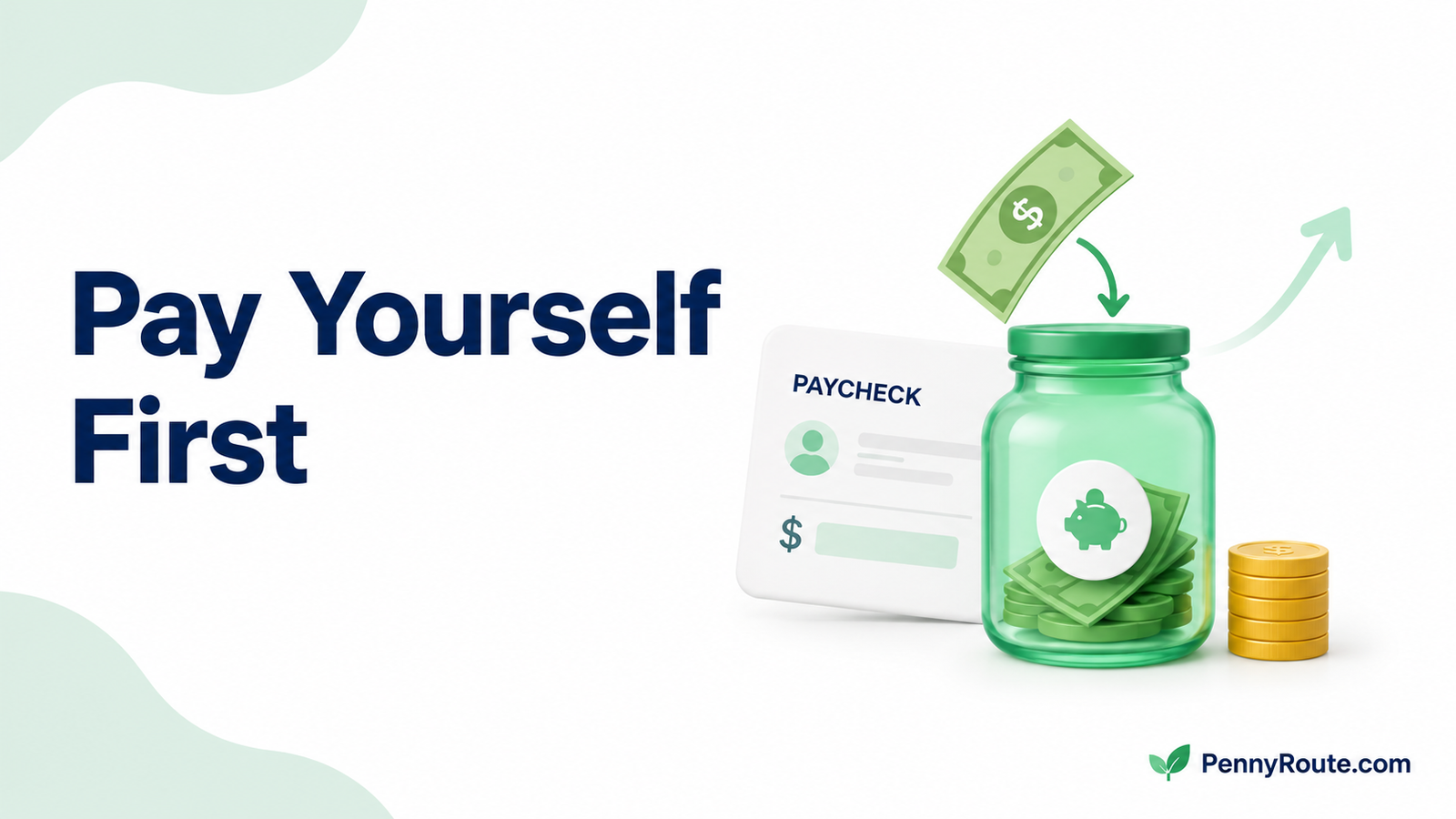
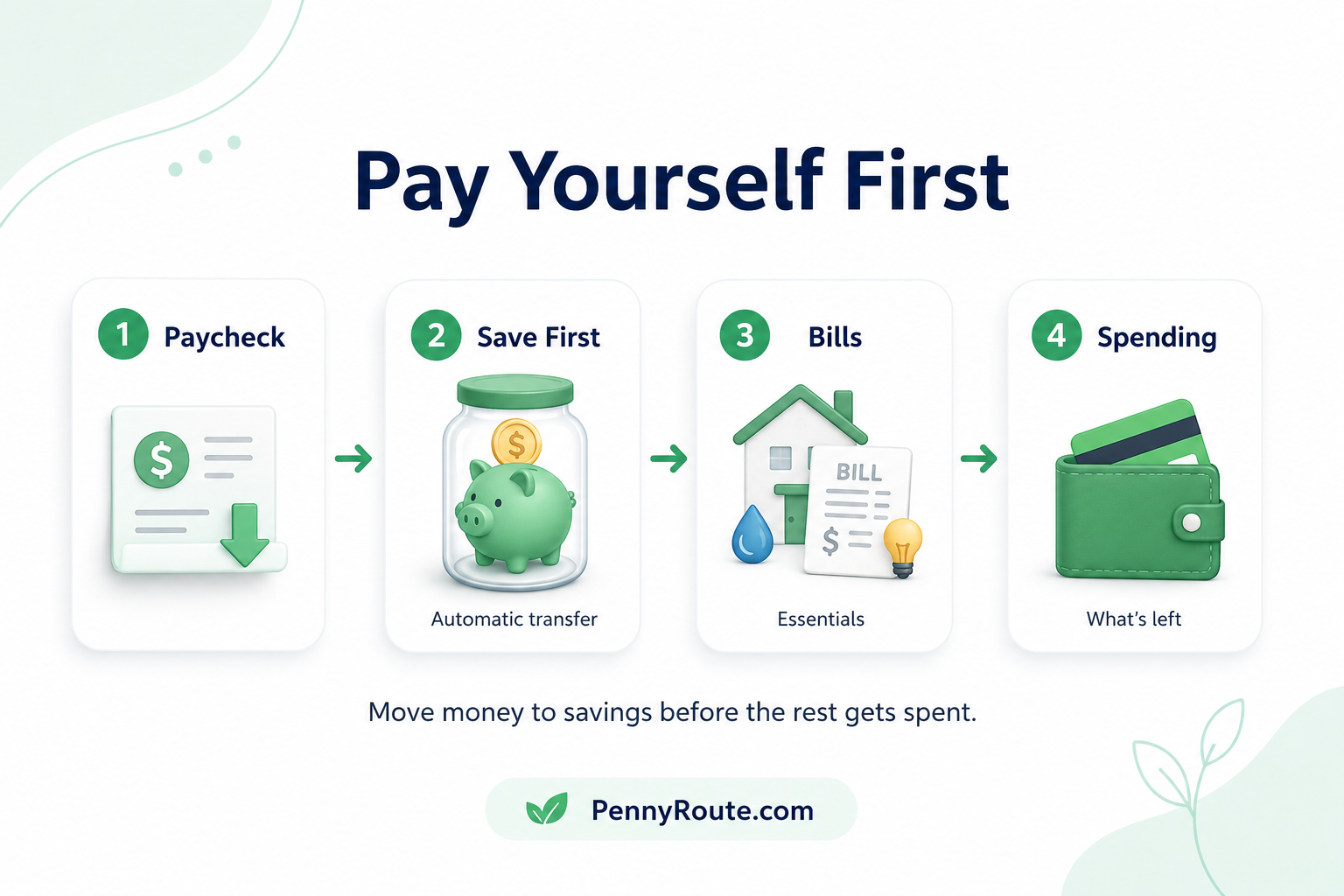
A pay yourself first budget changes that order. You decide on a savings, investing, or extra debt payment amount ahead of time and set it aside before flexible spending has a chance to absorb it.
The important part is choosing an amount that still leaves the rest of your budget workable. Paying yourself first should make progress more consistent, not leave you moving the money back a few days later just to cover normal expenses.
Disclaimer: This content is for informational purposes only and does not constitute financial advice. Choose a budgeting approach that fits your financial situation, and consult a qualified professional when needed.
What Does “Pay Yourself First” Actually Mean?
The phrase can be misleading because “first” does not mean sending money to savings while rent, utilities, or required debt payments go uncovered.
You still account for those obligations when deciding what you can afford to set aside. The difference is that your chosen financial priority gets funded before optional spending has a chance to use whatever remains.
That priority could be emergency savings, retirement, another savings goal, or extra debt repayment.
Instead of reaching the end of the month and seeing whether anything is left to save, you give that contribution a place in the plan from the beginning.
Paying yourself first means deciding on a financial priority before the rest of your discretionary spending gets a claim on that money.
What Can You Pay Yourself First For?
You can use the method for almost any financial goal that benefits from regular contributions. The harder decision is usually not where the money can go, but which goal should come first.
If you are building from a thin cash cushion, emergency savings may deserve priority. If that is already in better shape, you may decide to focus on retirement, another planned savings goal, or extra debt payments.
You also do not need to divide one small contribution across several goals. Putting $200 toward one priority can be easier to maintain and more meaningful than spreading the same amount across four places.
As your situation changes, the destination can change too. Paying yourself first is about protecting the contribution, not committing to the same goal forever.
How Much Should You Pay Yourself First?
There is no single percentage that works for everyone. The right amount is one you can keep setting aside without creating a shortfall somewhere else.
A useful starting point is to look at what remains after essential expenses, minimum debt payments, and other near-term obligations are covered. From there, choose a contribution that is meaningful enough to make progress but still realistic for the month ahead.
Fixed Amount, Percentage, or Base-Plus-Extra
You can structure the contribution in a few different ways:
- Fixed amount: Set aside the same dollar amount each payday or month.
- Percentage: Save a set share of each paycheck.
- Base-plus-extra: Commit to a smaller minimum amount, then add more when income is higher or expenses are lighter.
A fixed amount can be easier when your income is steady. A percentage can adjust more naturally when pay changes. Base-plus-extra can work well when you want consistency without making every month depend on the same contribution.
When the Transfer Is Too Aggressive
The clearest warning sign is that you keep needing the money back.
If a $300 transfer regularly leads to moving $100 back into checking, using a credit card for normal expenses, or running short before the next paycheck, the problem is probably not a lack of discipline. The contribution may simply be too high for your current cash flow.
A smaller amount that stays saved is more useful than a larger transfer you repeatedly have to undo.
Pay Yourself First Budget Example
Suppose you take home $3,600 a month and decide to put $300 toward emergency savings before flexible spending begins.
Your month might look like this:
| Category | Amount |
|---|---|
| Take-home income | $3,600 |
| Pay yourself first contribution | $300 |
| Essential expenses and minimum debt payments | $2,350 |
| Flexible spending | $750 |
| Remaining buffer | $200 |
The $300 works because the rest of the month still has room to function. Bills are covered, everyday spending has a limit, and there is some breathing room for expenses that do not land exactly where expected.
The point of the method is not to choose the biggest number you can move on payday. It is to choose an amount you can leave there.
Put the Transfer Where It Fits in Your Pay Cycle
Paying yourself first does not have to mean moving money the moment your paycheck lands. The transfer should happen early enough that the money is protected from casual spending, but not so early that it collides with bills due before your next paycheck.
If you are paid twice a month, for example, you could split a $300 monthly contribution into two $150 transfers. That may fit more comfortably than moving the full $300 at once, especially when rent or other large payments come out of one paycheck.
Automatic transfers can make the habit easier to maintain. The CFPB includes automatically directing part of a regular paycheck to savings as one way to pay yourself first.
Automation only helps when the timing works. If a transfer lands just before several large bills, moving it to another payday may solve the problem without changing how much you save over the month.
The contribution amount and the transfer date both matter. A perfectly reasonable savings target can still create unnecessary cash-flow pressure if it leaves the account at the wrong time.
Should You Pay Yourself First If You Have Debt?
You can still use the pay yourself first method while paying off debt, but the contribution needs to fit around required payments first.
Minimum debt payments remain part of the bills you need to cover each month. Anything you pay above the minimum is different. That extra amount can become part of the financial priority you fund before flexible spending.
For example, you might put $150 toward emergency savings and another $100 toward extra debt repayment each month. Or, if you already have the cash reserve you want to maintain, you might direct the full contribution toward paying off debt faster.
The balance does not have to stay the same forever. If building some savings would help you avoid relying on credit for the next unexpected expense, you may want part of the contribution going there first. Later, you can shift more toward debt.
What matters is that the plan does not create a new cash shortage while you are trying to make progress somewhere else.
Pay Yourself First and Reverse Budgeting: Are They the Same?
The two terms are often used to describe nearly the same idea, but there is a small difference in emphasis.
Pay yourself first focuses on the action: setting aside money for a financial priority before flexible spending gets the rest.
Reverse budgeting usually describes the broader structure that follows from that choice. Instead of starting with detailed spending limits for every category, you fund key priorities first and then manage what remains.
In practice, the two approaches can look very similar. If you automatically move money to savings on payday and then spend from the balance that is left, you are using the core idea behind both.
If you are comparing different budgeting methods, the distinction is useful. In everyday use, the two terms often describe very similar setups.
When Paying Yourself First Works Well
Pay yourself first tends to work best when you want saving or another financial goal to happen consistently, but you do not want to manage every spending category in detail.
It can be a good fit if your bills are fairly predictable and you are comfortable managing the money that remains after your priority contribution is set aside.
The method also suits people who tend to spend whatever stays in checking. Moving the money first creates a clearer boundary between what is available to spend now and what has already been claimed by a future goal.
When You May Need More Structure
Pay yourself first can be too loose if the money left after the transfer regularly disappears faster than expected.
If groceries, dining, shopping, or other variable expenses are where the real problem sits, simply saving first may not give you enough control. In that case, a method with more detailed category limits can make it easier to see where spending needs attention.
The same is true if irregular expenses keep catching you off guard or you often reach the end of the month unsure where the remaining money went. Saving first can still be part of the plan, but it may work better alongside a more detailed budgeting system.
Keep the Rest of the Month Workable
Paying yourself first is useful because it gives an important financial goal a place in your budget before everyday spending can crowd it out. But the contribution still has to coexist with the life you are paying for now.
If the amount stays set aside while your bills, regular expenses, and normal spending remain manageable, the method is doing what it should. As your income, expenses, or priorities change, you can adjust the contribution without abandoning the habit of setting something aside first.