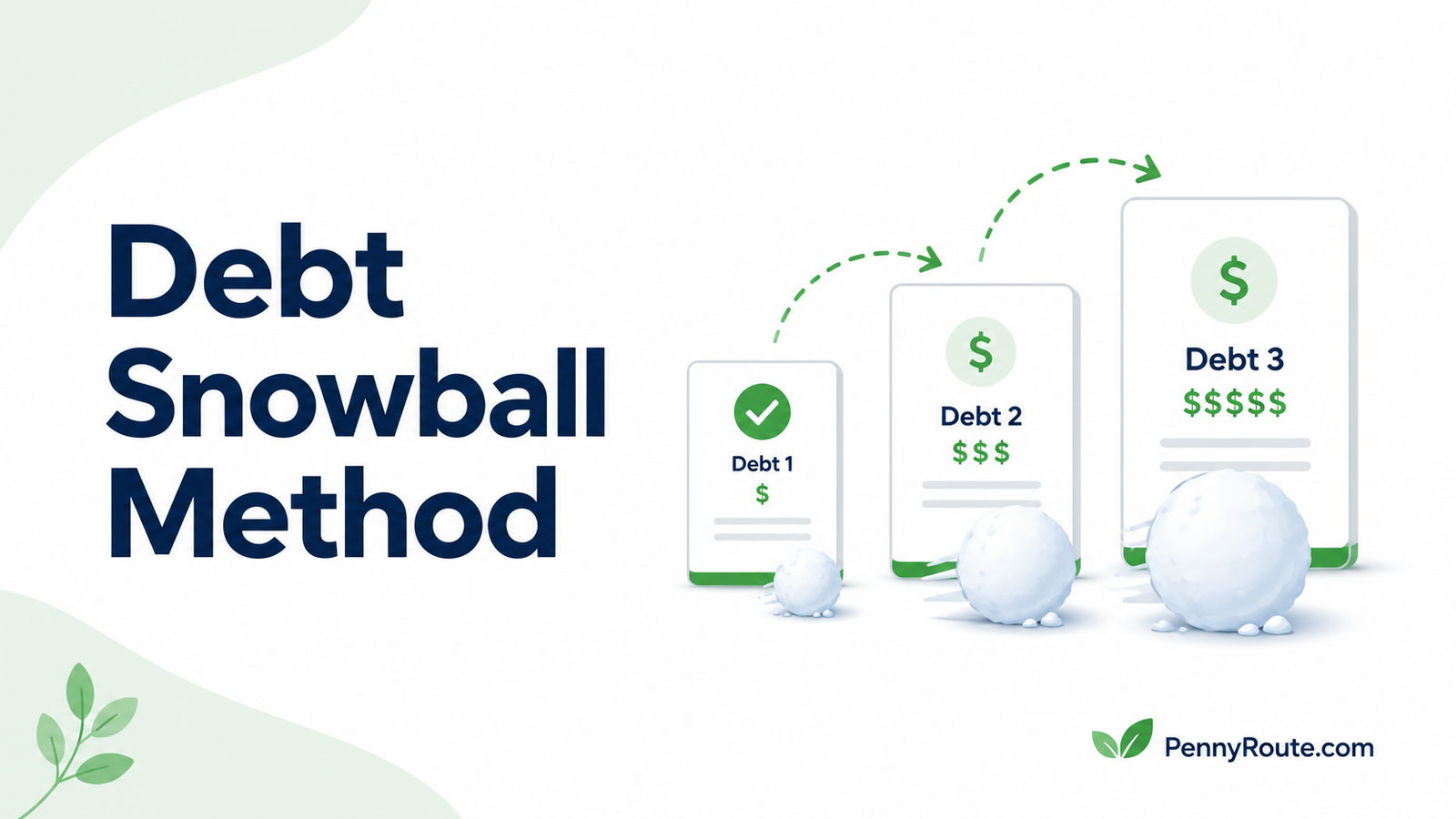
Paying several debts at once can make progress hard to see. You may keep making payments each month while every balance still seems to be sitting there, quietly asking for attention.
The debt snowball method gives your payoff plan one clear target at a time. By focusing extra money on the smallest balance first, you may clear an account sooner, reduce the number of payments you manage, and build momentum for the next debt.
Disclaimer: This content is for informational purposes only and does not constitute financial, legal, tax, or credit advice. Debt balances, interest charges, collection status, and repayment options vary. Consider speaking with a qualified professional when needed.
Quick Overview
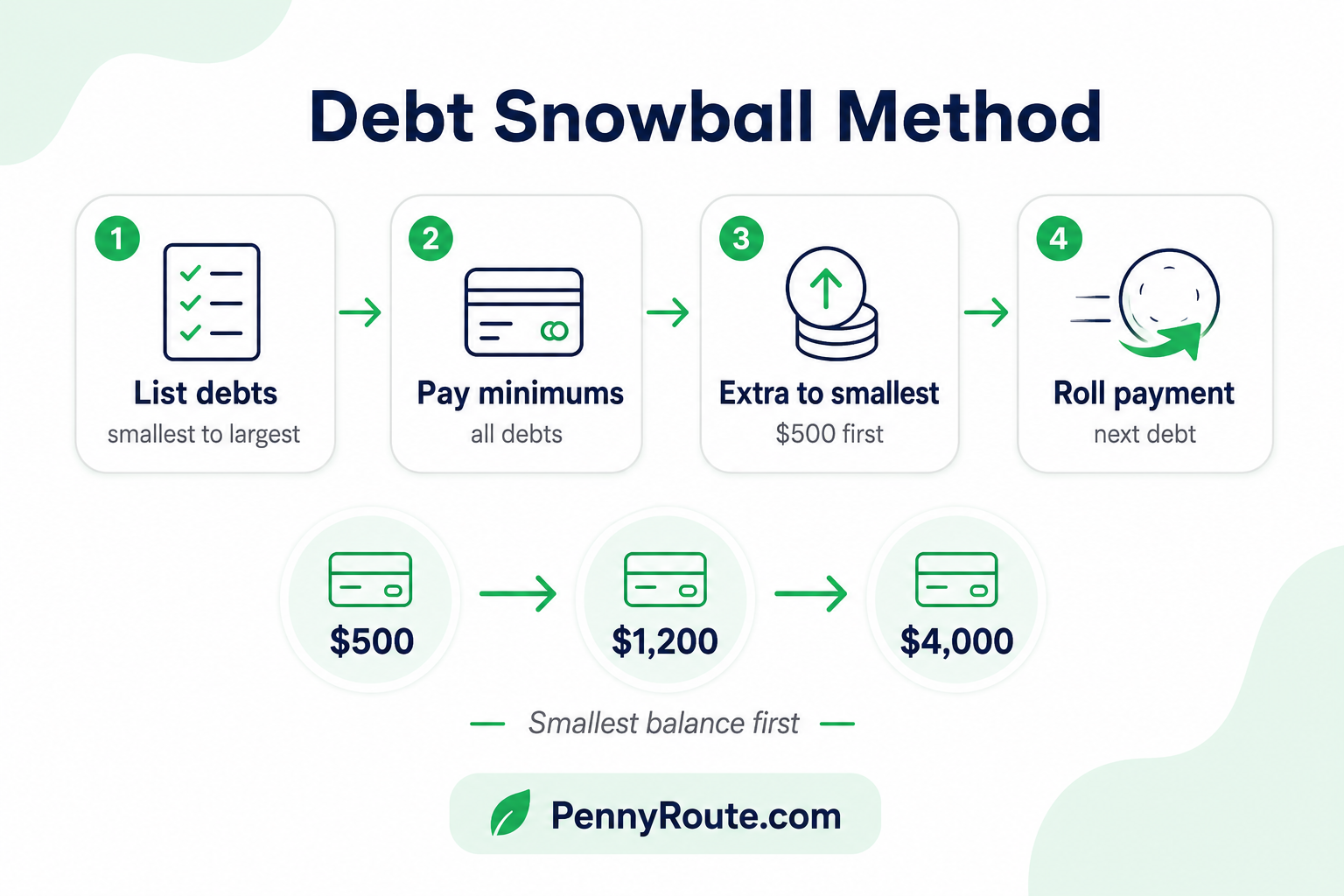
- List your debts from the smallest balance to the largest.
- Keep making at least the minimum payment on every debt.
- Direct all extra payoff money toward the smallest balance.
- After that debt is cleared, roll its full payment into the next one.
- Compare the motivation benefit with the possibility of paying more interest.
What Is the Debt Snowball Method?
The debt snowball method is a repayment strategy that organizes debts by balance, from smallest to largest.
You continue making the required minimum payment on every debt, then send any extra payoff money to the smallest balance. After that debt is paid off, its full payment is added to the payment on the next-smallest debt.
The payment amount grows as each balance disappears, which creates the “snowball” effect.
The method does not prioritize interest rates. A debt with a high rate may remain on the list while a smaller, lower-rate balance is paid first.
That tradeoff is the main feature of the strategy:
- Potential benefit: Faster visible progress and fewer open balances
- Potential drawback: You may pay more interest than with a highest-interest-first approach
The debt snowball method is designed around momentum and simplicity rather than minimizing interest costs.
How to Use the Debt Snowball Method
The debt snowball method works best when every debt is listed clearly and the monthly payoff amount is realistic. Follow the same order each month so extra money is not divided across several balances.
1. List Every Debt
Write down each debt you plan to include.
Record:
- Current balance
- Minimum payment
- Interest rate
- Payment due date
- Account status
Common debts may include credit cards, personal loans, medical bills, retail financing, and private student loans.
Secured debts such as a mortgage or auto loan may require separate consideration because missed payments can put the underlying asset at risk.
2. Order the Debts From Smallest to Largest
Arrange the debts by current balance, not by interest rate.
For example:
| Debt | Balance | Minimum payment |
|---|---|---|
| Store card | $450 | $35 |
| Credit card A | $1,600 | $60 |
| Medical bill | $2,800 | $90 |
| Personal loan | $6,500 | $210 |
The store card becomes the first target because it has the smallest balance.
3. Make Every Minimum Payment
Continue paying at least the required minimum on all debts.
Missing a minimum payment may lead to late fees, penalty interest, credit damage, or collection activity. The snowball only works when the other accounts remain current.
Set reminders or automatic payments when appropriate, but keep enough money in the account to avoid overdrafts.
4. Send All Extra Money to the Smallest Balance
After minimum payments and essential expenses are covered, direct the full extra amount to the smallest debt.
Suppose you can put an additional $250 per month toward debt.
The first payment would be:
$35 minimum payment + $250 extra payment =
First payment
$285 toward the store card
Avoid spreading the $250 across several accounts. Concentrating it on one balance is what creates the early payoff.
5. Roll the Full Payment Into the Next Debt
Once the store card is paid off, add its full $285 payment to the minimum payment on the next debt.
The new payment becomes:
$285 previous payment + $60 minimum payment =
New Payment
$345 toward Credit Card A
You continue paying the minimums on the remaining debts.
6. Repeat the Process
Each time a debt is cleared, roll the entire payment into the next balance.
Using the example above:
| Payoff stage | Target debt | Monthly target payment |
|---|---|---|
| First | Store card | $285 |
| Second | Credit card A | $345 |
| Third | Medical bill | $435 |
| Fourth | Personal loan | $645 |
The payment grows without requiring you to find a new extra amount each time.
7. Keep the Payoff Order Updated
Balances may change because of interest, fees, refunds, or additional charges.
Review the list regularly and update:
- Current balances
- Minimum payments
- Payment due dates
- Account status
- Any new debt
Do not change the order every month simply because two balances become close. Consistency is part of the method, unless a serious issue such as delinquency, legal action, or a secured-debt risk requires different priority.

Why the Debt Snowball Method May Help
The debt snowball method may be useful because it turns a long payoff plan into a series of smaller targets.
Early Progress Is Easier to See
Paying off a small balance can happen sooner than paying off a larger one.
That early result may make the plan feel more manageable, especially when several debts are open at the same time.
Instead of waiting months or years for a major balance to disappear, you can see one account reach zero sooner.
Fewer Debts Can Simplify the Budget
Each paid-off account removes:
- One minimum payment
- One due date
- One balance to monitor
- One opportunity for a late payment
Reducing the number of active debts can make the monthly budget easier to manage, even before the total debt is fully repaid.
The Next Step Is Always Clear
The method removes much of the decision-making from the payoff process.
You do not need to choose where extra money goes each month. It goes to the smallest remaining balance.
That consistency may help prevent extra payments from being divided across several accounts without producing visible progress.
The Payment Builds Over Time
When a debt is cleared, the money previously assigned to it is not absorbed into general spending. It moves to the next balance.
For example, a $285 payment may grow to $345, then $435, as minimum payments are added to the snowball.
The amount available for debt payoff increases even when the original extra contribution stays the same.
Visible Wins May Support Motivation
Debt payoff often takes time. A method that creates earlier milestones may help some people stay engaged.
However, motivation is personal. Someone who is more focused on reducing interest may prefer a different strategy.
The debt snowball method may help with consistency, but it does not reduce the importance of interest rates, fees, or account status.
Pros and Cons of the Debt Snowball Method
The debt snowball method can be effective for someone who benefits from quick progress and a simple payoff order. Its main limitation is that it does not minimize interest.
| Pros | Cons |
|---|---|
| Small balances may be cleared sooner | Higher-interest debt may remain unpaid longer |
| The payoff order is easy to follow | Total interest costs may be higher |
| Each payoff removes one monthly minimum | The smallest balance is not always the most urgent debt |
| Early wins may support motivation | The method may be less efficient mathematically |
| Payments grow as debts are cleared | Progress may slow if the smallest debt is still large |
| Fewer open balances can simplify tracking | It may not suit accounts that are past due or in collections |
Main Advantages
The debt snowball method may be useful when you want:
- A clear first target
- Fewer active accounts over time
- A consistent place to send extra money
- Visible milestones during a long payoff plan
- A simple system that does not require repeated interest calculations
Its structure may reduce decision fatigue because the next target is always the smallest remaining balance.
Main Drawbacks
The method may not be the most cost-effective option when large interest-rate differences exist.
For example, paying off a $600 balance at 8% before a $4,000 balance at 29% may create a faster win, but the high-rate debt continues generating more interest in the meantime.
The snowball method can also be unsuitable when:
- An account is already past due
- A secured debt is at risk of repossession or foreclosure
- Minimum payments are unaffordable
- Collection or legal deadlines require immediate attention
- A promotional interest rate is about to expire
In those situations, urgency and financial consequences may matter more than balance size.
The Tradeoff to Consider
The choice is usually between:
- Behavioral simplicity and earlier visible progress
- Potentially lower interest costs
The best method is not always the one that looks strongest on paper. It is the one you can follow consistently without ignoring urgent accounts or essential expenses.
Who May Prefer the Debt Snowball Method
The method may suit you when:
- Early progress helps you stay consistent
- You want a simple payoff order
- You have several small balances
- Reducing the number of accounts would make the plan easier to manage
- You are comfortable with the possibility of paying more interest
It may be less suitable when high-interest debt is growing quickly, minimum payments are unaffordable, or an account is past due, secured, or already in collections.
Debt Snowball vs. Debt Avalanche
The debt snowball and debt avalanche methods both direct extra money toward one debt at a time while you continue making minimum payments on the others.
The difference is how the target debt is chosen:
| Debt snowball | Debt avalanche |
|---|---|
| Targets the smallest balance first | Targets the highest interest rate first |
| Prioritizes visible progress | Prioritizes reducing interest |
| May clear an account sooner | May lower the total repayment cost |
| May cost more in interest | The first payoff may take longer |
The snowball method may suit you when early progress helps you stay consistent. The avalanche method may be more suitable when reducing interest is the main priority.
A detailed debt snowball vs. debt avalanche comparison can help you evaluate the examples, tradeoffs, and situations where each approach may work better.
When to Consider a Different Approach
The debt snowball method is not always the safest or most cost-effective choice. Balance size should not take priority when another debt creates a more urgent financial risk.
Balance size should not be the only factor in deciding which debt to pay off first. Interest rates, account status, collateral, legal deadlines, and the consequences of missing payments may require a different priority.
A High-Interest Debt Is Growing Quickly
A large interest-rate difference can make the snowball more expensive.
For example, paying a $700 balance at 8% before a $5,000 balance at 29% may create a faster payoff milestone, but the higher-rate debt continues accumulating interest.
The debt avalanche method may be more suitable when reducing interest is your main priority, and you can stay consistent without early account closures.
Minimum Payments Are Unaffordable
The snowball method assumes you can make every required minimum payment while directing extra money to one target.
If you cannot cover the minimums, adding an extra snowball payment is not the first priority. Start by reviewing:
- Essential household expenses
- Payment due dates
- Available hardship programs
- Interest-rate or payment-relief options
- Whether professional credit counseling may help
Contacting the creditor before missing a payment may provide more options than waiting until the account becomes seriously delinquent.
An Account Is Past Due
A past-due account may require attention before following the normal smallest-balance order.
Late accounts can lead to:
- Additional fees
- Penalty interest
- Credit reporting damage
- Collection activity
- Loss of promotional terms
Bringing urgent accounts current may be more important than paying off a smaller account that is already in good standing.
A Secured Debt Is at Risk
Secured debts are tied to property, such as a vehicle or home.
If an auto loan or mortgage is seriously past due, the possible consequences may be more severe than those of an unsecured balance. Protecting housing, transportation, and other essentials may need to come before the snowball order.
A Debt Is in Collections or Legal Action Has Started
Collection accounts, lawsuits, wage garnishment risks, and court deadlines may require a different response.
Do not assume the smallest collection balance should automatically receive the first payment. Confirm:
- Who currently owns the debt
- Whether the amount is accurate
- Whether a lawsuit or deadline exists
- How any agreement will be documented
- Whether legal advice is appropriate
Avoid making decisions based only on pressure from a collector.
A Promotional Rate Is About to End
A debt with a temporary 0% or low promotional rate may become much more expensive when the offer expires.
Review:
- The expiration date
- The new interest rate
- Whether deferred interest applies
- The balance likely to remain
- How much could be paid before the deadline
That debt may deserve earlier attention even when it is not the smallest.
You Have No Emergency Cushion
Sending every available dollar to debt can leave you vulnerable to another unexpected expense.
A modest emergency cushion may reduce the need to use a credit card for a car repair, medical bill, or urgent household cost. The right amount depends on your circumstances, but the snowball payment should not leave essential bills exposed.
You Need Professional Support
A self-directed payoff plan may not be enough when:
- Several accounts are delinquent
- Collection calls are increasing
- Minimum payments exceed what you can afford
- You are considering debt settlement
- A creditor has filed a lawsuit
- Housing or transportation is at risk
The Federal Trade Commission provides guidance on evaluating debt-relief options and avoiding companies that charge upfront fees or make unrealistic promises.
The debt snowball method is most useful when your accounts are manageable, minimum payments are affordable, and no urgent debt requires priority treatment.
How to Set Up Your Debt Snowball Safely
A debt snowball should fit around essential expenses and required payments. Before increasing any target payment, make sure the plan does not create new late fees, overdrafts, or credit card balances elsewhere.
Confirm Every Balance and Minimum Payment
Review recent statements and record:
- Current balance
- Minimum payment
- Interest rate
- Due date
- Account status
- Promotional-rate expiration date
- Whether the debt is secured or unsecured
Do not rely only on an old spreadsheet or credit report. Balances and minimum payments can change as interest and fees are added.
Protect Essential Expenses First
Cover necessary costs before sending extra money to the target debt.
These may include:
- Housing
- Utilities
- Food
- Insurance
- Transportation
- Childcare
- Required medications
- Minimum debt payments
An aggressive payoff amount is not helpful if it causes another bill to become overdue.
Keep a Small Emergency Buffer
A small emergency fund can help cover an unexpected expense without immediately adding another credit card balance.
The amount does not need to be large before you begin. It should be enough to reduce the chance that a minor car repair, medical copayment, or urgent household cost sends you back to a credit card.
The balance between emergency savings and extra debt payments depends on your income stability, essential expenses, and access to other support.
Automate Minimum Payments Carefully
Automatic minimum payments may reduce the risk of missing a due date while extra money goes to the smallest balance.
Before using autopay:
- Confirm the payment account has enough money
- Check when the payment will be withdrawn
- Review the first few transactions
- Keep alerts turned on
- Update the payment when the required minimum changes
Autopay should simplify the process, not make the account harder to monitor.
Confirm How Extra Payments Are Applied
Some lenders may apply extra money differently depending on the loan or account terms.
Check whether the payment:
- Reduces the principal balance
- Advances the next due date
- Is applied to accrued interest or fees first
- Requires a specific “principal-only” instruction
- Triggers any prepayment restriction
Review the next statement to confirm that the payment was applied as expected.
Stop Adding New Charges to the Target Debt
Continuing to use the account can slow or reverse progress.
Possible steps include:
- Removing saved card details from shopping accounts
- Moving subscriptions to a different payment method
- Keeping the card out of your wallet
- Locking the card through the issuer’s app
- Closing the account only after considering credit and access implications
The purpose is to prevent the balance from growing while you are trying to eliminate it.
Use Windfalls Intentionally
Extra money may speed up the snowball when essential needs are already covered.
Possible sources include:
- Tax refunds
- Bonuses
- Overtime
- Cashback
- Gifts
- Refunds
- Income from selling unused items
Decide how much will go toward debt before the money is absorbed into general spending.
Track Each Payoff Milestone
Keep a simple record of:
- Starting balance
- Current balance
- Monthly target payment
- Payoff date
- Payment rolled to the next debt
Debt payoff apps and calculators can help organize balances, minimum payments, extra payments, and estimated payoff dates.
Review the Plan Monthly
At the end of each month, check:
- Whether all minimum payments were made
- Whether the target payment was affordable
- Whether any new charges were added
- Whether an account became past due
- Whether your emergency buffer changed
- Whether income or essential expenses shifted
Increase the snowball only when the higher payment can be maintained without putting essential bills at risk.
What If You Have No Extra Money for the Debt Snowball?
The debt snowball requires money beyond the minimum payments. When nothing is left after essential expenses, the first step is to stabilize the budget rather than forcing an extra payment.
When your budget only covers minimum payments on debt, the immediate priority is stabilizing cash flow and preventing accounts from falling behind.
Confirm Whether the Shortfall Is Temporary
Review the last one to three months of income and expenses.
Look for:
- A temporary medical or repair bill
- Seasonal utility costs
- Reduced work hours
- An unusually expensive month
- A recurring gap between income and required expenses
A temporary shortfall may call for a brief pause. A recurring shortfall usually requires a broader budget adjustment or repayment discussion.
Protect Essential Bills and Minimum Payments
Prioritize:
- Housing
- Utilities
- Food
- Insurance
- Necessary transportation
- Required medications and childcare
- Minimum debt payments
Do not skip essentials or another required payment simply to create a snowball amount.
Look for a Small Sustainable Amount
You do not need hundreds of dollars to begin.
A consistent $20 or $50 monthly payment can still reduce the smallest balance, especially when combined with occasional extra income.
Review flexible categories such as:
- Unused subscriptions
- Takeout
- Convenience purchases
- Entertainment
- Nonurgent shopping
- Fees that may be avoidable
Avoid cuts that make the plan difficult to maintain or reduce necessary food, healthcare, or transportation.
Redirect Money From a Paid-Off or Reduced Expense
A snowball amount may become available when:
- A subscription is canceled
- An insurance premium falls
- A payment plan ends
- A phone or internet bill is reduced
- A regular expense disappears
- A raise or additional work increases take-home pay
Direct part of that money to debt before it becomes absorbed into everyday spending.
Use Irregular Money Carefully
A tax refund, bonus, cashback reward, gift, or sale of an unused item may provide a one-time payment.
Before using it for debt, confirm that:
- Essential bills are current
- Upcoming irregular expenses are covered
- A small emergency need will not immediately require new borrowing
- The payment will not create a cash shortage later in the month
One-time money can speed up the plan, but it should not replace a sustainable monthly budget.
Contact Creditors When Minimums Are Unaffordable
When you cannot make the required payments, contact the creditor or loan servicer before the account falls further behind.
Ask whether it offers:
- A hardship program
- A reduced payment
- A temporary interest-rate reduction
- A changed due date
- A short-term payment arrangement
- Another repayment option
The Consumer Financial Protection Bureau advises contacting the company when you cannot make a payment because a lender may offer more affordable options.
Consider Reputable Credit Counseling
A nonprofit credit counselor may help you review the full budget and explore a repayment plan when several minimum payments are difficult to manage.
Be cautious with companies that:
- Promise to erase debt quickly
- Guarantee a specific result
- Tell you to stop communicating with creditors
- Demand large upfront fees
- Pressure you to make an immediate decision
Pause the Snowball When Necessary
Pausing extra payments is reasonable when you need to:
- Bring essential bills current
- Avoid eviction, foreclosure, or repossession
- Cover an urgent medical need
- Rebuild a small emergency cushion
- Address an account in collections or legal action
- Adjust after a loss of income
A pause does not erase earlier progress. Resume the snowball when the budget can support it safely.
The debt snowball should use money that is genuinely available after essential costs and required payments. When that amount is zero, stabilizing the household comes first.
Frequently Asked Questions About the Debt Snowball Method
What is the debt snowball method?
The debt snowball method is a repayment strategy that targets the smallest debt balance first. You continue making minimum payments on the other debts, then roll the full payment into the next-smallest balance after each payoff.
How do you start a debt snowball?
List each debt’s balance, minimum payment, interest rate, due date, and account status. Order the debts from smallest balance to largest, then direct all available extra money to the first debt while keeping the others current.
Does the debt snowball save money on interest?
Not usually as much as the debt avalanche method. Because the snowball ignores interest rates, a high-rate balance may remain unpaid longer. Its main advantage is earlier visible progress.
Which debt should be paid first with the snowball method?
Pay the debt with the smallest current balance first, regardless of its interest rate. Urgent situations such as past-due secured debt, collection activity, or legal deadlines may require a different priority.
Should I build an emergency fund before starting a debt snowball?
A small emergency cushion may help prevent an unexpected expense from creating new debt. The amount depends on your income stability, essential costs, and current account status.
Can I use the debt snowball if I have no extra money?
The method requires money beyond minimum payments. When no extra amount is available, focus first on essential expenses, account minimums, creditor hardship options, and stabilizing the budget.
Can the debt snowball include student loans?
Student loans can be included, but review their repayment terms, interest rates, tax treatment, forgiveness eligibility, and federal borrower protections before sending extra payments. Some loans may need separate consideration.
Should I close a credit card after paying it off?
Not automatically. Closing a card may affect available credit, account age, and future access to credit. Consider fees, spending risk, account terms, and your broader credit situation before deciding.
What happens if two debts have the same balance?
You may choose either one. Possible tie-breakers include the higher interest rate, smaller minimum payment, earlier due date, or the account you most want to remove from the budget.
Can I switch from the debt snowball to the debt avalanche?
You may change strategies when your motivation, interest costs, income, or debt situation changes. Continue making every required minimum payment while redirecting extra money to the new target.
How long does the debt snowball take?
The timeline depends on your balances, minimum payments, interest rates, extra monthly payment, and whether new charges are added. A debt payoff calculator can help estimate the order and approximate payoff period.
PennyRoute Editorial creates beginner-friendly guides on budgeting, saving, and everyday money habits. Our goal is to make personal finance easier to understand with clear explanations, realistic examples, and practical steps.