When you have several debts, deciding where your extra money should go is not always as simple as choosing the highest interest rate or the smallest balance.
A debt that is already past due, tied to something essential, or carrying more immediate consequences may need attention before your normal payoff strategy. Once urgent issues are under control, you can decide which debt gets the extra payment each month.
The key is to separate what must be handled first from what you want to pay off faster. That gives you a clearer order without trying to attack every balance at once.
Disclaimer: This content is for informational purposes only and does not constitute financial advice. Debt payoff priorities can vary based on your financial situation and the type of debt involved. Consult a qualified professional when needed.
- Cover essential expenses and required minimum payments before sending extra money to one debt.
- Give priority to debts with more immediate consequences, such as a past-due secured loan or an account tied to something essential.
- If everything is current, choose between paying the highest-interest debt first or targeting the smallest balance.
- Focus extra payments on one debt at a time while continuing the required payments on the others.
Before Paying Extra Debt, Protect Essential Expenses
Extra debt payments should come after the expenses that keep your household running.
That usually means covering things such as housing, utilities, groceries, transportation, insurance, and other necessary bills before sending additional money to a credit card, loan, or other balance.
Paying extra toward debt can backfire if it leaves you short for essentials and forces you to borrow again before the month is over.
Once those basic expenses are covered, you can look at required debt payments and decide whether there is room to put extra money toward one balance.
Make Required Payments Before Choosing an Extra-Payment Target
Before putting extra money toward one debt, make the required payments on the others when you can.
Missing a required payment just to send more toward another balance can create late fees, credit problems, or more serious consequences depending on the debt.
Once the required payments are covered, the money left over becomes your extra-payment amount. That is the amount you can direct toward one priority debt.
Keeping that distinction clear helps you avoid making progress on one balance while another account falls behind.
When an Urgent Debt Should Come First
The highest interest rate is not always the first thing to look at.
A debt may deserve priority when delaying it could create a more immediate problem, such as losing access to something essential or allowing an already serious delinquency to get worse.
For example, you may need to address a debt first if it involves:
- A past-due car loan when you rely on the vehicle for work or essential transportation
- A mortgage or other secured debt that is seriously behind
- An account connected to an immediate legal or court deadline
- Another overdue obligation where waiting could create more serious consequences
Ask what could happen if this debt waits another month.
Once the immediate problem is under control, you can return to your regular payoff strategy and decide where extra payments should go next.
If Everything Is Current, Which Debt Should You Pay First?
Once essential expenses are covered, required payments are current, and no debt needs urgent attention, you can choose where your extra payment will have the most value.
Two common approaches are:
Highest Interest Rate First
Putting extra money toward the debt with the highest APR can reduce the amount of interest you pay over time.
This is the basic idea behind the debt avalanche method. Continue making the required payments on your other debts while directing extra money to the highest-rate balance.
Smallest Balance First
You may instead choose the debt with the smallest balance, regardless of its interest rate.
This is the debt snowball method. Paying off a smaller balance sooner can give you an earlier payoff milestone and free up that payment for the next debt.
Neither method needs a long explanation here. The better choice depends on whether your priority is reducing interest cost or getting an earlier balance paid off.
Should Credit Card Debt Come First?
Often, but not automatically.
High-interest credit card debt can be a strong target for extra payments when your essential expenses are covered, required payments are current, and no other debt has more immediate consequences.
For example, a credit card with a 27% APR may make more sense to target before a lower-rate personal loan. But a past-due car loan or another secured debt could deserve attention first if delaying it puts something important at risk.
Once urgent issues are handled, compare the remaining debts by interest rate, balance, and the payoff method you plan to follow.
What About Debt in Collections?
A debt in collections does not automatically become your first payoff target just because a collector is contacting you.
Before deciding where it belongs in your payoff order, confirm who is collecting the debt, whether the amount is correct, and whether you recognize the account. Debt collectors generally must provide validation information about the debt during the initial communication or within five days.
Also consider the age and legal status of the debt. Statutes of limitations vary by state, and with some older debts, making a partial payment or acknowledging the debt may restart the limitation period.
If the debt is valid and current, weigh it alongside your other priorities, especially debts tied to essential property, required payments, or accounts with more immediate consequences.
A Simple Order for Prioritizing Your Debts
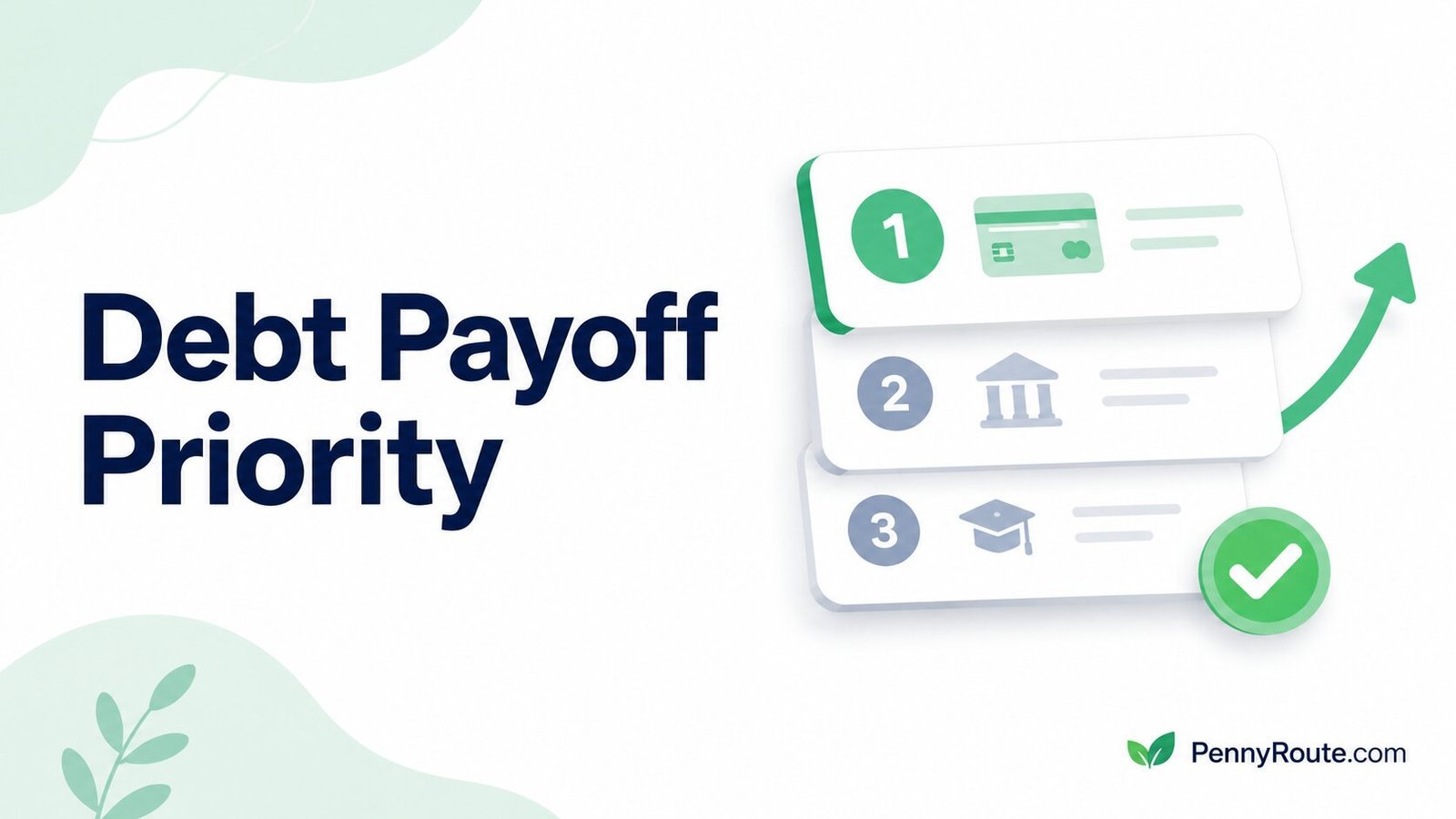
When several balances are competing for your money, use this order as a starting point:
- Cover essential current expenses. Keep housing, utilities, food, transportation, insurance, and other necessities funded.
- Make required debt payments when you can. Avoid letting another account fall behind just to make an extra payment elsewhere.
- Handle debts with immediate consequences. Prioritize overdue secured debts, legal deadlines, or other situations where waiting could create a more serious problem.
- Choose one debt for extra payments. If everything is current, direct your extra money toward a single target.
- Pick the target based on your priority. Choose the highest APR to reduce interest costs or the smallest balance for an earlier payoff milestone.
This order is not a rigid rule for every situation. It is a way to separate urgent obligations from the debt you want to eliminate faster.
Example: Choosing Which Debt to Pay First
Suppose you have these four debts:
| Debt | Balance | APR | Status |
|---|---|---|---|
| Credit card | $2,800 | 26.99% | Current |
| Medical bill | $450 | 0% | Current |
| Car loan | $9,000 | 8.99% | Past due |
| Store card | $700 | 29.99% | Current |
The store card has the highest interest rate, but the past-due car loan may need attention first if falling further behind could put your transportation at risk.
Once the car loan is brought under control, you can return to your normal payoff strategy.
If you use the debt avalanche method, the 29.99% store card would likely become the next target.
If you prefer the debt snowball method, you might choose the $450 medical bill first because it is the smallest balance.
The example shows why debt priority is not always just a math problem. Account status and immediate consequences can change the order before you choose a longer-term payoff method.
When the Normal Payoff Order Is Not Working
A payoff strategy may need adjusting if you keep falling behind somewhere else while sending extra money to one debt.
For example, reconsider the plan if:
- Minimum payments are becoming difficult to cover
- Essential expenses keep going back on a credit card
- A previously current account is becoming past due
- Your income or necessary expenses have changed
- The extra payment leaves no room for small unexpected costs
In that situation, reduce or pause the extra payment and look at your monthly cash flow again. Keeping accounts current and covering essential expenses can be more important than following a payoff order perfectly.
You can increase the extra payment again when your budget has enough room to support it consistently.