Paying down a credit card gets frustrating when new charges keep landing on the same balance. You make a payment, the balance drops, then groceries, gas, subscriptions, or another bill pushes it back up again.
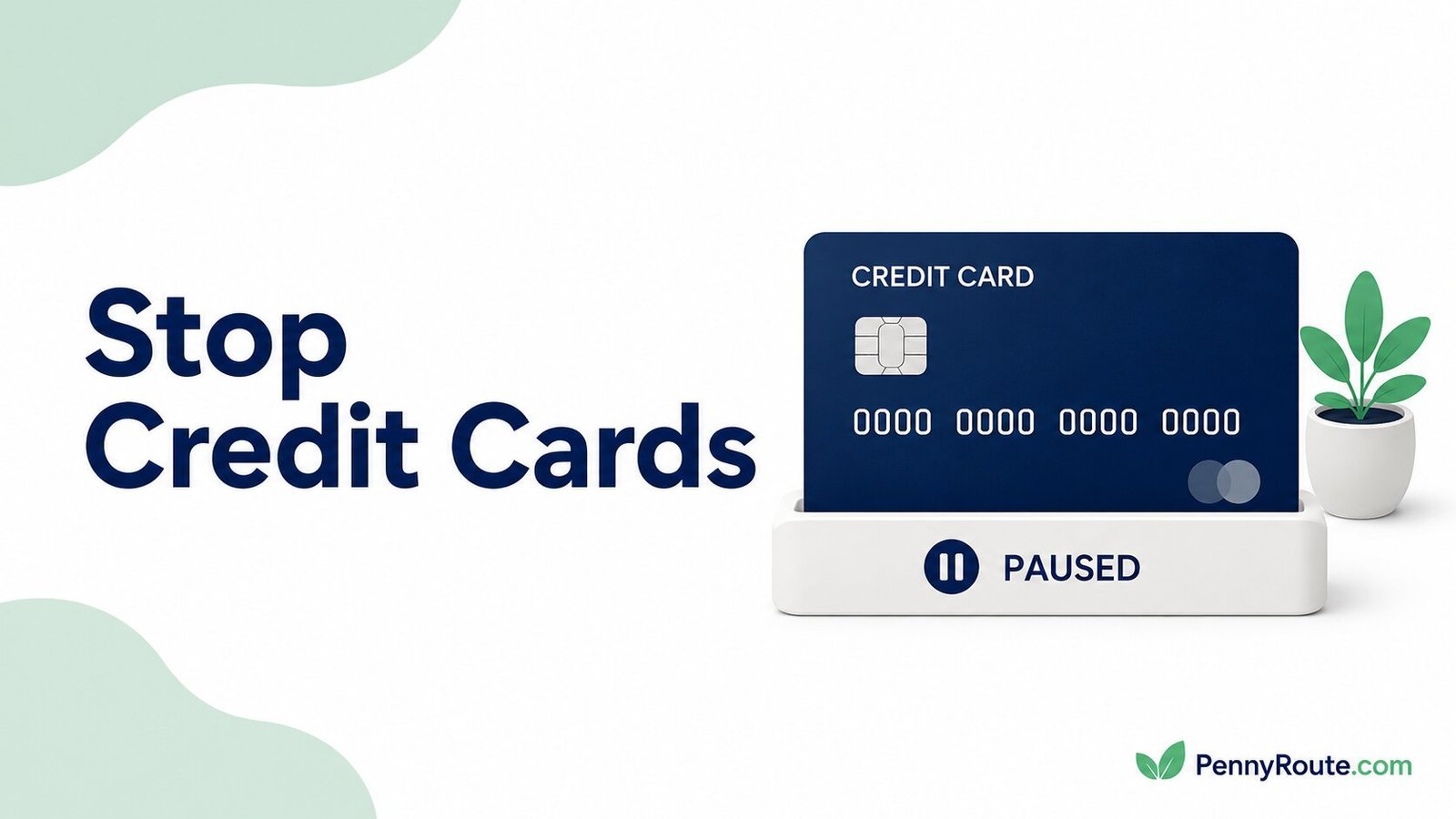
Stopping new charges can make your payoff progress easier to see and easier to maintain. It separates today’s spending from the debt you are already trying to reduce.
You do not need to fix every money habit at once. Start by slowing the new charges, changing how you pay for everyday expenses, and giving each payment a better chance to reduce the balance.
Disclaimer: This content is for informational purposes only and does not constitute financial advice. Please consult a qualified professional before making financial decisions.
- Stop adding new charges so your payments can reduce the balance instead of being replaced by new spending.
- Make credit cards harder to use for everyday purchases, but do not assume you need to close the account.
- Use debit, checking, cash, or another planned payment method for regular spending.
- If you still need credit for essentials, check whether the problem is a temporary gap or a recurring cash-flow shortfall.
Why New Charges Can Slow Credit Card Payoff
Credit card payoff can be difficult when the same card is doing two jobs at once.
Part of the balance is debt you are trying to reduce, while new groceries, gas, bills, subscriptions, or other purchases are still being added. That can create a cycle where you make a payment, the balance falls, and new charges push it back up again.
This does not always mean you are spending carelessly. Sometimes the card has become a backup because your checking balance is tight, bills fall at awkward times, or everyday expenses are higher than expected.
The practical problem is that new charges make your progress harder to see. Even when you are making payments, the balance may barely move because the card is still covering current spending.
Before focusing on paying the balance faster, it can help to slow or stop new charges first. That gives your payments a clearer chance to reduce the debt instead of being replaced by new spending.
New Purchases May Start Adding Interest Right Away
If you carry a credit card balance from month to month, you may lose the grace period on new purchases.
When that happens, new purchases can start accruing interest from the date of each transaction, depending on your card’s terms. Check your card agreement or statement to see how the grace period works on your account.
Pause New Charges Without Automatically Closing the Card
Stopping new purchases does not necessarily mean you need to close the credit card account.
Closing a card reduces your available credit, which can increase your credit utilization and may affect your credit score. In some situations, though, closing the account can still make sense, especially if keeping easy access to the card makes it harder to control new spending.
A better first step may be to make the card less convenient to use. You could:
- Remove it from your wallet
- Delete saved card details from shopping sites and apps
- Remove it from mobile wallets
- Lock the card through your issuer’s app, if available
- Keep it somewhere that is not easy to reach during everyday spending
If you use a card lock, check whether recurring or previously authorized charges can still go through. Card-lock behavior can vary by issuer.
Before closing the account, consider the card’s annual fee, your other available credit, and whether making the card harder to use is enough to solve the immediate problem.
Replace Credit Card Spending With a New Payment Method
If you stop using the credit card but do not decide how everyday expenses will be paid, it is easy to fall back on the card when the next purchase comes up.
Choose a payment method that fits your current cash flow. That might be:
- A debit card linked to checking
- Cash for a few problem spending categories
- A separate checking account for regular expenses
- Another planned payment method that does not add to your credit card balance
You do not need to switch everything at once. Start with one or two categories where new charges happen most often, such as groceries, gas, or everyday shopping.
The important part is making sure the replacement method has enough money available before you spend. Moving purchases off the credit card only helps if it does not create overdrafts or another form of debt.
Make a Plan for Bills Charged to the Credit Card
Automatic bills can keep adding to the balance even after you stop using the card for everyday purchases.
Start by making a short list of recurring charges attached to the card, such as:
- Streaming subscriptions
- Phone or internet bills
- Insurance payments
- Memberships
- Software or app subscriptions
- Other automatic payments
Then decide which charges should be moved to checking, debit, or another payment method.
Do not move everything at once if that could leave your checking account short. It can be safer to switch one or two bills at a time and check when each payment is due.
Also review whether every recurring charge still needs to stay active. Removing an unnecessary subscription can reduce both your monthly spending and the amount that needs to be moved off the card.
Build a Small Buffer So the Card Is Not Your Backup Plan
If every extra dollar goes toward the credit card, the next unexpected expense can send you straight back to it.
A small cash buffer can help cover things like a higher grocery bill, a prescription, a minor car expense, or another cost that does not fit neatly into the month.
You do not need to build a large emergency fund before making progress on debt. Even a modest amount set aside can reduce the need to use the card again.
Keep the buffer separate from everyday spending if possible, and refill it when you use it. The point is to give yourself another option before reaching for credit.
What If You Still Need the Credit Card for Essentials?
If groceries, gas, medicine, or other basic expenses still need to go on the credit card, the problem may be bigger than card access alone.
First, check whether the shortfall is temporary or keeps happening month after month. A one-time gap may need a different solution than a recurring cash-flow problem.
For a recurring shortfall, review:
- Take-home income
- Fixed bills
- Minimum debt payments
- Grocery and transportation costs
- Bill due dates
- Expenses that can be reduced, paused, or moved
Protect essential expenses first. Then look at whether debt payments or bill timing need to be adjusted so everyday costs are not repeatedly pushed onto the card.
If you are struggling to make even the minimum payment, contact the card issuer before the account falls further behind. Some issuers may have hardship or payment-assistance options available.
Keep Paying the Card While You Stop Using It
Stopping new charges does not mean ignoring the credit card balance.
If you can, keep making at least the minimum payment on time. Minimum payments help keep the account current and reduce the chance of late fees, penalty rates, or missed-payment problems.
After the minimum payment is covered, be careful with extra payments. Paying extra is helpful, but only if it does not leave you short for groceries, gas, rent, or bills before the next paycheck.
For example, sending an extra $200 to your credit card may seem like progress. But if that leaves your checking account too low and you need to charge groceries two days later, the payment may not really move you forward.
A safer approach is to cover essentials first, keep the card current, set aside a small buffer if you can, and then send extra money to the card. That way, your payment is less likely to come right back as a new charge.
Identify What Usually Sends You Back to the Card
Stopping credit card use is easier when you know what keeps triggering it.
Look back at the last few times you used the card after deciding to pay it down. Was it because:
- Your checking balance was too low
- A bill arrived before payday
- An unexpected expense came up
- You spent more than planned in one category
- The card was simply the easiest payment option
- An automatic charge was still connected to the account
The solution depends on the pattern.
A timing problem may be helped by moving bill due dates. Overspending in one category may need a clearer spending limit. Repeated unexpected expenses may point to a need for a larger cash buffer.
The point is not to judge the purchase. It is to identify what keeps reopening the same debt cycle so you can address the cause instead of relying on willpower alone.
Check Whether Your Payoff Plan Still Fits Your Budget
Once new charges have slowed down, look at the amount you are sending toward the card each month.
A payoff plan that leaves too little for groceries, transportation, utilities, or other essentials can be difficult to maintain. If you repeatedly have to put those expenses back on the card, the payment amount may be too aggressive for your current cash flow.
That does not mean you should stop making progress. It may mean adjusting the amount so you can cover current expenses without creating new debt.
A workable payoff amount should reduce the balance while still leaving enough room for essential spending and a small amount of flexibility when possible.
If you have multiple debts, the amount you can safely put toward this card may also depend on the minimum payments required elsewhere.
Make Extra Payments Only With Money You Can Actually Spare
Once your regular expenses and minimum payments are covered, any extra money can go toward reducing the credit card balance faster.
That might come from:
- Money left over after bills
- A lower-than-usual spending month
- Overtime or extra income
- A tax refund or other one-time payment
- Money freed up after canceling an expense
Avoid committing every available dollar to the card if doing so leaves you with no room for basic expenses or small surprises. That can make it more likely that you will need to use the card again.
A slightly slower payoff can be more sustainable if it helps you stop adding new debt while the balance is coming down.
FAQs About Stopping Credit Card Use While Paying Off Debt
Should I stop using credit cards while paying them off?
If new purchases keep replacing the balance you are paying down, pausing new charges can make your payoff plan easier to manage.
Should I close my credit card to stop using it?
Not always. Closing a credit card can affect your available credit, credit utilization, and account history. A safer first step may be to remove the card from your wallet, delete it from apps, or lock it in the issuer’s app if that option is available.
How do I stop using credit cards for bills?
Start by listing every bill and subscription charged to the card. Then move one bill at a time to checking or debit. Do not move everything at once if it could cause overdrafts or missed payments. Start with one predictable bill you can safely cover.
What if I need credit cards for groceries or gas?
If essential expenses regularly need to go on the credit card, the issue may be a recurring cash-flow shortfall rather than the card itself. Review your income, fixed bills, minimum debt payments, grocery and transportation costs, and bill timing. Protect essential expenses first, then adjust the payoff plan if necessary so you are not repeatedly putting basic costs back on the card.
How do I stop going back into credit card debt?
Remove easy access to the card, move daily spending to debit or cash, build a small buffer, and create clear rules for when the card is off-limits. Once the card is no longer your backup plan for everyday spending, your payments have a better chance to reduce the balance.