Grocery shopping on a budget starts before you enter the store. A realistic spending limit, a simple meal plan, and a focused list can help you buy what you need without filling the cart with food that may go unused.
The cheapest product is not always the best value. A larger package may cost less per unit but still waste money if part of it spoils. A sale can also increase your bill when it encourages you to buy food that was never part of the plan.
A practical grocery budget combines planning, price comparison, flexible choices, and better use of the food already at home.
Disclaimer: This content is for informational purposes only and does not constitute financial, dietary, or healthcare advice. Grocery costs and nutritional needs vary, so adjust these suggestions to your household and consult a qualified professional when necessary.
Quick Overview
- Set a grocery limit based on what your household actually spends and needs.
- Check your kitchen before planning meals or making a shopping list.
- Compare unit prices instead of relying only on package prices or sale labels.
- Choose flexible meals that can use similar ingredients in different ways.
- Track what gets wasted so you can adjust future purchases.
What Does Grocery Shopping on a Budget Mean?
Grocery shopping on a budget means deciding how much you can reasonably spend, planning how that money will be used, and choosing food that fits both your meals and your household’s needs.
It does not mean buying the cheapest option every time. A lower-priced product may be poor value if it goes unused, requires extra ingredients, or does not provide enough food for the meals you planned.
A grocery budget works best when it helps you:
- Cover regular meals and basic staples
- Reduce unnecessary purchases
- Make better use of food already at home
- Adjust when prices or household needs change
- Separate food spending from takeout and household supplies
The purpose is not to make every grocery trip perfectly predictable. It is to give your spending enough structure that small price changes or occasional extras do not disrupt the rest of your budget.
How to Set a Realistic Grocery Budget
A realistic grocery budget should reflect what your household actually buys, not a fixed percentage or a number copied from someone else.
Household size, dietary needs, local prices, available stores, and how often you cook at home can all affect the amount you need.
Review Your Recent Grocery Spending
Start by checking grocery receipts, bank statements, or budgeting app transactions from the past one to three months.
Calculate the average amount spent on food purchased for home. A longer review period can help smooth out unusually expensive or inexpensive weeks.
For example, if you spent:
- $620 in one month
- $570 the next month
- $610 in the third month
Your average monthly grocery spending would be $600.
That gives you a more useful starting point than choosing an arbitrary target.
Separate Groceries From Other Purchases
A supermarket receipt may include more than food. Toiletries, cleaning products, pet supplies, and pharmacy items can make the grocery total look higher than it really is.
Decide which expenses belong in your grocery category and track the rest separately. Your categories do not need to be complicated, but they should be consistent.
For example, you might use:
- Groceries
- Household supplies
- Personal care
- Pet expenses
- Takeout and dining out
Clear budget categories make it easier to see whether food costs are increasing or whether nonfood purchases are driving the total.
Identify Your Usual Needs
List the foods your household buys regularly, including:
- Breakfast and lunch staples
- Ingredients for evening meals
- Snacks
- Drinks
- Baby or child-specific items
- Foods required for allergies, health conditions, or dietary preferences
This step prevents you from creating a grocery target that looks good on paper but does not support your normal routine.
Choose a Weekly or Monthly Limit
A monthly limit gives you a complete view of grocery spending, while a weekly limit may be easier to manage during individual shopping trips.
You can use both.
For example, a $600 monthly grocery budget could be divided into:
- $135 for each of four main shopping weeks
- $60 left for a fifth week, price changes, or forgotten essentials
Avoid dividing the monthly total by exactly four. Most months are longer than four weeks, and some include five regular shopping days.
Use Benchmarks as a Reference, Not a Rule
The USDA publishes monthly food-cost estimates for several spending levels and household age groups. These reports can provide a broad comparison point, but they do not account for every location, medical need, dietary preference, or shopping situation.
Set an Initial Target
Once you know your current average, choose a realistic first target.
Suppose your household currently spends $700 a month. Cutting the budget immediately to $450 may lead to repeated shortages, extra trips, and frustration.
A more manageable first step might be reducing the target to $650, then reviewing the results after one or two months.
The target should still cover necessary food. The point is to identify avoidable spending and waste, not to make the budget so restrictive that it cannot work.
Review and Adjust the Amount
At the end of the month, compare:
- What you planned to spend
- What you actually spent
- Which foods went unused
- Which items cost more than expected
- Whether the budget covered enough meals
Then adjust the next month’s amount or shopping plan.
A grocery budget becomes useful through review and refinement. It does not need to be perfect on the first attempt.
How to Grocery Shop on a Budget Step by Step
Once you have a realistic spending limit, the next step is turning that number into a practical shopping routine. The process below helps you plan meals, control impulse purchases, and make better use of what you already own.
1. Check Your Fridge, Freezer, and Pantry
Before planning meals, look through the food already at home.
Check for:
- Produce that should be used soon
- Frozen meat or vegetables
- Open packages
- Canned goods and dry staples
- Leftovers that can become another meal
- Ingredients you forgot you had
This prevents duplicate purchases and helps you plan around food that might otherwise be wasted.
A simple habit is to keep a running list of items that need to be used first. Place it on the fridge or in your phone so those ingredients stay visible.
2. Plan a Few Flexible Meals
You do not need a detailed menu for every meal of the week. Start with the meals that usually create the most spending, such as dinners and packed lunches.
Choose meals that share ingredients. For example:
- Roast chicken one night
- Chicken sandwiches or wraps the next day
- Soup or rice bowls using the remaining chicken
Using one ingredient in several meals reduces the chance of buying specialty items that are used once and forgotten.
Leave one or two meals flexible for leftovers, schedule changes, or food that needs to be used quickly.
3. Build Your Grocery List Around the Meal Plan
Turn the meal plan into a list, then add regular staples such as milk, bread, fruit, or breakfast items.
Organize the list by store section:
- Produce
- Meat and seafood
- Dairy and refrigerated items
- Frozen food
- Pantry staples
- Bakery
- Household items
A grouped list reduces unnecessary movement through the store and makes it easier to notice missing ingredients before checkout.
4. Check Prices Before Leaving Home
Review store websites, digital flyers, loyalty offers, and coupons for items already on your list.
Use promotions to shape flexible choices rather than adding unrelated products. If chicken thighs are discounted and can replace a more expensive protein in your meal plan, the sale may be useful. A discounted snack you did not intend to buy is still extra spending.
Check whether coupons require:
- A minimum purchase
- Multiple packages
- A specific brand or size
- Loyalty-program enrollment
A promotion only saves money when the final purchase fits your plan and will be used.
5. Set a Limit for the Shopping Trip
Turn your weekly or monthly budget into a target for the current trip.
Suppose your weekly grocery limit is $135, but you need to reserve $25 for milk, fruit, and other items later in the week. Your target for the main trip would be about $110.
Keep a running total while shopping. You can use:
- A phone calculator
- The store’s app
- Rounded estimates
- A handwritten tally
Rounding prices up slightly gives you room for tax where applicable, price differences, or weighed produce.
6. Compare Unit Prices
The cheapest package is not always the best value. Compare the price per ounce, pound, liter, or individual item.
For example:
- A 16-ounce package costs $4.00, or $0.25 per ounce.
- A 24-ounce package costs $5.40, or $0.225 per ounce.
The larger package has a lower unit price, but it saves money only if your household can use it before it spoils.
Store shelf labels often show unit prices, although the comparison units may differ between products. Check that you are comparing the same measurement.
7. Use Substitutions Instead of Adding Extra Items
Be willing to change brands, package sizes, or ingredients when the original choice is too expensive.
Possible substitutions include:
- Frozen vegetables instead of fresh produce that is out of season
- Beans or eggs in place of part of the meat in a meal
- Store-brand pantry staples
- A lower-cost cut of meat that suits the same recipe
- One versatile cheese instead of several varieties
A substitution should still fit the planned meal. Buying both the original item and the alternative defeats the purpose.
8. Pause Before Adding Unplanned Purchases
When something is not on the list, ask:
- What meal will this be used for?
- Do I already have something similar?
- Will it replace another item or increase the total?
- Is the sale saving money, or encouraging me to spend more?
- Will the food be used before it spoils?
This brief pause can prevent small additions from turning into a much larger bill.
9. Review the Cart Before Checkout
Before paying, scan the cart for:
- Duplicate products
- Items added without a clear use
- Expensive convenience foods that could be replaced
- Perishable items that may not be used in time
- Products purchased only because they were on sale
Remove anything that does not support the meal plan or essential household needs.
10. Check the Receipt and Update Your Budget
After shopping, review the receipt for pricing errors, missed discounts, and unexpected purchases.
Record the total in your monthly budget or expense tracker while the trip is still fresh. Also note any item that cost much more than expected so you can plan a substitution next time.
The receipt is not only a record of what you spent. It shows whether the shopping plan worked.
Grocery Shopping Strategies That Can Lower Your Bill
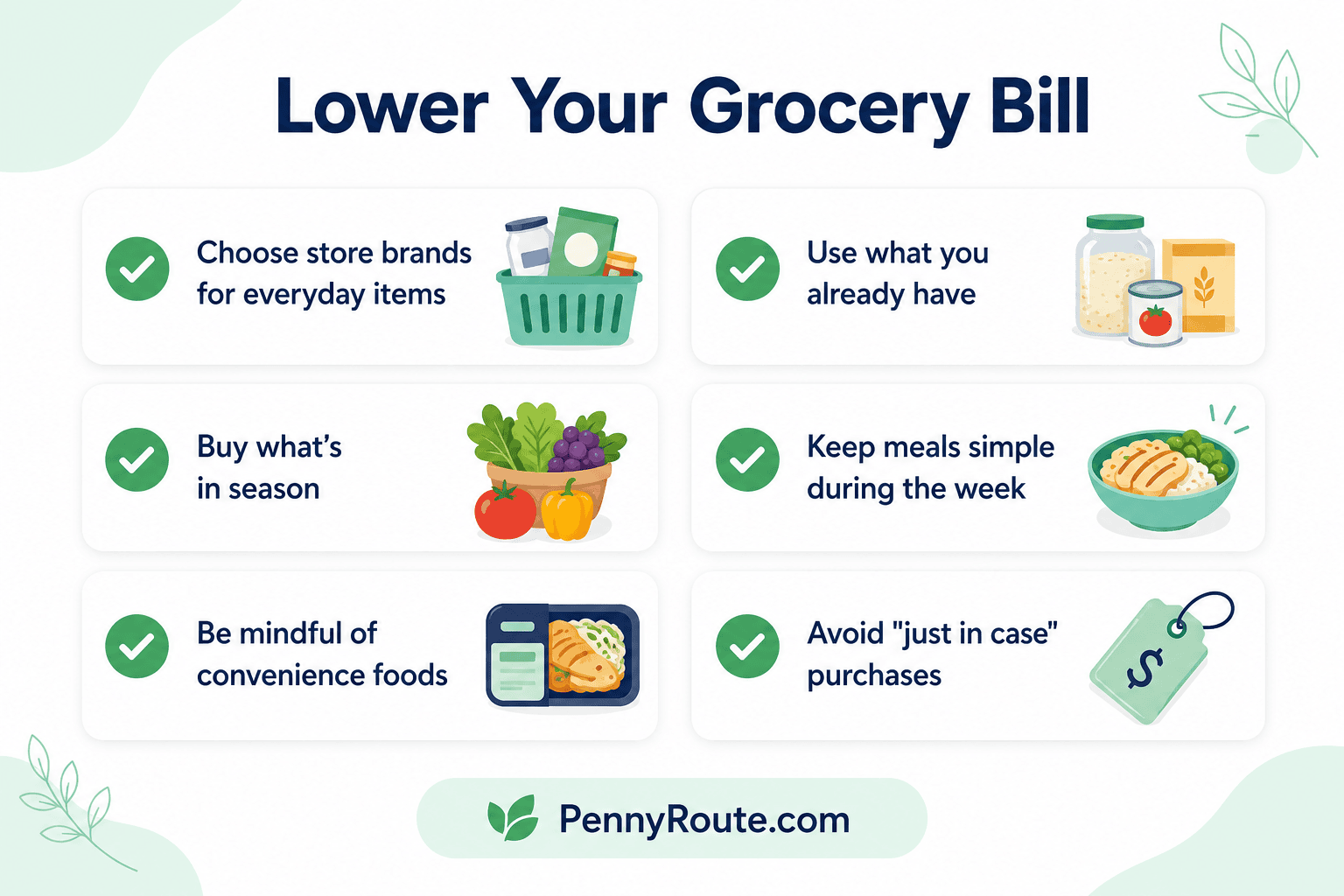
The biggest savings often come from changing a few repeat purchases rather than searching for a coupon for every item. Focus on products you buy regularly and choices that do not make meals harder to prepare.
Try Store Brands on Basic Items
Store-brand products often cost less than national brands, especially for simple staples such as:
- Rice, pasta, and flour
- Canned vegetables and beans
- Frozen produce
- Milk and eggs
- Spices and baking supplies
- Paper goods and cleaning products
You do not need to replace every familiar product at once. Test one or two alternatives during each trip and keep the ones your household actually likes.
A cheaper product is not a saving if no one uses it.
Notice the Convenience Premium
Pre-cut fruit, individually packaged snacks, grated cheese, prepared sauces, and ready-to-cook meals may save time, but they often cost more than less-prepared versions.
Compare the added cost with the convenience you receive.
For example, pre-cut vegetables may be worthwhile during a busy week if they help you cook at home instead of ordering takeout. Buying them automatically every week may not make sense when you have time to prepare the vegetables yourself.
The best choice is not always the least expensive one. It is the option that fits both your budget and routine.
Use Frozen and Canned Foods Strategically
Frozen and canned foods can be useful when fresh ingredients are expensive, spoil quickly, or are not in season.
Good options may include:
- Frozen vegetables without added sauces
- Frozen berries
- Canned beans
- Canned tomatoes
- Tuna or salmon
- Shelf-stable broth
- Canned fruit packed in water or juice
These products can reduce waste because they last longer and allow you to use only what the meal requires.
Compare ingredients, package sizes, and unit prices rather than assuming fresh, frozen, or canned is always cheaper.
Choose Seasonal Produce Flexibly
Produce that is in season may be less expensive and better stocked, but prices still vary by store and location.
Build flexibility into the shopping list. Instead of writing “strawberries,” you might write “fruit for breakfast.” This allows you to choose apples, bananas, oranges, or another reasonably priced option.
The same approach works for vegetables, proteins, and side dishes.
A flexible list gives you room to respond to prices without abandoning the meal plan.
Use Markdowns With a Clear Plan
Stores may discount meat, bakery items, dairy products, and produce as they approach their sell-by or best-quality dates.
A markdown can be useful when you can:
- Use the food soon
- Freeze it safely
- Replace a full-priced item on your list
- Fit it into an already planned meal
Do not buy a discounted item simply because the original price was higher. The money is wasted if the food is forgotten or spoils.
Combine Discounts Carefully
Loyalty programs, digital coupons, and cashback apps may reduce the final cost of items you already planned to buy.
Check the conditions before using an offer. Some promotions require:
- Buying several packages
- Choosing a larger size
- Spending a minimum amount
- Purchasing a specific brand
- Uploading the receipt before a deadline
Calculate the final amount you will spend, not just the advertised discount.
A $2 reward does not help if the offer encourages you to spend $8 on something you did not need.
Compare Stores Selectively
One store may have lower prices overall, while another may be better for produce, meat, or a few household staples.
You do not need to visit several stores for every trip. Extra driving, time, and unplanned purchases can cancel out small price differences.
Consider using a second store only when:
- The savings are meaningful
- It is already on your route
- You are buying several lower-priced items
- The products are unavailable at your regular store
A simple shopping routine is usually easier to maintain than chasing every individual sale.
Keep a Small List of Reliable Low-Cost Meals
A few familiar meals can help when grocery prices rise or the monthly budget is running low.
Examples include:
- Bean and rice bowls
- Pasta with vegetables
- Soup with bread
- Eggs with potatoes and vegetables
- Baked potatoes with simple toppings
- Stir-fry using leftover ingredients
These meals should fit your household’s preferences and nutritional needs. Their purpose is to give you affordable, dependable options without requiring another complicated shopping list.
When Buying in Bulk Actually Saves Money
Buying in bulk can reduce the cost per unit, but a larger package is not automatically a better deal. The purchase only saves money when the food will be used, stored properly, and paid for without disrupting the rest of the grocery budget.
Compare the Unit Price First
Check the price per ounce, pound, liter, or item rather than comparing package prices alone.
For example:
- A 2-pound bag of rice costs $4.50, or $2.25 per pound.
- A 10-pound bag costs $18, or $1.80 per pound.
The larger bag offers a lower unit price. However, the $18 purchase still takes more from the current grocery budget, so the timing matters.
Buy in Bulk When the Item Is Used Regularly
Bulk purchases are usually easier to justify for foods your household uses consistently, such as:
- Rice, oats, pasta, or flour
- Canned beans or tomatoes
- Frozen vegetables
- Frequently used spices
- Meat that can be divided and frozen
- Shelf-stable snacks
- Household products with a long storage life
Review how quickly you normally use the item before choosing the larger size.
Check the Storage Space
A bulk purchase can create waste when there is not enough room to store it safely.
Before buying, consider:
- Pantry space
- Refrigerator capacity
- Freezer space
- Whether the packaging can be resealed
- Whether moisture, heat, or pests could damage the product
Large quantities are less useful when they make other food difficult to organize or cause older items to be forgotten.
Consider the Expiration and Quality Timeline
Shelf-stable does not mean the product will remain at its best forever.
Estimate whether the household can use the item before its quality declines. Pay particular attention to:
- Cooking oils
- Nuts and seeds
- Whole-grain flour
- Spices
- Large containers of sauces
- Fresh produce
- Dairy products
A smaller package at a slightly higher unit price may be the better value when spoilage is likely.
Avoid Bulk Buying Untested Products
Do not buy a large quantity of a new product simply because the price looks attractive.
Test a regular-size package first. This is especially useful for unfamiliar store brands, new flavors, or foods that other household members may not enjoy.
A low unit price does not help when most of the package remains unused.
Be Careful With Warehouse-Club Spending
Warehouse stores may offer lower unit prices, but large package sizes can increase the total bill quickly.
Before adding an item, ask:
- Is the unit price lower than at my usual store?
- Would I normally buy this quantity?
- Can I store it properly?
- Will the household use it before it spoils?
- Is the purchase replacing future spending or simply increasing today’s bill?
Also consider membership fees, travel costs, and the tendency to buy more than planned.
Split Bulk Purchases When Practical
Sharing a large package with a relative, friend, or neighbor may provide the lower unit price without requiring one household to store and use the full quantity.
This works best when the product can be divided safely and everyone agrees on the cost beforehand.
Use a Simple Bulk-Buying Test
A bulk purchase is more likely to save money when all four statements are true:
- The unit price is meaningfully lower.
- The item is already used regularly.
- There is enough safe storage space.
- The larger upfront cost fits the current grocery budget.
When one of these conditions is missing, the smaller package may be the better financial choice.
How to Reduce Food Waste After Grocery Shopping
A good shopping plan can still lose money if food is stored poorly, forgotten, or left unused. The habits after the grocery trip matter just as much as the choices made in the store.
Put Perishable Food Away First
Refrigerate or freeze meat, dairy products, prepared foods, and other perishables soon after returning home.
Keep the refrigerator at 40°F or below, and follow safe storage guidance for individual foods. Proper storage protects both the grocery budget and food safety.
Store New Groceries Behind Older Food
Use a simple first-in, first-out system:
- Move older items toward the front.
- Place new packages behind them.
- Check dates and condition before using either.
- Plan meals around food that should be used soon.
This makes existing food more visible and reduces the chance that it will be forgotten behind newer purchases.
Create a “Use First” Area
Choose one refrigerator shelf, drawer, or small container for food that should be eaten soon.
It may include:
- Open packages
- Ripe produce
- Leftovers
- Dairy products approaching their date
- Small amounts of ingredients from earlier meals
Check this area before preparing a snack, packing lunch, or deciding what to cook.
Prepare Food While It Is Still Fresh
A small amount of preparation after shopping can make ingredients easier to use during the week.
Depending on the food, you might:
- Wash or portion produce
- Divide meat into meal-sized amounts
- Freeze anything not needed soon
- Portion snacks
- Label opened packages
- Prepare one ingredient for several meals
Do not prepare more than your household is likely to use. Convenience helps only when the food remains safe and appealing.
Freeze Food Before It Is Forgotten
Freezing can extend the useful life of meat, bread, cooked grains, sauces, fruit, and prepared meals.
Label containers with the food and freezing date. Use portions small enough for one meal so you do not need to thaw more than necessary.
For specific storage times and handling guidance, the government’s FoodKeeper resource covers hundreds of foods and beverages.
Plan a Leftover Meal
Leave one meal open each week for leftovers or ingredients that need attention.
Leftovers may become:
- Packed lunches
- Soup or stew
- Wraps or sandwiches
- Rice or pasta bowls
- Omelets
- A mixed plate of smaller portions
Store cooked leftovers promptly. USDA guidance generally recommends using refrigerated leftovers within three to four days or freezing them for longer storage.
Understand Food Date Labels
A date on a package does not always mean the food becomes unsafe immediately after that day. Labels may refer to quality, inventory management, or the period when the product is expected to taste its best.
However, date labels should not replace safe storage, visual checks, package instructions, or official food-safety guidance. Discard food that shows signs of spoilage or may have been stored unsafely.
Track What You Throw Away
For one or two weeks, make a brief note whenever food is discarded.
Record:
- What was wasted
- How much
- Why it was not used
- What could change next time
For example:
| Food wasted | Likely cause | Adjustment |
|---|---|---|
| Bagged salad | Bought too much | Purchase a smaller package |
| Cooked rice | Made too much | Reduce the batch or freeze portions |
| Bananas | Ripened too quickly | Buy fewer or freeze for later |
| Leftover soup | Forgotten in the refrigerator | Add it to the “use first” shelf |
The purpose is not to feel guilty about every discarded item. It is to spot repeated patterns that can improve the next meal plan and shopping list.
Adjust Future Purchases
Use what you learn to change quantities, package sizes, or meal plans.
You may discover that your household needs:
- Less fresh produce and more frozen options
- Smaller packages of rarely used ingredients
- Fewer snack varieties
- More flexible meals for leftovers
- A shorter gap between grocery trips for certain perishables
Reducing waste does not require using every scrap perfectly. Even a few consistent adjustments can help more of the grocery budget end up on the table instead of in the trash.
Grocery Budget Example
A grocery budget example is most useful when it shows the household, time period, planned meals, and food already available. A single dollar amount without that context can be misleading.
The example below is illustrative, not a target every household should follow.
Example: One Week for Two Adults
Suppose two adults have a weekly grocery limit of $120. They already have rice, pasta, oats, cooking oil, spices, and a few frozen vegetables at home.
Their meal plan includes:
- Oatmeal, eggs, or toast for breakfast
- Sandwiches, leftovers, or rice bowls for lunch
- Chicken and vegetables
- Pasta with tomato sauce
- Bean and rice bowls
- Vegetable omelets
- One leftover night
Sample Grocery List
| Category | Planned purchases | Estimated cost |
|---|---|---|
| Produce | Bananas, apples, onions, potatoes, carrots, lettuce | $20 |
| Protein | Chicken, eggs, canned beans | $29 |
| Dairy | Milk, yogurt, cheese | $18 |
| Bread and grains | Bread, tortillas | $10 |
| Pantry items | Tomato sauce, canned tomatoes, peanut butter | $14 |
| Frozen items | Frozen mixed vegetables | $8 |
| Snacks and extras | Popcorn, crackers | $9 |
| Price-change buffer | Substitutions or forgotten basics | $12 |
| Total | $120 |
The exact prices will vary by store and location. The important part is how the limit is divided before shopping.
How the Example Stays Within Budget
The plan works because it:
- Uses pantry staples already available
- Reuses ingredients across several meals
- Includes lower-cost proteins such as eggs and beans
- Leaves one night for leftovers
- Keeps a small buffer for price changes
- Avoids buying ingredients for seven unrelated dinners
For example, the chicken can be used for dinner one night and added to sandwiches or rice bowls later. Potatoes, onions, and carrots can appear in several meals rather than being purchased for one recipe.
Adjusting the Example
Suppose the chicken costs $5 more than expected. The shopper could:
- Buy a smaller package
- Replace one chicken meal with eggs or beans
- Choose a discounted cut
- Reduce an optional snack purchase
- Use part of the buffer
The adjustment happens inside the grocery plan rather than increasing the total automatically.
What This Example Does Not Include
The $120 limit does not include:
- Takeout or restaurant meals
- Toiletries
- Cleaning products
- Pet food
- Alcohol
- Prescription items
Tracking these separately through clear budget categories makes it easier to see whether food spending itself is changing.
The best grocery budget example is not the one with the lowest total. It is the one that provides enough food, fits the household’s routine, and can be repeated without frequent extra shopping trips.
What to Do When You Go Over Your Grocery Budget
Going over the grocery budget once does not mean the plan failed. The useful next step is to find out what changed and decide whether the spending limit, shopping choices, or meal plan needs adjusting.
Identify What Caused the Overspending
Review the receipt and separate the extra spending into a few categories:
- Higher prices on planned items
- Unplanned food purchases
- Household or personal-care products
- Extra shopping trips
- Bulk purchases
- Special events or guests
- A grocery target that was too low
The cause matters because each problem needs a different response. A price increase should not be treated the same as repeated impulse purchases.
Use Food Already at Home
Before making another full grocery trip, check the pantry, refrigerator, and freezer for meals you can build from existing ingredients.
This may include:
- Pasta with a simple sauce
- Rice bowls
- Eggs with vegetables
- Soup
- Sandwiches
- Frozen meals or leftovers
The purpose is not to avoid buying necessary food. It is to delay optional purchases and use what has already been paid for.
Reduce Extras Before Essentials
When the budget is tight, review flexible purchases first:
- Snacks
- Soft drinks
- Convenience foods
- Premium brands
- Multiple dessert options
- Ingredients for complicated recipes
Avoid cutting core foods so sharply that the plan becomes difficult to maintain or leads to extra takeout spending later.
Adjust the Next Shopping Trip
If you have $40 left for the week instead of the planned $65, build the next list around the reduced amount.
Start with essentials, then choose lower-cost alternatives where practical. You may also postpone nonurgent household purchases or move them to the correct budget category.
Do not automatically spend the usual amount and promise to fix it next month. Small adjustments are easier to manage while the overspending is still limited.
Check Whether the Budget Was Unrealistic
Repeated overspending may indicate that the target is too low.
Suppose your household consistently spends between $580 and $620, but the budget is set at $450. The issue may not be poor discipline. The amount may simply not match current food prices and household needs.
Raise the budget when necessary, then look for savings through waste reduction, substitutions, and better planning rather than forcing an unworkable limit.
Avoid Extreme Compensation
Do not respond to one expensive week by creating an unusually restrictive plan for the next week.
Extreme cuts can lead to:
- Running out of food
- Additional grocery trips
- More takeout
- Buying cheap items that go unused
- Abandoning the budget entirely
A better response is to make a modest correction and return to the normal routine.
Use the Overspending as Feedback
At the end of the month, ask:
- Was the extra cost temporary?
- Did certain products increase in price?
- Were there too many unplanned purchases?
- Did food go to waste?
- Should another category cover some of the spending?
- Does the grocery limit need to change?
A grocery budget should respond to real spending patterns. Adjusting it is part of the process, not a sign that you have done something wrong.
Frequently Asked Questions About Grocery Shopping on a Budget
How do I start grocery shopping on a budget?
Start by reviewing what you currently spend, checking the food already at home, and setting a realistic weekly or monthly limit. Plan a few meals, make a focused list, and track the total while shopping.
How much should I budget for groceries?
The right amount depends on household size, local prices, dietary needs, and how often you cook at home. Use your recent spending as a starting point, then adjust the amount based on waste, price changes, and whether the budget covers enough meals.
Is it better to grocery shop weekly or monthly?
Weekly shopping may make fresh food and short-term spending easier to manage. Monthly shopping can work well for pantry staples and frozen items. A combination of one larger trip and smaller weekly trips may be more practical for some households.
How can I spend less on groceries without buying low-quality food?
Plan meals around affordable staples, compare unit prices, try store brands, use frozen or canned ingredients where practical, and choose seasonal substitutes. Reducing food waste can also lower costs without reducing the amount of food available.
Does buying groceries in bulk save money?
Bulk buying may save money when the unit price is lower, the item is used regularly, and you can store it safely. It may cost more overall when food spoils, the package is too large, or the purchase strains the current budget.
How do I stick to a grocery list?
Build the list from a meal plan, group items by store section, and keep a running total while shopping. Before adding an unplanned item, decide which meal it supports and whether it replaces something already on the list.
What should I do when grocery prices increase?
Review the items with the largest price changes and look for practical substitutions. You may switch brands, adjust package sizes, use a different protein, or rely more on flexible pantry and frozen foods. Raise the budget when necessary rather than setting a limit that no longer reflects actual prices.
Should household supplies be included in a grocery budget?
They can be, but tracking them separately usually gives you a clearer view of food spending. Toiletries, cleaning products, pet supplies, and pharmacy items may otherwise make it look as though grocery costs increased when the change came from nonfood purchases.
How can I avoid wasting groceries?
Check what you already have before shopping, store older food where it stays visible, freeze items before they spoil, and leave room in the meal plan for leftovers. Tracking what gets discarded can reveal which quantities or products should change.
What happens if I go over my grocery budget?
Review what caused the overspending before making changes. A one-time event may require only a small adjustment, while repeated overspending may mean the budget is too low or the shopping routine needs improvement.