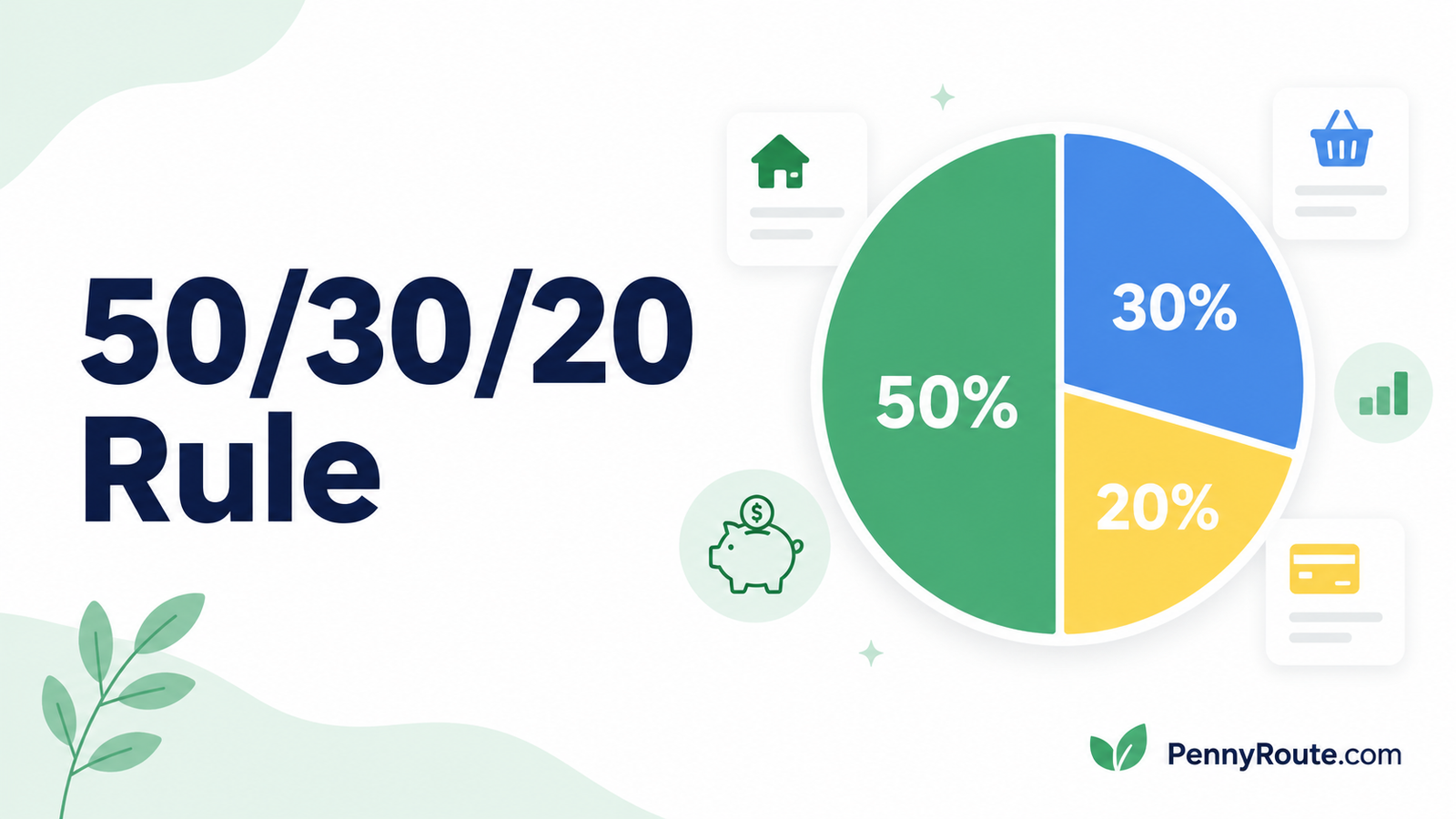
The 50/30/20 budget gives your take-home income three broad jobs: needs, wants, and savings or extra debt payments. That makes it appealing if you want structure without tracking dozens of categories.
But the percentages do not fit every budget neatly. Housing, insurance, childcare, transportation, or debt can push essential costs well above 50%, while someone with lower fixed expenses may have room to save much more than 20%.
The 50/30/20 budget method works best as a framework, not a rule you have to force your finances into.
Disclaimer: This content is for informational purposes only and does not constitute financial advice. Choose a budgeting approach that fits your financial situation, and consult a qualified professional when needed.
Quick Overview
- The 50/30/20 method splits take-home income into needs, wants, and savings or extra debt payments.
- The percentages are a framework, not a rule every budget has to match exactly.
- Clear expense classification matters more than forcing a perfect split.
- If your numbers do not fit 50/30/20, the mismatch can still show where your budget is under pressure.
What Is the 50/30/20 Budget Method?
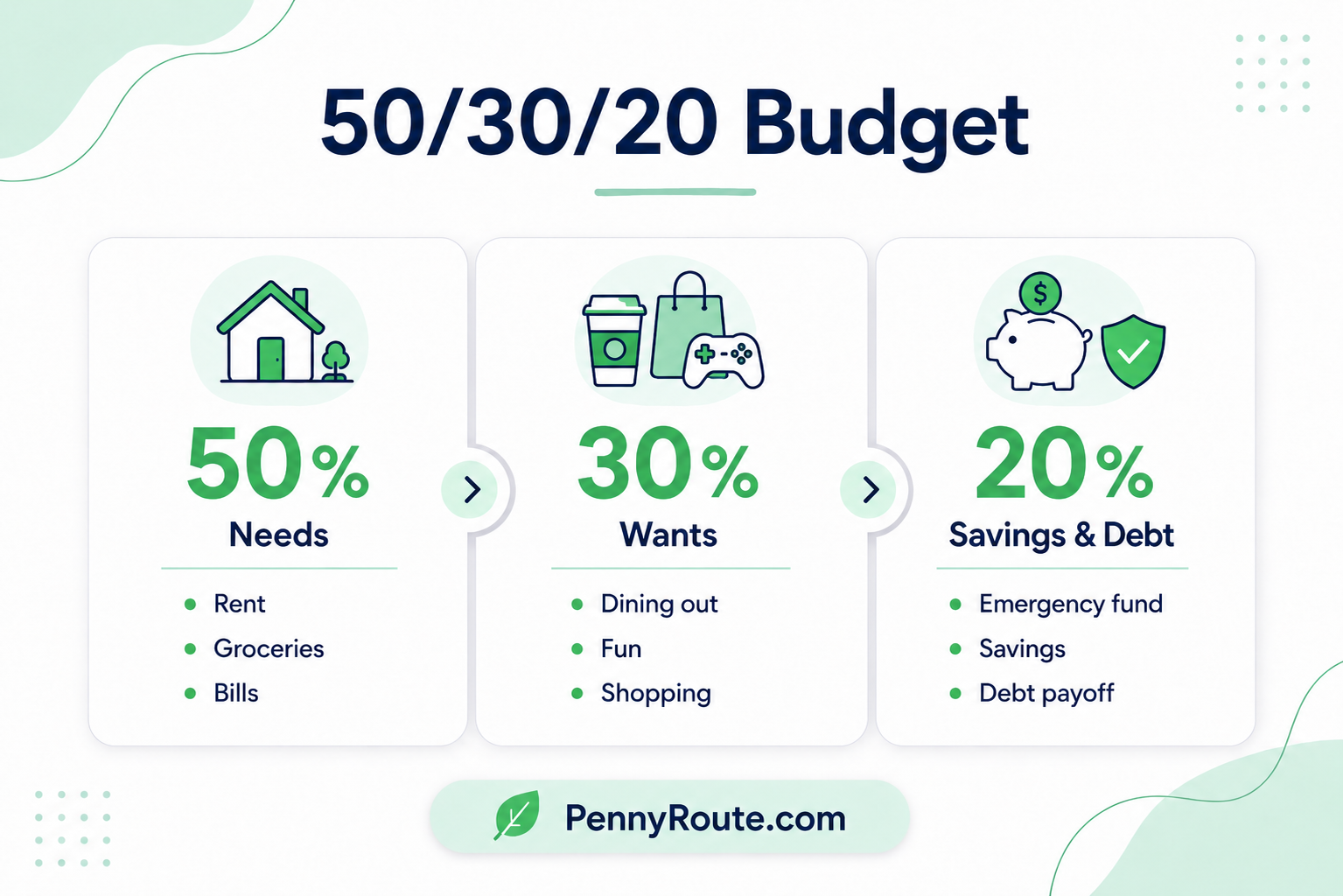
The 50/30/20 budget groups your take-home income into three broad buckets:
| Category | Share of Take-Home Income | What It Covers |
|---|---|---|
| Needs | 50% | Essential living costs and required minimum payments |
| Wants | 30% | Optional spending and lifestyle choices |
| Savings and extra debt payments | 20% | Savings goals and debt payments above the required minimum |
If you take home $4,000 a month, the classic split would be $2,000 for needs, $1,200 for wants, and $800 for savings or extra debt payments.
That does not mean every household should hit those numbers exactly. The method is most useful as a quick way to see how much of your income is going toward essentials, how much is supporting your current lifestyle, and how much is helping your future finances.
It is also just one of several budgeting methods. Because it uses only three broad buckets, you do not have to assign a separate limit to every small category.
Which Income Should You Use for the 50/30/20 Budget?
The 50/30/20 method is usually based on take-home pay, not your salary before deductions. In simple terms, that is the income available after taxes and other payroll deductions. The CFPB defines net income as take-home pay, which is also the income basis used in its 50/30/20 budgeting material.
That difference can change the numbers quite a bit. If you earn $5,000 a month before deductions but $4,000 reaches your bank account, using the larger number would create spending targets based on money you never actually receive.
Payroll savings deserve a little more attention. If part of your pay already goes to a 401(k) or another savings goal before the rest reaches your bank account, remember that contribution when you assess how much you are saving overall. Otherwise, your savings progress can look lower than it really is.
For steady income, a normal monthly take-home amount keeps the calculation straightforward. When your pay changes substantially from month to month, one fixed monthly number is less useful, and a budget for irregular income gives you a better way to choose the income amount you can safely plan around.
What Counts as Needs, Wants, and Savings?
The percentages are easy to calculate. Deciding where an expense belongs is usually the harder part.
A useful way to think about the three buckets is to focus on the role the expense plays in your life, not just the label on the bill.
Needs
Needs are expenses you have to cover to maintain basic living, work, health, or required financial obligations.
That usually includes housing, basic utilities, groceries, essential transportation, insurance, and minimum debt payments.
Some expenses sit in a gray area. A basic phone plan may be necessary for work and everyday life, while a more expensive plan with extra features is partly a lifestyle choice. The same is true for housing, transportation, and even groceries.
When you are unsure, ask whether reducing or removing the expense would interfere with housing, health, work, basic transportation, or a required payment. If the answer is yes, at least part of the cost probably belongs under needs.
Wants
Wants are expenses you could reduce, pause, or replace without losing something essential.
Dining out, entertainment, vacations, premium subscriptions, hobbies, and optional upgrades usually fall here.
The distinction is not about whether the expense is worthwhile. A gym membership, streaming service, or occasional restaurant meal may add real value to your life. It simply means the cost is flexible if your monthly budget needs more room.
This is also where upgraded versions of necessary expenses often belong. You may need transportation, for example, but the extra cost of choosing a more expensive vehicle than you need is not automatically a need.
Savings and Extra Debt Payments
The final 20% is meant for money that improves your future financial position.
That can include emergency savings, retirement contributions, other savings goals, and debt payments above the required minimum.
The debt distinction matters. A required minimum credit card or loan payment belongs with needs because it is an obligation you have to pay. Extra money you choose to send toward the balance belongs in the 20% bucket.
You do not need every expense to fit perfectly on the first try. The useful part is being consistent enough that the percentages give you an honest picture of where your money is going.
50/30/20 Budget Example
Suppose you take home $4,000 per month.
Using the classic 50/30/20 split, that would give you:
| Category | Target Amount |
|---|---|
| Needs | $2,000 |
| Wants | $1,200 |
| Savings and extra debt payments | $800 |
The useful part is not the table itself. It is comparing those targets with what your budget actually looks like.
If your real needs total $2,350, for example, you already know that the 50% target does not match your current cost structure. You then have to decide whether some of those expenses are really wants, whether any essential costs can reasonably come down, or whether a different split is more realistic for now.
On the other hand, if your needs come to $1,750, you have more room than the standard 50% bucket assumes. That extra space could go toward savings, faster debt payoff, or additional wants depending on your priorities.
This is why the 50/30/20 method works best as a reference point rather than a scorecard. The percentages give you something to compare against, but your actual numbers tell you what needs attention.
What If 50/30/20 Does Not Fit Your Budget?
A budget does not become wrong just because it misses the 50/30/20 percentages.
The more useful question is why your numbers are different. A higher needs percentage, lower savings rate, or smaller wants bucket can each point to a different situation, and they do not all call for the same response.
Your Needs Are Above 50%
This is common when housing, childcare, insurance, transportation, or other essentials take up a large share of take-home pay.
Start by checking whether everything in the needs bucket truly belongs there. Some costs are unavoidable, while others may include an upgraded or optional portion.
If your needs are still above 50% after that review, forcing them down to an arbitrary target is not especially helpful. Protect the expenses you actually need to cover, then decide how much room is realistically left for wants and future goals.
A higher needs percentage also tells you where the pressure is coming from. That can be useful even when the percentage itself cannot change quickly.
You Cannot Put 20% Toward Savings or Extra Debt Yet
Saving less than 20% does not automatically mean the method has failed.
If your current income is mostly absorbed by necessary costs, you may need to begin with a smaller amount that you can maintain rather than choosing a target that leaves the rest of the month too tight.
What matters is whether the savings or extra debt amount fits alongside essentials without creating another shortfall somewhere else.
As your income or expenses change, that percentage can change too.
You Want to Save or Pay Debt Faster
The 20% bucket is not a ceiling.
You might reduce the wants bucket and direct more toward savings or extra debt payments. The exact percentage matters less than whether the tradeoff fits your current priorities and cash flow.
The framework should help you make the tradeoff visible, not discourage you from saving more because the percentage no longer matches the classic version.
Your Income Changes From Month to Month
A fixed 50/30/20 split is harder to use when your take-home pay moves around.
You can still use the percentages as a rough comparison, but building every month around one assumed income number can create problems when the next paycheck is smaller.
In that situation, it makes more sense to cover the expenses that matter most first and let the flexible parts of the budget adjust around the income that actually arrives.
The value of 50/30/20 is not whether you can reproduce the exact percentages. It is whether the comparison helps you see which part of your budget is taking more room than expected and what tradeoff that creates.
Is the 50/30/20 Budget a Good Fit for You?
The 50/30/20 method is most useful when you want a broad structure without managing a long list of category limits.
When It Fits Well
This method tends to work well when your essential expenses leave enough room for both discretionary spending and future goals.
It also suits you if seeing the big picture is more useful than tracking every dollar closely. Three broad buckets can make the budget easier to understand without turning every purchase into a separate category decision.
When Another Method May Fit Better
The method is less helpful when one part of your budget needs much tighter control.
If groceries, dining, or personal spending regularly run over, a category-based approach may give you clearer boundaries than three large percentage buckets.
It can also be less practical when most of your take-home pay is already tied up in essential costs. In that situation, the percentages can still show where the pressure is, but they may not provide enough detail to manage the month.
If the three buckets make your budget easier to understand without hiding important details, the method is probably giving you enough structure.
50/30/20 Budget vs. Zero-Based Budgeting
Both methods can help you plan where your money goes, but they do it at very different levels of detail.
| 50/30/20 Budget | Zero-Based Budgeting |
|---|---|
| Uses three broad percentage groups | Assigns all available income to specific purposes |
| Leaves more flexibility inside each group | Requires more detailed planning |
| Works well for a big-picture view | Works well when you want tighter control over each dollar |
| Usually takes less ongoing tracking | Usually needs more active review and adjustment |
The 50/30/20 method is useful when you want to see whether your overall spending, lifestyle choices, and future goals are reasonably balanced without planning every category in detail.
Zero-based budgeting works at a more detailed level. It gives every dollar a job, which can be more helpful when you want closer control over spending or need to account for many competing priorities.
Neither approach is automatically better. The better fit depends on how much detail helps you stay on track without making the budget harder to maintain.
Use 50/30/20 as a Framework, Not a Test
The 50/30/20 method is useful when the three buckets make your money easier to understand, not when you have to keep forcing your real expenses into percentages that do not fit.
If your numbers are close, the framework can give you a simple way to balance essentials, lifestyle spending, and future goals. If they are not, the mismatch still tells you something useful about where your budget is under pressure and what may need to change.