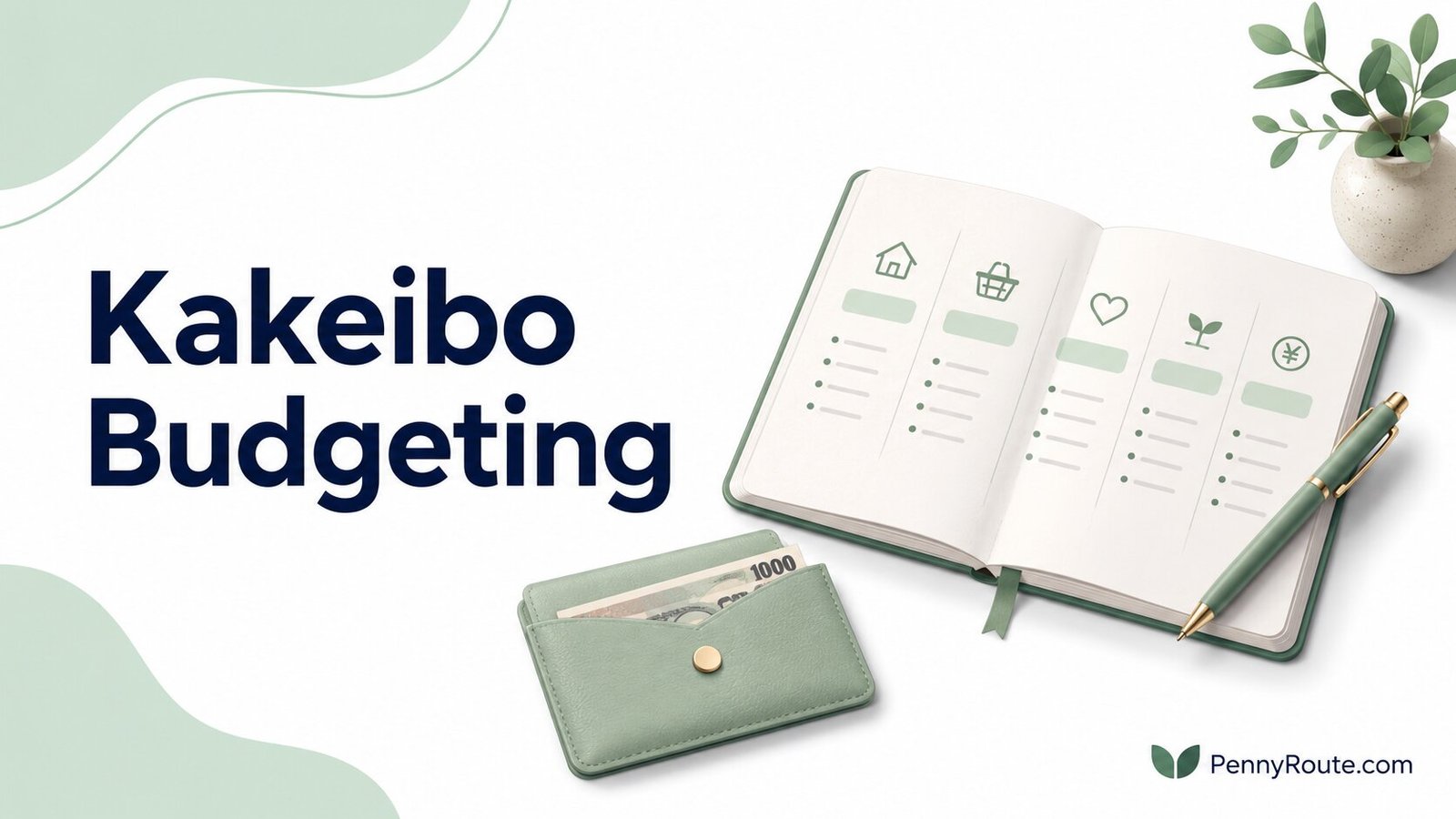
Many budgets tell you where your money went after it is already gone. Kakeibo takes a slower approach. This Japanese budgeting method uses simple written planning and reflection to help you understand your spending before it turns into another month of “Wait, where did my money go?”
Instead of only tracking numbers, Kakeibo asks you to pause, plan your spending, choose a savings goal, and review what your money choices are showing you. It can be especially useful if you want a budget that feels more mindful, less rushed, and easier to connect with your real habits.
Disclaimer: This content is for informational purposes only and does not constitute financial advice. Please consult a qualified professional before making financial decisions.
Quick Overview: Kakeibo Budgeting Method
- Kakeibo is a Japanese budgeting method that uses written planning, spending tracking, and monthly reflection.
- It helps you understand why you spend, not just where your money went.
- The method is built around four questions: how much money you have, how much you want to save, how much you spend, and how you can improve.
- Kakeibo spending is often grouped into needs, wants, culture, and unexpected costs.
- It may work well if you prefer a slower, more mindful budgeting method instead of a fully automated app-based system.
What Is Kakeibo Budgeting?
Kakeibo is a Japanese budgeting method that uses written planning, spending tracking, and reflection to help you manage money more intentionally.
The word is often translated as a household financial ledger, but the method is more than writing down expenses. It helps you look at your income, choose a savings goal, plan your spending, and review what your money choices say about your habits.
Unlike a budget that only focuses on numbers, Kakeibo encourages you to slow down and think before spending. That makes it different from fully automated budgeting tools, where transactions may be tracked in the background but not always reviewed with attention.
Kakeibo can be helpful if you want a simple monthly budget that connects your spending with your values, habits, and goals.
The 4 Kakeibo Questions
Kakeibo is built around four simple questions that guide your monthly budget.
| Kakeibo Question | What It Helps You Do |
|---|---|
| How much money do I have? | Start with your real income for the month. |
| How much do I want to save? | Choose a savings goal before spending begins. |
| How much am I spending? | Track where your money goes during the month. |
| How can I improve? | Review your choices and make one better plan for next month. |
These questions are simple, but they make the method more thoughtful than basic expense tracking.
Instead of only recording what you bought, Kakeibo asks you to connect your spending with your intentions. Did your money go toward what mattered? Did small purchases quietly take over? Did you save what you planned to save?
That reflection is what makes Kakeibo useful. It gives you a monthly habit of learning from your spending instead of only feeling frustrated by it later.
Kakeibo Spending Categories
Kakeibo usually groups spending into a few simple categories so you can see not only how much you spend, but what kind of spending is taking most of your money.
| Kakeibo Category | What It Usually Includes |
|---|---|
| Needs | Essentials like rent, groceries, utilities, transport, insurance, and basic bills |
| Wants | Non-essential spending like eating out, shopping, hobbies, and entertainment |
| Culture | Books, learning, events, museums, creative activities, or experiences that add value to your life |
| Unexpected | Surprise costs like repairs, medical expenses, urgent travel, or bills you did not plan for |
The “culture” category may look different for each person. For one reader, it might mean books and classes. For someone else, it could mean music, local events, creative hobbies, or learning something new.
You can also adjust the categories if needed. The point is not to copy the method perfectly. It is to separate spending in a way that helps you notice patterns.
For example, if “wants” keeps taking over your budget, you may need clearer limits for eating out or shopping. If “unexpected” costs keep showing up every month, some of those expenses may need a sinking fund instead of being treated as surprises.
How to Start a Kakeibo Budget Step by Step
Kakeibo works best when you keep the setup simple. You do not need a fancy planner or a complicated spreadsheet. A notebook, printable worksheet, notes app, or basic spreadsheet can work as long as you actually use it.
Write Down Your Monthly Income
Start with the money you expect to have for the month.
This may include your paycheck, side income, freelance payments, benefits, or any other money you can reasonably count on. If your income changes, use a careful estimate instead of your best possible month.
List Your Fixed Expenses
Next, write down the expenses that are already committed.
This may include rent or mortgage, utilities, insurance, phone bill, subscriptions, debt payments, childcare, transport, and other regular bills. These costs show how much money is already spoken for before flexible spending begins.
Choose a Savings Goal
Before you plan spending, decide how much you want to save.
Your goal could be small, especially in the beginning. You might save for an emergency fund, a sinking fund, a trip, a debt payment, or simply a small cash cushion. The important part is choosing the amount before the month gets busy.
Set Your Spending Categories
Use the Kakeibo categories to organize the money left after fixed expenses and savings.
You can start with needs, wants, culture, and unexpected costs. Keep the categories broad enough to manage, but clear enough to show where your money is going.
Track Spending During the Month
As you spend, write down purchases under the right category.
This is where Kakeibo becomes different from passive app tracking. You are not only recording numbers. You are slowing down long enough to notice what you bought, why it happened, and whether it matched the plan you made at the start of the month.
Review What Changed at the End of the Month
At the end of the month, compare your plan with what actually happened.
Look at where you overspent, where you stayed on track, and what surprised you. Then choose one small improvement for next month. That might mean lowering a category, adding a sinking fund, or creating a limit for a spending habit that kept showing up.
Kakeibo Budget Example
Here is a simple example of how Kakeibo could work for one month.
Let’s say your take-home income is $3,000. Your fixed expenses are $1,800, and you want to save $400 before planning the rest of your spending.
| Monthly Money Step | Amount |
|---|---|
| Take-home income | $3,000 |
| Fixed expenses | -$1,800 |
| Savings goal | -$400 |
| Money left for monthly spending | $800 |
That $800 can then be tracked across the main Kakeibo categories:
| Kakeibo Category | Example Amount |
|---|---|
| Needs | $350 |
| Wants | $250 |
| Culture | $100 |
| Unexpected | $100 |
| Total spending money | $800 |
During the month, you would write down purchases under the right category. At the end of the month, you would review what happened.
Maybe your wants category was higher than expected because of takeout and small online purchases. Maybe your culture category felt worth it because you spent money on books, a class, or an event you truly enjoyed. Maybe unexpected costs showed that you need a small sinking fund for repeat expenses.
The value of Kakeibo is not only the math. It is the monthly review that helps you understand which spending choices supported your life and which ones you may want to adjust next time.
Kakeibo vs. Zero-Based Budgeting
Kakeibo and zero-based budgeting both help you plan your money before spending, but they do it in different ways.
Zero-based budgeting is more detailed. It asks you to assign every dollar of income to a specific category until your budget reaches zero on paper. This can work well if you want close control over bills, savings, debt payments, and spending categories.
Kakeibo is more reflective. It still asks you to plan your income, expenses, and savings, but the main focus is understanding your spending choices. You write things down, track categories, and review what your money habits are showing you at the end of the month.
If your main problem is that money disappears without a clear plan, zero-based budgeting may give you more structure. If your main problem is spending without thinking, Kakeibo may help you slow down and notice patterns before they repeat.
Kakeibo vs. Envelope Budgeting
Kakeibo and envelope budgeting both use categories, but they use them for different reasons.
Envelope budgeting is built around spending limits. You decide how much money each category gets, such as groceries, eating out, shopping, or entertainment. When the category runs low, it signals that spending needs to slow down.
Kakeibo is less about strict limits and more about awareness. You still track spending by category, but the monthly review matters just as much as the category amount. The question is not only “Did I stay under budget?” It is also “What did this spending show me?”
If you need firm limits for categories like takeout, shopping, or groceries, envelope budgeting may be more useful. If you want to slow down and understand why certain spending keeps happening, Kakeibo may be a better fit.
Is Kakeibo Budgeting Right for You?
Kakeibo can be a good fit if you want a slower, more thoughtful way to manage money.
It is not the most automated method, and it may not be the strictest one either. Its strength is helping you pay attention. If you often spend quickly, forget small purchases, or reach the end of the month unsure what happened, Kakeibo can give you a clearer monthly review.
Kakeibo May Work Well If…
Kakeibo may be useful if you:
- prefer writing things down
- want to understand your spending habits
- dislike complicated spreadsheets
- want a budget that encourages reflection
- spend emotionally or impulsively
- want to save more without using a strict system
Because Kakeibo uses reflection, it can help you notice patterns that a normal transaction list may miss. For example, you may see that you spend more when you are stressed, bored, rushed, or trying to make a difficult week feel easier.
Kakeibo May Not Be Ideal If…
Kakeibo may not be the best fit if you want a fully automatic budgeting system.
It also may not give enough structure if you need strict category limits, detailed debt payoff planning, or a budget built around irregular income. In those cases, you may prefer envelope budgeting, zero-based budgeting, or a more structured irregular income budget.
You can still borrow parts of Kakeibo, though. Even if you use another budgeting method, a short monthly reflection can help you understand what worked, what did not, and what you want to change next.
Can You Use Kakeibo With an App or Spreadsheet?
Yes, you can use Kakeibo with an app or spreadsheet, but the method works best when you keep the reflection part.
Traditional Kakeibo is commonly done by hand because writing can make spending decisions feel more intentional. When you record a purchase manually, you pause long enough to notice what happened instead of letting the transaction disappear into an app.
That does not mean you must use a notebook. A spreadsheet, notes app, printable worksheet, or budgeting app can still work if it helps you stay consistent.
The important part is not the tool. It is the habit of planning at the start of the month, tracking during the month, and reviewing what changed at the end.
If you prefer digital tools, app-based budgeting can help with tracking and reminders. Just make sure the app does not replace the thinking part. Kakeibo is most useful when you actually review your spending, not when the numbers sit quietly in the background.
A Simple Kakeibo Plan to Try This Month
You do not need to build a perfect Kakeibo budget right away. Start with one month, one simple setup, and one small improvement to look for.
| Step | What to Do |
|---|---|
| 1 | Write down your expected income for the month. |
| 2 | List fixed expenses, such as rent, utilities, insurance, debt payments, and subscriptions. |
| 3 | Choose one savings goal, even if the amount is small. |
| 4 | Divide your remaining spending into needs, wants, culture, and unexpected costs. |
| 5 | Track purchases during the month. |
| 6 | Review which category surprised you most. |
| 7 | Choose one change for next month. |
The first month is mostly about awareness. You may notice that small purchases add up faster than expected, or that some spending felt genuinely worthwhile while other spending was more automatic.
That is useful information. Kakeibo works best when you use what you notice to make the next month a little clearer, calmer, and more intentional.
FAQs About Kakeibo Budgeting
What is Kakeibo budgeting?
Kakeibo budgeting is a Japanese budgeting method that uses written planning, spending tracking, and monthly reflection to help you understand where your money goes and how your spending habits can improve.
How does the Kakeibo method work?
The Kakeibo method works by writing down your income, fixed expenses, savings goal, spending categories, and purchases during the month, then reviewing what worked and what you want to change next month.
What are the 4 Kakeibo questions?
The four Kakeibo questions are: how much money do you have, how much do you want to save, how much are you spending, and how can you improve next month?
What are the Kakeibo spending categories?
The common Kakeibo spending categories are needs, wants, culture, and unexpected costs. These categories help you separate essential spending, optional spending, meaningful experiences, and surprise expenses.
Is Kakeibo good for beginners?
Kakeibo can be good for beginners because it is simple, low-cost, and does not require a complicated app or spreadsheet. It works best if you are willing to write things down and review your spending honestly.
Is Kakeibo better than zero-based budgeting?
Kakeibo is not automatically better than zero-based budgeting. Kakeibo is better for mindful spending and reflection, while zero-based budgeting is better if you want to assign every dollar to a specific category before the month begins.
Can I use Kakeibo without a notebook?
Yes, you can use Kakeibo without a notebook by using a spreadsheet, notes app, printable worksheet, or budgeting app. The important part is still planning, tracking, and reviewing your spending instead of only collecting numbers.
Does Kakeibo help you save money?
Kakeibo may help you save money by making spending more intentional. It does not save money automatically, but it can help you notice patterns, reduce automatic purchases, and choose one improvement each month.