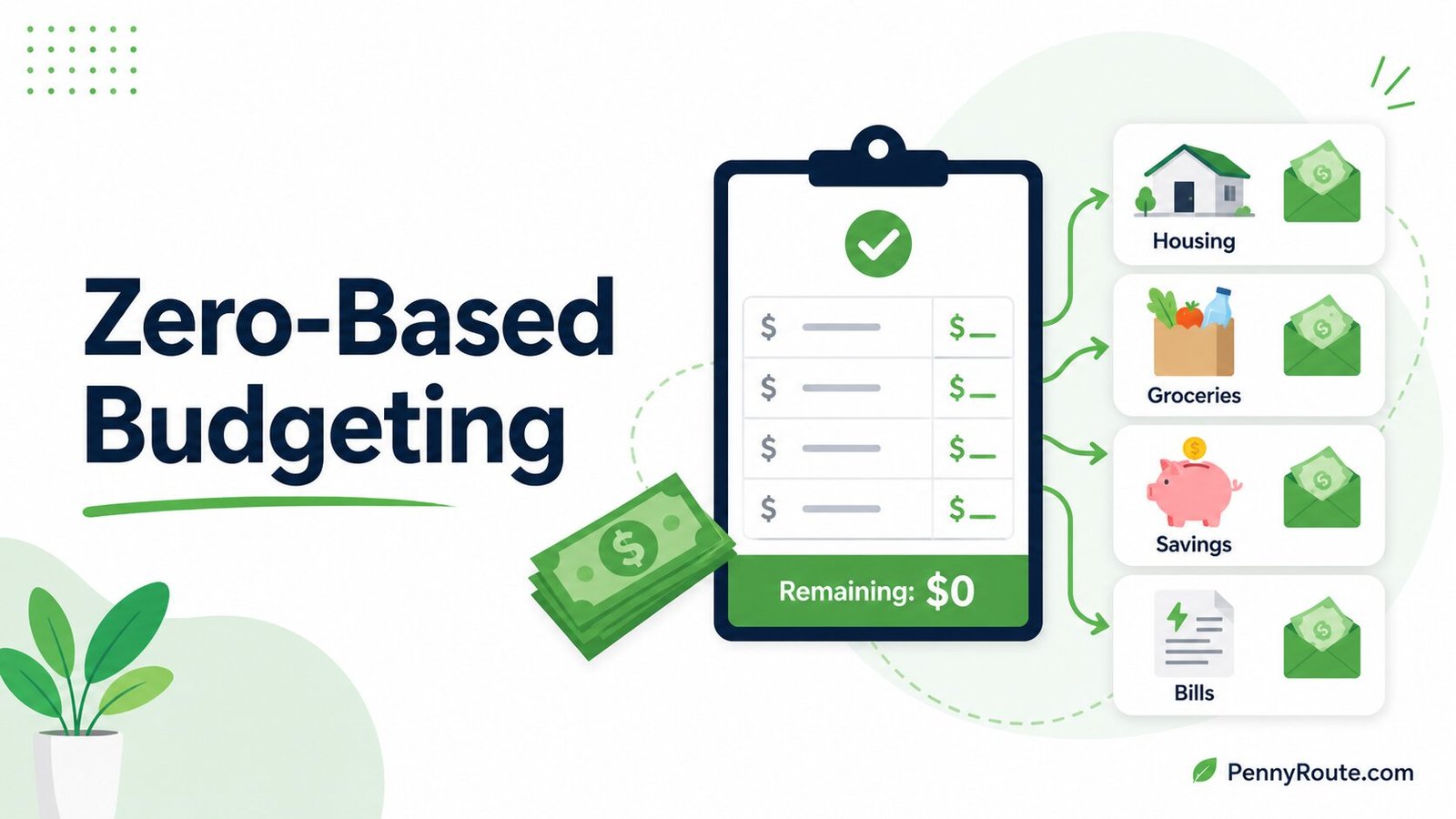
Zero-based budgeting gives every dollar of your available income a purpose before the month begins.
That does not mean spending everything. Money assigned to savings, debt payments, bills, future expenses, and everyday spending all count toward the plan.
The method can be useful when you want more control over where your money goes and do not mind checking the budget as the month changes.
Disclaimer: This content is for informational purposes only and does not constitute financial advice. Choose a budgeting approach that fits your financial situation, and consult a qualified professional when needed.
Quick Overview
- Zero-based budgeting assigns all available income to bills, spending, savings, debt, or other planned purposes.
- Your budget reaches zero on paper because every dollar has a job, not because your bank account should be empty.
- The method works best when you want detailed control and are willing to adjust the plan as the month changes.
- A small buffer and regular check-ins can make the budget more realistic when actual expenses differ from the plan.
What Is Zero-Based Budgeting?
Zero-based budgeting is a budgeting method where you plan your income until every dollar has a clear purpose.
That does not mean you spend every dollar. Savings, debt payments, emergency fund contributions, sinking funds, and extra payments all count as part of the plan. The “zero” simply means there is no money left unassigned on paper.
For example, if your take-home income is $3,000 for the month, your budget categories should also add up to $3,000. That might include rent, groceries, utilities, transportation, savings, debt payments, personal spending, and a small buffer.
In personal finance, zero-based budgeting is much simpler than the business version of zero-based budgeting. You are not justifying company expenses from scratch. You are deciding where your own money should go before the month begins.
This makes the method useful if money tends to disappear without a clear reason. Instead of guessing what you can afford after spending, you make a plan first and adjust as the month goes on.
How Zero-Based Budgeting Works
Zero-based budgeting works by planning your money before the month starts instead of waiting to see what is left.
You begin with your expected take-home income. Then you assign that money to the categories your month actually needs, such as rent, groceries, utilities, transportation, savings, debt payments, personal spending, and a small buffer.
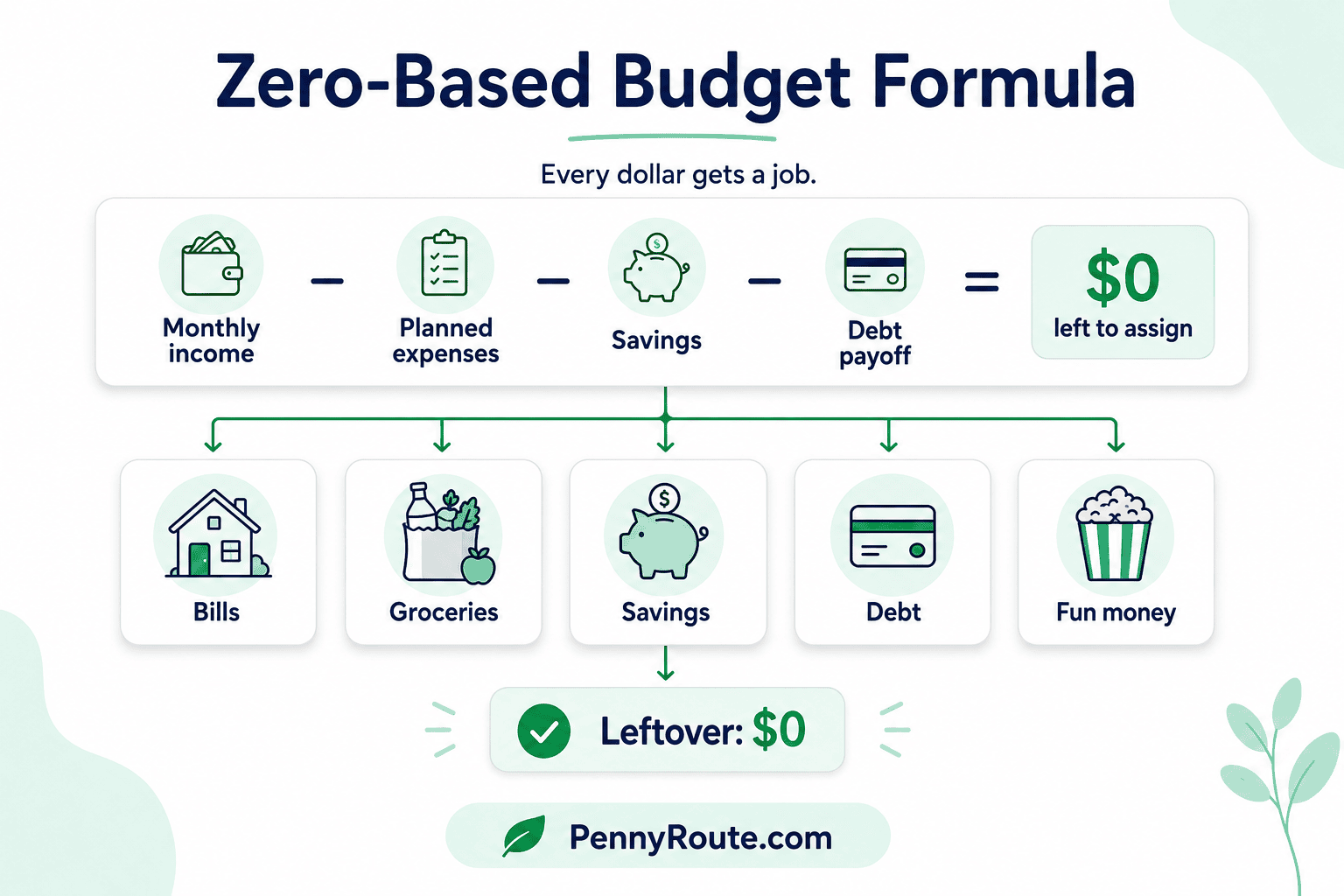
The basic formula is:
Income – Expenses – Savings – Debt Payments = $0
Formula
That zero does not mean your checking account should be empty. It means each dollar has been given a job in your budget before it gets spent.
For example, if you bring home $3,000 for the month, your planned bills, savings, debt payments, and spending categories should also total $3,000. If you still have $150 unassigned, you decide where it should go before the month begins, such as savings, debt payoff, or a flexible spending category.
A Simple Zero-Based Budget Example
A zero-based budget is easier to understand when you see the numbers.
Let’s say your take-home income is $3,000 for the month. In a zero-based budget, you would assign that full $3,000 across your bills, savings, debt payments, and spending categories.
| Budget Category | Amount |
|---|---|
| Rent | $1,100 |
| Groceries | $400 |
| Utilities | $200 |
| Transportation | $250 |
| Insurance | $150 |
| Phone and internet | $100 |
| Minimum debt payments | $250 |
| Emergency fund savings | $300 |
| Personal spending | $150 |
| Eating out | $75 |
| Miscellaneous buffer | $25 |
| Total assigned | $3,000 |
| Money left to assign | $0 |
In this example, the budget reaches zero because every dollar has a planned purpose. Some money goes to bills, some goes to savings, some goes to debt, and some stays available for personal spending.
The important part is that savings are included before the month begins. They are not treated as whatever happens to be left after spending.
Zero-Based Budgeting vs. Traditional Budgeting
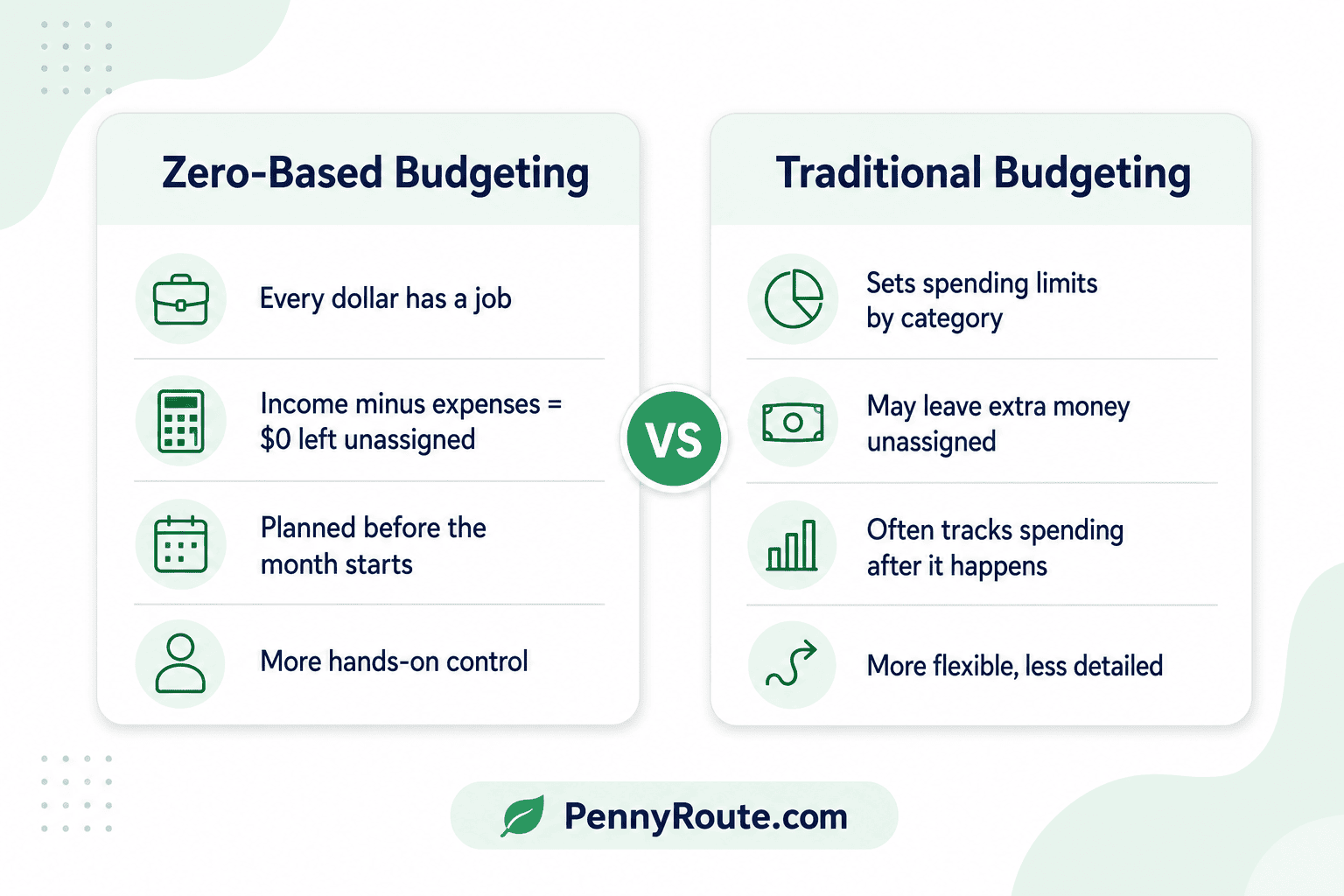
Zero-based budgeting and traditional budgeting both help you plan your money, but they work a little differently.
With a traditional budget, you may set general spending limits for categories like groceries, rent, savings, and entertainment. If money is left over, it might stay unplanned or get spent without much attention.
With zero-based budgeting, you assign every dollar before the month begins. That includes bills, savings, debt payments, spending money, and a small buffer.
| Budgeting Method | How It Works | Best For |
|---|---|---|
| Traditional budgeting | Sets spending limits for common categories | People who want a simpler monthly plan |
| Zero-based budgeting | Assigns all income to specific categories until nothing is left unplanned | People who want more control over where their money goes |
| 50/30/20 rule | Splits income into needs, wants, and savings/debt | People who prefer a broader budget structure |
Zero-based budgeting is usually more detailed than the 50/30/20 rule because it asks you to plan each category more closely. That extra detail can be helpful if your money often disappears into small purchases, subscriptions, or flexible spending.
The best method is the one you can actually follow. A simple budget you use every month is better than a detailed budget you abandon after two weeks.
Benefits of Zero-Based Budgeting
Zero-based budgeting can be useful when you want a clearer picture of where your income is going before the month gets underway.
It Makes Tradeoffs More Visible
Because every dollar is assigned, increasing one category usually means reducing another or changing a savings or debt goal. That makes the cost of each decision easier to see.
Savings and Debt Stay in the Plan
Savings and extra debt payments are treated as planned uses of income rather than whatever happens to remain after spending.
That can make those priorities easier to maintain from month to month.
It Gives You More Detail When Money Is Tight
A detailed plan can be helpful when there is not much room between income and expenses.
Instead of relying on a few broad limits, you can see which categories have room to move and which ones need to stay protected.
How to Create a Zero-Based Budget
A zero-based budget works best when you build it before the month begins. You do not need perfect numbers at first. You need a clear starting point and a willingness to adjust.
1. Start With the Income You Can Plan Around
Write down how much money you expect to receive for the month after taxes and deductions.
If your income changes from month to month, use a lower estimate instead of your best possible month. It is easier to adjust upward later than to build a budget around money that may not arrive.
2. Add Your Fixed Expenses
List regular costs such as rent or mortgage, insurance, loan payments, phone service, internet, and other bills that stay fairly predictable.
Use the actual amounts whenever possible.
3. Estimate Your Variable Expenses
Add categories such as groceries, transportation, utilities, dining, personal spending, and other costs that change from month to month.
Recent transactions give you a better starting point than guessing.
4. Add Savings and Debt Goals
Include savings, sinking funds, minimum debt payments, and any extra debt payments you plan to make.
These are part of the budget just like regular spending.
5. Leave a Small Buffer
A small buffer gives the plan room when an expense comes in slightly higher than expected.
The buffer still has a job, so it does not break the zero-based structure.
6. Assign Any Money That Is Still Left
Subtract all planned amounts from your available income.
If money remains, decide where it should go, such as savings, extra debt payments, an upcoming expense, or another priority.
When every dollar has been assigned, the budget reaches zero on paper.
7. Adjust the Plan During the Month
Zero-based budgeting is not meant to lock every category permanently.
If groceries cost more than planned, for example, move money from another category instead of ignoring the difference. The total income stays the same, but the assignments can change as the month unfolds.
How to Use Zero-Based Budgeting With Each Paycheck
You do not have to wait for the full month’s income to arrive before using a zero-based budget.
If you are paid weekly, every two weeks, or twice a month, you can assign each paycheck to the expenses and priorities it needs to cover before the next one arrives.
For example, one paycheck might cover rent, groceries, and a savings contribution, while the next handles utilities, insurance, transportation, and other spending.
A budget calendar can help you match paydays with bill due dates so each paycheck is assigned to the expenses that come before the next one.
The same zero-based rule still applies: every available dollar gets a purpose, even if you are assigning the money one paycheck at a time instead of planning the entire month from a single deposit.
Is Zero-Based Budgeting Right for You?
Zero-based budgeting can work well if you want a detailed plan and prefer knowing exactly where your available income is going.
It is especially useful when your budget has little room for waste, you are working toward several financial priorities at once, or broad spending limits do not give you enough control.
It May Be a Good Fit If You:
- want detailed control over spending, savings, and debt;
- are willing to check the budget regularly;
- prefer assigning money before spending it;
- do not mind moving money between categories when plans change.
You May Prefer a Simpler Method If You:
- want fewer categories and less tracking;
- are comfortable managing broader spending limits;
- find detailed budgeting difficult to maintain consistently.
Zero-based budgeting is not automatically better because it is more detailed. It is useful when that extra detail helps you make better decisions instead of creating more work than you need.
Best Tools for Zero-Based Budgeting
You can use zero-based budgeting with almost any tool that lets you see your income, planned categories, and remaining amounts clearly.
A few practical options are:
- Spreadsheet: Good if you want full control over categories, formulas, and adjustments.
- Budgeting app: Useful if you want transaction tracking, category balances, or account connections in one place.
- Notebook: Works well if you prefer writing the plan by hand and updating it manually.
- Notes app: Enough for a simple version if you only need a few categories and a running total.
The tool matters less than whether you can easily update the assignments when something changes during the month.
If you prefer digital tracking, app-based budgeting can help you decide how much automation and account connection you actually want.
Keep the Plan Flexible
Zero-based budgeting gives every dollar a purpose, but the assignments do not have to stay frozen once the month begins.
If an expense changes, move money between categories and keep the overall plan balanced. Over time, those adjustments can make the budget more accurate and easier to maintain.
FAQs About Zero-Based Budgeting
Does zero-based budgeting mean you spend all your money?
No. “Zero” means every dollar of available income has been assigned a purpose. Money set aside for savings, sinking funds, debt payments, bills, and spending all count toward the plan.
Is zero-based budgeting good for beginners?
It can be. The method gives you a clear view of where your money is going, but it also requires more detail and regular check-ins than simpler approaches. It works best if that extra structure helps you stay organized rather than making the budget harder to maintain.
Is zero-based budgeting better than 50/30/20?
Neither method is automatically better. Zero-based budgeting gives you more detailed control by assigning all available income, while the 50/30/20 method uses broader percentage targets for needs, wants, and savings or extra debt payments.