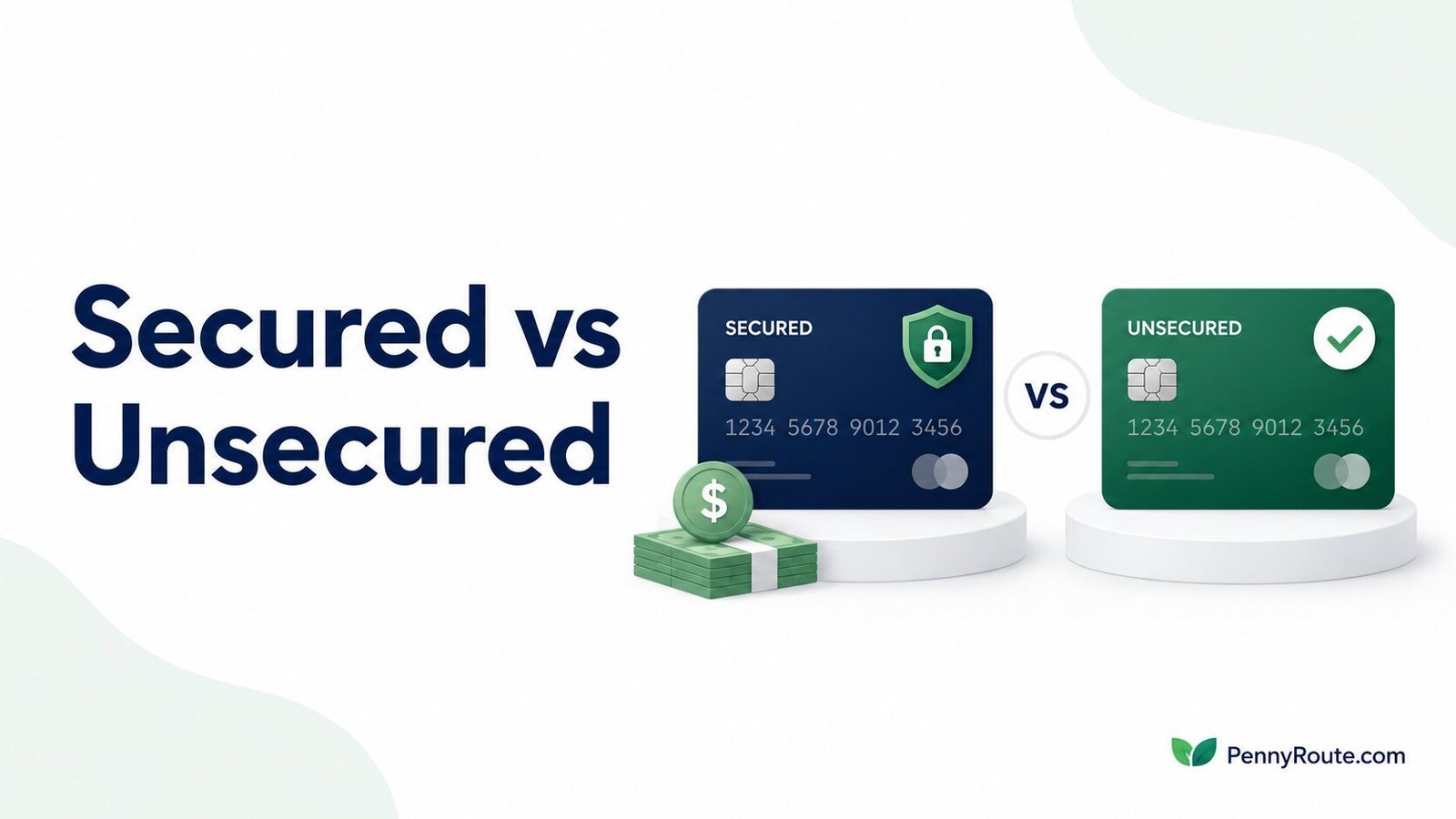
A secured credit card usually requires a refundable cash deposit, while an unsecured credit card usually does not.
That deposit protects the card issuer. It is not money you spend from the card, and it does not replace your monthly payments. After the account opens, both card types work in much the same way: you make purchases, receive a statement, and repay what you owe.
The better choice depends on more than approval. Fees, credit reporting, deposit rules, interest rates, credit limits, and upgrade options all affect whether the card will actually help you.
Disclaimer: This content is for informational purposes only and does not constitute financial advice. Please consult a qualified professional before making financial decisions.
What Is a Secured Credit Card?
A secured credit card is a credit card that usually requires a refundable cash deposit when you open the account. The deposit helps reduce risk for the card issuer, especially if the applicant has limited credit history, poor credit, or no credit score yet.
After the card is opened, a secured credit card works much like a regular credit card. You can use it for purchases, receive a monthly statement, and make payments by the due date.
The important part is this: your deposit is not the money you spend. If you put down a $300 deposit and then use the card to buy $40 of groceries, you still owe that $40 when your bill arrives.
A secured credit card may help build or rebuild credit if the issuer reports your account activity to the major credit bureaus. That is why checking the card’s reporting policy matters before applying.
What Is an Unsecured Credit Card?
An unsecured credit card is a credit card that usually does not require a cash deposit when you open the account. Instead, the card issuer reviews your application and decides whether to approve you based on its own requirements.
Those requirements may include your credit history, income, existing debts, payment history, and other information from your application. If you are approved, the issuer gives you a credit limit that you can borrow against and repay over time.
Unsecured credit cards are the standard type of credit card many people think of first. Some offer rewards, higher credit limits, introductory offers, or extra cardholder benefits, but those features depend on the card and the issuer.
Like secured cards, unsecured cards can become expensive if you carry a balance. Interest, late fees, and other charges can add up, so the card’s terms matter just as much as the approval itself.
Secured vs Unsecured Credit Card: Key Differences
The main difference between a secured and unsecured credit card is the deposit. A secured credit card usually requires a refundable cash deposit, while an unsecured credit card usually does not.
After that, the two cards can work in similar ways. You can use either card for purchases, receive a statement, and make payments by the due date. The bigger differences usually show up in approval requirements, credit limits, fees, rewards, and upgrade options.
| Feature | Secured Credit Card | Unsecured Credit Card |
|---|---|---|
| Deposit | Usually requires a refundable cash deposit | Usually does not require a deposit |
| Credit limit | Often based on your deposit amount | Based on the issuer’s approval review |
| Approval | May be easier with limited or damaged credit | May be harder with limited or damaged credit |
| Credit building | May help if the issuer reports to credit bureaus | May help if the issuer reports to credit bureaus |
| Rewards | May be limited, depending on the card | More likely to offer rewards or extra benefits |
| Fees | May include annual, monthly, or setup fees | May include annual, late payment, or other fees |
| APR | Can be high if you carry a balance | Can also be high if you carry a balance |
| Common use | Building or rebuilding credit | Everyday credit use for people who qualify |
A secured card is not automatically cheaper or safer, and an unsecured card is not automatically better. The details matter. A card with high fees, unclear deposit rules, or no credit reporting may be less useful than it looks at first.
How the Security Deposit Works on a Secured Credit Card
The security deposit is one of the most important parts of a secured credit card. It is usually a refundable amount you pay when opening the account, and it helps protect the card issuer if the bill is not paid.
In many cases, the deposit also affects your credit limit. For example, a $300 deposit may give you a $300 credit limit, though exact rules can vary by issuer.
The deposit is not a prepaid balance. You do not spend from it each time you use the card. If you buy gas, groceries, or a small online purchase with the secured card, that purchase becomes part of your credit card balance. You still need to pay the bill by the due date.
You may get the deposit back if the account is closed in good standing or if the issuer upgrades the card to an unsecured account. Before opening a secured card, check when the deposit may be refunded and whether there are any conditions attached.
Which Card May Be Easier to Qualify For?
A secured credit card may be easier to qualify for because the deposit lowers the risk for the card issuer. This is why secured cards are often marketed to people who are new to credit, rebuilding credit, or trying to establish a stronger credit history.
An unsecured credit card usually has stricter approval requirements because there is no deposit backing the account. The issuer may review your credit history, income, existing debt, payment history, and other details before deciding whether to approve the application.
That does not mean approval is guaranteed for a secured card. Card issuers can still deny an application based on their own rules. They may also charge fees, set a lower credit limit, or require a certain minimum deposit.
For beginners, the key is not only which card is easier to get. It is also whether the card reports to the credit bureaus, has reasonable fees, and fits the way you plan to use it.
Do Secured and Unsecured Credit Cards Build Credit?
Both secured and unsecured credit cards may help build credit, but only if the card issuer reports your account activity to the credit bureaus. If a card does not report, your payment history on that card may not help your credit profile in the same way.
The card type matters less than how the account is managed. Paying on time, keeping the balance low compared with the credit limit, and avoiding missed payments can all matter more than whether the card is secured or unsecured.
You also do not need to carry a balance to build credit. Using the card for small purchases and paying the statement balance by the due date can still show responsible activity if the issuer reports it. This can also help you avoid paying credit card interest while keeping the account active.
This is where a secured card can be useful for someone starting from scratch, but an unsecured card can also support credit building when used carefully. The real value comes from consistent, on-time payments and clear reporting.
The Federal Trade Commission explains that payment history and the amount of debt you have can affect your credit score, which is why on-time payments and manageable balances matter when using either type of card.
Pros and Cons of Secured and Unsecured Credit Cards
Both secured and unsecured credit cards can be useful, but they come with different trade-offs. A secured card may be easier to access, while an unsecured card may offer more flexibility if you qualify.
| Card Type | Main Advantages | Main Drawbacks |
|---|---|---|
| Secured credit card | May be easier to qualify for, can help build or rebuild credit, deposit may be refundable | Requires money upfront, credit limit may be low, fees can reduce the card’s value |
| Unsecured credit card | Usually no deposit required, more card options, may offer rewards or higher limits | May be harder to qualify for, interest can be expensive, some cards may still charge high fees |
The better option depends on the card’s terms, not just the label. A secured card with low fees and clear credit reporting may be more useful than an unsecured card with expensive charges. On the other hand, an unsecured card with fair terms may be more convenient if you can qualify without putting down a deposit.
Secured Credit Card vs Prepaid Card
A secured credit card is not the same as a prepaid card. This is an important difference because both can involve money upfront, but they work in very different ways.
With a secured credit card, the deposit is usually held by the card issuer. You use the card to borrow money up to your credit limit, then repay what you spend. If the issuer reports your activity to the credit bureaus, the account may help build credit over time.
With a prepaid card, you load your own money onto the card first. When you use the card, you are spending the money you already added. Since you are not borrowing money, prepaid cards usually do not help build credit.
Here is the simple difference: a secured credit card uses a deposit as backup, while a prepaid card uses loaded money for spending.
Can You Upgrade From a Secured to an Unsecured Credit Card?
Some secured credit cards may let you move to an unsecured card later. This is often called an upgrade or graduation. If the issuer allows it, your deposit may be returned after the account is reviewed and the card is converted.
The exact process depends on the issuer. Some may review your account automatically after a period of on-time payments. Others may require you to request an upgrade. In some cases, you may need to apply for a separate unsecured card instead.
Before opening a secured card, check whether the issuer offers a clear upgrade path. A card that reports to the credit bureaus, has reasonable fees, and gives you a possible way to get your deposit back may be more useful than one with unclear rules.
An upgrade is not guaranteed, but knowing the policy upfront can help you avoid surprises later.
What to Check Before Applying for Either Card
Before comparing a secured or unsecured credit card, look beyond the card name. Two cards in the same category can have very different costs, rules, and benefits.
Fees
Check whether the card charges an annual fee, monthly maintenance fee, setup fee, application fee, or other charges. A card that looks easy to get may not be helpful if fees take up too much of your available credit.
This matters for both secured and unsecured cards. Some cards with easier approval may come with higher costs, so the fee details deserve a close look before applying.
APR
The APR matters most if you carry a balance from one month to the next. Even if you plan to pay in full, it is still worth knowing how expensive the card could become if a balance remains unpaid. If you only make the credit card minimum payment, interest may keep adding to the balance for longer.
A lower APR does not make a card risk-free, and a higher APR does not matter as much if you consistently pay the statement balance in full. Still, APR is one of the most important terms to compare.
Security Deposit Rules
For secured cards, review the deposit rules carefully. Look at the minimum deposit, how the deposit affects your credit limit, when the deposit may be refunded, and whether the issuer offers a path to upgrade to an unsecured card.
Also confirm that the deposit is refundable. If there are conditions attached, those details should be clear before you open the account.
Credit Bureau Reporting
Check whether the issuer reports account activity to the major credit bureaus. If your goal is to build credit history, reporting matters.
A card that does not report your account activity may not help your credit profile in the way you expect, even if you make payments on time.
Credit Limit
Look at how the credit limit is set. With a secured card, the limit may be tied to your deposit. With an unsecured card, the issuer usually sets the limit based on its approval review.
A very low credit limit can make the card harder to use for regular purchases without using too much of the available credit. That does not make the card bad, but it does mean you may need to use it carefully.
Upgrade or Account Review Options
If you are considering a secured card, check whether the issuer offers an upgrade path to an unsecured card. Some issuers review accounts automatically after several months of responsible use, while others require you to request a review.
This matters because an upgrade may allow you to keep the account open, receive your deposit back, and move to an unsecured card without starting over.
Late Payment and Account Rules
Review what happens if a payment is late, the account is closed, or the card is not used for a while. These rules can affect fees, your deposit refund, and your overall experience with the card.
Clear terms are a good sign. If the costs or rules are hard to understand, it may be worth slowing down before applying.
Is a Secured or Unsecured Credit Card Better?
A secured credit card is not automatically better than an unsecured credit card, and an unsecured credit card is not automatically the better choice. They are built for different situations.
A secured card may be more accessible if you are new to credit or rebuilding credit because the deposit lowers risk for the issuer. An unsecured card may offer more flexibility, rewards, or higher limits if you qualify without a deposit.
Before comparing either type, look at the details that affect the real cost and usefulness of the card: fees, APR, credit bureau reporting, deposit rules, credit limit, and upgrade options. The label matters, but the terms matter more.
A simple question can help you compare both card types more clearly: “What will this card cost me, and how will it help me build or manage credit?” That keeps the focus on how the card works, not just whether it is secured or unsecured.
FAQs About Secured and Unsecured Credit Cards
Is a credit card secured or unsecured debt?
Most regular credit card debt is unsecured debt because it is not backed by collateral like a car or house. A secured credit card is different because the account usually requires a cash deposit, but the balance you charge still needs to be repaid like any other credit card balance.
Do you get your secured credit card deposit back?
You may get your deposit back if the account is closed in good standing or upgraded to an unsecured card, depending on the issuer’s rules. Before applying, check when the deposit may be refunded and what conditions apply.
Can you be denied for a secured credit card?
Yes. A secured card may be easier to qualify for, but approval is not guaranteed. The issuer can still review your application, identity information, credit history, income, and other factors.
Does a secured card build credit faster than an unsecured card?
Not necessarily. Credit building depends more on credit reporting, payment history, balance management, and time. A secured card does not automatically build credit faster just because it requires a deposit.