A detailed budget can be useful, but not everyone needs separate limits for groceries, dining, shopping, entertainment, and every other category.
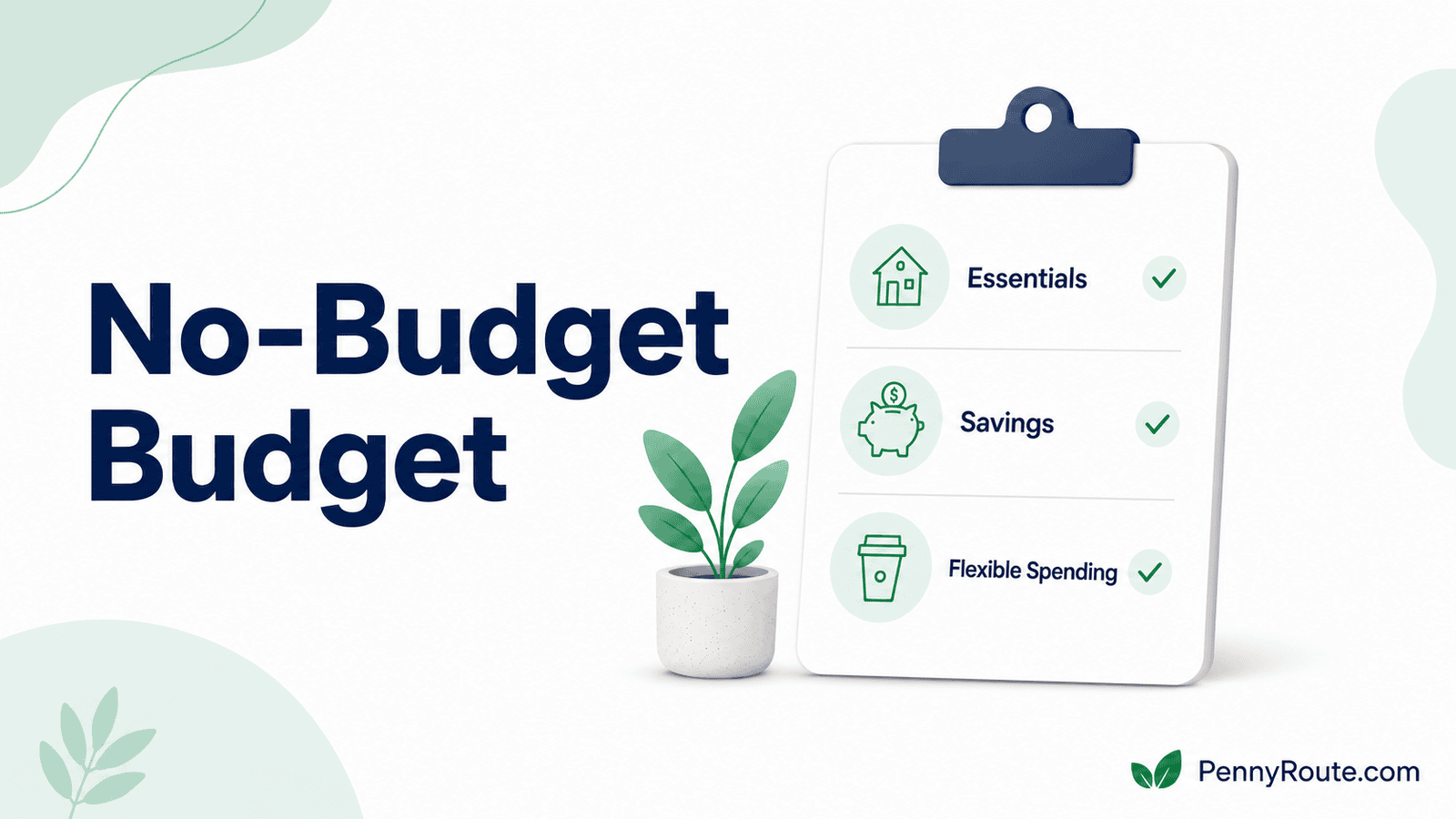
A no-budget budget takes a lighter approach. You first protect the money that is already spoken for, then manage what remains as one simpler spending number instead of tracking dozens of categories.
The spending number needs to be realistic enough to guide your decisions without hiding necessary costs inside it. The point is not to stop paying attention to your money. It is to keep the system simple enough that you will actually use it.
Disclaimer: This content is for informational purposes only and does not constitute financial advice. Choose a budgeting approach that fits your financial situation, and consult a qualified professional when needed.
Quick Overview
- A no-budget budget protects bills, required payments, and planned financial goals before flexible spending begins.
- The money left over becomes one simpler spending number instead of several category limits.
- Necessary variable costs, such as groceries or gas, do not always belong in the same spending pool.
- If the spending number regularly runs out early, the setup probably needs more structure or a more realistic starting amount.
What Is a No-Budget Budget?
A no-budget budget is a simplified way to manage money without assigning a separate spending limit to every category.
You still make room for bills, required payments, savings, and other planned priorities. What changes is how you handle the money that remains. Instead of giving groceries, dining, shopping, entertainment, and personal spending their own individual limits, you manage more of that spending from one broader amount.
That does not mean every expense has to be mixed together. If a necessary cost is large enough to distort the number, you can protect it separately and keep the remaining spending pool simpler.
So the “no-budget” part refers to less category tracking, not the absence of a plan.
How the No-Budget Budget Works
The method starts by separating money you need to protect from money you can manage more freely.
A simple way to think about it is:
Take-home income − protected expenses and planned goals = amount left to manage
Calculation
Protected money can include bills, minimum debt payments, savings, and other costs you do not want competing with everyday spending.
What remains becomes your main spending number. You can use that amount across several categories without setting a separate cap for each one, as long as the total stays within the limit you have available.
The calculation is simple. The real judgment comes from deciding what belongs in the protected amount before you treat the rest as spendable.
What Counts as Fixed Bills and Flexible Spending?
For a no-budget budget, the most useful distinction is not simply fixed versus variable. It is whether the money needs to be protected before you start spending more freely.
Money to Protect Before Flexible Spending
This usually includes expenses and priorities that should not have to compete with optional spending, such as:
- rent or mortgage
- utilities
- insurance
- minimum debt payments
- childcare
- planned savings
- predictable irregular costs you are setting aside for
Some necessary variable expenses may belong here too. If groceries, gas, or transportation take up a large share of your monthly cash flow, protecting them first can make the remaining spending number more realistic.
What Can Stay in the Flexible Spending Number?
This can include expenses you are comfortable managing together, such as dining out, entertainment, shopping, personal spending, and other day-to-day purchases.
Groceries and gas can go either way. If they are predictable and easy for you to manage, keeping them inside the main spending number may be fine. If they regularly use most of the pool or make the number hard to interpret, setting them aside separately can give you a clearer limit for everything else.
The best setup is the one that makes the remaining number genuinely useful, not artificially larger than the money you can actually spend freely.
How to Start a No-Budget Budget
You do not need to rebuild your entire budget to use this method. You mainly need a reliable picture of what comes in, what has to be protected, and what is genuinely left to manage.
1. Start With the Income You Can Plan Around
Use the take-home income that is actually available for the month.
If your pay is fairly consistent, that may be straightforward. If it changes substantially, avoid building the spending number around an unusually strong month. A lower, more dependable amount gives you less room to overspend before the next paycheck arrives.
2. Set Aside the Money That Is Already Spoken For
Account for bills, required payments, planned savings, and any necessary costs you decided should stay outside the flexible pool.
This is where the previous classification matters. A spending number is only useful if it does not quietly include money you will need later for something important.
3. Use What Remains as Your Main Spending Number
After the protected money is accounted for, the remainder is what you can manage with much less category tracking.
You do not have to decide in advance that $120 is for dining, $80 is for entertainment, and $150 is for shopping. Those purchases can come from the same pool as long as the total stays within what is available.
Once that number is clear, the example below shows how the setup can work with real monthly numbers.
No-Budget Budget Example
Suppose you take home $3,600 a month.
Before deciding what is available to spend more freely, you set aside the money that already has a job:
| Monthly Money | Amount |
|---|---|
| Take-home income | $3,600 |
| Bills and required payments | $2,100 |
| Savings and planned future expenses | $400 |
| Amount left to manage | $1,100 |
At first glance, you could treat the full $1,100 as one spending number.
But suppose groceries usually take about $500 of that amount. If groceries are predictable and easy for you to manage alongside everything else, keeping them inside the $1,100 pool may be perfectly workable.
If they regularly make the number hard to judge, you could protect that $500 separately instead. That would leave $600 as the amount you manage more freely across dining, shopping, entertainment, personal spending, and other day-to-day choices.
The no-budget approach is not about making the leftover number as large as possible. It is about making that number honest enough to guide your spending.
Make Your Spending Number Easier to Manage
One monthly number can still be too easy to overspend early, especially when the balance looks comfortable at the start of the month.
Use a Weekly or Pay-Period Guardrail
You do not need to create another full budget. A smaller checkpoint can simply help you pace the money.
If you have $800 left to manage for roughly four weeks, using about $200 per week as a rough guide can make it easier to notice when spending is moving too quickly. The weekly amount is not a hard category limit. It is just a way to avoid reaching the middle of the month with most of the spending money already gone.
If you are paid every two weeks, a pay-period number may feel more natural than a weekly one. The important part is matching the checkpoint to how your money actually arrives and gets spent.
Keep the Remaining Amount Easy to See
A no-budget budget only stays simple if you can tell, at a glance, what is still available.
That might mean using one checking account for flexible spending, checking the balance in a budgeting app, or keeping a simple running total. You do not need detailed category tracking, but you do need a number you can trust.
That visibility gives you feedback while there is still time to adjust, not after the money is gone.
What If Your Spending Number Runs Out Too Early?
Running out before the month ends usually means the number is not telling you the full story. The fix is not always to spend less. First, figure out what is making the number unreliable.
Check Whether the Starting Number Was Realistic
A spending pool can look larger than it really is if an important cost was left inside it by accident.
Groceries, gas, household basics, or other necessary expenses can take up a large share of the total. If that keeps happening, protect those costs before calculating the amount you can manage more freely.
See Whether One Category Needs Its Own Limit
Sometimes the overall number is fine, but one type of spending keeps draining it.
If dining out, shopping, or another category regularly takes more than you intended, giving that one expense its own limit can add enough structure without turning the whole system into a detailed category budget.
Do Not Let Credit Hide the Shortfall
The spending number only works if reaching zero actually means you have reached the limit.
If you continue spending on a credit card after the available amount is gone, the system can make the month look manageable while pushing part of the cost into the future.
That is a sign to adjust the starting number, separate a problem expense, or add a little more structure before the next spending cycle begins.
No-Budget Budget vs. Pay Yourself First
The two methods can look similar because both protect important money before everyday spending takes over.
The difference is which number you are managing.
With a pay yourself first budget, the main decision is the amount you set aside for savings, investing, or extra debt repayment before flexible spending begins.
With a no-budget budget, the main decision comes afterward. Once bills, required payments, and planned financial goals are covered, you manage the remaining money as one broader spending amount instead of assigning separate limits to every category.
So the methods can work together, but they solve different problems. Paying yourself first helps make sure a financial goal gets funded. A no-budget budget helps simplify how you handle what is left.
You can also compare other budgeting methods if you want to see how this simpler approach differs from methods that use category limits, percentage targets, or a plan for every dollar.
When the No-Budget Budget Works Well
This approach can work well when your income and regular obligations are predictable enough that you can trust the amount left after everything important is covered.
It also suits you if detailed category limits add more work than value. If one clear spending number is enough to keep everyday purchases in check, there is little benefit in tracking every coffee, grocery run, or entertainment expense separately.
The method is especially useful when you already have reasonable control over routine spending and mainly want a simpler way to know what is still available.
When One Number Is Not Enough Structure
A single spending pool is less helpful when you regularly lose track of where the money went or one category keeps taking more than expected.
It can also be too loose if necessary expenses and optional spending are constantly competing inside the same number. In that case, separating one or two problem areas may give you enough control without abandoning the simpler setup altogether.
One spending number is useful only if it gives you enough information to make good decisions before the money is gone.
Keep Your Budget Simple, Not Invisible
A no-budget budget should reduce the amount of tracking you do, not reduce your awareness of where your money stands.
If the bills and planned goals are covered and the spending number is easy to see, you have enough information to make everyday decisions without turning every purchase into a separate category check.
The method is working when simplicity makes your money easier to manage, not easier to ignore.