Starting a budget is easier when every part of your money has a clear place to go. Budget categories are groups that organize your bills, everyday spending, savings, debt payments, and financial goals.
Without categories, rent, groceries, gas, subscriptions, savings, and small purchases can all blend together. That makes it harder to see where your money is going or decide what needs attention.
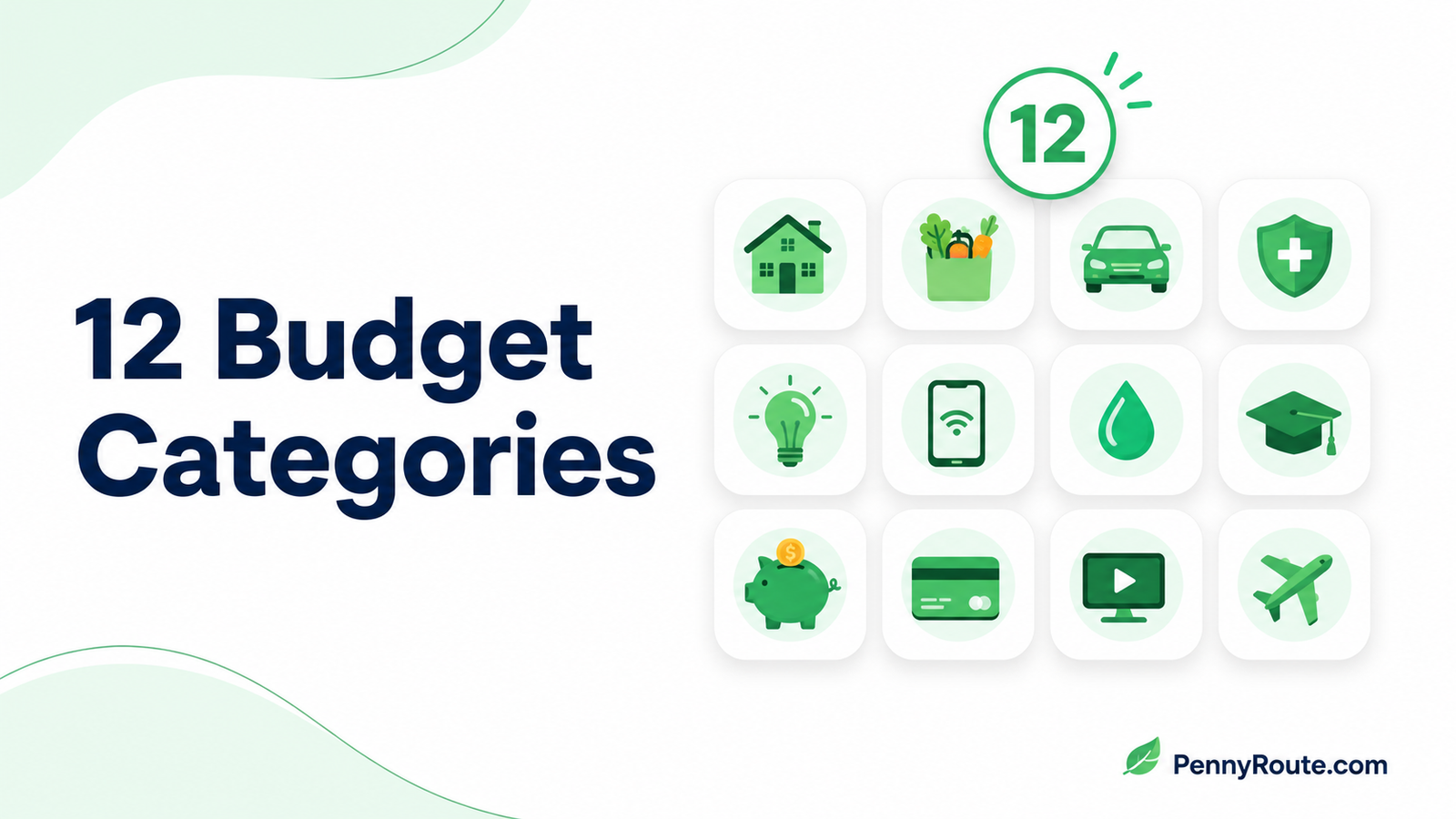
These 12 essential budget categories give you a practical starting point for a simple monthly budget. You can use them as they are, remove categories that do not fit your life, and split larger categories later as your spending becomes clearer.
Disclaimer: This content is for informational purposes only and does not constitute financial advice. Choose budget categories that fit your financial situation, and consult a qualified professional when needed.
What Are Budget Categories?
Budget categories are labels that group similar types of income, spending, saving, and debt payments. They help you decide where your money should go before the month gets busy.
For example, instead of listing rent, electricity, groceries, gas, and savings as unrelated expenses, you can organize them under broader categories such as housing, utilities, food, transportation, and savings.
Categories also make it easier to review your budget. If one area is consistently higher than expected, you can see which part needs attention without checking every transaction separately.
You do not need a category for every small purchase. A simple budget may work well with a few broad categories at first. You can split them later when more detail would help you make better decisions.
Monthly Expenses List: What to Include in Your Budget
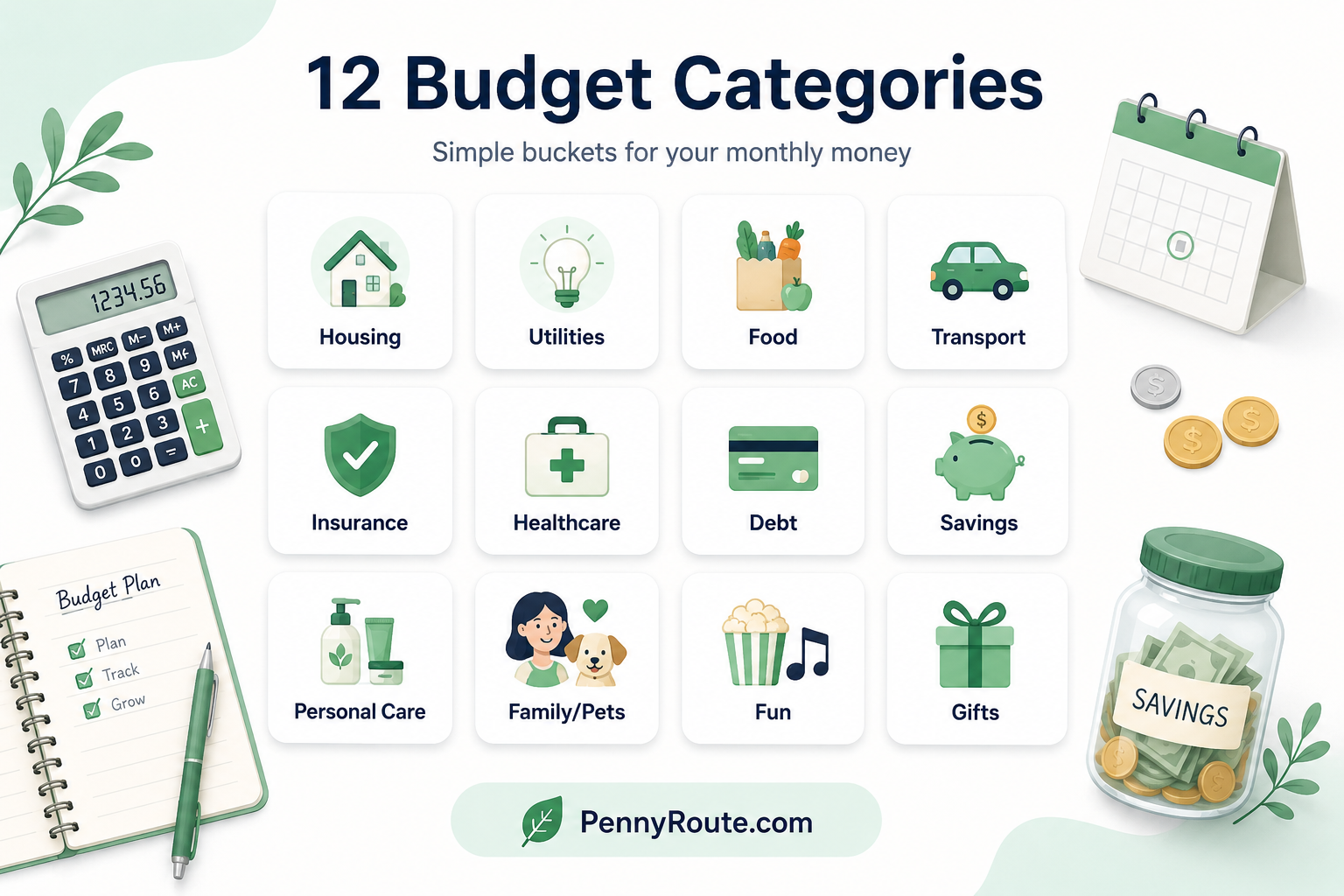
Here are 12 essential budget categories to help you organize your monthly expenses and set up a simple budget.
| # | Budget Category | What It Usually Covers |
|---|---|---|
| 1 | Housing | Rent, mortgage, property taxes, basic home costs |
| 2 | Utilities | Electricity, water, gas, internet, phone |
| 3 | Food | Groceries and basic household food |
| 4 | Transportation | Gas, public transit, parking, car costs |
| 5 | Insurance | Health, auto, renters, homeowners, life insurance |
| 6 | Healthcare | Doctor visits, prescriptions, dental, vision |
| 7 | Debt Payments | Credit cards, student loans, personal loans |
| 8 | Savings | Emergency fund, sinking funds, short-term goals |
| 9 | Personal Care | Toiletries, haircuts, laundry, basic clothing |
| 10 | Family, Kids, or Pets | Childcare, school costs, pet food, vet visits |
| 11 | Fun and Entertainment | Dining out, hobbies, streaming, events |
| 12 | Gifts and Miscellaneous | Birthdays, holidays, small unexpected expenses |
This list gives you a broad starting point. You may not need every category, and some categories may need more detail depending on your expenses.
For example, you might keep transportation as one category at first. If car costs take up a large part of your budget, you could later separate gas, insurance, maintenance, registration, and loan payments.
Start broad enough to keep the budget manageable. Add detail only when it helps you plan, track, or adjust your spending more clearly.
Three Main Types of Budget Categories
Most budget categories fit into three broad groups:
- Essential expenses: Costs you generally need to cover first, such as housing, utilities, groceries, transportation, insurance, healthcare, and minimum debt payments.
- Flexible expenses: Costs that may change from month to month or can sometimes be reduced, such as dining out, entertainment, clothing, hobbies, and personal spending.
- Savings and financial goals: Money set aside for an emergency fund, sinking funds, planned purchases, retirement, or extra debt payments.
These groups give you a simple way to understand how your budget is organized. The 12 categories below show where individual expenses may fit.
12 Essential Budget Categories
The categories below cover the main areas of a typical monthly budget. Your amounts will depend on your income, household, location, debt, and current priorities.
Treat the list as a starting structure, not a fixed template. Some categories may not apply to you, while others may need to be divided into smaller sections.
1. Housing
Housing is often the largest monthly budget category, so it should be one of the first expenses you plan for.
This category may include:
- Rent or mortgage payments
- Property taxes
- Renters or homeowners insurance
- HOA fees
- Basic repairs and maintenance
If you rent, this category may be limited to rent and renters insurance. If you own a home, you may also need to plan for property taxes, maintenance, and repair costs.
Keep regular housing payments separate from less predictable expenses. A small home-maintenance sinking fund can help you prepare for repairs without forcing the full cost into one month’s budget.
2. Utilities
Utilities cover the services that keep your home running. These costs may vary by season, household size, and location.
This category may include:
- Electricity
- Gas
- Water and sewer
- Trash collection
- Internet
- Mobile phone service
Some bills stay fairly consistent, while others can rise during hotter or colder months. Use recent statements to estimate a realistic monthly amount instead of relying on one unusually low bill.
If a utility cost changes significantly during the year, you can budget using an average monthly amount or set aside a little extra during lower-cost months.
3. Food
The food category covers groceries and other everyday food costs. It may also include dining out, but separating restaurant spending can make the budget easier to review.
This category may include:
- Groceries
- Takeout and restaurant meals
- Coffee and snacks
- Meal delivery
- Household basics purchased with groceries
Use recent spending to set a realistic amount. Grocery costs can vary based on household size, location, dietary needs, and how often you eat away from home.
If dining out regularly pushes the total higher, create a separate restaurant category. That makes it easier to adjust discretionary spending without cutting the grocery budget needed for meals at home.
4. Transportation
Transportation includes the costs of getting to work, school, appointments, and other regular destinations.
This category may include:
- Car payments
- Gas or charging costs
- Auto insurance
- Public transportation
- Parking and tolls
- Rideshare services
- Maintenance and repairs
- Registration and inspection fees
Some transportation costs appear every month, while others are occasional. Keep regular costs in the monthly budget and save gradually for repairs, registration, and other larger expenses.
If transportation takes up a significant part of your income, divide it into smaller categories such as fuel, insurance, maintenance, and car payments. This can make it easier to see which costs are increasing.
5. Insurance
Insurance protects you from costs that could be difficult to cover from one month’s income.
This category may include:
- Health insurance
- Auto insurance
- Renters or homeowners insurance
- Life insurance
- Disability insurance
- Pet insurance
Some premiums are paid monthly, while others are due every six or twelve months. For nonmonthly premiums, divide the total by the number of months until the bill is due and set that amount aside regularly.
For example, a $600 auto insurance premium due every six months would require setting aside $100 per month. This keeps the bill from becoming a sudden expense when the renewal date arrives.
6. Healthcare
Healthcare costs may include both regular expenses and occasional bills that are harder to predict.
This category may include:
- Copays
- Prescriptions
- Dental care
- Vision care
- Therapy
- Medical equipment
- Over-the-counter medicine
- Health savings account contributions
Use recent medical spending to estimate a realistic monthly amount. If you expect a larger cost, such as dental work or new glasses, save for it gradually instead of relying on the regular monthly category alone.
Keep insurance premiums under the insurance category and out-of-pocket medical costs under healthcare. This makes both categories easier to review.
7. Debt Payments
The debt-payments category includes the minimum amounts required on credit cards, loans, and other balances.
This category may include:
- Credit card payments
- Student loans
- Auto loans
- Personal loans
- Medical debt
- Buy now, pay later payments
List each minimum payment separately so you know what must be paid every month. Then decide whether your budget allows extra payments toward one balance.
Keep required payments in this category. Extra debt payments may also stay here, or you can track them separately if that helps you measure payoff progress more clearly.
8. Savings
Savings should be part of your monthly plan rather than whatever remains after spending.
This category may include:
- Emergency fund contributions
- Sinking funds
- Retirement contributions
- Vacation savings
- Home or car savings
- Other short-term goals
Choose an amount that fits your current budget and schedule the transfer soon after payday, when possible. Even a modest contribution can help when it is repeated consistently.
You may keep all savings under one category or separate major goals when that makes progress easier to track.
9. Personal Care
Personal care covers routine expenses related to hygiene, grooming, and everyday personal needs.
This category may include:
- Toiletries
- Haircuts
- Skincare
- Cosmetics
- Clothing basics
- Laundry costs
- Gym or fitness expenses
Some costs may be monthly, while others appear only a few times a year. Use recent spending to estimate a realistic amount and set aside money gradually for less frequent expenses.
Keep this category broad unless one area, such as clothing or fitness, takes up enough of your budget to track separately.
10. Family, Kids, or Pets
This category covers household expenses connected to children, dependents, or pets.
It may include:
- Childcare
- School supplies and fees
- Clothing and activities
- Baby supplies
- Allowances
- Pet food
- Veterinary care
- Grooming and boarding
Some of these costs are regular, while others appear only at certain times of the year. Use separate sinking funds for larger or less predictable expenses such as school enrollment, summer activities, or veterinary care.
Keep this as one category when the total is manageable. Split it into child-related and pet-related categories when that would make planning easier.
11. Fun and Entertainment
Fun and entertainment covers optional spending that helps you enjoy your money without losing sight of other priorities.
This category may include:
- Streaming services
- Movies and events
- Hobbies
- Dining out
- Games
- Books
- Weekend activities
- Short trips
Set an amount that fits after essential expenses, minimum debt payments, and planned savings. The category does not need to disappear when money is tight, but it may need to be smaller.
If one expense, such as dining out or travel, uses a large share of this category, track it separately so you can see where the money is going.
12. Gifts and Miscellaneous
This category covers occasional costs that do not fit neatly elsewhere.
It may include:
- Birthday and holiday gifts
- Greeting cards and wrapping supplies
- Small donations
- Work or school events
- One-time household purchases
- Minor unexpected expenses
Keep the amount modest and review what ends up here. If the same expense appears repeatedly, give it a separate category instead of continuing to place it under miscellaneous.
For larger seasonal costs, such as holiday gifts, save gradually through a sinking fund so the full amount does not come from one month’s budget.
Which Budget Categories Should You Set Up First?
Start with the categories that protect your basic needs and financial stability. These usually include:
- Housing
- Utilities
- Food
- Transportation
- Insurance and healthcare
- Minimum debt payments
- Savings
After those are covered, add flexible categories such as personal care, entertainment, gifts, and other nonessential spending.
This order does not mean every household will use the same amounts. It simply helps you give priority to expenses that are harder to delay or reduce.
If your income is tight, begin with the categories you must fund before the next payday. Then add savings and flexible spending in amounts that fit what is actually available.
How Many Budget Categories Do You Really Need?
There is no universal number of budget categories, but the 12 broad categories in this article provide a practical starting point for a monthly budget.
You may use fewer if some categories do not apply to your household. For example, someone without debt may not need a debt-payment category, while someone without children or pets may not need a separate family, kids, or pets category.
You may also need more detail within certain categories. Transportation could remain one broad category, or you could divide it into gas, insurance, maintenance, registration, and car payments when that helps you plan more accurately.
A useful rule is to split a category only when:
- The expense is large enough to track separately.
- You regularly overspend in that area.
- The cost needs its own savings plan.
- More detail would help you adjust your budget.
Start with the 12-category structure, remove what does not apply, and add detail only where it improves clarity.
Budget Categories People Often Forget
Some expenses do not appear every month, which makes them easy to leave out of a budget. When they arrive, they can disrupt categories that were meant for regular bills or everyday spending.
Add these costs to your budget before they are due. You can either create a separate category or save for them gradually through a sinking fund.
| Often-Forgotten Expense | Where It Could Go |
|---|---|
| Annual subscriptions | Fun and Entertainment or Miscellaneous |
| Car registration | Transportation |
| Oil changes and tires | Transportation or Sinking Fund |
| Medical copays | Healthcare |
| Birthday gifts | Gifts and Miscellaneous |
| School fees | Family, Kids, or Pets |
| Pet vaccinations | Family, Kids, or Pets |
| Household supplies | Food or Personal Care |
| Bank fees | Miscellaneous |
| Work clothes | Personal Care |
| Holiday spending | Gifts and Miscellaneous |
Review the past 6 to 12 months of bank and credit card statements to find expenses that do not appear in a typical month. Dividing an annual cost by 12 can help you estimate how much to set aside each month.
Simple Monthly Budget Categories Example
Here is one example of how a $3,200 monthly take-home income could be divided across broad budget categories:
| Budget category | Monthly amount |
|---|---|
| Housing | $1,100 |
| Utilities | $250 |
| Food | $450 |
| Transportation | $300 |
| Insurance and healthcare | $250 |
| Debt payments | $250 |
| Savings | $200 |
| Personal care and household costs | $150 |
| Family, kids, or pets | $100 |
| Fun and entertainment | $80 |
| Gifts and miscellaneous | $70 |
| Total | $3,200 |
These amounts are only an example. Your budget may look very different depending on your income, location, household, debt, and financial goals.
The useful part is not matching these numbers. It is making sure every dollar has a clear purpose and that the total does not exceed your monthly take-home income.
How to Use These 12 Budget Categories
Start with your monthly take-home income, then assign money to essential expenses such as housing, utilities, food, transportation, insurance, healthcare, and minimum debt payments.
Next, use recent spending to set realistic amounts for flexible categories. Add savings, sinking funds, planned purchases, retirement contributions, or extra debt payments as part of the budget rather than waiting to see what remains.
Before finalizing the plan, check that your total spending, saving, and debt payments do not exceed your take-home income. A small miscellaneous buffer may help with minor surprises, but repeated expenses should eventually receive their own category.
At the end of the month:
- Compare your planned amounts with actual spending.
- Adjust categories that were consistently too high or too low.
- Remove categories you do not use and split categories only when more detail would help.
Your first budget does not need to be exact. It becomes more useful as you review and refine it.
How to Adjust Your Budget Categories Over Time
Your budget categories should change when your expenses, household, or priorities change. A category that worked six months ago may no longer match what you actually spend.
Review your categories when you:
- Move or have a major rent change
- Take on or pay off debt
- Add a child or pet to the household
- Change jobs or income
- Buy or sell a car
- Start paying for new insurance or healthcare costs
- Add a savings goal
- Notice a repeated expense sitting under “miscellaneous”
The Oregon Division of Financial Regulation also recommends reviewing your spending at the end of the month to decide whether you need to adjust your budget amounts or create a new category.
The point is not to preserve the same budget forever.
You may need to increase one category, reduce another, combine categories you rarely use, or split a broad category that no longer gives you enough detail.
Start Simple, Then Adjust as Real Life Changes
Budget categories give your money a clear structure, but they do not need to remain identical every month.
Start with the essential budget categories in this article, remove anything that does not apply, and add more detail only where it helps you plan or make better decisions.
Review your budget regularly, especially when your income, bills, household, debt, or goals change. A useful budget should reflect your current life rather than force every month into the same template.
Small adjustments are part of the process. The more accurately your categories match your real spending, the easier it becomes to see what is working and what needs attention.
FAQs About Essential Budget Categories
What are the 12 essential budget categories?
The 12 essential budget categories are housing, utilities, food, transportation, insurance, healthcare, debt payments, savings, personal care, family, kids, or pets, fun and entertainment, and gifts and miscellaneous.
How many budget categories should I have?
Start with the 12 essential budget categories, then remove any that do not apply and split broad categories only when more detail would help you manage your money.
What is the difference between fixed and flexible budget categories?
Fixed categories usually contain costs that stay similar each month, such as rent or loan payments. Flexible categories contain costs that may change, such as groceries, dining out, entertainment, and personal spending.
Should savings be a budget category?
Yes. Treating savings as a budget category helps you plan for emergency savings, sinking funds, retirement, and other financial goals before the money is spent elsewhere.
What budget category should groceries go under?
Groceries usually belong under the food category. Dining out may be kept separate if you want to track restaurant spending more clearly.
What category should irregular expenses go under?
Irregular expenses can go into a sinking fund, a dedicated category, or a planned miscellaneous category. Repeated costs such as annual insurance premiums or car registration should not stay hidden under miscellaneous.