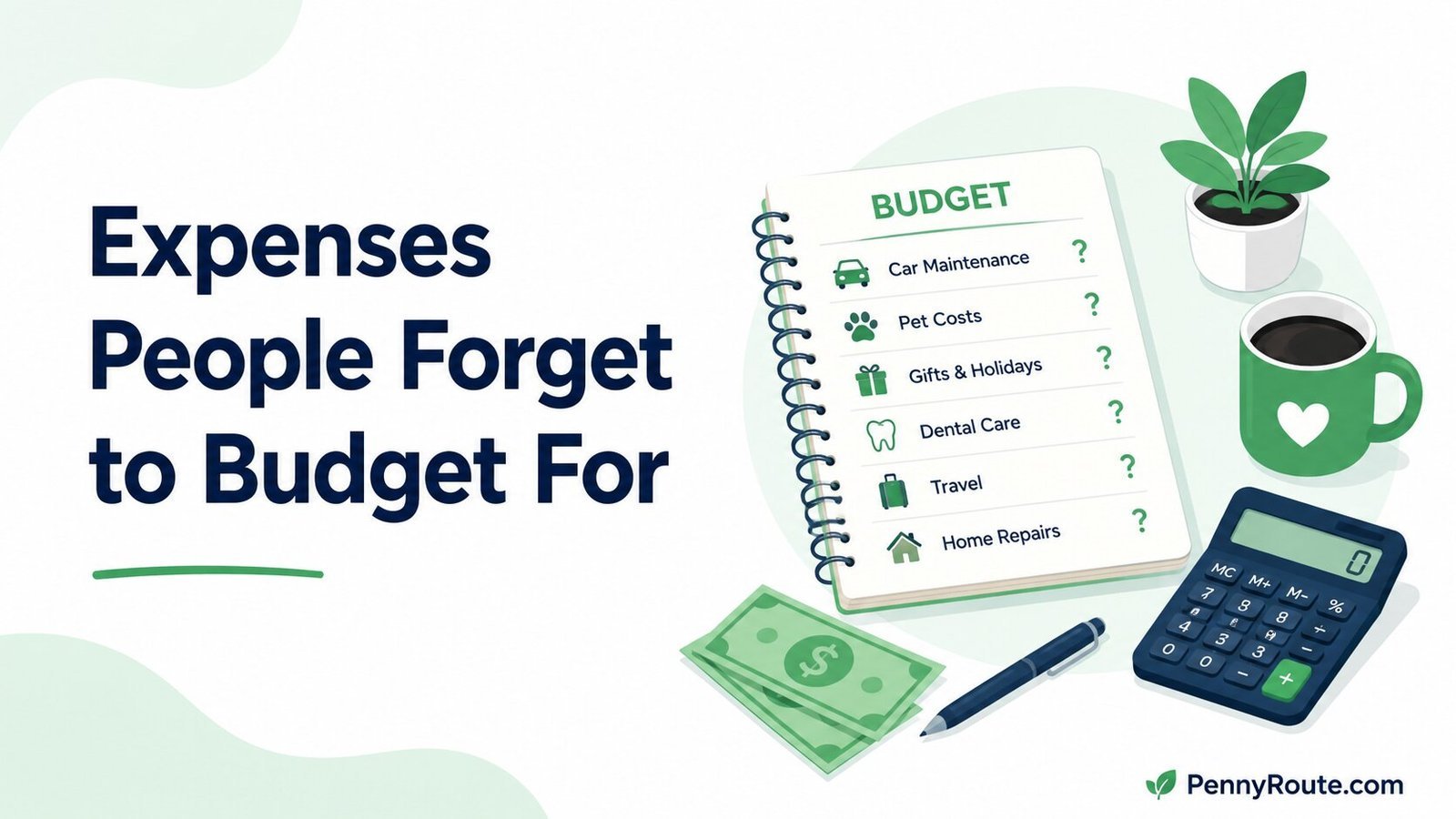
A budget can look perfectly reasonable at the start of the month and still get thrown off by a bill you forgot was coming.
The problem is often not overspending. It is that some costs do not arrive every month. Car registration, school expenses, insurance renewals, medical bills, gifts, home maintenance, and other irregular expenses can disappear from view until the payment is suddenly due.
Once those costs have a place in your plan, they stop behaving like surprises.
Disclaimer: This content is for informational purposes only and does not constitute financial advice. Build a budget that fits your own financial situation, and consult a qualified professional when needed.
Quick Overview
- Review up to 12 months of past spending when possible so annual and seasonal expenses do not stay hidden.
- Separate predictable irregular costs from genuine emergencies.
- For a known bill, save based on how much is still needed and how long you have until it is due.
- Group smaller irregular expenses when that keeps your budget easier to manage.
What Are Forgotten Budget Expenses?
Forgotten budget expenses are costs that do not show up consistently each month but happen often enough to affect your spending plan.
Car registration, annual renewals, school costs, routine maintenance, gifts, and seasonal expenses are common examples. They can disappear from view during an ordinary month and then create a much bigger expense later.
If a cost has happened before or you already know it is coming, it is worth accounting for before the payment arrives.
25 Expenses People Forget to Budget For

Not all 25 will apply to you. Look for the costs that tend to disappear from your budget until they come due.
Home, Housing, and Insurance Costs
1. Home Maintenance and Seasonal Care
Owning a home involves more than the mortgage.
Air filters, HVAC servicing, gutter cleaning, lawn care, pest control, pool care, minor repairs, winter preparation, and other seasonal jobs can arrive at different points during the year.
Renters have fewer maintenance responsibilities, but household supplies, small tools, replacement fixtures, cleaning items, and other home costs can still show up outside the normal monthly bills.
2. Appliance Repairs and Replacements
A refrigerator, washing machine, vacuum, microwave, or other appliance can work for years before suddenly becoming expensive.
You do not need a separate savings fund for every appliance. If several household items are aging, a broader home repair or replacement reserve may be enough.
3. Property Taxes Paid Separately
Homeowners whose property taxes are included in an escrow payment already account for the cost through the mortgage.
If you pay property taxes directly, however, the bill may arrive once or twice a year and be easy to overlook in a monthly budget.
Treat the payment date as a real deadline rather than waiting for the tax bill to remind you.
4. HOA or Condo Fees and Special Assessments
Regular HOA or condo fees may already be part of your budget.
Less obvious are annual charges, changing fees, or special assessments for shared repairs, insurance, building improvements, or community maintenance.
A special assessment is not always predictable far in advance, but past notices can tell you whether these costs occur often enough to deserve some room in your plan.
5. Insurance Premiums That Are Not Paid Monthly
Auto, homeowners, renters, life, or other insurance may be billed every six or twelve months instead of monthly.
A $900 premium can be easy to forget during the months when nothing is being charged.
Check the actual billing schedule rather than assuming every insurance cost is already built into your monthly expenses.
Car and Transportation Costs
6. Vehicle Registration, Inspections, and DMV Fees
Registration renewals are predictable but infrequent, which makes them easy to miss.
Depending on where you live, you may also have inspection, emissions-testing, title, license-plate, or other vehicle-related fees.
Put the renewal month on your calendar and check the most recent amount before deciding how much to set aside.
7. Routine Car Maintenance and Planned Replacements
Gas stays visible because you pay for it often. Car maintenance is easier to forget.
Oil changes, brakes, tire rotations, new tires, batteries, wiper blades, fluids, and other wear-related costs may be separated by months or years.
You cannot predict every mechanical problem, but you can reasonably expect a car to need routine service and replacement parts over time.
8. Parking, Tolls, and Extra Transportation
Parking meters, garages, toll roads, rideshares, public transit, taxis, airport transfers, and occasional train tickets often get scattered across different transactions.
If these charges appear regularly enough, grouping them under a broader transportation category can give you a more realistic picture of what getting around actually costs.

Health, Family, and Pet Costs
9. Medical Copays and Other Out-of-Pocket Costs
Health insurance does not make every medical expense disappear.
Copays, deductibles, lab charges, urgent care visits, specialist appointments, and other out-of-pocket costs may come in clusters rather than on a predictable monthly schedule.
If your household regularly has medical expenses, last year’s total can give you a more useful starting point than pretending a normal month has none.
10. Prescriptions and Over-the-Counter Medicine
Prescription refills, allergy medicine, pain relievers, cold medicine, first-aid supplies, and other pharmacy purchases can vary considerably from month to month.
You may spend almost nothing one month and much more during allergy season, flu season, or a period when several prescriptions need refilling.
11. Dental and Vision Care
Dental cleanings, fillings, eye exams, glasses, contacts, and related supplies may only happen once or twice a year.
Known appointments are easier to fund when you start planning before they appear on next month’s calendar.
12. School, Childcare, and Activity Costs
School and childcare expenses often arrive in waves.
Backpacks, uniforms, shoes, school supplies, field trips, sports fees, technology, music lessons, summer camp, daycare changes, after-school programs, and activity registrations can all compete for money around the same time.
Looking at what the previous school year cost can provide a much better starting point than estimating each item from memory.
13. Money You Regularly Send to Family
Helping parents, adult children, siblings, or other relatives can become a real part of household cash flow even when the amount changes.
If money leaves your account often enough, budget for the pattern honestly rather than treating each transfer as unrelated.
You do not need to know the exact amount every month. A flexible family-support category may be enough.
14. Pet Care
Pet spending goes well beyond food.
Annual checkups, vaccinations, grooming, medication, flea or tick prevention, boarding, licenses, and replacement supplies may all appear at different times.
Routine care is reasonably predictable. A serious unexpected veterinary emergency is a different kind of expense and may need to be handled separately.
Annual, Seasonal, and Work-Related Costs
15. Annual Subscriptions and Memberships
Streaming services, software, cloud storage, security tools, warehouse clubs, gym plans, professional associations, roadside assistance, and other memberships sometimes renew once a year.
Before setting money aside for another renewal, check whether you still use the service enough to keep it.
An annual charge is much easier to remove before it renews than after it has already hit your account.
16. Tax Preparation and Filing Costs
Tax software, professional preparation, document fees, postage, or specialist help can create a seasonal expense around tax time.
The cost may change if your financial situation becomes more complicated, so last year’s bill is a useful reference rather than a guarantee.
This is separate from any income tax you may owe.
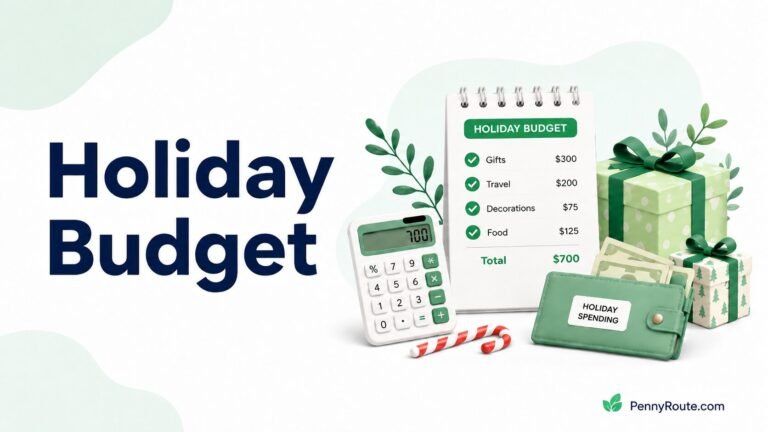
17. Holiday Spending
Holiday gifts are only one part of seasonal spending.
Food, travel, decorations, shipping, donations, school events, office celebrations, wrapping supplies, and last-minute purchases can turn one holiday period into a large household expense.
A realistic holiday target should reflect what you actually tend to spend, not just the gift list.
18. Birthdays, Weddings, and Other Celebrations
Birthdays, weddings, graduations, baby showers, anniversaries, and housewarming events happen throughout the year.
The expense may include more than the gift. Travel, clothing, meals, cards, and event costs can matter too.
Checking the calendar a few months ahead gives you more warning than waiting for an invitation to become this month’s problem.
19. Professional Licenses, Certifications, and Work Renewals
Some jobs come with costs that renew periodically.
Professional licenses, continuing education, certification fees, association dues, background checks, uniforms, safety equipment, or required training may not appear in every paycheck.
If your employer does not reimburse them, they need a place in your personal budget.
20. Planned Travel and Family Visits
Not every trip is a vacation.
Family visits, weddings, reunions, holidays, and other travel can involve airfare, gas, hotels, meals, pet care, parking, or local transportation.
Some travel is impossible to predict. Recurring trips, such as visiting family each holiday season, are easier to plan for because you already know they are likely.
21. Document Renewals and Government Fees
Passports, driver’s licenses, permits, identification cards, certificates, and other official documents can have renewal or replacement fees.
These costs may be years apart, which is exactly why they are easy to forget.
When you receive a new document, adding the next expiration date to your calendar can save a future scramble.
Personal and Everyday Costs
22. Clothing and Shoes
Clothing is easy to treat as optional until a coat wears out, work shoes need replacing, children change sizes, or an event requires something you do not already own.
You do not necessarily need a fixed clothing allowance every month.
A modest reserve can be enough if your spending tends to arrive seasonally or in larger bursts.
23. Haircuts, Grooming, and Personal Care
Haircuts, toiletries, salon visits, skincare, razors, makeup, and other personal-care purchases can become difficult to see when they are scattered across several stores and transactions.
If the total is consistently larger than expected, one broader personal-care category can make the spending easier to track.
24. Technology Repairs and Replacements
Phones, laptops, chargers, headphones, routers, printers, and other electronics eventually need repair or replacement.
You cannot know exactly when a device will fail.
But if your phone is five years old or your laptop battery is already struggling, replacement is not completely unforeseeable either.
Planning gradually is often easier than turning an aging device into an emergency the day it stops working.
25. Bank Fees, Late Fees, and Other Service Charges
ATM fees, account fees, replacement-card charges, late fees, document fees, and other service charges can quietly drain money.
A predictable service fee may belong in your budget. Repeated overdraft or late fees usually point to a timing, payment, or account problem that is better fixed than budgeted around.
Review the pattern rather than automatically treating every fee as a normal expense.
How to Find the Expenses Your Budget Keeps Missing
Memory is not the best tool for this job.
If you have the records, looking across a full year gives you the best chance of catching annual and seasonal costs. Go through bank and credit card activity and look for transactions that were:
- annual or semiannual;
- seasonal;
- larger than your normal monthly spending;
- repeated a few times during the year;
- expected but missing from your usual budget;
- stressful when they arrived.
The CFPB also recommends reviewing several months of past spending so less-frequent expenses such as insurance, medical costs, school clothing, seasonal spending, gifts, family support, and vacations are not missed.
Your calendar can uncover costs that account statements do not immediately explain.
Check birthdays, holidays, school dates, registration renewals, memberships, medical appointments, trips, annual services, and other events that tend to create spending.
You do not need to uncover every future expense in one afternoon.
Start with the costs that caused the most disruption over the past year. Other patterns will become easier to spot once you know what you are looking for.
Three Types of Forgotten Expenses Need Different Plans
Once you find a missing expense, how you prepare for it depends on what you actually know about the cost.
1. You Know the Amount and the Due Date
Examples include:
- $240 car registration due in three months;
- a $600 insurance premium due in six months;
- a $120 annual membership renewing in four months.
For these costs, work from the actual due date.
Amount still needed ÷ saving periods until due = amount to set aside each period
Planning Formula
Suppose your registration costs $240 and is due in three months.
$240 ÷ 3 months = $80 per month
Example Calculation
Saving $20 a month because $240 ÷ 12 = $20 would leave you with only $60 when the current bill arrives.
Once you pay the registration and the next renewal is about a year away, you can switch to:
$240 ÷ 12 = $20 per month
That keeps the next annual cycle funded from the beginning.
2. You Expect the Expense, but the Amount Changes
Car maintenance, gifts, medical spending, pet care, clothing, and home maintenance often fall into this category.
You know the expense will probably happen again, but there is no exact bill waiting for you.
Start with your own history.
If you spent roughly $600 on gifts and celebrations last year, $50 per month gives you a reasonable starting reserve for the next year.
If routine car costs came to about $900 last year, you might begin with $75 per month and adjust as the balance and actual expenses change.
The number does not need to be perfect. It needs to be more realistic than zero.
3. It Is a Genuine Financial Surprise
Some expenses are difficult to schedule or reasonably estimate in advance.
A sudden loss of income or a major unexpected repair may fall into this group.
That is where your emergency fund has a different job from money set aside for known future expenses.
Car registration may be inconvenient, but it is not an emergency when you know it renews every year.
Keeping that distinction clear helps prevent planned expenses from repeatedly eating into savings meant for genuine financial shocks.
When a Sinking Fund Makes Sense
A sinking fund can help with larger expenses you expect to pay later, such as car registration, annual insurance, holiday spending, or planned home and vehicle costs.
You build the money gradually so the full expense does not have to come from one month’s income.
Smaller costs that fit comfortably inside a normal budget category may not need their own sinking fund.
Add Forgotten Expenses Without Creating 25 New Categories

Finding 25 possible expenses does not mean your budget needs 25 new lines.
Start with the budget categories you already use.
For example:
- registration, routine maintenance, and parking can sit under Transportation;
- birthdays and weddings can sit under Gifts and Events;
- subscriptions, memberships, and insurance renewals can sit under Annual Bills;
- school supplies and activity fees can sit under Kids or School Costs.
Split a category only when the extra detail helps you make a better decision.
If car costs repeatedly catch you off guard, separating registration from maintenance may make sense. If the combined amount is easy to plan for, one transportation category may be simpler.
Use enough detail to know whether the money is there, but not so much that maintaining the budget becomes a chore.
A budget calendar can help with expenses that have known dates. Add renewals, registration deadlines, insurance payments, school seasons, holidays, and other predictable costs before the month arrives.
For a simple place to organize income and regular expenses alongside these set-asides, the Consumer.gov budget worksheet provides a straightforward starting point.
Give the Expense a Place Before It Arrives
You will never predict every expense perfectly.
You do not need to.
The bigger improvement comes from noticing which “surprises” have actually happened before and giving those costs a place before they return.
A bill you know is coming should not have to compete with groceries or next month’s rent simply because it does not arrive every month.
Start with the expenses that have caused the most disruption, fund them according to when they are likely to arrive, and adjust the amounts as your real spending becomes clearer.