You get paid, cover the important bills, buy a few small things, and somehow your money still disappears faster than expected. It is not always one big purchase causing the problem. Often, it is the flexible spending that slips through quietly.
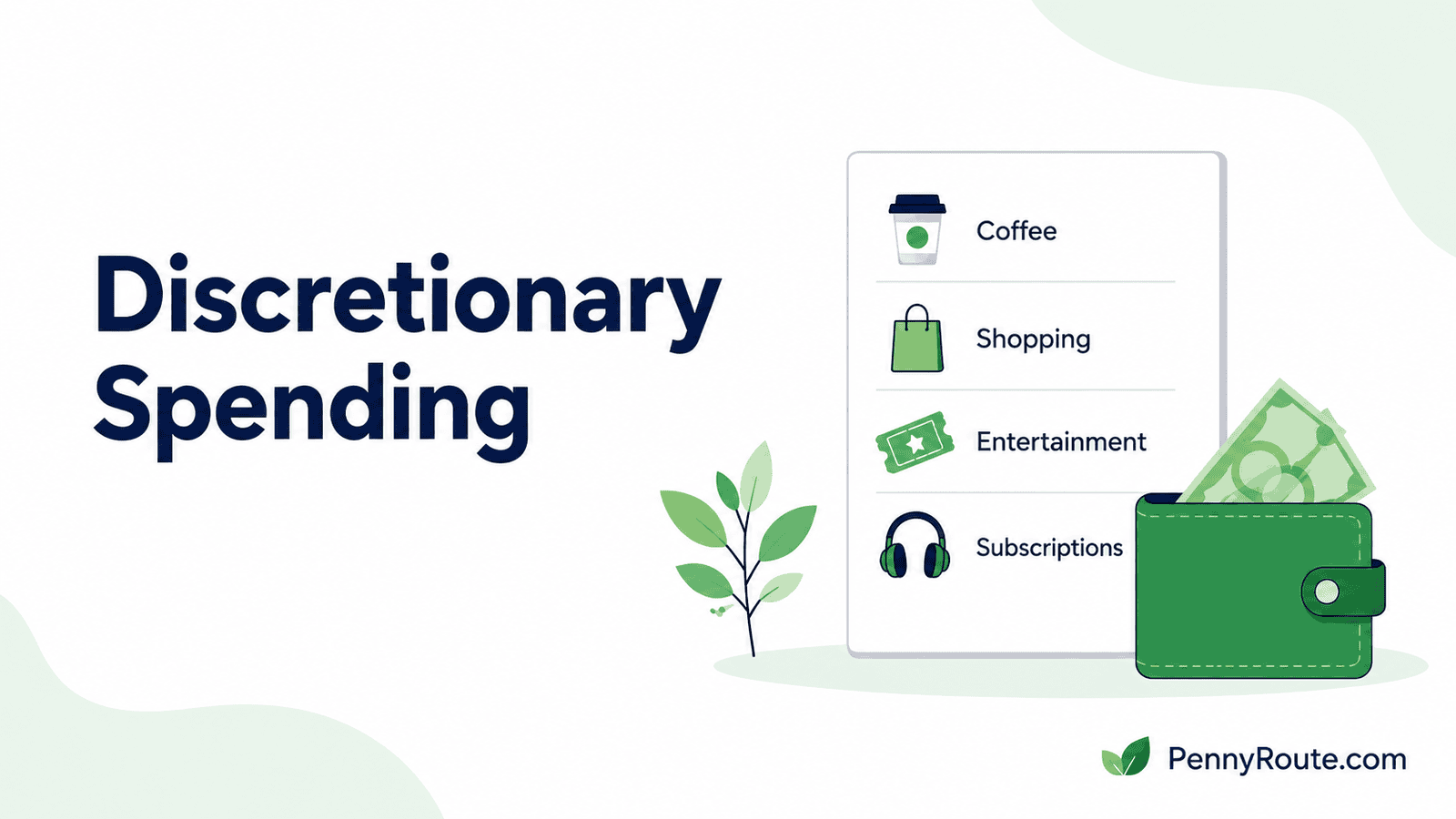
Discretionary spending includes the non-essential purchases you can reduce, delay, or skip when your budget needs more room. That does not mean these expenses are bad. It simply means they are adjustable.
Once you know what counts as discretionary spending, it becomes easier to set limits, protect your savings goals, and spend on the things you actually enjoy without guessing where your money went.
Disclaimer: This content is for informational purposes only and does not constitute financial advice. Discretionary spending limits should fit your own budget and financial situation.
- Discretionary spending is money you choose to spend on nonessential wants after necessary expenses are covered.
- Common examples include dining out, entertainment, hobbies, subscriptions, and nonessential shopping.
- The 50/30/20 method uses 30% of take-home pay for wants, but that is one budgeting framework, not a rule for everyone.
- Your discretionary spending limit should fit your income, essential expenses, savings, debt payments, and other priorities.
What Is Discretionary Spending?
Discretionary spending is the part of your spending that is optional or flexible. These are expenses you choose based on your lifestyle, preferences, habits, convenience, or comfort.
You may enjoy them. You may even value them. But if money gets tight, you usually have some control over how much you spend in these areas.
For example, rent is usually not discretionary because you need housing. But ordering takeout three times a week is discretionary because you could reduce it, cook more often, or choose cheaper meals.
Discretionary spending is not the same as “wasteful spending.” A gym membership, hobby, streaming service, or weekend dinner can be worth keeping if it fits your budget and supports your life.
The problem starts when flexible spending grows without a plan. That is when small choices begin pushing out savings, debt payoff, or bills.
When you make a budget, discretionary expenses help you see where you have room to adjust without touching your basic needs first.
Discretionary Spending Examples
Discretionary spending looks different for every household, but it usually includes purchases that make life more enjoyable, convenient, or comfortable.
Common discretionary spending examples include:
- Dining out
- Coffee shop drinks
- Food delivery fees
- Streaming services
- Subscription boxes
- Concerts, movies, and events
- Hobbies and crafts
- Gaming purchases
- Extra clothing and accessories
- Beauty treatments
- Home decor
- Vacations and weekend trips
- Gym memberships
- Apps and digital subscriptions
- Impulse buys
- Upgraded versions of things you already own
Some of these expenses may be perfectly reasonable. A $15 streaming service may bring more value than several random $15 purchases you barely remember. The point is not to remove every want from your life. The point is to choose them on purpose.
What Counts as Discretionary Spending?
Some expenses are easy to label. A concert ticket is usually discretionary. Rent usually is not.
Other expenses sit in the middle. Groceries are essential, but premium snacks, fancy drinks, and last-minute convenience items may be flexible. Transportation to work may be essential, but frequent rideshares for convenience may be discretionary if cheaper options are available.
Use this table as a practical starting point.
| Expense | Usually Discretionary? | Why |
|---|---|---|
| Restaurant meals | Yes | You can usually reduce, delay, or replace them with lower-cost meals. |
| Basic groceries | No | Food is essential, even if the exact grocery choices can vary. |
| Premium snacks and drinks | Sometimes | Basic food is necessary, but extras may be flexible. |
| Rent or mortgage | No | Housing is usually a required living cost. |
| Streaming subscriptions | Yes | They can usually be paused, canceled, or reduced. |
| Health insurance | No | It protects against major medical and financial risk. |
| Extra clothing | Usually | Basic clothing may be necessary, but extra outfits are flexible. |
| Childcare needed for work | Usually no | It may be essential if it allows you to earn income. |
| Weekend trips | Yes | Travel for fun can usually be delayed or reduced. |
| Rideshare trips | Sometimes | It depends on safety, location, schedule, and available alternatives. |
| Minimum debt payments | No | These are required payments that protect your credit and avoid fees. |
| Extra debt payments | Sometimes | They are planned financial choices, not everyday discretionary spending. |
A helpful test is simple:
Can I reduce, delay, pause, or skip this expense without losing a basic need?
If the answer is yes, it is probably discretionary.
Discretionary vs Non-Discretionary Spending
The difference between discretionary and non-discretionary spending comes down to flexibility.
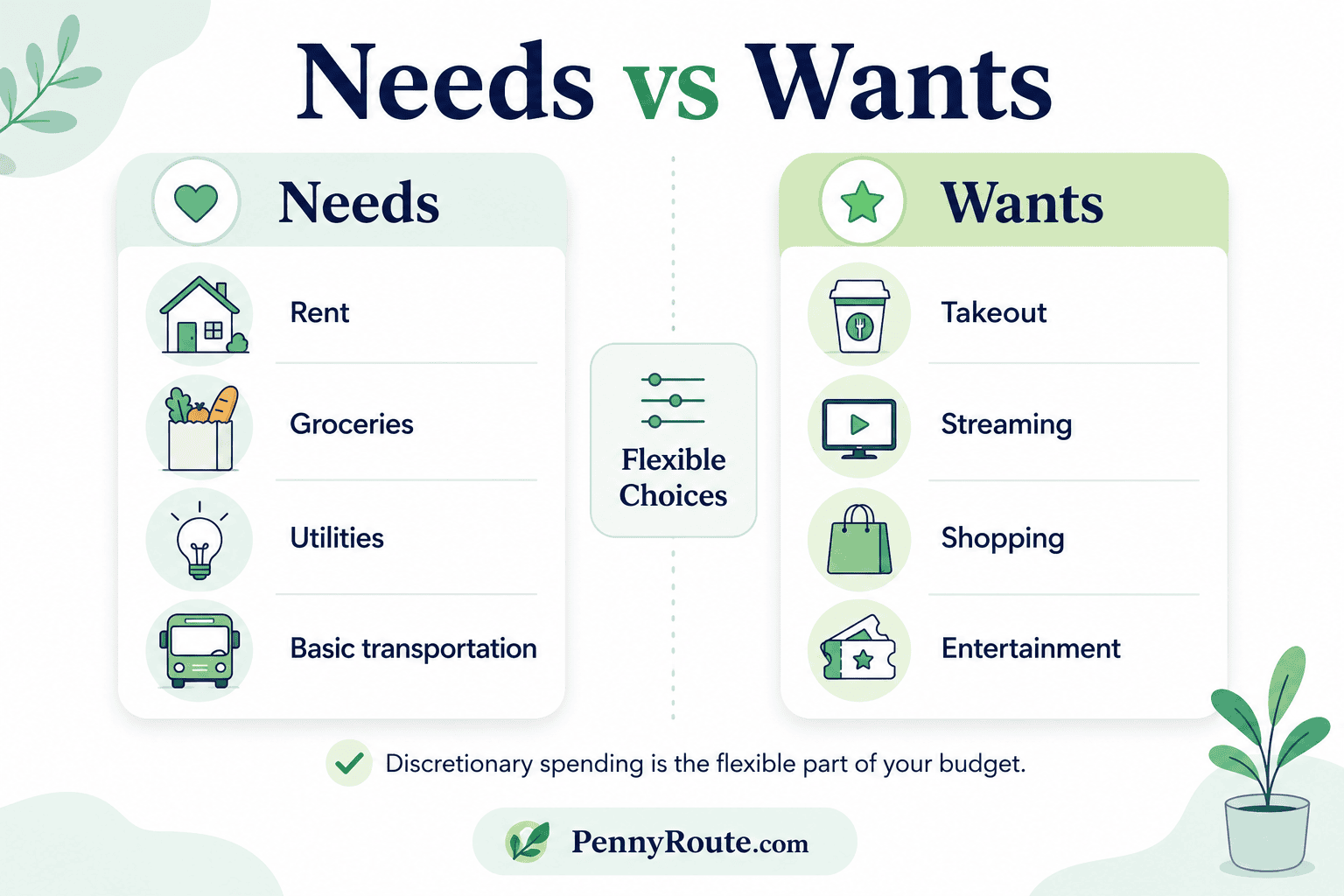
Non-discretionary spending covers basic needs and required obligations. These are expenses you usually need to pay to live safely, keep income coming in, protect your health, or avoid serious financial trouble.
The CFPB also explains budgeting through needs and wants, which is a helpful way to separate required expenses from flexible spending. In simple terms, needs are the expenses you must cover first, while wants are the purchases you can adjust when your budget needs more room.
Examples include:
- Rent or mortgage
- Basic groceries
- Utilities
- Health insurance
- Car insurance
- Transportation to work
- Minimum debt payments
- Childcare needed for work
- Prescription medicine
- Basic phone service
Discretionary spending covers wants, upgrades, extras, and lifestyle choices. These expenses may matter to you, but they usually have more room for adjustment.
Examples include:
- Dining out
- Entertainment
- Subscriptions
- Vacations
- Hobbies
- Decor
- Food delivery
- Extra shopping
- Premium upgrades
This distinction helps when you are reviewing your monthly budget categories. If money is tight, you usually want to review discretionary expenses before cutting essentials.
That does not mean essential bills are impossible to lower. You may be able to shop for cheaper insurance, reduce utility usage, or move to a more affordable phone plan. But discretionary spending is often the fastest place to find immediate savings.
Discretionary Spending vs Discretionary Income
Discretionary spending and discretionary income sound similar, but they are not the same.
Discretionary income is the money left after necessary expenses are paid. In simple budgeting terms, it is the money you have available after essentials like housing, food, utilities, insurance, transportation, and required payments.
Discretionary spending is how much of that leftover money you actually spend on non-essential purchases.
For example:
- Take-home pay: $4,000
- Essential expenses: $2,800
- Money left after essentials: $1,200
- Discretionary spending: $650
- Remaining money for savings, extra debt payments, or other goals: $550
In this example, the person has $1,200 available after essentials, but they spend $650 of it on flexible expenses.
That difference matters because having discretionary income does not automatically mean you are saving. If all of it goes to dining out, subscriptions, shopping, and convenience spending, your budget may still feel tight.
How to Calculate Your Discretionary Spending
You do not need a complicated spreadsheet to calculate discretionary spending. Start with one month of real numbers.
Use this simple process:
- Add up your take-home pay.
- Add up essential expenses.
- Add up non-essential expenses.
- Divide your discretionary spending by your take-home pay.
- Multiply by 100 to get your percentage.
Here is the basic formula:
discretionary spending ÷ take-home pay × 100 = discretionary spending percentage
Formula
Example:
- Take-home pay: $3,500
- Discretionary spending: $700
- Formula: $700 ÷ $3,500 × 100
- Result: 20%
That means 20% of take-home pay is going toward discretionary expenses.
This number is not automatically good or bad. A person with no debt, a strong emergency fund, and low fixed costs may have more room for flexible spending. Someone with credit card debt, high rent, or little savings may need a smaller discretionary spending limit for a while.
If you are new to budgeting, track the last 30 days first. Your bank and credit card statements will usually show the truth faster than memory will.
Signs Your Discretionary Spending Needs a Reset
You do not have to cut every fun expense just because you spend money on wants. But a reset may help if your flexible spending is making the rest of your budget harder.
Common signs include:
- Your bank balance surprises you before the next paycheck.
- You keep missing savings goals even when your income seems enough.
- You use credit cards for normal purchases because cash runs out.
- You regret purchases soon after making them.
- You are paying for subscriptions you rarely use.
- You avoid checking your transactions.
- You do not know where your money went at the end of the month.
- You keep saying, “It was only a few dollars,” but the total is not small.
A reset does not need to be dramatic. Sometimes the best fix is simply choosing a monthly limit and deciding which flexible expenses deserve a place in your budget.
Why Flexible Spending Gets Hard to Control
Discretionary spending often gets out of control because it feels harmless in the moment.
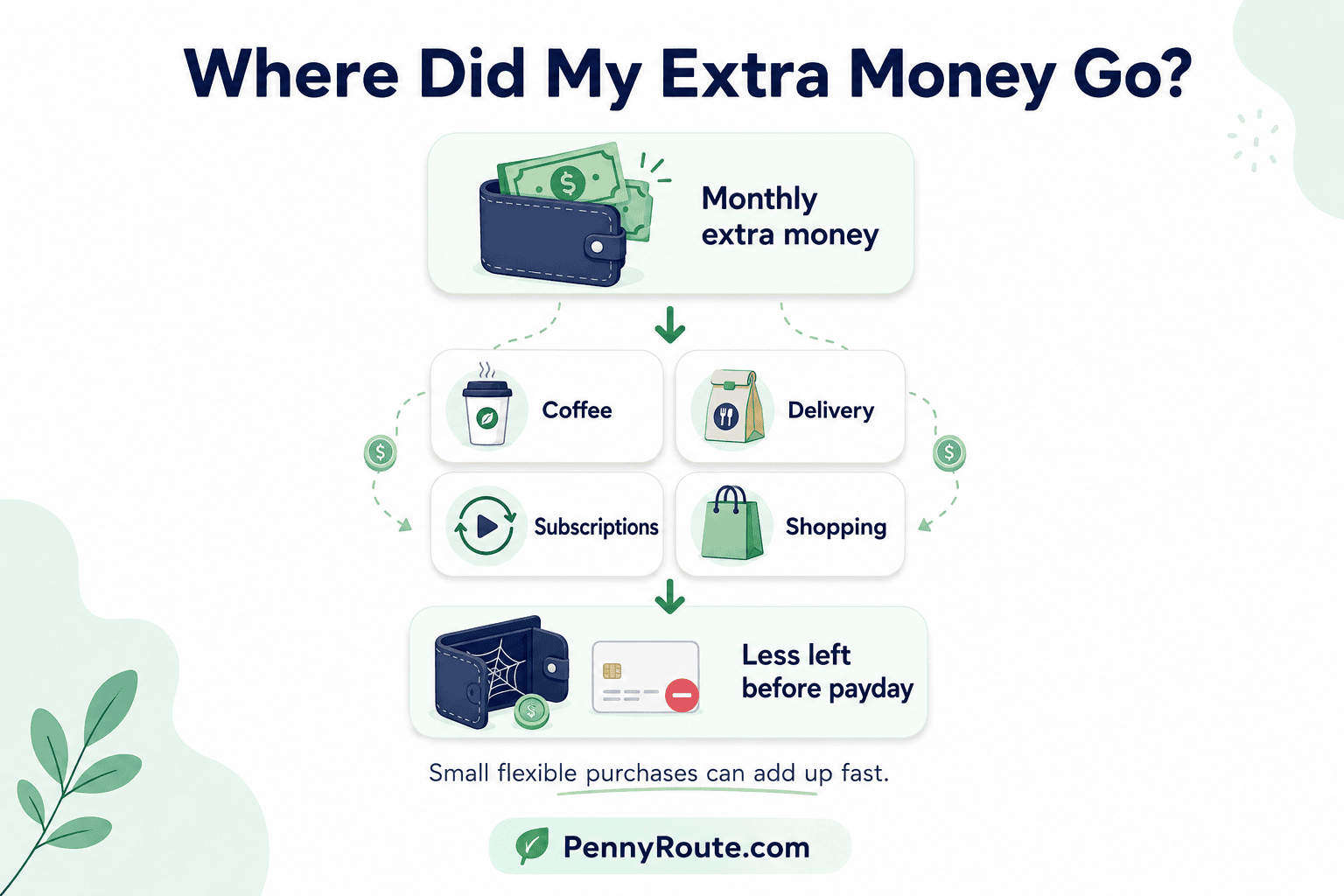
A $6 coffee, a $12 lunch upgrade, a $9 app charge, and a $28 delivery order may not seem like a big deal by themselves. But repeated small expenses can quietly take over money you planned to save.
A few common reasons flexible spending grows include:
Convenience spending adds up quickly
Food delivery, rideshare trips, last-minute purchases, and quick online orders save time. The problem is that convenience often carries extra fees, tips, markups, or repeat charges.
You do not need to remove convenience completely. It just needs a limit.
Subscriptions are easy to forget
Streaming services, apps, memberships, cloud storage, and subscription boxes can continue long after you stop using them regularly.
A forgotten $9.99 charge may not hurt once. But five or six forgotten charges every month can become real money.
Social spending can stretch your budget
Birthdays, dinners, trips, events, and group plans can make spending feel harder to control. Saying yes once may be fine. Saying yes to everything can slowly push your budget off track.
A simple monthly “social spending” limit can make this easier without making you feel like you have to disappear from everyone’s life.
Lifestyle creep feels normal
As income rises, wants often rise too. You upgrade your phone, eat out more, buy nicer things, or book bigger trips. Some upgrades may be worth it, but automatic upgrades can absorb raises before they improve your financial life.
This is why tracking your flexible spending matters even when your income goes up.
How Much Should You Spend on Discretionary Expenses?
There is no perfect number for discretionary spending, but the 50/30/20 rule gives a simple starting point.
Under the 50/30/20 rule, your take-home pay is divided into three broad groups:
- 50% for needs
- 30% for wants
- 20% for savings and extra debt payments
In that method, discretionary spending usually fits into the “wants” category.
For example, if your monthly take-home pay is $4,000, the 30% wants category would be $1,200.
But that does not mean you should automatically spend $1,200 on wants. Your best number depends on your real situation.
You may need a lower discretionary spending limit if:
- Your rent or mortgage takes up a large part of your income.
- You have high-interest credit card debt.
- You do not have an emergency fund.
- Your income changes from month to month.
- You are behind on bills.
- You are saving for an important goal.
You may have more room for discretionary spending if:
- Your essentials are affordable.
- You have no high-interest debt.
- You are saving consistently.
- Your emergency fund is in good shape.
- Your spending is planned instead of random.
A budget rule is a starting point, not a command. The right discretionary spending amount should help you enjoy some of your money while still making progress.
How to Control Discretionary Spending
You do not need to eliminate discretionary spending. The aim is to give it a limit that fits the rest of your budget.
Start With What You Actually Spend
Review recent transactions and total up spending on categories such as dining out, entertainment, subscriptions, hobbies, and nonessential shopping.
This gives you a realistic starting point instead of choosing a limit based only on what you think you spend.
Set a Flexible Spending Limit
After essential expenses, savings, and required debt payments are accounted for, decide how much room is available for wants.
You can use one overall discretionary amount or divide it among a few categories. Choose whichever makes your spending easier to manage.
Slow Down Unplanned Purchases
Use a waiting period for impulse purchases so you have time to decide whether the item still fits your budget once the initial urge passes.
Review Recurring Extras
Subscriptions and memberships can quietly use part of your discretionary budget each month. Periodically check whether you still use them enough to justify the cost.
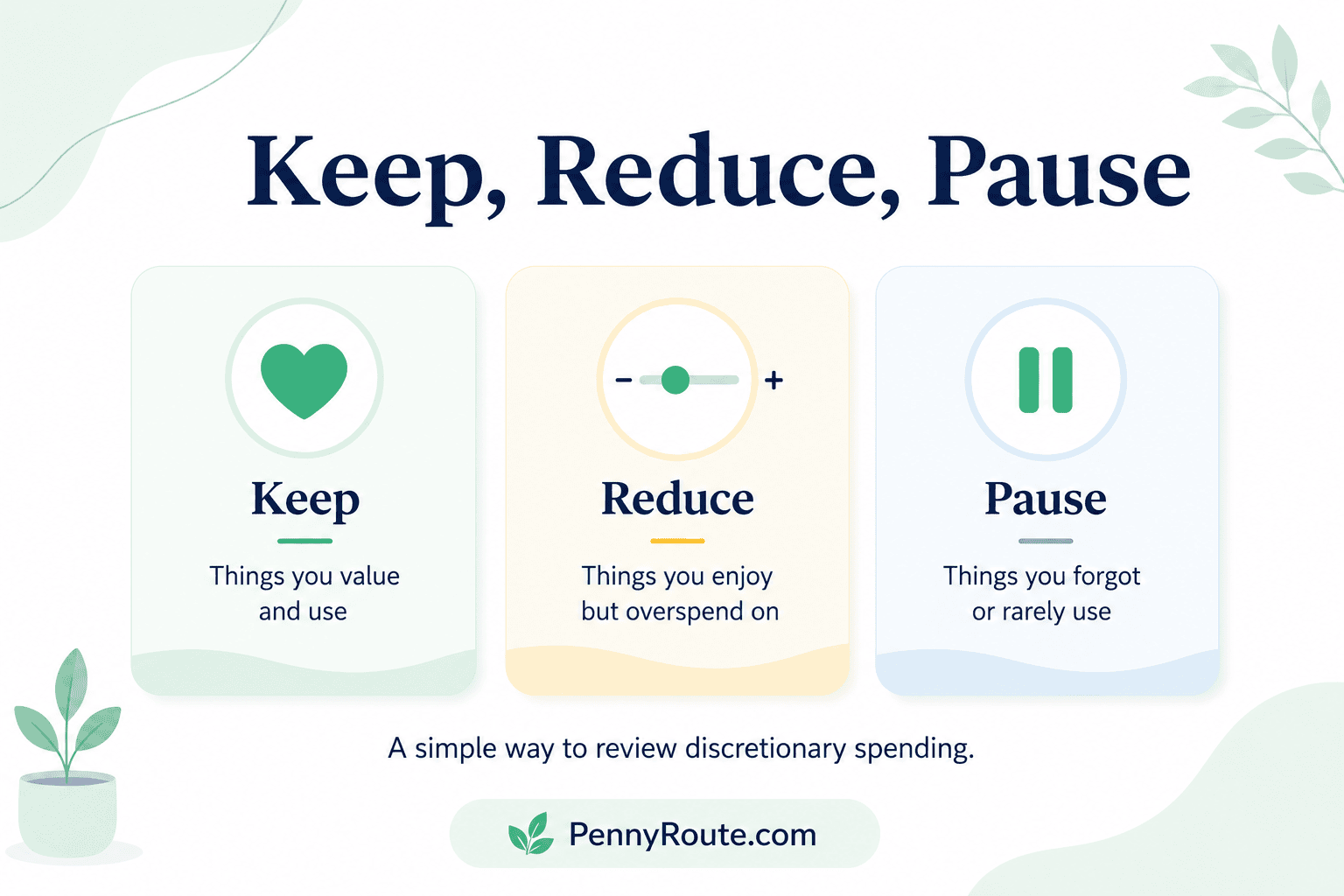
If your discretionary spending regularly exceeds the amount you planned, adjust either the spending limit or the categories rather than assuming the entire budget has failed.
Simple Discretionary Spending Plan Example
Here is how a simple discretionary spending plan might look for someone earning $3,800 per month in take-home pay.
| Category | Monthly Limit |
|---|---|
| Dining out and coffee | $250 |
| Streaming and subscriptions | $60 |
| Shopping and personal items | $150 |
| Entertainment and events | $120 |
| Hobbies | $75 |
| Miscellaneous wants | $95 |
| Total discretionary spending | $750 |
In this example, discretionary spending is about 20% of take-home pay.
That leaves more room for essentials, savings, and debt payoff. It also avoids the “no fun allowed” budget that many people quit after two weeks.
Your numbers may be higher or lower. The goal is to set a limit that fits your real income and priorities.
If you struggle with unplanned purchases, a deeper look at how to stop overspending can help you build better spending rules without relying on willpower alone.
What to Do If Your Discretionary Spending Is Too High
If your number is higher than expected, do not panic. Start with the easiest wins first.
Begin with expenses that are:
- Unused
- Forgotten
- Repeated too often
- More expensive than you realized
- Not connected to real enjoyment
- Easy to replace with a cheaper option
For example, canceling two unused subscriptions is easier than cutting every restaurant meal. Reducing delivery fees may be easier than giving up all social plans. Setting a shopping limit may work better than promising to “stop buying things.”
Small changes count when they repeat every month.
If you lower discretionary spending by $150 per month, that is $1,800 per year. That money could help build savings, pay down credit card debt, or cover irregular expenses that usually catch you off guard.
Give Flexible Spending a Limit That Fits
Discretionary spending is not something you need to eliminate. It gives you room for things you enjoy, from dining out and hobbies to entertainment and nonessential shopping.
The important part is making sure that spending fits alongside your essential expenses, savings, debt payments, and other priorities.
Set a limit that works with your actual budget, review it when your income or expenses change, and adjust the amount when needed.