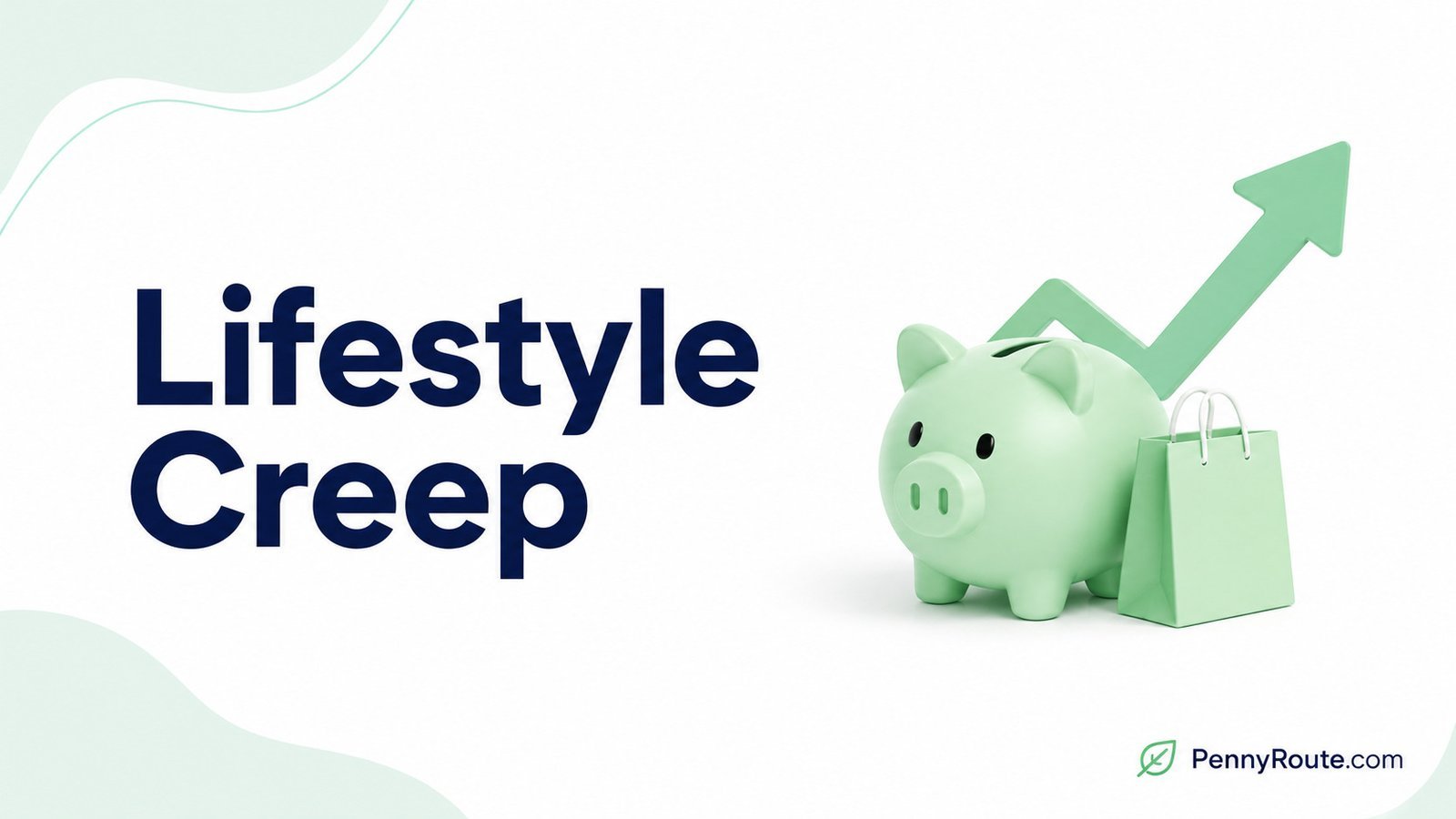
Earning more should make life easier, not simply make your normal life more expensive. Lifestyle creep starts when raises, bonuses, or other income increases are gradually absorbed by higher spending until the extra money barely feels like extra money anymore.
Spending more as your income grows is not automatically a problem. A better home, more convenient services, or experiences you genuinely value may be worth paying for. The trouble starts when those upgrades keep becoming permanent expenses without leaving enough room for saving, debt progress, or the flexibility you hoped the higher income would give you.
Disclaimer: This content is for informational purposes only and does not constitute financial advice. Consider your own financial situation when making spending decisions, and consult a qualified professional when needed.
Quick Overview
- Lifestyle creep happens when higher income gradually leads to higher spending.
- Not every lifestyle upgrade is a problem.
- Recurring costs deserve more caution because they are harder to undo.
- When income rises, decide what should improve your life now and what should support future priorities.
- If spending has already crept up, start with the costs that give you the least value.
What Is Lifestyle Creep?
Lifestyle creep happens when your spending gradually rises as your income rises, and the higher level of spending starts to feel normal.
For example, a raise might lead to more takeout, a pricier phone plan, upgraded travel, or a higher car payment. None of those choices is automatically a problem. The concern is when several of them become part of your regular spending and most of the extra income disappears with them.
You may also see the term lifestyle inflation used for the same general pattern. Both describe spending that grows along with income until the more expensive lifestyle becomes the new baseline.
That is why lifestyle creep is often easy to miss. There may not be one obviously bad purchase, just a series of upgrades that slowly raise the cost of maintaining your usual life.
Lifestyle Creep vs. Normal Lifestyle Upgrades
Spending more after your income rises is not automatically lifestyle creep. Some upgrades are deliberate, affordable, and genuinely make daily life better.
The difference is usually whether the higher spending was chosen on purpose and still leaves enough room for the rest of your priorities.
| Normal lifestyle upgrade | Lifestyle creep |
|---|---|
| Chosen deliberately | Happens gradually or almost automatically |
| Adds clear value to your life | Mostly raises the cost of your normal routine |
| Still leaves room for saving and other priorities | Starts crowding those priorities out |
| Fits comfortably over time | Leaves less flexibility each month |
A better apartment, more reliable transportation, or paying for a service that saves you meaningful time may be worth the extra cost. The concern is when spending keeps rising simply because your income did, and the higher cost becomes difficult to reverse.
Where Lifestyle Creep Usually Shows Up
Lifestyle creep often shows up in everyday categories rather than one obvious purchase.
- Housing: more space, a higher rent or mortgage, or added amenities
- Transportation: a larger car payment, frequent upgrades, or higher ongoing vehicle costs
- Dining and convenience: more takeout, delivery, or pricier everyday choices
- Subscriptions and memberships: more recurring services becoming part of the monthly budget
- Travel and entertainment: spending more often or choosing more expensive options
- Shopping and personal spending: gradually moving toward pricier brands, products, or routines
- Paid services: paying for convenience more often as income grows
Seeing one of these changes does not automatically mean you have lifestyle creep. It becomes more telling when several categories rise together and the extra income is no longer creating much additional breathing room.
Fixed-Cost Creep Is Harder to Undo
Some spending increases are easy to scale back. Eating out less often or cutting back on entertainment can usually change from one month to the next.
Fixed costs are different. A higher rent, car payment, insurance premium, phone plan, or recurring service keeps showing up whether or not you still feel the upgrade was worth it.
That makes recurring commitments more important to think through before they become part of your normal budget.
For example, an extra $150 per month may not look dramatic next to a higher paycheck, but it adds $1,800 to your annual spending. If several fixed costs rise at the same time, a raise can disappear surprisingly quickly.
The issue is not that fixed expenses are always bad. It is that they leave you with less room to adjust later if income drops, another bill rises, or your priorities change.
How to Decide Whether a Lifestyle Upgrade Is Worth Keeping
Not every higher expense needs to be cut back. Some upgrades are worth the money because they make daily life safer, easier, healthier, or simply more enjoyable.
A better way to judge an upgrade is to look at the value it adds and the pressure it creates.
Keep It If It Clearly Improves Your Life
An upgrade may be worth keeping if you use it regularly, it solves a real problem, and the cost still fits comfortably with the rest of your priorities.
That could be a more reliable car, a better apartment in a safer or more convenient location, or paying for a service that saves you meaningful time each week.
Reduce It If You Like the Benefit but Not the Cost
Sometimes the upgrade itself is useful, but the version you chose is more expensive than you need.
You might keep the gym membership but switch plans, use delivery less often, choose a smaller phone package, or keep the convenience while lowering how often you pay for it.
That lets you hold on to the part you value without carrying the full cost.
Reverse It If It Mostly Adds Pressure
Some upgrades stop feeling worthwhile once they become part of the monthly routine.
If a recurring cost is rarely used, mostly there because you are trying to keep up with other people financially, or regularly squeezes money away from bills, saving, or other priorities, it may be worth stepping back from it.
You do not have to undo every lifestyle improvement. Focus first on the upgrades that cost more than the value they are giving you.
How to Avoid Lifestyle Creep When Your Income Goes Up
A raise gives you more room to work with, but that room can disappear quickly if every part of your lifestyle expands at the same time.
Decide What Part of the Increase Improves Life Now
There is nothing wrong with enjoying some of the extra income. You may want better groceries, an occasional trip, more convenience, or something else that genuinely improves your day-to-day life.
Choosing that spending deliberately is different from letting the entire increase blend into everyday expenses without noticing.
Protect Part of the Increase for Future Priorities
Before the higher paycheck starts to feel normal, decide whether some of it should go toward saving, debt, investing, or another financial priority.
There is no percentage that works for everyone. Someone paying off expensive debt may make a different choice from someone building savings or preparing for a home purchase.
Upgrade One or Two Areas, Not Everything at Once
A raise becomes surprisingly easy to lose when several categories move up together.
An extra $400 a month can disappear through a nicer apartment, more takeout, a new subscription, and slightly more shopping without any single change looking excessive.
Choosing the upgrades you care about most lets you enjoy the higher income without raising the cost of everything around it.
Be More Careful With New Fixed Costs
A one-time celebration is easier to absorb than another payment that returns every month.
Before adding a larger rent payment, vehicle cost, membership, or other ongoing commitment, look at how much of the income increase it would permanently use. The higher cost may fit today but still leave less flexibility when another expense changes later.
Compare Your New Spending With Your Old Baseline
After you have been earning the higher amount for a while, compare where the extra money is actually going.
If your take-home pay rose by $600 a month but regular spending rose by almost the same amount, you have a clear picture of how much of the increase became lifestyle cost.
You do not need every extra dollar to show up in savings. The comparison simply helps you see whether the higher income is giving you more choices or mostly supporting a more expensive routine.
What If Lifestyle Creep Has Already Happened?
You do not need to undo every upgrade at once. Start with the costs that are easiest to change and give you the least value.
A sensible order is:
- Remove easy recurring costs first. Cancel services, memberships, or subscriptions you barely use.
- Trim flexible spending that has quietly grown. That could mean less delivery, fewer convenience purchases, or choosing a cheaper version of something you still enjoy.
- Review larger commitments only if they are creating real pressure. Housing, transportation, and other major fixed costs usually take more time and effort to change.
You do not have to undo every improvement you made. Focus on getting some breathing room back while keeping the upgrades that still feel worth the cost.
A Raise Should Give You More Options, Not Just More Expenses
Higher income should leave you with more choices, not simply a more expensive version of the same month.
That might mean keeping a few upgrades you genuinely enjoy while also leaving more room for saving, debt progress, travel, time off, or other priorities that matter to you.
If every raise is quickly absorbed by higher regular spending, the extra income stops creating much flexibility. Keeping even part of that increase uncommitted gives you more room to decide what you want the money to do next.