
Being a student is expensive. Between food, rent, textbooks, transport, and social plans, your money can disappear faster than you expected.
And when your income is limited or irregular, saving money can feel even harder. You may be working part-time, relying on financial aid, getting help from family, or trying to stretch a small monthly budget while still having a life.
Saving money as a student does not mean cutting out every coffee, skipping every hangout, or turning your budget into a punishment. It means making small, smart choices that help you spend less on the things that do not matter as much, so you have more room for the things that do.
Disclaimer: This content is for informational purposes only and does not constitute financial advice. Please consult a qualified professional before making financial decisions.
Quick Overview: How to Save Money as a Student
- Start with a simple student budget based on your real income and expenses.
- Focus on your biggest costs first, such as housing, food, textbooks, and transport.
- Use student discounts, campus resources, and free events before paying full price.
- Set a weekly spending limit for fun so saving money does not feel too restrictive.
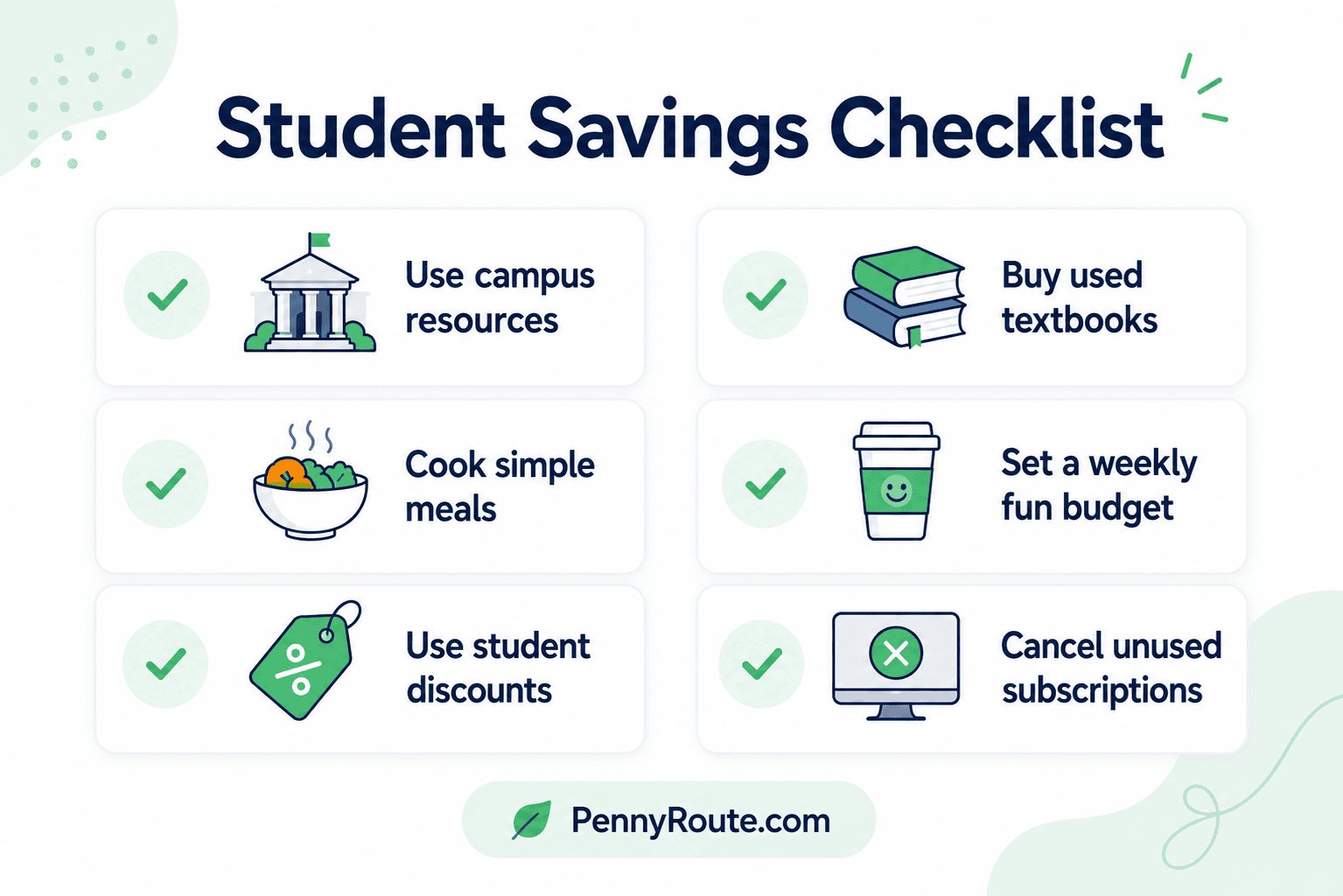
- Small habits, like cooking more meals, canceling unused subscriptions, and buying used textbooks, can add up over time.
How Can Students Save Money?
Students can save money by tracking where their money goes, setting a simple weekly budget, using student discounts, buying used textbooks, cooking more meals, sharing housing costs, and choosing free or low-cost social plans.
The goal is not to stop spending completely. That usually does not work for long.
A better approach is to spend less on things you barely notice, so you can keep room in your budget for the things you actually care about. For example, you might cut back on unused subscriptions, stop buying food on campus every day, or use your student discount before paying full price.
Small choices like these can make your money last longer without making student life feel miserable.
Here are some of the best ways to start:
- Know how much money you have coming in each month.
- Track your regular expenses, including food, rent, transport, phone bills, and subscriptions.
- Set a weekly limit for flexible spending.
- Use campus resources before paying for things separately.
- Save a small amount when you can, even if it is only $5 or $10.
- Plan for irregular costs, such as textbooks, travel, course supplies, or club fees.
Saving money as a student becomes easier when your plan matches your real life. You do not need a perfect budget. You need a budget you can actually follow.
Why Saving Money as a Student Feels Hard
Saving money as a student can feel difficult because your expenses are often steady, but your income may not be.
Rent, food, transport, phone bills, course materials, and social plans can show up every month. But your income might come from a part-time job, financial aid, scholarships, family support, or seasonal work. Some months feel manageable. Others feel like your bank account is quietly packing its bags.
There is also the pressure to keep up socially. A quick lunch, a weekend plan, a birthday dinner, or a last-minute trip can all seem small in the moment. But when they happen often, they can eat into your budget fast.
Another challenge is that student expenses are not always predictable. You might suddenly need a textbook, lab fee, train ticket, software subscription, or replacement charger. These costs are easy to forget until they appear.
That is why student budgeting needs to be flexible. Instead of trying to control every penny perfectly, focus on knowing your regular costs, planning for surprise expenses, and setting limits that still leave room for normal student life.
Start With a Simple Student Budget
Before you try to save more money, get clear on what is coming in and what is going out.
Your budget does not need to be fancy. It can be a spreadsheet, a notes app, a budgeting app, or a notebook. The goal is simply to see your money clearly instead of guessing where it went.
Start by listing your monthly income.
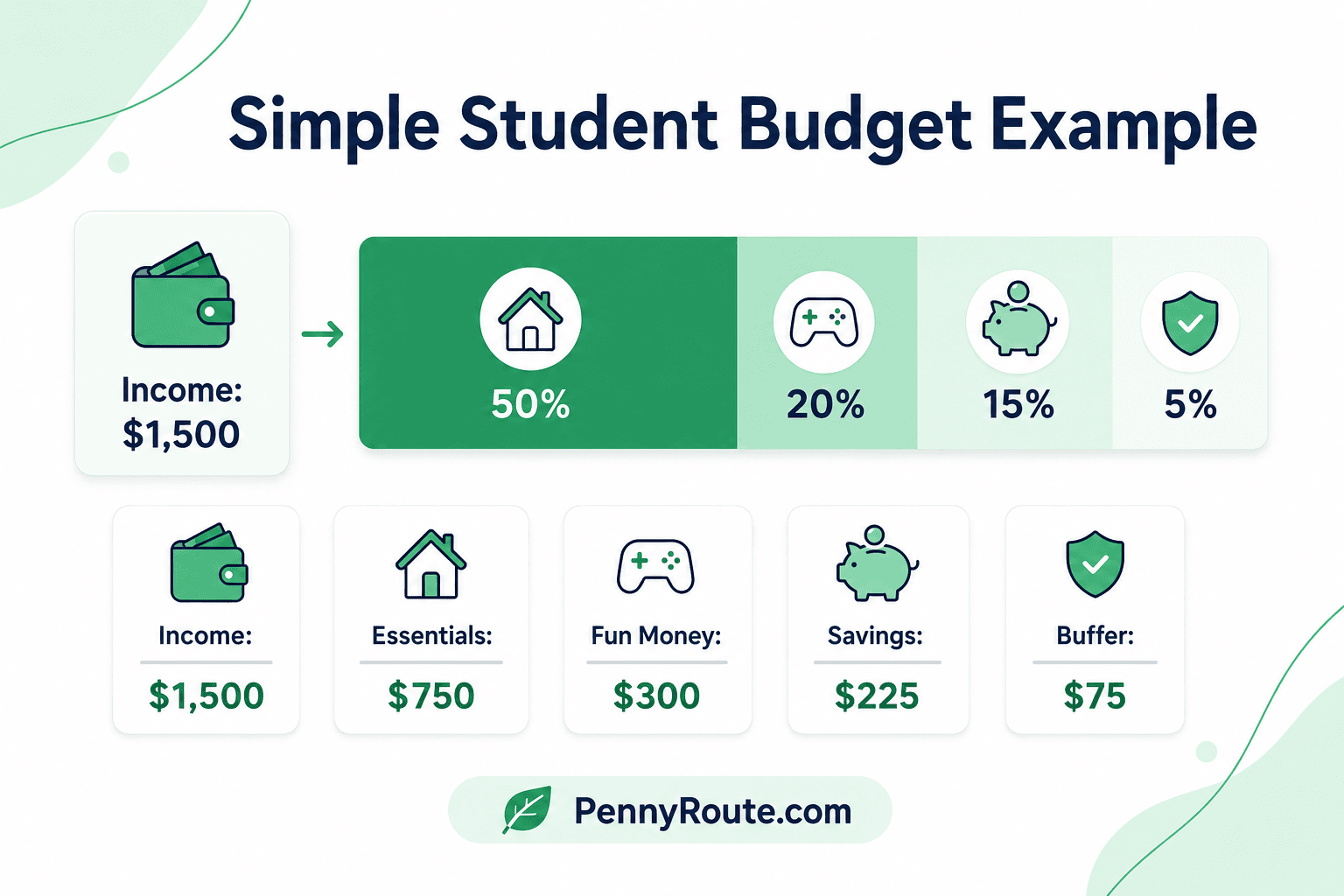
| Monthly Money Source | Example Amount |
|---|---|
| Part-time job | $600 |
| Family support | $200 |
| Scholarship or financial aid refund | $150 |
| Total monthly money | $950 |
Next, list your main expenses.
| Spending Category | Example Amount |
|---|---|
| Food | $220 |
| Transport | $80 |
| Phone bill | $40 |
| School supplies | $60 |
| Fun money | $120 |
| Savings | $80 |
| Buffer for unexpected costs | $100 |
| Total planned spending | $700 |
This is only an example, so your numbers may look very different. You might pay rent, have a car, buy groceries for yourself, or live at home and have fewer monthly bills.
The important part is to give every major expense a place in your budget.
Also, keep a small buffer if you can. Student life comes with random costs, and they are much less stressful when you have a little money set aside for them. Even a small buffer can help you avoid using a credit card or dipping into savings every time something unexpected happens.
A good student budget should answer three simple questions:
- How much money do I have this month?
- What do I need to pay for first?
- How much can I spend freely without creating stress later?
Once you know those answers, saving money becomes a lot easier. You are no longer trying to “be better with money” in a vague way. You have a simple plan you can actually use.
25 Ways to Save Money as a Student
Saving money as a student is easier when you focus on real spending areas instead of random tiny cuts.
You do not need to follow every tip on this list. Start with the ones that fit your life right now. Even a few changes can help you stretch your money further.
Save Money on Food
Food is one of the easiest areas to overspend because small purchases feel harmless. A coffee here, a sandwich there, one quick delivery order after a long day, and suddenly your food budget looks personally offended.
1. Cook a Few Simple Meals Each Week
You do not need to become a meal-prep expert. Start with a few easy meals you can repeat, such as pasta, rice bowls, wraps, eggs, oatmeal, soup, or sandwiches.
Even cooking two or three meals a week can reduce how often you buy food on campus or order takeout.
2. Use Your Meal Plan Before Buying Extra Food
If you already have a meal plan, use it properly before spending more money elsewhere.
Check how many meals, swipes, or dining credits you have left each week. If you often run out too early or leave unused meals behind, adjust how you use the plan. You may even be able to choose a better plan next semester.
3. Shop With a List
Going grocery shopping without a list is how snacks, random sauces, and “this might be useful” items sneak into your cart.
Before you shop, plan a few meals and write down what you actually need. A simple list helps you avoid buying food that goes bad before you use it.
4. Buy Store-Brand Basics
Store-brand items are often cheaper than name-brand versions, especially for basics like rice, pasta, oats, canned beans, frozen vegetables, bread, and cleaning supplies.
You do not have to switch everything. Start with items where the difference does not matter much to you.
5. Split Groceries With Roommates
If you live with roommates, consider sharing basic items like rice, cooking oil, eggs, milk, spices, or cleaning supplies.
This works best when everyone agrees on what to share and how costs will be split. Keep it simple, or it can turn into a tiny household accounting department nobody asked for.
Save Money on Textbooks and Supplies
Textbooks and course materials can take a painful bite out of your budget, especially at the start of a semester. The key is to avoid paying full price unless you truly need to.
6. Wait Until Classes Start Before Buying Every Book
It can be tempting to buy every textbook on the course list before the semester begins, but waiting can save you money.
Sometimes a professor will say a book is optional, only certain chapters are needed, or an older edition is fine. Give yourself a little time to confirm what is actually required before spending.
7. Buy Used or Rent Textbooks
Used textbooks and rentals are often much cheaper than new copies. Check your campus bookstore, online marketplaces, student groups, and textbook rental sites before buying new.
If you only need the book for one semester, renting may be enough. If it is for your major and you will use it again, buying used may be the better choice.
8. Check Your Library First
Before buying a book, search your college or university library. Some libraries keep textbooks on reserve, offer digital access, or provide short-term borrowing for high-demand course materials.
Even if you cannot borrow the book for the full semester, library access can help while you decide whether you really need to buy it.
9. Use Free Open Educational Resources When Allowed
Some courses use free or low-cost learning materials known as open educational resources. These may include digital textbooks, readings, worksheets, and course modules.
Check your syllabus or ask your professor whether free alternatives are allowed. A quick question could save you a surprising amount.
For some courses, free open educational resources like OpenStax may help reduce textbook costs. OpenStax provides free online textbooks and low-cost print options for many high school and college subjects.
10. Sell Books After the Semester
If you bought textbooks you no longer need, try selling them as soon as the semester ends. Books often lose value when new editions come out, so waiting too long can reduce what you get back.
You can sell through your campus bookstore, student groups, online marketplaces, or directly to another student taking the same class next term.
Save Money on Housing
Housing is often one of the biggest student expenses, so even small savings here can make a big difference.
The cheapest option is not always the best option, though. A lower rent can still become expensive if it comes with high transport costs, extra bills, or a stressful living setup.
11. Compare the Full Cost, Not Just Rent
When comparing places to live, look beyond the monthly rent.
Factor in:
- Utilities
- Internet
- Laundry
- Transport
- Parking
- Food costs
- Furniture
- Deposit or move-in fees
For example, an apartment that costs $100 less per month may not actually save money if you need to spend more on transport, utilities, or parking.
Before choosing housing, ask: “What will this cost me in a normal month?”
12. Share Housing Costs With Roommates
Living with roommates can lower your rent, utilities, internet, and household supply costs.
Before moving in together, talk about money clearly. Decide how bills will be split, when payments are due, and what shared items everyone will contribute to.
It may feel awkward at first, but it is much better than arguing later over electricity, toilet paper, or someone’s mysterious 40-minute showers.
13. Watch Utility Bills
If you pay for utilities separately, small habits can help keep costs lower.
Try simple changes like turning off lights, unplugging chargers, washing full loads of laundry, and being mindful of heating or cooling. These habits may not make you rich, but they can stop your bills from creeping up.
If you live with roommates, agree on basic rules so one person is not trying to save while another treats the thermostat like a personal weather machine.
14. Consider Commuting Only If It Truly Saves Money
Living at home or farther from campus can save a lot on rent, but commuting has costs too.
Before deciding, add up:
- Fuel, bus, train, or transit pass costs
- Parking fees
- Extra food costs while away from home
- Travel time
- Missed campus access or work opportunities
Commuting can be a smart money move, especially if you live with family. Just make sure the total savings are worth the time, cost, and convenience trade-off.
Save Money on Transport
Transport costs can quietly take up more of your budget than expected. Even if each trip feels small, daily travel, parking, fuel, rideshares, or train tickets can add up quickly.
The goal is not always to choose the cheapest option. It is to choose the option that is affordable, reliable, and realistic for your schedule.
15. Use Student Transit Passes
Many colleges and universities offer discounted bus, train, or subway passes for students. Some include public transport access as part of student fees, which means you may already be paying for it.
Check your school website, student services office, or local transit authority to see what discounts are available.
Even a small discount on daily travel can save a lot over a full semester.
16. Walk, Bike, or Carpool When It Makes Sense
If you live close to campus, walking or biking can help you save money while adding a little movement to your day. Not a bad deal, as long as the route is safe and practical.
For longer distances, carpooling with classmates or roommates can reduce fuel and parking costs. You can rotate driving, split gas, or share rides for early classes and late study sessions.
Just make sure the arrangement is clear. Nobody wants a “quick ride” to turn into an unpaid taxi subscription.
17. Avoid Bringing a Car Unless You Truly Need It
Having a car at school can be convenient, but it can also be expensive.
Before bringing one, think about the full cost:
- Insurance
- Fuel
- Parking permits
- Maintenance
- Repairs
- Registration fees
- Occasional tickets or towing risks
If your campus is walkable or public transport is reliable, skipping the car may be one of the easiest ways to save money as a student.
If you do need a car, look for ways to reduce costs, such as sharing rides, choosing cheaper parking options, driving less often, and keeping up with basic maintenance before small problems become expensive ones.
Save Money on Social Life
Saving money does not mean staying in your room while everyone else has fun.
Your social life can still exist. It just needs a little planning so every hangout does not turn into dinner, drinks, rideshares, tickets, and a confused look at your bank balance the next morning.
18. Set a Weekly Fun-Money Limit
Instead of trying to avoid all fun spending, give yourself a set amount for it.
This could cover things like:
- Coffee with friends
- Takeout
- Movies
- Small events
- Weekend plans
- Snacks or treats
For example, if you can afford $40 a week for flexible spending, you can decide what matters most. Maybe you skip two random takeout orders so you can afford a birthday dinner without stress.
A fun-money limit helps you enjoy yourself without guessing whether you can afford it.
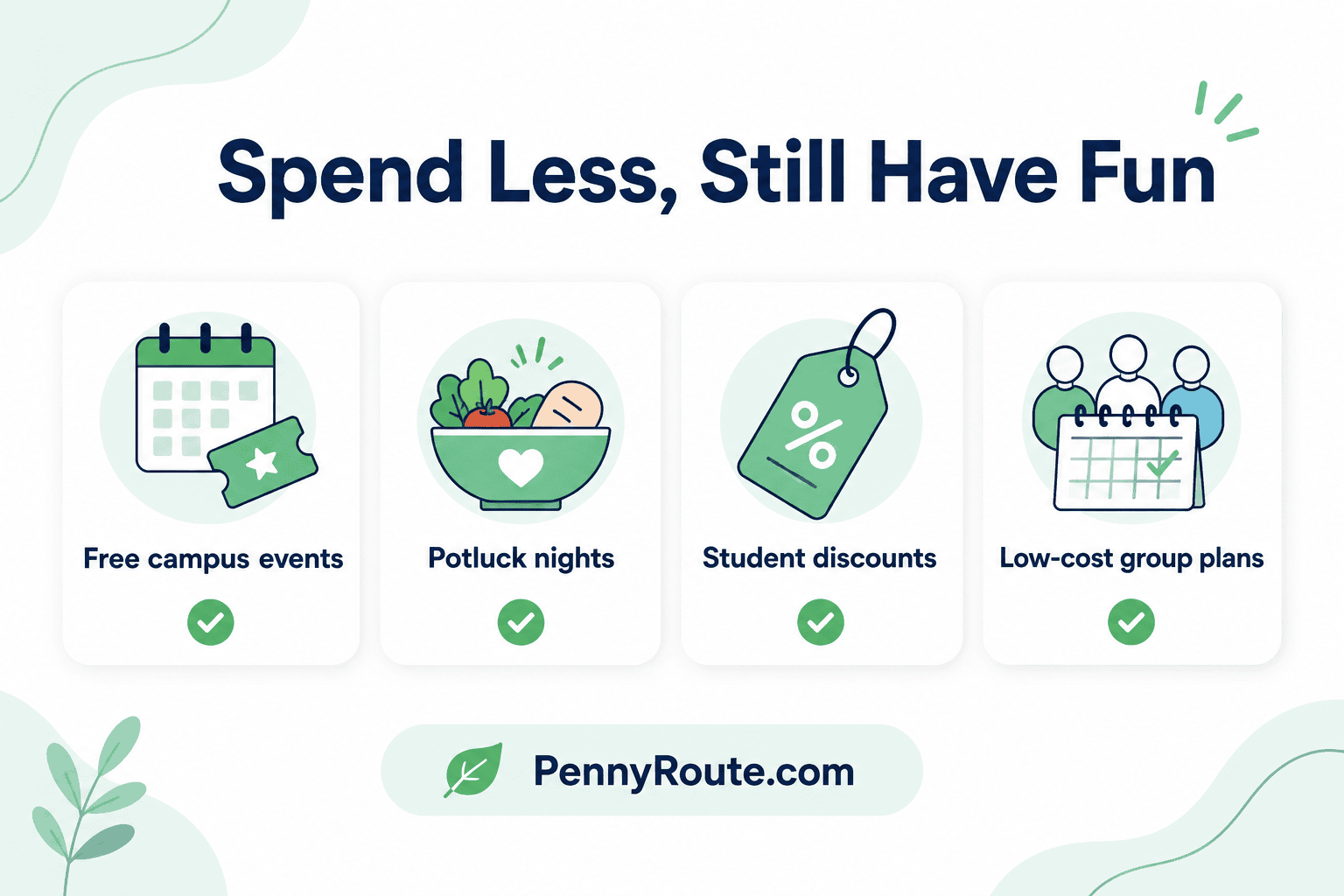
19. Use Free Campus Events
Most campuses offer free or low-cost events throughout the year. These may include movie nights, concerts, club events, sports games, workshops, fitness classes, cultural events, or guest talks.
You are often already paying student fees that help fund these activities, so it makes sense to use them.
Check your campus event calendar, student union page, residence hall notices, or club boards. You may find more going on than you expected.
20. Host Low-Cost Nights With Friends
Not every plan needs to involve going out.
You can save money and still have a good time with simple ideas like:
- Potluck dinners
- Game nights
- Movie nights
- Study-and-snack sessions
- Group walks or hikes
- DIY coffee nights
- Themed dinner nights
The best part is that low-cost plans often feel more relaxed. No one has to worry about expensive menus, parking, tips, or splitting a bill that somehow includes three things they did not order.
21. Say Yes to the Plans You Actually Care About
Trying to join every paid plan can drain your budget fast.
Instead, choose the things that matter most to you. Maybe you care about concerts but not eating out every weekend. Maybe you love coffee meetups but do not care about shopping trips. Maybe you would rather save for one weekend trip than spend on several random nights out.
This is not about being boring. It is about spending on purpose.
When you know what is worth it to you, it becomes easier to say no to the plans that are not.
Save Money on Everyday Spending
Everyday spending is sneaky because it usually does not feel like a big deal in the moment.
A small subscription, a quick snack, a delivery fee, or one impulse buy may not hurt your budget alone. But when these small costs repeat often, they can quietly take money away from food, rent, savings, or the things you actually enjoy.
22. Check Student Discounts Before Paying Full Price
Before buying something for school or everyday use, check whether a student discount is available.
Student offers can cover things like technology, software, streaming, clothing, travel, and memberships. Compare the student price with regular sales before assuming it is the better deal.
A discount works best when it lowers the cost of something you already planned to buy. If the offer convinces you to spend money you otherwise would have kept, the savings may not be worth much.
23. Cancel Unused Subscriptions
Subscriptions are easy to forget because they renew quietly in the background.
Go through your bank statement and look for anything you no longer use, such as:
- Streaming services
- Music apps
- Cloud storage
- Fitness apps
- Study tools
- Premium app trials
- Gaming subscriptions
Cancel what you do not need. If you use something only occasionally, consider pausing it and restarting later.
This is one of the easiest ways to save money because you are cutting spending that may not be adding much value.
24. Wait 24 Hours Before Impulse Purchases
Impulse spending is common, especially when you are stressed, tired, bored, or trying to keep up with friends.
A simple 24-hour rule can help.
When you want to buy something that is not urgent, wait one day before purchasing it. If you still want it and it fits your budget, go ahead. If you forget about it, you just saved yourself money without much effort.
This works especially well for clothes, gadgets, room decor, online deals, and random “this will fix my life” purchases.
25. Build a Small Emergency Fund
An emergency fund may sound like something for full-time adults with spreadsheets and serious coffee mugs, but students need one too.
Start small. Even saving $100 to $300 can help with unexpected costs like:
- A train ticket home
- Medicine
- A broken charger
- A small car repair
- Extra course supplies
- A delayed paycheck
You do not need to save a huge amount right away. Try setting aside $5, $10, or $20 when you can.
The goal is to create a small cushion so one surprise expense does not throw off your whole month.
What Not to Cut From Your Budget
Saving money is important, but cutting the wrong things can make life harder, not better.
A good student budget should help you spend wisely. It should not push you to skip basic needs, ignore your health, or remove every small thing that makes student life enjoyable.
Basic Food
Trying to save money by barely eating or skipping proper meals is not a good plan.
Food affects your energy, focus, mood, and health. Instead of cutting food too hard, look for cheaper ways to eat well. Cook simple meals, use your meal plan, buy store-brand basics, and keep easy snacks on hand so you are less tempted by expensive last-minute food.
Health Needs
Do not cut important health expenses just to save a little money.
This includes medicine, doctor visits, dental care, mental health support, glasses, safe transport, and anything else that affects your wellbeing. If money is tight, check whether your school offers student health services, counselling, emergency support, or discounted care options.
Required Course Materials
It is smart to save money on textbooks and supplies, but avoid skipping materials you truly need for class.
Use cheaper options first, such as used books, rentals, library copies, digital versions, or open educational resources. But if a course material is required and you will use it often, it may be worth buying the right version.
Safe Transport
Cheaper transport is only helpful if it is safe and reliable.
Walking, biking, public transport, or carpooling can all save money, but do not choose an option that puts you at risk or regularly makes you late. Sometimes paying a little more for safe transport is the better decision.
A Small Fun Category
Cutting out every enjoyable thing can make your budget feel like punishment.
Keep a small amount for fun if you can. It might be coffee with a friend, a movie, a low-cost event, snacks, or one meal out. Having a small fun budget makes it easier to stick with your plan because you are not trying to live like a calculator with homework.
Common Student Money Mistakes to Avoid
Saving money as a student is not about getting everything right. You will probably overspend sometimes, forget a cost, or buy something that seemed like a good idea at 11 p.m. That happens.
The bigger problem is when the same money mistakes keep repeating. Here are a few to watch for.
Spending Before Planning
If money comes in from a paycheck, family support, financial aid, or a scholarship refund, avoid spending it before giving it a job.
Set aside money for essentials first, such as rent, food, transport, textbooks, and bills. Then decide what is safe to spend on fun or extras.
This helps you avoid feeling “fine” at the start of the month and stressed two weeks later.
Forgetting About Semester Costs
Some student expenses do not show up every week, so they are easy to miss.
These can include textbooks, lab fees, course supplies, travel home, club fees, parking permits, or technology repairs.
A small savings category for semester costs can make these expenses less stressful when they appear.
Letting Social Spending Run on Autopilot
One dinner out may not hurt your budget. But frequent paid plans can add up quickly if you are not paying attention.
You do not need to say no to everything. Just decide which plans are worth spending on and which ones you can skip or replace with cheaper alternatives.
Depending on Credit Cards for Regular Expenses
A student credit card can help build credit if used carefully, but it can become a problem if you use it to cover everyday spending you cannot afford.
Try to use credit only when you already have the money to pay it back. That way, your card helps your future instead of creating stress later.
Final Thoughts
Saving money as a student does not mean cutting all the fun out of your life. It means being more intentional with the money you have, especially when your income is limited or changes from month to month.
Start with the basics. Know what money is coming in, cover your essentials first, and set a realistic limit for food, transport, social plans, and everyday spending. Then look for simple ways to spend less, like using student discounts, buying used textbooks, cooking more often, and taking advantage of campus resources.
You do not need to do everything perfectly. Even small changes can help you feel more in control and reduce the stress that comes from guessing where your money went.
Pick two or three tips from this list and try them this week. Once those feel normal, add a few more. That is how saving money becomes less overwhelming and more doable.
FAQs About Saving Money as a Student
How much money should a student save each month?
There is no perfect amount every student should save. It depends on your income, expenses, rent, food costs, transport, and whether you receive financial support.
A good starting goal is to save a small amount consistently, even if it is only $10, $25, or $50 a month. Once that feels manageable, you can increase it. The habit matters first.
What is the easiest way to save money as a student?
The easiest way to start is to track your spending for one week and look for small costs you barely notice. You may find unused subscriptions, frequent takeout, extra delivery fees, or random impulse purchases. Cutting one or two of these is often easier than making a strict budget overnight.
How can students save money on food?
Students can save money on food by cooking a few simple meals each week, shopping with a grocery list, buying store-brand basics, using meal plans fully, and reducing food delivery. You do not need to cook every meal. Even replacing a few takeout meals with easy homemade options can make a difference.
Is it worth using a budgeting app as a student?
A budgeting app can be helpful if it makes tracking your money easier. But you do not need one to save money. A spreadsheet, notes app, banking app, or notebook can work just as well. The best tool is the one you will actually use.
How can I save money in college without missing out?
Set a small weekly fun budget instead of cutting fun completely. This lets you enjoy coffee, events, meals out, or plans with friends without overspending. You can also use campus events, student discounts, potlucks, game nights, and low-cost group plans to stay social for less.
Should students use credit cards?
Students can use credit cards carefully, but they should avoid using them to cover spending they cannot afford. If you get a student credit card, keep the balance low and try to pay it off in full each month. A credit card can help build credit, but only if it does not turn into expensive debt.
What are the biggest expenses for students?
The biggest student expenses are usually housing, food, tuition or course fees, textbooks, transport, and personal spending.