Opening a student bank account can seem straightforward until the application asks for something you weren’t expecting. Maybe you need proof of enrollment, a document confirming your address, or a parent or guardian to help open the account.
The requirements aren’t the same everywhere. Two accounts marketed to students can have different eligibility rules, and the one closest to campus isn’t necessarily the least expensive.
Knowing what your chosen bank requires before you apply can save you an unnecessary branch visit and help you avoid unexpected fees.
Disclaimer: This content is for informational purposes only and does not constitute financial or banking advice. Account requirements, fees, eligibility, and approval processes vary by financial institution.
Quick Overview
- Student bank accounts are usually checking accounts with features or fee benefits for eligible students or young adults.
- Students age 18 or older can often apply independently. Minors may need a parent or guardian involved.
- You’ll generally need identification, personal information, and any additional documents the institution requires.
- Check account fees, overdraft rules, ATM access, and when student benefits end before applying.
What Is a Student Bank Account?
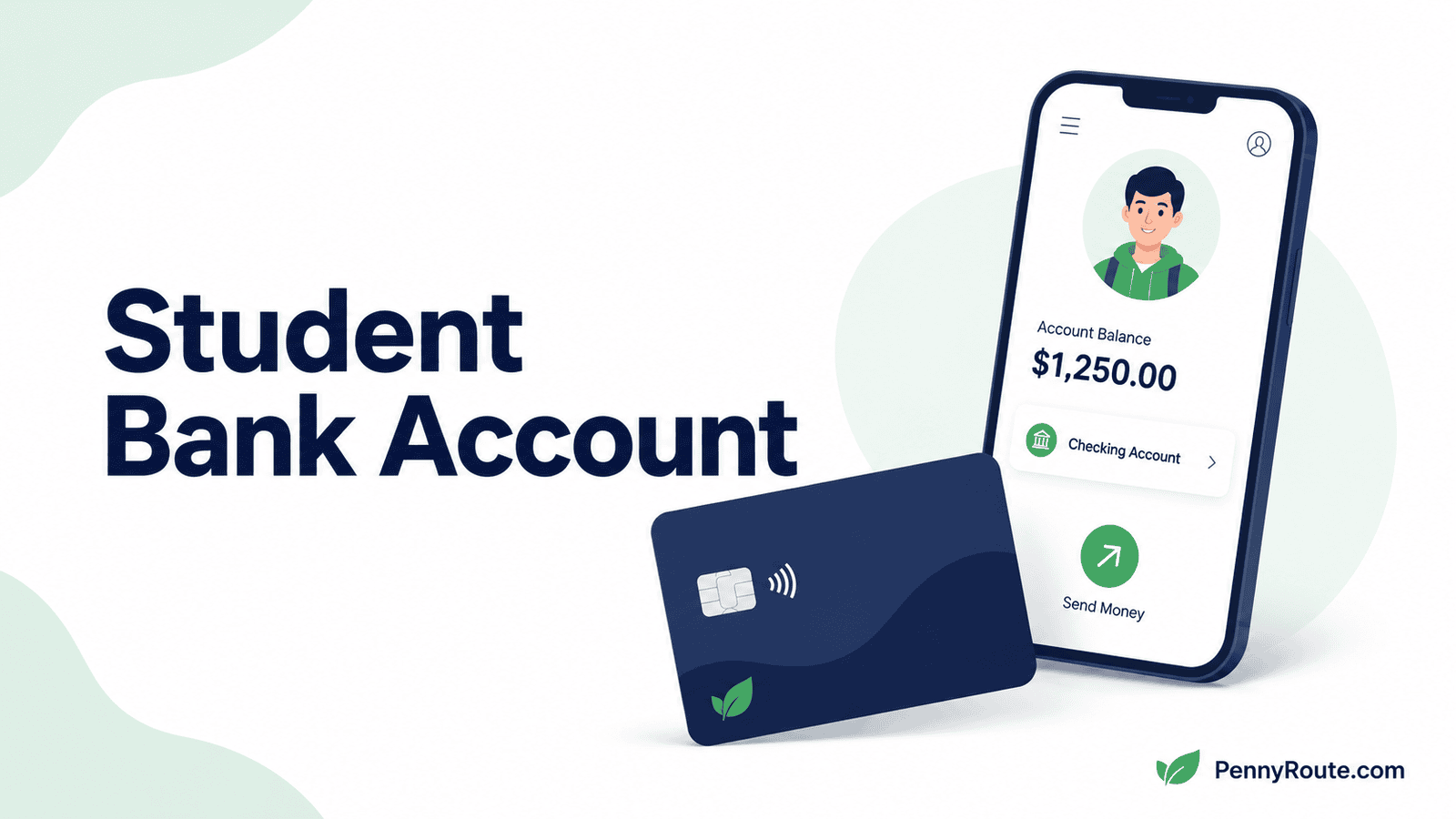
A student bank account is usually a checking account designed for college students, younger customers, or people who meet specific age or enrollment requirements.
Depending on the institution, it may offer:
- No monthly maintenance fee while you qualify.
- Little or no minimum-balance requirement.
- A debit card and access to ATMs.
- Online banking, mobile check deposit, and spending alerts.
- Direct deposit for wages and eligible school payments.
The term “student bank account” doesn’t describe one standard product. Some accounts require proof of current enrollment, while others offer benefits based on age.
That distinction matters if you’re working instead of attending school full-time, taking a break between semesters, or approaching the age when student benefits end.
A student account is one of several types of checking accounts. An ordinary checking account with no monthly maintenance fee might also meet your needs, even if it doesn’t have “student” in its name.
Who Can Open a Student Bank Account?
Eligibility depends on the institution, the type of account, and sometimes your enrollment status.
College Students Age 18 or Older
If you’re 18 or older, you can generally apply for a checking account in your own name without a parent or guardian.
To qualify for a particular student account, you may need to meet an age requirement or provide proof that you’re enrolled at an eligible school.
Some institutions offer student benefits to people within a particular age range, even when enrollment isn’t required. Others ask for a current student ID, enrollment verification, or similar evidence.
It’s worth finding out whether you only need to qualify when opening the account or must continue meeting the requirements to keep the student benefits.
Students Under 18
Students under 18 may need a parent or guardian to help open the account. The exact requirements depend on the institution and the account offered.
Some banks provide joint checking accounts, while others offer teen accounts with adult supervision or controls.
Important
The type of ownership matters. If an adult becomes a joint owner, they generally share legal access to the account and its funds. That’s different from an arrangement where an adult can supervise certain transactions without being a joint owner.
Before opening the account, find out who legally owns it, what access each person has, and whether the arrangement changes when the student turns 18.
International Students
International students can often open a U.S. bank account, but identification and address requirements may be different.
For example, a bank might accept a foreign passport or another approved identification document. Depending on its policies, it may also ask for immigration-related records, proof of a U.S. address, or school documents.
Not having a Social Security number doesn’t automatically mean you cannot open an account. The FDIC explains that many banks accept applications from non-U.S. citizens, although the identification accepted varies by institution.
If you’ve recently arrived in the United States, contact the bank before applying. Ask which identification numbers and documents it accepts, whether your current address documents are sufficient, and whether you must visit a branch.
That can save you a trip with the wrong paperwork.
What Documents Do You Need to Open a Student Bank Account?
Banks and credit unions must verify certain information before opening an account. The exact documents depend on the institution and your situation.
You may need:
- Government-issued identification: A driver’s license, state ID, passport, or another form the institution accepts.
- An identification number: Your Social Security number, Individual Taxpayer Identification Number (ITIN), or another identification number accepted under the bank’s requirements.
- Personal and contact information: Your legal name, date of birth, residential address, phone number, and email address.
- Proof of address: A lease, utility bill, school housing document, or another accepted record, if the institution requires supporting evidence.
- Proof of student status: A current student ID, enrollment letter, class schedule, or school verification when required for student eligibility.
- Parent or guardian information: If the account requires adult participation.
- An opening deposit: If the account has an initial funding requirement.
A student ID may establish enrollment, but it isn’t automatically sufficient for identity verification.
If you live in a dorm, recently moved, or don’t have a utility bill in your name, check which alternative address documents the institution accepts. A school housing letter or other official document might be acceptable, depending on its rules.
If you don’t have an SSN, ask about other identification options before starting the application. Not every online application can accommodate the same documents or identification numbers.
What Should Students Compare Before Opening an Account?
An account may have no monthly maintenance fee while you’re a student, but that doesn’t necessarily make it the most convenient or least expensive choice.
The details matter, especially if your income changes during the school year or you spend part of the year away from campus.
| What to compare | What to check |
|---|---|
| Monthly fees | Whether fees are waived, what you must do to qualify, and when the waiver ends |
| Minimum balance | Whether you must maintain a certain balance to avoid charges |
| ATM access | Availability and possible fees near campus, home, work, and during school breaks |
| Cash deposits | Whether you can deposit cash conveniently, especially if you work for tips |
| Overdraft terms | Which transactions may trigger fees or be declined and what choices you have |
| Mobile banking | Balance alerts, mobile check deposit, transfers, and card controls |
| After-graduation terms | Whether the account converts and which fees or requirements may change |
Also check whether deposits are federally insured through the FDIC for banks or the NCUA for federally insured credit unions.
Campus Convenience Is Only One Factor
A bank located near campus can be convenient, but school affiliation doesn’t guarantee that it has the lowest fees or the best account for your situation.
Consider where you’ll be using the account throughout the year.
For example, if you work at a restaurant during summer break and regularly receive cash tips, an online account without a convenient cash-deposit option may be frustrating. A nearby branch or an accessible deposit network could be more useful, even if both accounts waive monthly maintenance fees.
Similarly, an ATM network that works well around campus may be less practical when you return home.
When you choose a checking account, consider how its fees, services, and access will work for you both during the school year and when you’re away from campus.
Understand Your Overdraft Choices
Overdraft rules deserve particular attention when your account balance is small or your income is irregular.
For ATM withdrawals and one-time debit card purchases, overdraft fees generally require your opt-in. Checks and recurring electronic payments are treated differently, and those transactions can still result in fees.
Before opening the account, ask what happens if a payment exceeds your available balance, whether transactions will be declined, and what overdraft settings you can choose.
How to Open a Student Bank Account Step by Step
Once you’ve identified an account that meets your needs, the opening process usually involves confirming eligibility, providing your information, and completing the institution’s verification requirements.
1. Decide Who Will Own the Account
Start by finding out whether you can open the account independently or need another person involved.
If you’re under 18, ask whether the institution offers a joint account, a supervised teen account, or another arrangement.
Make sure you understand the ownership rules before anyone signs the application.
2. Confirm the Student Eligibility Rules
Find out whether the account requires current enrollment, a particular age range, or another qualification.
You should know what evidence you’ll need and whether the institution periodically checks student status.
Also look at when the account’s student benefits expire. A fee waiver that lasts until a certain age is different from one that ends when you graduate.
3. Choose an Account That Fits Your Needs
By this point, you should have a clearer idea of which accounts you’re eligible for.
From those options, choose one with fees you can manage and convenient access to the services you’ll actually use, whether that’s cash deposits, nearby ATMs, or mobile banking.
A sign-up bonus or campus location may be appealing, but ongoing fees and everyday convenience usually matter more.
4. Gather Your Documents
Use the institution’s document list to get everything ready before applying.
That includes your identification, contact information, and any required student-status records.
For a joint account, find out whether the other person needs to visit the branch or can complete verification separately.
International students should also confirm whether they’ll need to present original documents in person.
5. Submit the Application
Apply through the bank’s website, mobile app, or branch, depending on the options available to you.
You’ll usually provide personal details, complete identity checks, and review the account terms.
Read the fee schedule and account agreement before accepting. Approval isn’t automatic, and the institution may request more information.
6. Make the Opening Deposit, If Required
Some student accounts can be opened without an initial deposit. Others require funding when the account is opened or within a specified period.
Depending on the institution, you may be able to fund the account through:
- A transfer from another bank account.
- Cash or a check deposited at a branch.
- An accepted debit card or electronic funding method.
- Another approved deposit option.
An opening deposit is not the same as an account fee.
The opening deposit is your money going into the account. A minimum-balance requirement is different: it means keeping a certain amount in the account to meet the bank’s terms or avoid fees.
You may have to make an opening deposit even when there’s no ongoing minimum-balance requirement, so look at both conditions.
7. Complete Your Account Setup
After approval, finish setting up the account before relying on it for everyday transactions.
That usually includes activating your debit card, creating a PIN if needed, and setting up online or mobile banking.
Turn on balance and transaction alerts if available. They can help you notice unfamiliar purchases and keep track of what is available to spend.
You can also review your overdraft preferences, find your account and routing numbers, and set up direct deposit when needed.
Keep your login information secure, and contact the institution promptly if your card or account details are lost or compromised.
Can You Open a Student Bank Account Online?
Yes. Many banks and credit unions allow eligible students to open a bank account online, but not every applicant can complete the entire process digitally.
For example, the institution may need to verify an adult joint owner, inspect original identification, or review documents that its online system cannot process.
What If You Cannot Complete the Online Application?
Suppose you’re eligible for an account, but the bank’s website cannot verify your identity or accept your supporting documents.
That doesn’t necessarily mean you’re ineligible for the account.
Contact the institution and ask whether it offers additional verification, a branch application, or another way to provide the required documents.
If the issue involves a missing student record, find out which alternative enrollment documents the bank accepts.
International students should ask specifically about the identification numbers and foreign documents accepted for their situation.
If the application was declined rather than stopped because of missing verification, ask the bank whether it can explain the reason and what options you have.
If the denial was based on a checking-account consumer report, the bank generally must tell you which reporting company it used. You can request your report and dispute any inaccurate information.
The next step may be different from simply supplying another document.
Using Your Account for Work Income and School Refunds
Once your account is active, you can generally use it to receive wages from a part-time job or eligible payments from your school through direct deposit.
To arrange a deposit, your employer or school may ask for:
- Your bank or credit union’s routing number.
- Your checking account number.
- Your account type.
- A completed direct deposit authorization or other required form.
Check the details carefully before submitting them. Entering the wrong account or routing number can delay a payment.
Understand What a School Refund Means
A school refund generally occurs when eligible funds credited to your student account exceed the charges the school is permitted to apply them toward.
The resulting credit balance may come from grants, scholarships, your own payments, student loans, or a combination of sources.
That distinction matters because a refund isn’t necessarily extra income. If part of it comes from student loans, that portion is borrowed money.
You also don’t have to use a particular bank promoted by your college to receive eligible student aid credit balances.
Before choosing where to receive those funds, check whether the account provides convenient access without unexpected fees.
What Happens to a Student Bank Account After Graduation?
A student bank account doesn’t always keep its student benefits permanently.
Once you graduate, reach a certain age, or stop meeting the eligibility requirements, the institution may change the account to a regular checking product.
Your account and routing numbers might remain the same, but that doesn’t mean the terms will stay unchanged.
Before your benefits end, check:
- When the student fee waiver or eligibility period expires.
- Whether a monthly maintenance fee will begin.
- Whether a minimum-balance requirement will apply.
- Whether ATM, overdraft, or other service terms will change.
- Whether your existing direct deposits and automatic payments will continue.
- Whether another low-cost account is available at the same institution.
Review any account-change notices and the applicable fee schedule. Don’t assume the account will remain free simply because it was free while you were in school.
If the converted account no longer meets your needs, you can compare alternatives before closing it. Just make sure your paycheck deposits, subscriptions, bill payments, and scheduled transfers have been moved successfully.
An account that works well during college may still be worth keeping afterward. If the fees and features continue to suit you, there’s no need to switch simply because your student status has changed.