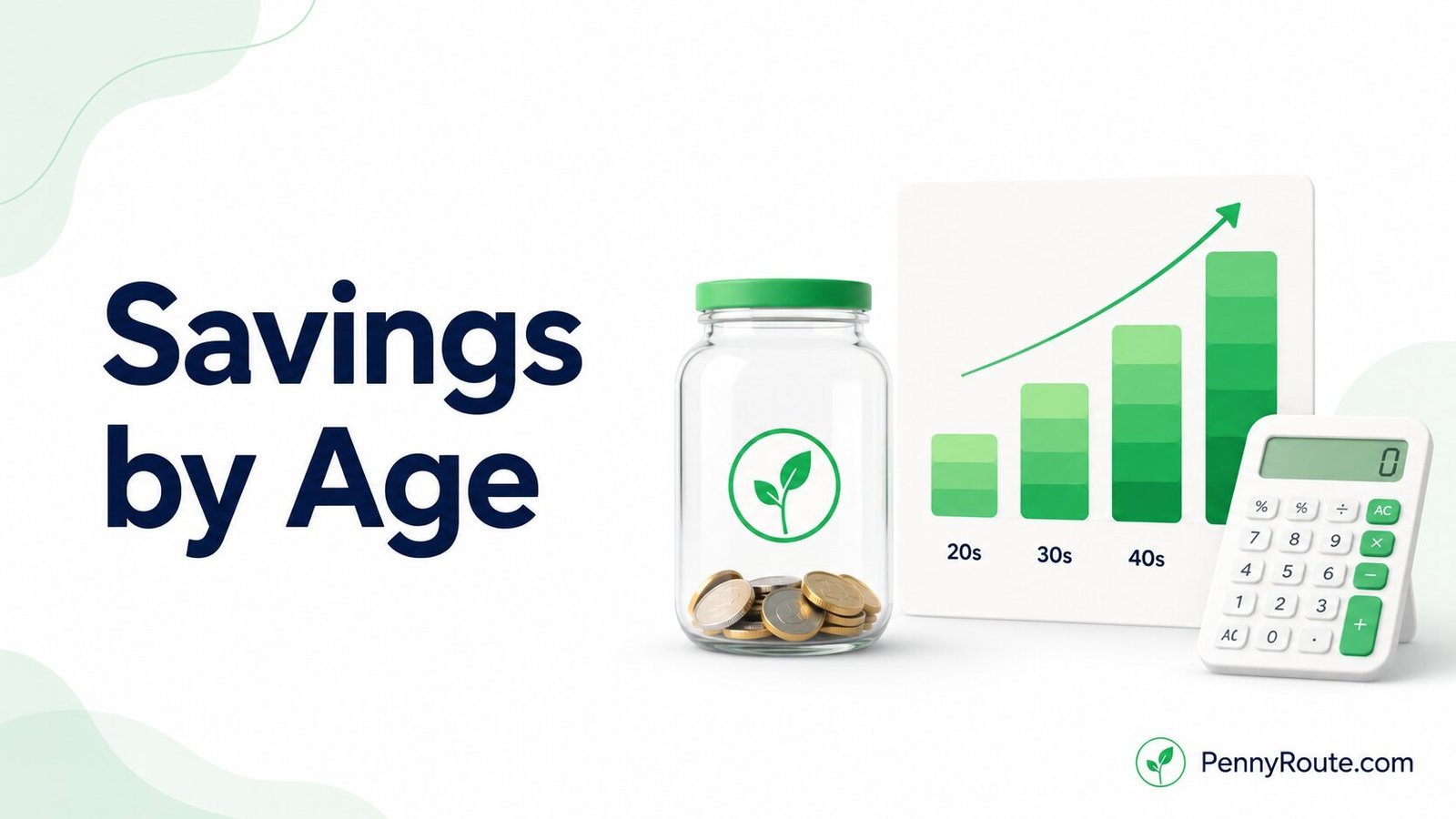
Savings-by-age numbers can be confusing because they do not always measure the same thing. One chart may show money held in checking and savings accounts, while another uses retirement balances or total net worth.
That distinction matters. The amount you need in accessible savings depends more on your monthly expenses, income stability, responsibilities, and upcoming goals than on your age alone.
Age-based averages can still provide useful context, but they should not be treated as a pass-or-fail target. A more helpful approach is to understand what the numbers include, then build a savings cushion that fits your actual life.
Disclaimer: This content is for informational purposes only and does not constitute financial advice. Savings needs vary based on income, expenses, goals, debt, and other financial circumstances. Consult a qualified professional when needed.
What Does “Savings by Age” Actually Mean?
Before comparing your balance with an age-based number, check what the number includes.
“Savings” can refer to accessible money in bank accounts, emergency funds, retirement accounts, investments, or even total net worth. These amounts serve different purposes and should not be treated as interchangeable.
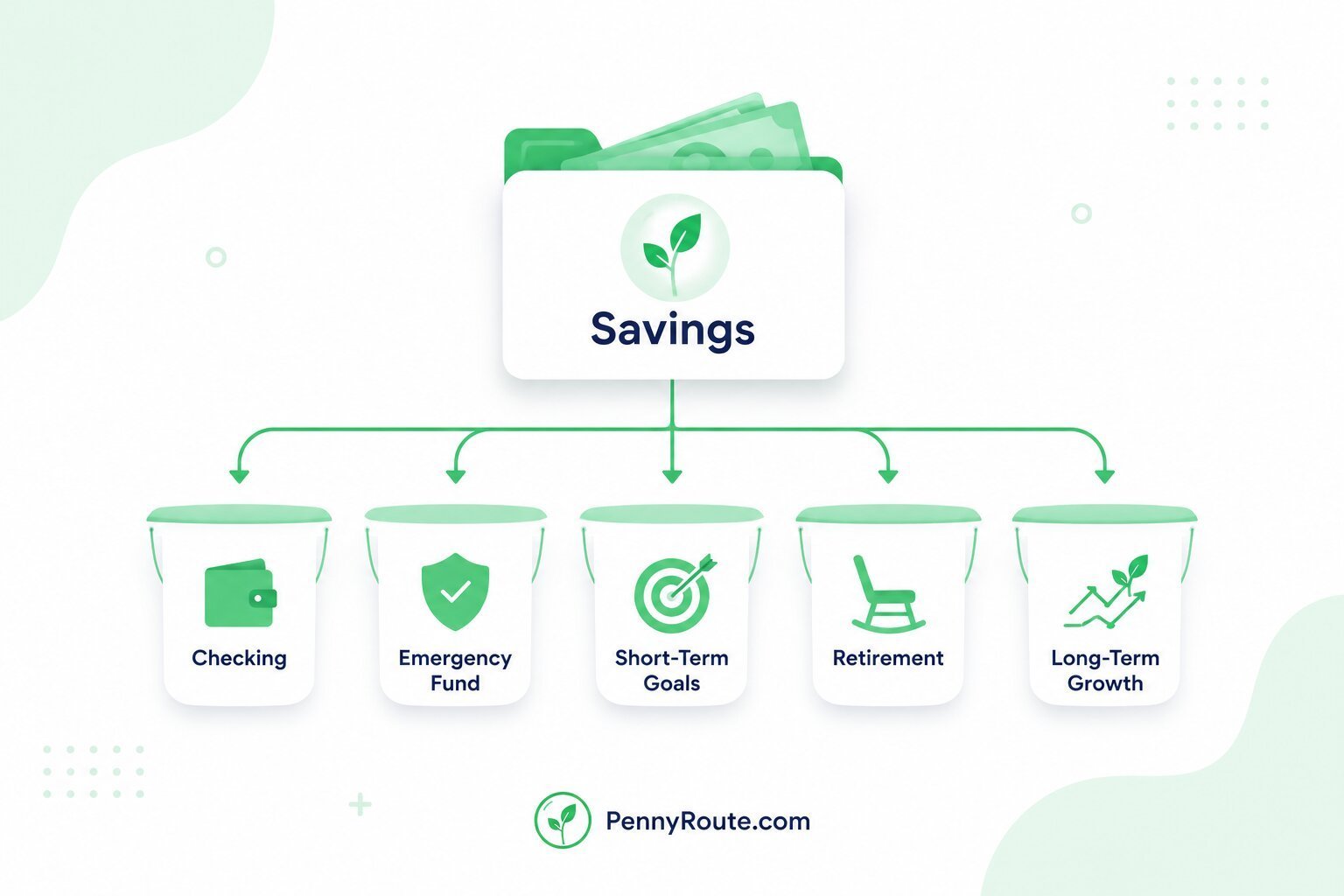
For a clearer comparison, separate your money into these categories:
- Everyday cash: Money kept in checking for bills and regular spending
- Emergency savings: Money reserved for unexpected expenses or a loss of income
- Short-term savings: Money for planned costs within the next few months or years
- Retirement savings: Money held in a 401(k), IRA, workplace plan, or another long-term retirement account
- Investments: Money intended for longer-term growth that can rise or fall in value
Retirement benchmarks measure something different from the amount you need in accessible cash. For example, Fidelity’s retirement guideline suggests working toward one times your annual income by age 30, three times by 40, six times by 50, eight times by 60, and ten times by 67.
These are planning guidelines based on specific savings, investing, and retirement assumptions. They refer to long-term retirement savings, not money set aside for bills, emergencies, or near-term goals.
That distinction matters because $10,000 in a savings account and $10,000 in a retirement account do not provide the same type of financial support. Cash is generally available for immediate needs, while retirement money is meant for later and can involve taxes or other consequences when withdrawn early.
Whenever you see a savings-by-age chart, look at what it measures before comparing the number with your own balance.
Average vs. Median Savings by Age: Which Number Matters More?
Savings figures are often reported as either an average or a median. The difference can be large.
The average is calculated by adding all balances and dividing the total by the number of households. A relatively small number of very high balances can pull this figure upward.
The median is the middle value. Half of households have more and half have less. It usually provides a more useful comparison when you want to understand what is typical.
The latest available Federal Reserve Survey of Consumer Finances was conducted in 2022 and published in 2023. It reports the following transaction-account balances among U.S. families that held these accounts:
| Age of reference person | Median balance | Average balance |
|---|---|---|
| Under 35 | $5,400 | $20,540 |
| 35–44 | $7,500 | $41,540 |
| 45–54 | $8,700 | $71,130 |
| 55–64 | $8,000 | $72,520 |
| 65–74 | $13,400 | $100,250 |
| 75 or older | $10,000 | $82,800 |
The gap between the two columns shows why the average can create a misleading comparison. For families under 35, for example, the average balance is nearly four times the median.
These figures measure transaction accounts held by surveyed families, not dedicated savings accounts alone. The category includes checking accounts, savings accounts, money market deposit accounts, call accounts, and prepaid debit cards.
The table therefore provides a picture of accessible account balances by age. It does not tell you how much every household should keep in savings or how much of each balance is already needed for bills.
Use the median as a reference point, not a required target. Your own number should be based on the expenses and financial risks your savings need to cover.
How to Calculate Your Own Savings Target
Age-based figures can show how your balance compares with other households, but they cannot tell you exactly how much accessible savings you need.
A more useful target starts with your essential monthly expenses.
Include costs such as:
- Housing
- Utilities
- Groceries
- Insurance
- Transportation
- Minimum debt payments
- Childcare
- Essential medical expenses
If you are unsure what your essential expenses total, a simple beginner budget can help you separate required costs from spending you could reduce during a difficult month.
Then use this calculation:
Essential monthly expenses × number of months you want to cover = emergency savings target
Emergency Savings
For example, suppose your essential expenses total $2,500 per month:
- One month of expenses: $2,500
- Three months of expenses: $7,500
- Six months of expenses: $15,000
The number of months that makes sense depends on your situation.
A smaller cushion could be reasonable while you are building savings for the first time. A larger fund can provide more protection when your income changes from month to month, you support other people, or replacing your income could take longer.
Your target could also be lower when your household has two stable incomes and either one could cover most essential costs temporarily.
Do not include every purchase in this calculation. Focus on the expenses you would still need to pay during a financial setback.
Once you have an emergency-fund target, keep planned expenses separate. Money for a vacation, car repair, insurance renewal, or home purchase has a different job, even when it is held in the same type of savings account.
How Much Should You Have in Savings by Age?
There is no single savings balance that everyone should reach by a certain birthday.
Your income, essential expenses, job stability, household responsibilities, debt, health needs, and upcoming plans all affect how much accessible cash is useful. Age still matters because financial priorities often change over time, but it should provide context rather than a strict deadline.
Savings in Your 20s
In your 20s, the most useful first target is usually a basic emergency cushion.
You may be managing irregular income, entry-level pay, student debt, moving costs, or your first major household expenses. A smaller amount that prevents you from relying on credit can be more useful than chasing a large age-based benchmark.
A practical progression could be:
- Save enough to cover one common unexpected expense.
- Build toward $500 or $1,000.
- Work toward one month of essential expenses when possible.
The exact amount matters less than creating a cushion you can continue building.
Savings in Your 30s
Your 30s can bring higher expenses and more people depending on your income.
Housing costs, childcare, insurance, debt payments, and home or car repairs can make a small emergency fund easier to use up. Depending on your income stability and responsibilities, this can be a useful time to work toward one or more months of essential expenses.
You may need a larger cushion when:
- Your household relies heavily on one income
- Your job or income changes from month to month
- You own a home or an older vehicle
- You support children or other family members
- Your health insurance leaves you with substantial out-of-pocket costs
A stable two-income household with lower fixed expenses might be comfortable with less.
Savings in Your 40s
In your 40s, the value of cash savings often comes from protecting a more complex financial life.
You could be balancing mortgage payments, education costs, family care, home maintenance, or a longer list of recurring commitments. A fund covering several months of essential expenses can provide useful protection, particularly when replacing your income would take time.
This does not mean everyone in their 40s needs the same three- or six-month balance. The more important question is how long your household could continue covering essential costs after a loss of income.
Keep known expenses separate from the emergency fund. Money already intended for tuition, property taxes, home repairs, or another planned cost is not fully available for an unexpected setback.
Savings in Your 50s
In your 50s, accessible savings can help prevent short-term problems from disrupting longer-term plans.
A strong cash reserve can be especially valuable when:
- Your income is difficult to replace
- You expect major home or medical costs
- You provide financial support to family members
- You are preparing for a change in work or retirement timing
This stage is also a good time to check whether too much money is sitting in cash without a near-term purpose. Emergency savings should remain accessible, but money intended for goals many years away may need a different home based on your risk tolerance and financial plan.
Savings in Your 60s and Beyond
As retirement approaches or begins, accessible savings can help cover expenses without forcing you to sell investments during an inconvenient period.
The amount you need depends on your retirement income, healthcare costs, housing situation, and how much of your spending is covered by reliable sources such as Social Security, a pension, or an annuity.
Cash can be useful for:
- Monthly expenses not covered by regular income
- Home or vehicle repairs
- Medical and insurance costs
- Planned large purchases
- Market downturns or delays in other income
The aim is not to hold every retirement dollar in savings. It is to keep enough accessible money for near-term needs while the rest of your plan supports longer-term income and growth.
Across every age group, the strongest savings target is one connected to your actual expenses and risks. Age can help you think about changing responsibilities, but it should not determine the number by itself.
What If You Have Less Saved Than the Average?
Having less than the median or average for your age does not automatically mean you are financially failing.
Savings balances are shaped by income, housing costs, debt, childcare, health expenses, family support, and unexpected setbacks. Two people of the same age can have very different responsibilities and still be making sensible financial choices.
Instead of trying to close the entire gap at once, choose the next amount that would make a real difference.
That could mean:
- Saving enough to cover a common car or home repair
- Building a $500 or $1,000 starter emergency fund
- Reaching one month of essential expenses
- Rebuilding money used during a recent emergency
- Separating a planned expense from your emergency savings
The next useful milestone is often more motivating than an age-based number that feels far away.
Even a modest balance can reduce the need to use a credit card, delay a bill, or borrow when an unexpected cost appears. Once that first cushion is in place, you can increase it gradually based on your expenses and income stability.
Use age-based figures to understand the wider picture, not to judge your progress. What matters most is whether your savings are moving toward the protection your household needs.
What If You Have More Saved Than the Average?
Having more cash than the average for your age can provide useful security, especially when the money is already set aside for a near-term need.
A larger balance can make sense when you are preparing for:
- A home purchase or major repair
- Medical costs
- A period of reduced income
- Self-employment or irregular earnings
- Education expenses
- A move or career change
- Retirement in the next few years
The important question is not whether the balance looks high. It is whether each part of the money has a clear job.
Keep Near-Term Money Accessible
Money you expect to use soon should generally remain easy to reach and protected from short-term market changes.
A larger balance can make sense when you are building a home down payment, preparing for a major repair, covering irregular income, or planning another expensive change.
Depending on the goal, that money could be kept in a savings account, money market deposit account, or another suitable cash account.
Avoid counting the same money twice. If $15,000 is already reserved for a home repair, it is not also fully available as a $15,000 emergency fund.
Decide What the Extra Cash Is For
Once your emergency fund and near-term goals are covered, review any cash that does not yet have a purpose.
Ask:
- When will I probably need this money?
- What expense or risk is it meant to cover?
- Would I be comfortable leaving it untouched for several years?
- Is keeping all of it in cash helping me feel prepared, or is it delaying another financial priority?
Money needed soon usually belongs in an accessible account. Money intended for a much later goal may need a different approach based on your timeline, risk tolerance, taxes, and overall financial plan.
There is no single balance at which savings becomes “too much.” The concern begins when a large amount remains in cash for years without a clear reason, while longer-term goals receive little attention.
What Savings Number Should You Focus on Next?
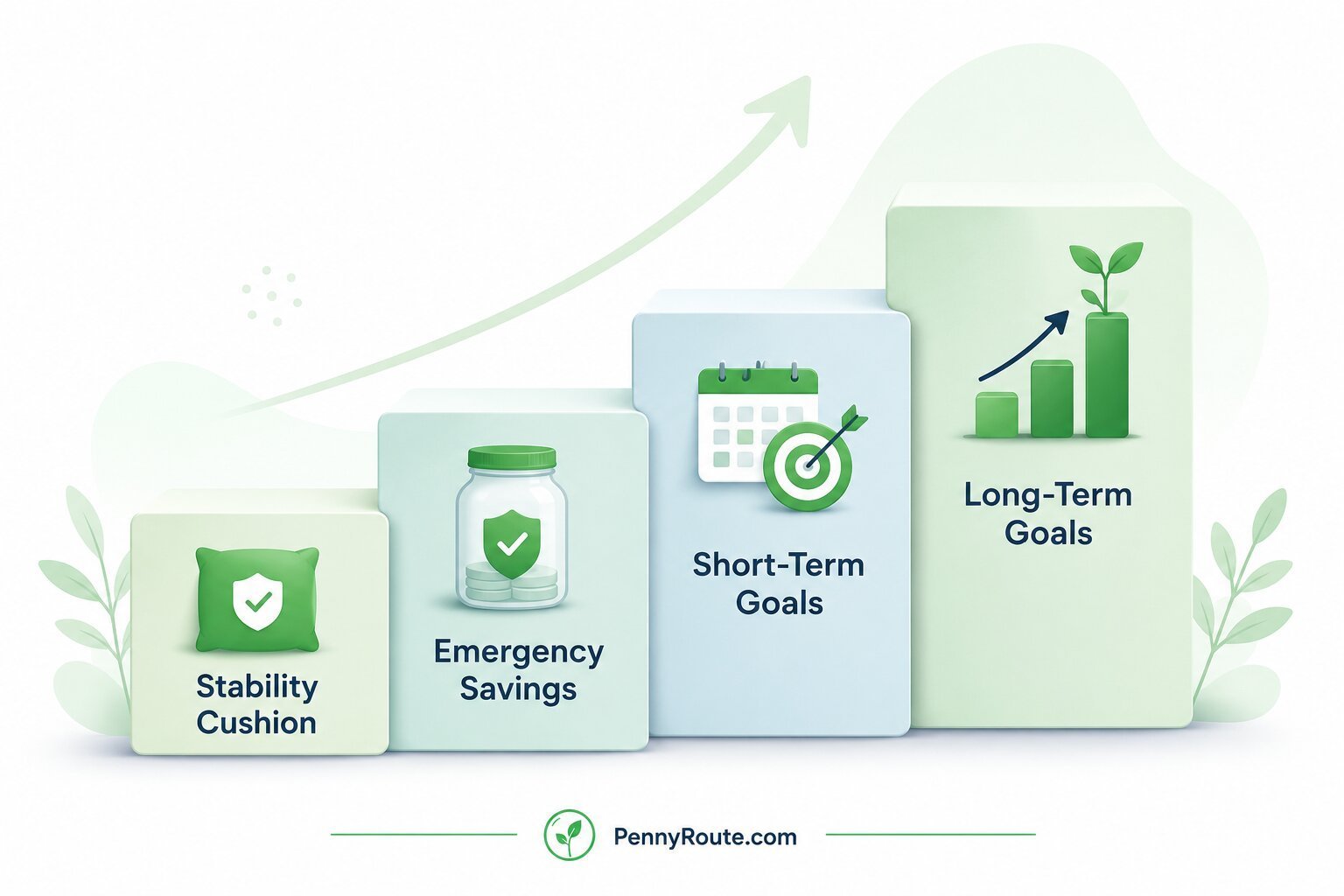
The most useful savings target is the next one that improves your financial stability.
Your next step might be:
- No emergency savings yet: Build a small starter cushion, such as $500 or $1,000.
- Some savings in place: Work toward one month of essential expenses.
- One month covered: Increase the fund based on your income stability, responsibilities, and likely recovery time after a setback.
- Emergency savings established: Separate money for planned expenses so those costs do not reduce your emergency fund.
- More cash than you need soon: Review whether part of it should support a longer-term goal.
You do not need to match an age-based average before your savings become useful. A smaller amount with a clear purpose can provide more protection than a larger balance that is already committed to another expense.
Choose one target, decide how much you can add regularly, and review the amount when your income, expenses, or responsibilities change. Age-based figures can provide context, but your next practical milestone is the number that matters most.
Frequently Asked Questions
Is $10,000 a Good Amount of Savings?
It can be. The answer depends on your essential expenses, income stability, and whether part of the money is already reserved for another goal. If your essential expenses are $3,000 per month, $10,000 covers a little more than three months.
Does Savings by Age Include Retirement Savings?
Not always. Some figures measure checking and savings balances, while others include retirement accounts, investments, or net worth. Check what the source measures before comparing it with your own balance.
Can You Have Too Much Money in a Savings Account?
A large balance is not automatically a problem. It is worth reviewing when the money has no near-term purpose and is likely to remain in cash for years while longer-term goals receive little attention.