Holiday spending rarely feels like one big purchase at first. It starts with a few gifts, then turns into extra groceries, travel costs, wrapping paper, school events, work parties, decorations, shipping fees, and those last-minute “I forgot one person” expenses.
That’s why budgeting for the holidays can make such a difference. A holiday budget helps you decide what you can spend before the season gets busy, instead of trying to clean up the damage in January.
You do not need a perfect spreadsheet or a strict no-fun plan. You just need a clear number, a few simple categories, and a way to track what is already spoken for.
Disclaimer: This content is for informational purposes only and does not constitute financial advice. Choose a holiday spending plan that fits your financial situation, and consult a qualified professional when needed.
Quick Overview: Holiday Budget
- Start with one total holiday spending limit that fits your regular bills and financial priorities.
- Plan for the full season, including gifts, food, travel, events, and smaller costs that are easy to overlook.
- If one category goes over, adjust another before increasing the overall budget.
- If the numbers do not fit, reduce the holiday plan before relying on debt or emergency savings.
What Is a Holiday Budget?
A holiday budget is a spending plan for seasonal expenses, such as gifts, food, travel, decorations, cards, events, and last-minute extras.
It is not only a Christmas gift list. Your holiday budget should include the full season, especially if your spending also covers Thanksgiving, New Year’s, family gatherings, school events, work parties, travel, donations, or extra groceries.
The main goal is simple: decide where your holiday money will go before you start spending it. That way, gifts do not quietly take money from groceries, travel does not sneak onto a credit card, and small extras do not turn into a bigger January problem.
A good holiday budget gives your spending a limit without removing the parts of the season you actually care about.
Why Holiday Spending Gets Out of Control
Holiday spending can get messy because it rarely happens in one place.
You may buy gifts from one store, groceries from another, decorations during a quick errand, and shipping labels online. Then a school event, work party, family dinner, or last-minute host gift shows up, and none of it feels huge by itself.
The problem is that small holiday costs stack quickly when they are not planned together. A $12 gift bag, a $25 dessert run, a $40 gas refill, and a few “just in case” gifts can quietly push your Christmas budget higher than expected.
Holiday spending also comes with pressure. Sales create urgency, family traditions can feel expensive to maintain, and it is easy to spend more when you want people to feel appreciated.
A holiday budget helps by putting all of those scattered costs in one place. Once you can see the full picture, it becomes much easier to decide what matters, what can be simplified, and what needs a spending limit.
How Much Should You Spend on the Holidays?
There is no perfect amount to spend on the holidays. A good holiday budget is not based on what other people are spending. It is based on what your own money can handle.
Start with the money you have available after regular bills, basic living costs, savings needs, and debt payments. The amount left after those priorities is the space you can work with for gifts, food, travel, decorations, and seasonal extras.
Holiday spending averages can be useful for context, but they should not become your target. The National Retail Federation reported that consumers planned to spend $890.49 per person on gifts, food, decorations, and other seasonal items during the 2025 winter holidays. That number is useful for context, but it should not become your personal target.
A simple way to choose your number is to ask:
- How much can I spend without missing regular bills?
- How much can I spend without using emergency savings?
- How much can I spend without creating a January credit card problem?
- What amount would still let me enjoy the season without feeling squeezed afterward?
Your holiday budget can be small and still work. A thoughtful $250 plan is better than a $900 plan that follows you into the new year.
What to Include in Your Holiday Budget
A strong holiday budget includes more than gifts. Gifts may be the most obvious expense, but they are usually not the only reason December feels expensive.
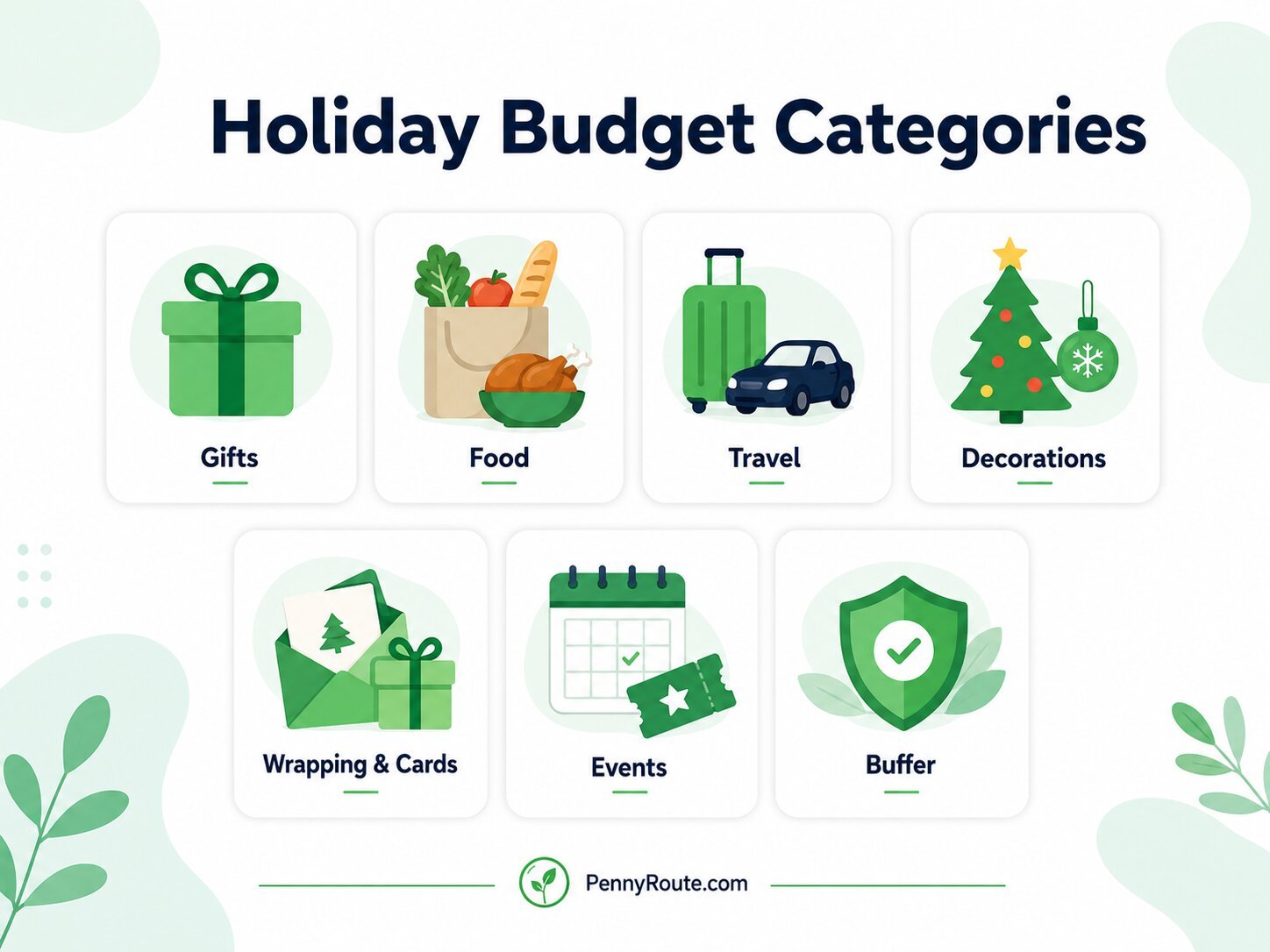
Use these categories as a starting point, then remove anything that does not apply to your season.
| Holiday Budget Category | What to Include |
|---|---|
| Gifts | Family, friends, coworkers, teachers, neighbors, hosts, gift exchanges |
| Food and groceries | Holiday meals, baking supplies, snacks, drinks, extra pantry items |
| Travel | Gas, flights, hotels, parking, tolls, baggage fees, rideshares |
| Decorations | Lights, ornaments, tree items, candles, outdoor décor, replacement items |
| Wrapping and cards | Gift bags, wrapping paper, tape, tags, cards, stamps, postage |
| Events and activities | School events, work parties, holiday outings, community events |
| Giving | Donations, charity drives, church or community gifts, toy drives |
| Clothing and photos | Holiday outfits, family photos, event clothing, small accessories |
| Shipping and delivery | Online order shipping, rushed delivery, package supplies |
| Buffer | Last-minute gifts, price changes, forgotten items, small surprises |
The buffer is easy to skip, but it can save the whole plan. Even a small cushion gives you room for the expenses that do not show up neatly on a gift list.
You do not need to spend in every category. The point is to see the full season before you start shopping, so your Christmas budget does not get pulled apart by costs you forgot to include.
How to Create a Holiday Budget Step by Step
A holiday budget works better when you decide on the total first and make the individual purchases fit inside it. Starting with gifts, travel, or decorations one at a time can make it surprisingly easy to lose sight of what the whole season is costing.
1. Choose Your Total Holiday Spending Limit
Start with the amount you can realistically afford for the entire holiday season.
Look at the money available after regular bills, minimum debt payments, savings commitments, and other necessary expenses are covered. Your holiday number should fit within that cash flow rather than depend on money you hope will appear later.
If $800 fits comfortably but $1,100 would require carrying a credit card balance or pulling from money meant for another priority, $800 is the more useful starting point.
2. Divide the Total Across Your Priorities
Once you have the overall limit, decide how much of it can go toward gifts, food, travel, events, decorations, and the other expenses that apply to you.
You do not need to divide the money equally. If traveling to see family matters more this year, travel might take a larger share while decorations or entertainment get less.
This is where the holiday budget becomes personal instead of just a list of seasonal expenses.
3. Make Your Gift Plan Before You Shop
Gifts can take up a large part of the holiday budget, so decide who you are buying for and roughly how much you can spend before browsing sales.
You can set an individual amount for each person or use one total gift budget and divide it according to your priorities. Either approach gives you a reference point when a tempting purchase costs more than you originally planned.
A sale can lower the cost of something you already intended to buy. It does not create extra room in the budget unless you actually spend less overall.
4. Track Purchases Against the Plan
You do not need a complicated spreadsheet. A simple note, budgeting app, or running total can show:
- what you planned for each category;
- what you have already spent;
- what remains.
Update the numbers as you shop rather than waiting until the holidays are over. That gives you time to adjust while there are still choices left to make.
5. Adjust Categories Without Automatically Raising the Total
Some expenses will come in higher or lower than expected. That does not mean the original budget has failed.
If gifts end up $40 over budget, you might spend $40 less on decorations, dining, or another flexible holiday expense. If travel costs less than expected, you can decide whether the difference goes elsewhere in the holiday plan or stays unspent.
The important boundary is the total. Moving money between categories keeps the plan flexible without letting every small overage quietly increase what the season costs.
Simple Holiday Budget Example
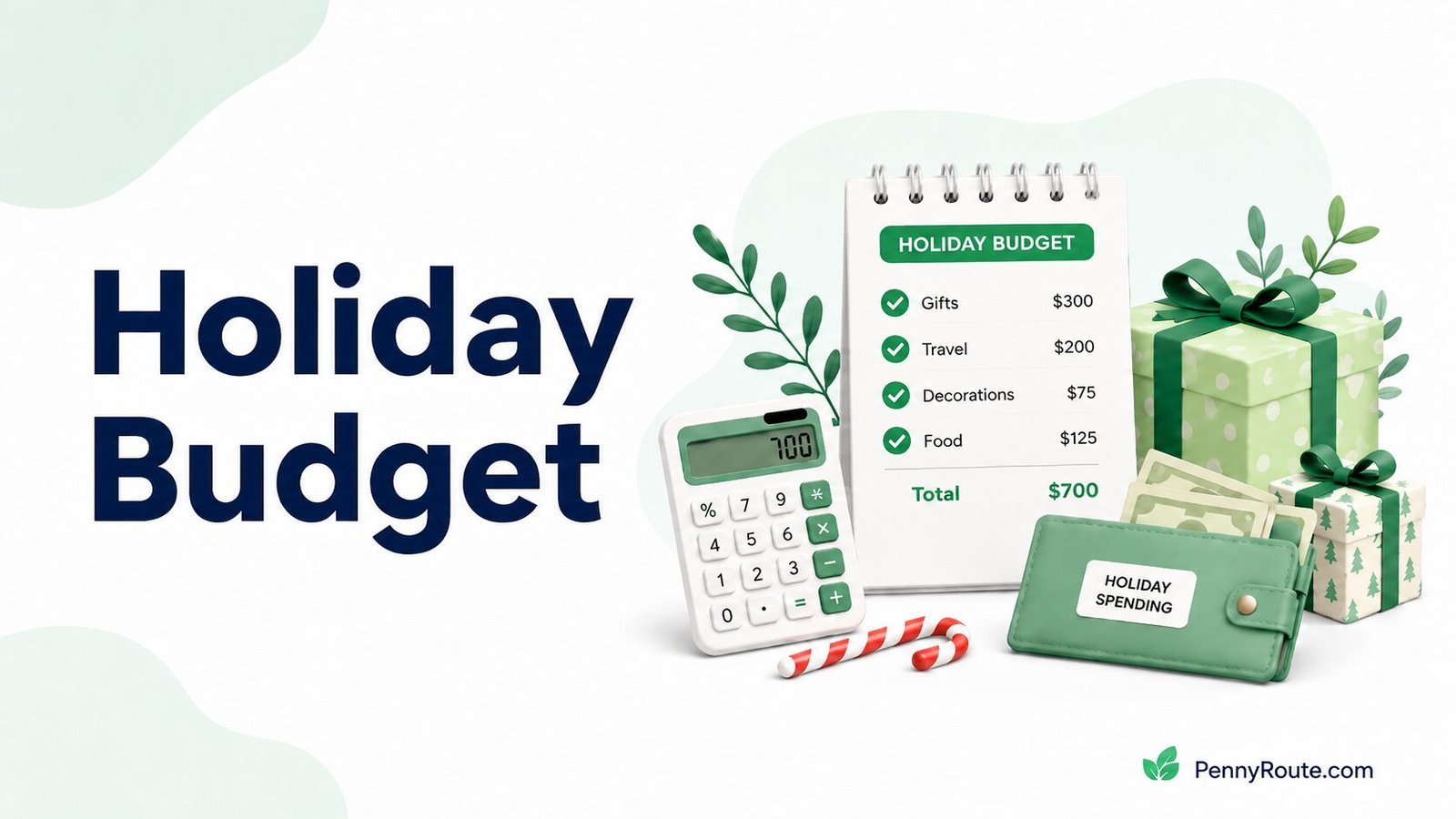
Suppose you decide that $700 is the most you want to spend across the holiday season.
You might divide it like this:
| Holiday Category | Planned Amount |
|---|---|
| Gifts | $300 |
| Food and groceries | $140 |
| Travel | $100 |
| Events and seasonal activities | $60 |
| Decorations, wrapping, and cards | $50 |
| Buffer | $50 |
| Total | $700 |
Now suppose gifts end up costing $330 instead of $300.
Rather than letting the holiday budget quietly grow to $730, you could reduce another flexible category by $30. For example, decorations and wrapping could drop from $50 to $20.
The total still stays at $700.
That is the useful part of a holiday budget. Individual categories can move when plans change, but the overall limit stays visible.
If one category keeps growing and there is nowhere realistic to cut elsewhere, that is a sign the original total or the holiday priorities need to be revisited before more purchases are added.
Start Saving Before the Holiday Season If You Can
Once you know your holiday spending limit, working backward from that number can make the cost easier to spread across the year.
If your holiday budget is $600 and you have four months left, setting aside $150 per month would fully fund it by the time you need the money. A dedicated sinking fund can keep those savings separate from everyday spending.
If you are starting late, do not force an unrealistic savings amount just to reach the original target. Adjusting the holiday budget may be more practical than squeezing too much from the remaining paychecks.
If the Budget Is Too High, Decide What Matters Most
If your holiday plan is more than you can comfortably afford, cutting a little from every category is not always the best fix. It can be easier to protect the parts of the season you care about most and simplify the rest.
Simplify Gifts
You can reduce the gift budget by shortening the list, setting a lower per-person amount, or using a group exchange such as Secret Santa for larger families or friend groups.
The point is not to make every gift cheaper. It is to decide where gifts matter most and stop the list from expanding beyond the total you planned.
Reduce Seasonal Extras
Decorations, special outfits, elaborate hosting, premium wrapping, and extra events can add up quickly.
Reusing what you already own, simplifying the menu, or skipping one optional event can free up room without changing the parts of the holidays that matter more to you.
Keep Lower-Cost Traditions You Actually Enjoy
Not every holiday activity needs a large budget.
A movie night at home, a neighborhood light walk, baking together, or a simple gathering can still be part of the season without adding much to the total.
When you need to cut costs, start with the expenses that add the least value to your holiday, rather than automatically cutting everything by the same amount.
How to Avoid Holiday Debt
A holiday budget loses much of its value if the spending limit only works because part of the cost gets pushed into future months.
Credit cards and buy now, pay later plans can make purchases easier to spread out, but they do not create more room in the holiday budget. BNPL is still a form of credit, and consumers can end up carrying multiple BNPL loans at the same time.
Do Not Let the Payment Method Increase Your Budget
If your holiday limit is $700, paying by credit card does not turn it into an $850 budget.
You can still use a card for convenience, rewards, or purchase protections if it fits your situation. The important part is keeping the purchases inside the amount you already planned to spend.
The same principle applies to installment plans. A smaller payment at checkout can make an item look easier to afford, but the later payments still have to fit alongside your regular expenses.
Keep Emergency Savings for Actual Emergencies
Holiday gifts, travel, food, and celebrations are usually predictable expenses rather than financial emergencies. Emergency savings are generally meant for unplanned expenses or financial emergencies.
If the holiday budget requires dipping into money you have set aside for an unexpected car repair, medical bill, or loss of income, reducing the holiday plan is usually the cleaner option.
Lower the Plan Before Borrowing for It
If the numbers no longer fit, go back to the holiday priorities before adding debt.
That could mean buying for fewer people, simplifying travel or hosting, skipping an optional event, or lowering the total gift budget.
The aim is not to avoid every use of credit. It is to avoid letting a predictable seasonal expense leave you with payments that continue long after the holidays are over.
What to Do If You’re Starting Late
Starting late does not mean you need to abandon the holiday budget. It just means the plan has to be built around the money and time you actually have left.
Work With the Money You Have Left
Start with what you can realistically spend from the paychecks or cash available before the holidays.
Do not base the plan on what you wish you had saved earlier. If only $400 is comfortably available now, build the remaining holiday spending around $400 rather than trying to force the original $700 plan.
Prioritize the Remaining Costs
List what still needs to be paid for and separate it into three groups:
- Must happen: costs you are already committed to or genuinely need to cover.
- Important: things you would still like to include if the money allows.
- Optional: extras that can be reduced, postponed, or skipped.
That makes it easier to protect the parts of the season that matter most instead of cutting every category by the same amount.
Stop Adding New Spending
Late-season overspending often comes from purchases that were never part of the plan in the first place.
Once you have decided what the remaining money needs to cover, be cautious about expanding the gift list, adding another event, or treating every sale as an opportunity to buy something extra.
A smaller plan that fits the money you have left is more useful than trying to recreate the holiday budget you would have made months earlier.
Use This Year’s Spending to Plan Next Year
Once the holidays are over, compare what you planned with what you actually spent.
Look for the categories that came in higher or lower than expected. Maybe travel cost more than you planned, food was underestimated, or shipping and last-minute gifts added more than you realized.
Those numbers give you a better starting point for next year than guessing from scratch.
You do not need to copy this year’s total exactly. If some spending was unusual or you want to scale things back, adjust the amount before using it as next year’s starting point.