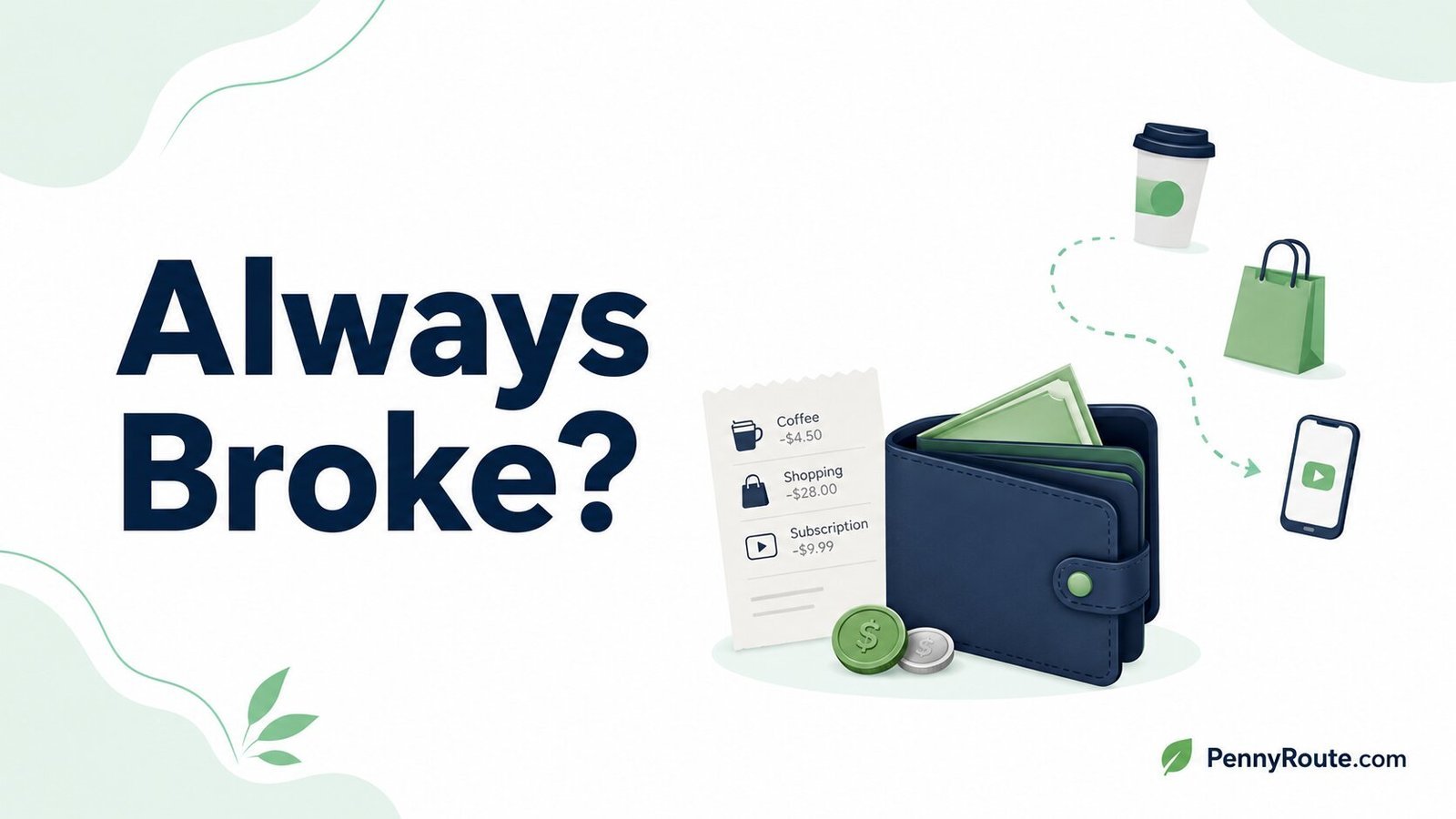
If you keep asking, “Why am I always broke?”, don’t assume the answer is automatically overspending. Everyday spending may be part of the problem, but housing, debt, childcare, transportation, irregular expenses, or simply not enough income can leave just as little room.
What helps most is figuring out why the shortage keeps happening. You may have a structural problem where required costs already use most of your income. You may have enough room on paper but lose track of where the rest goes. Or the monthly numbers may work while the timing of paychecks and expenses keeps creating tight weeks.
Once you can see where the pressure is coming from, you can focus there instead of cutting random expenses and hoping something changes.
Disclaimer: This content is for informational purposes only and does not constitute financial advice. Consider your own financial situation before making money decisions, and consult a qualified professional when needed.
Quick Overview
- If required expenses use most of your income, small cuts alone may not solve the problem.
- If money should be left but isn’t, check where flexible spending is going.
- If only certain weeks are tight, look at paydays, bill dates, and irregular expenses.
- If several causes apply, start with the one creating the biggest recurring squeeze.
What Does “Always Broke” Actually Mean?
One expensive month does not necessarily mean you have an ongoing money problem. A major repair, medical expense, travel cost, or another unusual bill can throw off an otherwise workable month.
A recurring shortage looks different. You may notice that:
- most of your paycheck is already committed soon after it arrives;
- you regularly run short before the next payday;
- predictable nonmonthly expenses keep disrupting the month;
- credit cards or other borrowing cover ordinary expenses when cash runs low;
- you earn money but still struggle to explain why so little remains.
What deserves your attention is when the same shortage keeps happening. If you are regularly ending up in the same position, your cash flow is telling you something.
Before Asking “Why Am I Always Broke?”, Start With the Numbers
It is difficult to know whether spending is the problem until you see how much room your income actually gives you.
Start by separating your normal monthly money into five parts:
- Take-home income
- Required recurring expenses, such as housing, utilities, insurance, and childcare
- Minimum debt payments
- Variable essentials, such as groceries and transportation
- Flexible and irregular spending
You do not need to build a detailed budget just to make this comparison. For now, you simply want to see how much of your income is already spoken for and what is realistically left afterward.
Example
Suppose you bring home $3,200 per month. Fixed bills and minimum debt payments take $2,200, while groceries, transportation, and other basics average another $700. That leaves only $300 for optional spending and costs that do not arrive every month.
Now compare that with someone who also brings home $3,200 but has $2,000 in normal necessary costs. If that person cannot explain where the remaining $1,200 went, the underlying problem is probably different.
In the first situation, there simply is not much money left before optional spending even enters the picture.
In the second, there should be money left, so the next question is where it actually went.
Timing matters too. A monthly total can look affordable even when bills and income fall on dates that create shortages during particular weeks. The Consumer Financial Protection Bureau’s guidance on creating a working budget recommends looking at when bills are due alongside when income arrives.
Three Patterns to Look For
Your numbers will usually point toward one or more of these patterns.
1. A structural shortfall
Required bills, minimum payments, and normal essentials already consume nearly all of your take-home income.
Small spending cuts may help around the edges, but they are unlikely to solve the whole problem when there was very little room to begin with.
2. Money is leaving somewhere you did not expect
Your income appears to leave reasonable room after normal costs, but very little remains.
That is when looking through your actual transactions becomes worthwhile. You may not find one big purchase causing the problem. It may be dozens of ordinary ones adding up quietly.
3. The totals work, but the timing does not
You seem to earn enough across the month, yet certain weeks repeatedly become difficult.
Your paydays and bill dates may be out of sync, or too much of each paycheck may be getting spent before later expenses arrive.
You may recognize more than one pattern. That is normal. Start with whichever one is creating the biggest recurring gap rather than trying to fix everything at once.
7 Reasons You May Always Be Broke
1. Too Much of Your Income Is Already Committed
Sometimes very little money is flexible before the month even begins.
Housing, car payments, insurance, childcare, utilities, minimum debt payments, and other recurring obligations can take a large share of take-home pay. Add groceries and transportation, and there may be little left for savings, irregular expenses, or optional spending.
Look at your largest recurring costs before focusing on the smallest purchases. If most of your income is already committed, saving a few dollars here and there will not change the underlying numbers very much.
That does not mean your biggest expenses are necessarily wasteful, or that you can easily change them. It means much of the pressure is already there before everyday spending starts.
2. Everyday Spending Is Higher Than You Realize
A different problem appears when the required costs look manageable but the remaining money still disappears.
Takeout, convenience purchases, shopping, rides, delivery fees, small card transactions, and other flexible spending rarely feel significant one purchase at a time. The monthly total can tell a different story.
If you expected to have several hundred dollars left but cannot explain where it went, tracking your expenses for a few weeks can replace guesswork with actual numbers.
You are not looking for purchases to feel guilty about. You are simply checking whether those purchases add up to enough to explain why the money keeps disappearing.
3. Irregular Expenses Keep Getting Treated Like Surprises
Some expenses feel unexpected only because they are missing from the normal monthly plan.
Car maintenance, annual insurance premiums, school costs, gifts, memberships, medical copays, seasonal expenses, and home repairs do not necessarily appear every month. Many still come around often enough to anticipate.
If you leave those costs out of your normal plan, the month can look fine right up until the car needs work or an annual bill lands.
Useful Distinction
Unexpected expenses are genuinely difficult to predict. Irregular expenses do not arrive every month, but many are predictable enough to plan for.
Looking back over several months of transactions can reveal costs that keep returning outside your regular bill cycle, including expenses people often forget to budget for because they do not show up every month.
4. Debt Payments Are Taking Too Much of Your Monthly Cash Flow
Debt pressure is not only about the total balance you owe.
Several required payments can leave little room each month even when everyday spending is fairly controlled. Credit card minimums, personal loans, auto loans, student loans, and buy now, pay later installments all compete with housing, groceries, utilities, and other current expenses.
Add up what debt requires from you each month, then look at what is left for everything else.
If debt payments are taking a big bite out of every paycheck, cutting a few small purchases may help without solving the bigger squeeze.
5. Your Income Is Too Low or Too Unpredictable for Your Current Costs
Your spending does not have to be excessive for the numbers to be too tight. Sometimes the income coming in simply is not enough for the costs you have to cover.
If essentials and required payments already use nearly everything you earn, there is very little room for savings, irregular expenses, or an unexpected bill.
Variable income creates a different kind of pressure. Freelancers, tipped workers, hourly employees, seasonal workers, and others with changing pay can earn enough over a longer period while still facing difficult low-income months.
If your income changes from month to month, plan around a more conservative amount rather than assuming every month will look like your strongest one. A dedicated approach to budgeting with irregular income can help when the amount or timing of your pay changes regularly.
Either way, put a number on the gap before deciding what to change. A $75 monthly shortage and a $700 shortage call for very different decisions.
6. Your Spending Rose as Your Income Rose
A larger paycheck does not automatically create more breathing room.
There is nothing automatically wrong with spending more as you earn more. Some upgrades genuinely make life better.
The problem appears when most of every raise becomes part of the normal cost of living. Housing, cars, dining out, travel, subscriptions, shopping, and other expenses can quietly expand until the extra income no longer feels like extra income.
That pattern is often called lifestyle creep.
One way to spot it is to compare your finances with an earlier income level. If you earn considerably more today but still have roughly the same amount available before payday, look at which recurring and flexible expenses grew along the way.
The answer is not necessarily returning to your old lifestyle. Focus on increases that cost more without adding enough value to justify them.
7. Your Paycheck Has No Plan Before Spending Starts
A healthy-looking bank balance on payday can be misleading.
Part of that money may already be needed for rent, groceries, utilities, transportation, debt payments, or bills due later in the pay period. If flexible spending begins before those commitments are separated, the first few days after payday can feel comfortable while the final week becomes tight.
Before treating your bank balance as spending money, set aside what has to last until the next paycheck.
A consistent payday routine can make that easier by giving upcoming bills, everyday expenses, savings, and flexible spending a place before the money starts leaving your account.
Which Problem Should You Work on First?
If several reasons sound familiar, do not automatically start with whichever expense is easiest to cut.
Start with whatever is putting the biggest repeated squeeze on your money.
| What you notice | What to check first |
|---|---|
| Required costs leave almost nothing | Your largest recurring commitments and the size of the monthly shortfall |
| The numbers suggest money should remain | Recent transactions and flexible spending |
| Nonmonthly costs repeatedly derail the month | Predictable irregular expenses over the past 6–12 months |
| Debt payments take a large share of what remains | Total required monthly debt payments |
| Normal costs are reasonable but income still falls short | The size and consistency of the income gap |
| You earn more than before but have no extra room | Expenses that increased along with income |
| Some weeks are tight even though the month looks affordable | Paydays, due dates, and when spending happens |
A household can have several of these problems at the same time. High rent, debt payments, and some unplanned spending can all contribute to the same shortage.
Start with the problem that would free up the most breathing room if you could improve it. Smaller changes still count, but they should not distract you from a much larger recurring gap.
If your numbers show that nearly every paycheck is already spoken for before the next one arrives, the question changes from “Why does this keep happening?” to “How do I create some breathing room?” A focused plan for stopping the paycheck-to-paycheck cycle can help with that next step.