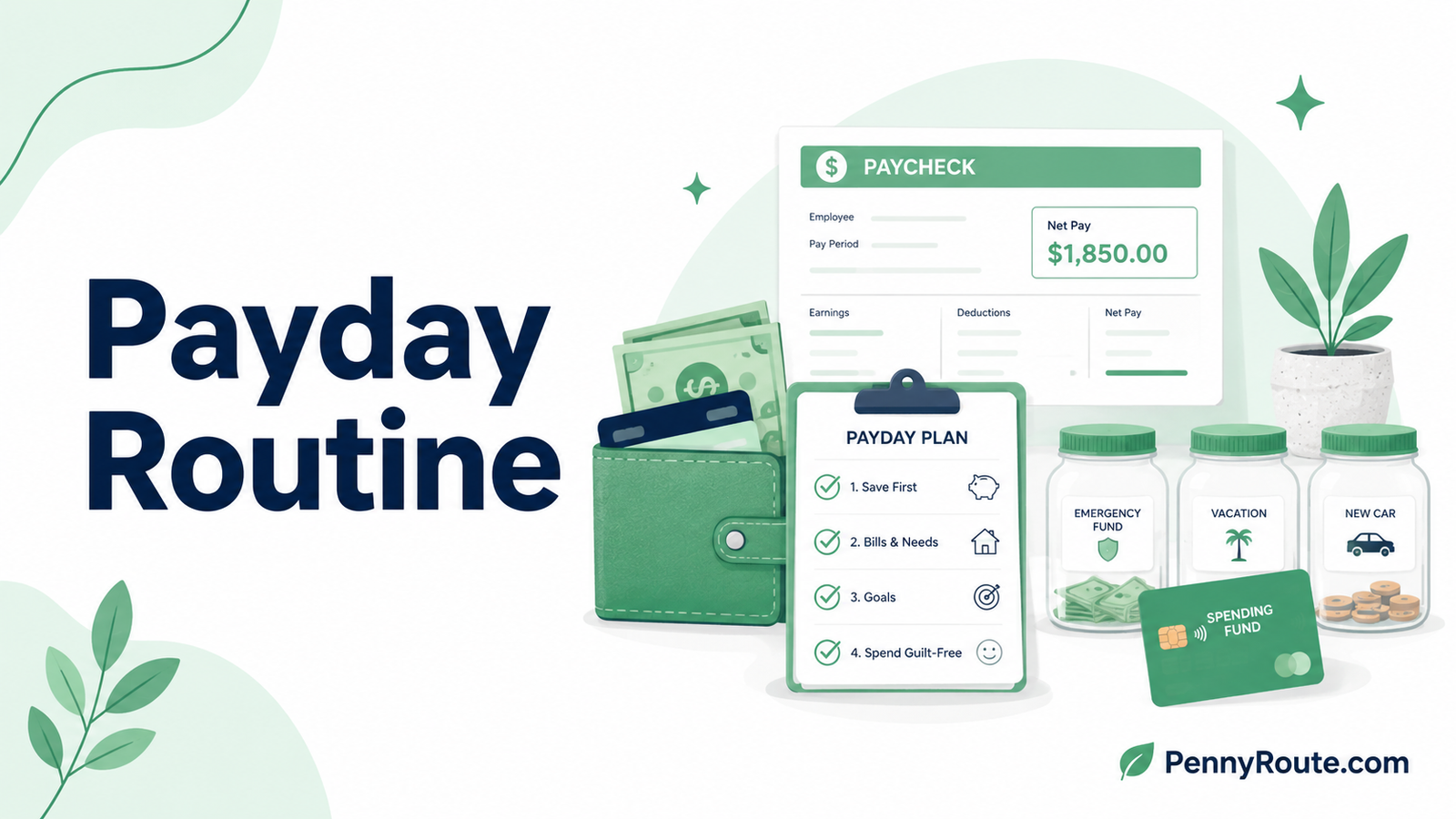
A good payday routine helps you figure out what your paycheck needs to cover before you start spending from it. The full amount may be sitting in your account, but some of that money already has a purpose, such as bills, groceries, transportation, or other expenses due before your next payday.
It doesn’t need to take long. A few minutes on payday can help you see what needs to stay available, what you want to put toward other priorities, and what is actually free to spend.
Disclaimer: This content is for informational purposes only and does not constitute financial advice. Consider your own financial situation when deciding how to manage each paycheck, and consult a qualified professional when needed.
Quick Overview
- Start with the amount that actually reached your account.
- Look at what this paycheck needs to cover before the next one arrives.
- Treat bills and everyday essentials as money that is already spoken for.
- Decide what any remaining money should do, such as saving, extra debt payments, or another priority.
- Keep flexible spending within an amount that can last until your next payday.
What Is a Payday Routine?
A payday routine is a short check you do when income arrives so you know what needs to stay available and what you can actually decide how to use.
It is less about following a perfect formula and more about matching the paycheck to the expenses and priorities that come before your next payday. That way, the full account balance does not get mistaken for money that is free to spend.
Start With One Question: What Must This Paycheck Cover Before the Next One?
The right planning window depends on when you get paid again.
If you are paid biweekly, this paycheck may need to cover two weeks of groceries and transportation, along with any bills due during that time. If you are paid monthly, the same paycheck has to carry you much further.
Thinking in terms of the next payday makes the routine more practical because you are matching the money to the period it actually needs to cover.
A 5-Step Payday Routine
1. Confirm the Amount That Actually Arrived
Start with the amount that reached your account, especially if your pay changes from one payday to the next.
Overtime, commissions, unpaid time off, benefit deductions, or irregular hours can make the deposit different from what you expected. Using the real number gives you an accurate starting point for the rest of the routine.
2. List What Must Be Paid Before the Next Payday
Next, look at the bills and required payments that fall before you get paid again.
That could include rent or mortgage payments, utilities, insurance, minimum debt payments, childcare, or anything else with a due date during that period.
The important part is the timing.
A bill due after your next paycheck does not necessarily need to come out of this one, while a bill due tomorrow probably does. If due dates are spread throughout the month, a budget calendar can make it easier to see which bills need to come out of each paycheck.
This keeps you focused on what this paycheck actually needs to handle instead of trying to solve the entire month at once.
3. Allow for Everyday Essentials Until Then
Bills are only part of what the paycheck has to cover. You also need room for expenses such as groceries, transportation, prescriptions, and other everyday needs before the next payday.
These costs are less predictable than fixed bills, so it helps to use a realistic amount rather than an unusually low target that is hard to maintain.
If groceries normally cost around $250 over two weeks, planning for $150 just to make the numbers look better does not create real extra money. It only pushes the shortfall later into the pay period.
4. Choose What Any Remaining Money Should Do
Once bills and everyday essentials are covered, look at what is left.
Part of that money could go toward savings, an upcoming irregular expense, extra debt repayment, or another priority that matters right now. There is no single order that works for every paycheck.
Someone with no cash cushion may value keeping more money available. Someone with a stable buffer may decide that extra debt repayment makes more sense. The right choice depends on what would improve your finances without leaving the rest of the pay period too tight.
5. Set the Amount You Can Actually Spend Freely
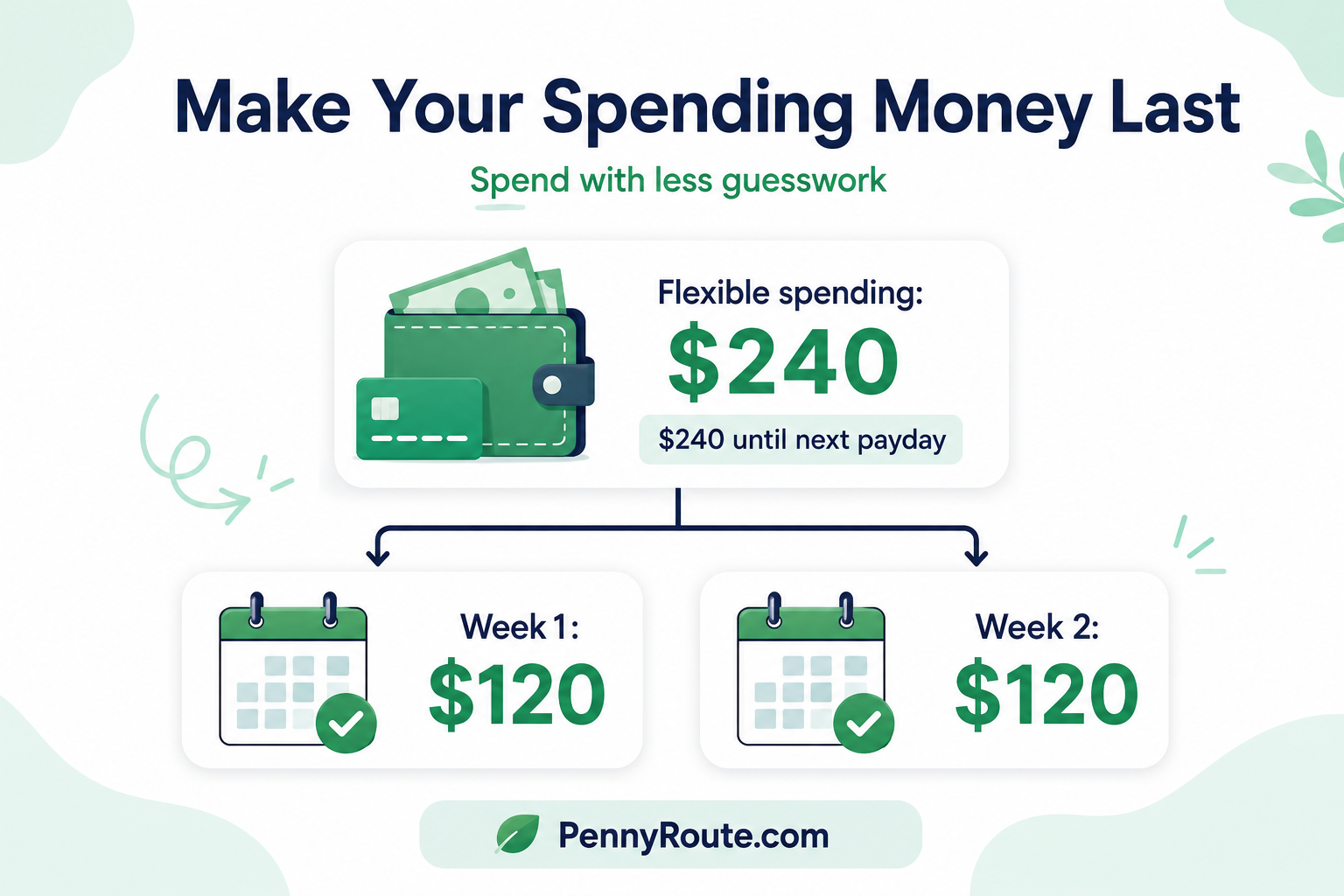
Whatever remains after the important costs and planned priorities are accounted for is the amount you can treat as flexible spending.
That may cover eating out, entertainment, hobbies, shopping, or other optional purchases. If the amount has to last two or four weeks, breaking it into smaller weekly amounts can make it easier to avoid using most of it early.
You do not need to track every dollar perfectly. What matters is knowing the amount you can spend without dipping into money you still need before payday.
Payday Routine Example
Suppose you receive a $1,800 paycheck and need it to last until your next payday.
| Paycheck allocation | Amount |
|---|---|
| Paycheck received | $1,800 |
| Bills and required payments before next payday | $850 |
| Groceries, transportation, and other essentials | $350 |
| Planned savings or another priority | $100 |
| Flexible spending | $300 |
| Left as a buffer | $200 |
The full $1,800 is in your account, but that does not mean all of it is available for everyday spending. In this example, only $300 has been set aside for flexible spending.
The remaining money already has a purpose, whether that is covering bills, handling essentials, supporting a current priority, or simply staying available as a small cushion until the next paycheck arrives.
How Your Pay Schedule Changes the Routine
The same payday routine works with different pay schedules, but the amount of time each paycheck has to cover changes.
| Pay schedule | What changes |
|---|---|
| Weekly | You are usually planning for a shorter stretch and fewer expenses before the next paycheck. |
| Biweekly | One paycheck often needs to cover about two weeks of essentials and any bills due during that period. |
| Semimonthly | Match each paycheck to expenses due before the next fixed pay date, such as the 15th or the end of the month. |
| Monthly | More of the paycheck needs to stay available upfront because it has to last until the next month’s income arrives. |
| Variable | Base the routine on what actually came in and the expenses that need to be covered before income arrives again. |
With variable income, plan from the money that has actually arrived rather than the income you expect but have not received yet. That keeps the routine based on money you can use now, not money that may come in later.
What If the Paycheck Cannot Cover Everything Before the Next Payday?
Sometimes the numbers simply do not leave enough room. If the paycheck is already needed for bills, required payments, and basic expenses before the next one arrives, there may be little or nothing left for savings, extra debt payments, or flexible spending.
In that situation, the payday routine is not the real problem. If this keeps happening, living paycheck to paycheck is the bigger issue because there is not enough room between income and normal expenses.
For this paycheck, the priority is understanding the shortfall rather than trying to force every category to fit. Once you know how much is missing, you have a clearer picture of what needs to change.
Your Payday Routine Should Get Simpler Over Time
A payday routine should become easier once the same bills, transfers, and spending limits start falling into a familiar pattern.
You may still need to look closely at a paycheck when income changes or an unusual expense is coming up. On a normal payday, though, the routine could be as simple as confirming the deposit, checking what needs to stay available, making any planned transfers, and seeing what is left for flexible spending.
Over time, payday should need less thought, not more. If the basics are already organized, you should not have to rebuild the plan from scratch every time you get paid.
FAQs About Payday Routines
What Should I Do First When I Get Paid?
Start by looking at what the paycheck needs to cover before your next payday. Bills, required payments, and everyday essentials come before deciding what is available for saving or flexible spending.
Should I Save Money or Pay Bills First on Payday?
There is no single order that fits every paycheck. First account for essential expenses and required payments due before you get paid again, then decide what amount can reasonably go toward savings or other priorities.
How Should I Handle a Biweekly Paycheck?
Plan for roughly two weeks at a time. Match bills to the paycheck that arrives before they are due, allow for essentials during that period, and divide flexible spending into smaller weekly amounts if that helps it last.
What If My Paycheck Is Not Enough for All My Bills?
If required expenses regularly exceed what comes in, the issue is bigger than how the paycheck is divided. Start by identifying the size of the shortfall so you know what needs to change.