A bad spending habit is not simply buying something you enjoy or spending money on something optional. The problem starts when the same spending pattern keeps showing up and regularly leaves less money for bills, saving, debt payments, or other priorities.
Some habits are easy to spot, while others blend into everyday spending. A few small purchases, a sale that is hard to pass up, or spending more freely around certain people may not seem important on their own. Repeated often enough, though, they can change how much money is left at the end of the week or month.
The useful place to start is not cutting everything you enjoy. It is figuring out which spending pattern is actually costing you the most and changing that one first.
Disclaimer: This content is for informational purposes only and does not constitute financial advice. Consider your own financial situation when making spending decisions, and consult a qualified professional when needed.
Quick Overview
- A spending habit becomes a problem when the same pattern repeatedly pulls money away from more important needs or goals.
- The biggest issue is not always the largest purchase. Frequency and timing matter too.
- Common patterns include impulse buying, emotional spending, overspending after payday, lifestyle creep, and spending without a clear limit.
- Start by identifying the habit with the clearest impact on your cash flow rather than trying to change everything at once.
- Small changes are easier to keep when they target the specific situation that triggers the spending.
What Makes a Spending Habit a Problem?
Not every purchase you could live without is a bad spending habit. The issue is usually the pattern around it.
A habit is worth paying attention to when the same type of spending keeps leaving you short, pushing aside something more important, or making you rely on credit more often than you planned.
Frequency matters too. A $100 purchase once in a while may have less impact than a $15 expense that shows up several times every week. The amount, how often it happens, and what it replaces all help show whether the habit is actually hurting your budget.
The point is not to label every treat or convenience as a mistake. It is to notice the spending that keeps creating the same problem afterward.
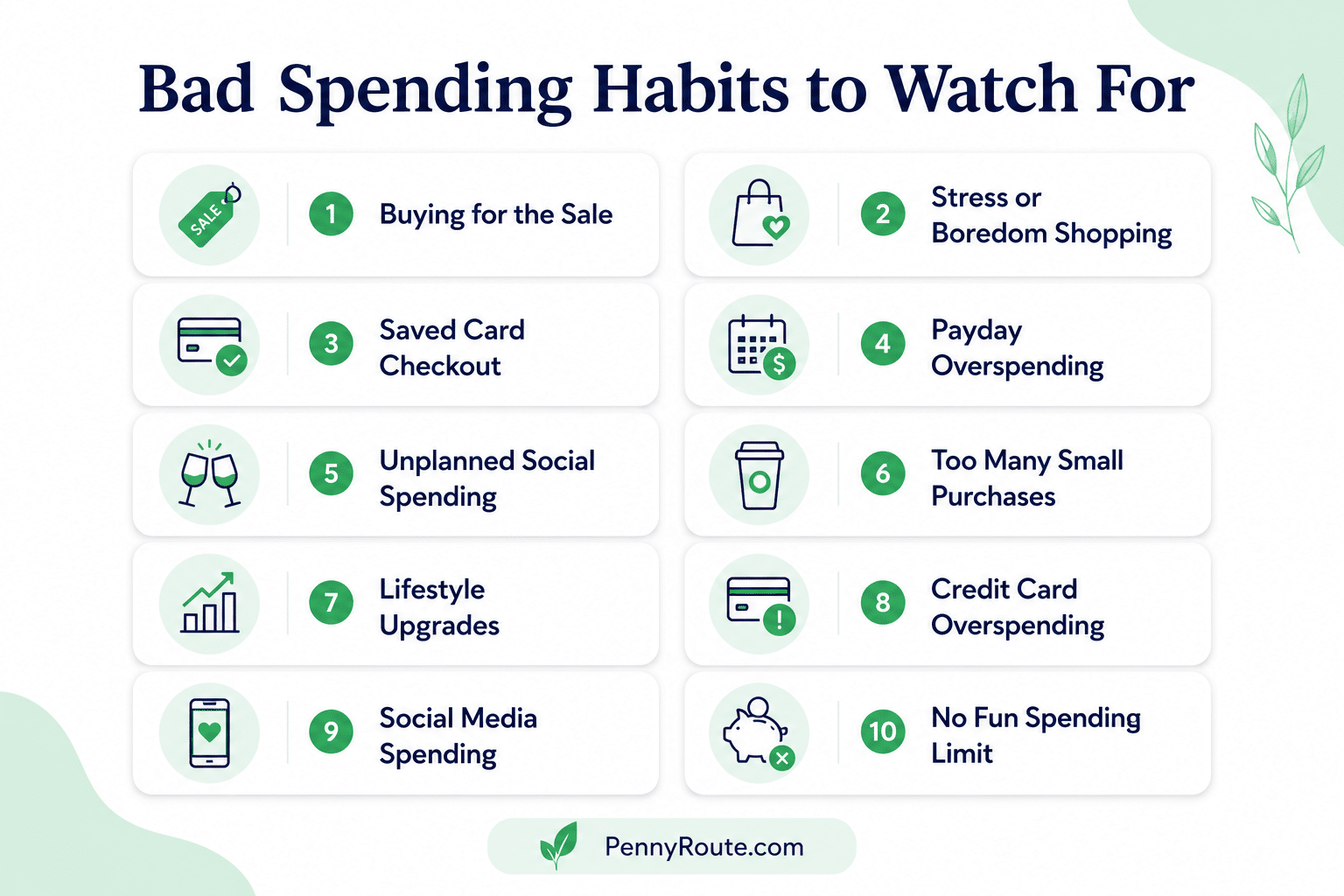
10 Bad Spending Habits Worth Paying Attention To
1. Buying Things Mainly Because They Are on Sale
A discount only saves you money if you were already planning to buy the item. A discount can make a purchase seem easier to justify, especially when the original price makes the deal look too good to pass up.
The habit becomes expensive when sales regularly lead you to buy things that were never part of your plans. You may spend less than the original price, but you are still spending money you otherwise would have kept.
The pattern to watch is not whether you use discounts. It is whether the discount itself is becoming the reason you buy.
2. Making Unplanned Purchases Too Quickly
Some purchases happen before you have really decided whether they fit your budget or whether you want them enough to spend the money.
This could be an extra item added to an online order, something picked up while browsing, or a larger purchase made because it seemed appealing in the moment.
Occasional spontaneity is not necessarily a problem. Frequent impulse buying becomes a bad spending habit when quick decisions repeatedly use money you intended for something else.
3. Spending in Response to Stress, Boredom, or Other Emotions
Sometimes spending is less about the item and more about what is happening in the moment. A stressful day, boredom, frustration, or the urge to reward yourself can make a purchase feel especially appealing.
The pattern becomes costly when shopping starts showing up as the same response to the same feeling. That is different from occasionally buying yourself something you enjoy.
If this happens often, noticing the trigger matters more than judging the purchase afterward. Emotional spending is easier to address when you can see what usually happens right before the urge to spend shows up.
4. Spending Heavily Right After Payday
Payday can make your account balance look more comfortable than it really is. The problem starts when that temporary bump leads to extra spending before bills, essentials, and other near-term costs are accounted for.
A few larger purchases right after getting paid can make the rest of the pay period much tighter than expected.
A simple payday routine helps separate money that is already spoken for from money you can actually choose to spend.
5. Letting Small Purchases Add Up Without Noticing
Small purchases are easy to dismiss because each one seems harmless on its own. Coffee, snacks, delivery fees, app purchases, and convenience-store stops may not stand out the way a larger purchase would.
The pattern matters when those expenses happen often enough to take a noticeable share of your flexible spending.
You do not need to cut every small purchase. It is more useful to look at which ones you would happily keep and which ones are happening mostly out of habit.
6. Saying Yes to Plans Before Checking the Cost
Social spending can creep up when the decision starts with “Do I want to go?” instead of “What will this actually cost me?”
A dinner, concert, weekend trip, or group activity may fit comfortably one time and strain the rest of the month the next. The price of the ticket or meal is not always the full cost either. Transportation, drinks, parking, childcare, or other extras can change the total quickly.
Before committing, look at the full cost and what else that money needs to cover. That makes it easier to say yes when it fits and say no when it does not.
7. Letting Everyday Lifestyle Costs Gradually Increase
Spending often rises in small ways rather than through one obvious upgrade. A pricier phone plan, more frequent takeout, premium subscriptions, or choosing the more expensive option by default can slowly become normal.
There is nothing wrong with spending more on things you value when your budget has room for it. The issue is when small upgrades keep becoming part of your regular spending without you noticing how much they add up to.
This is where lifestyle creep can start to take hold. The increase may seem minor at first, but recurring costs are harder to notice once they become part of your usual spending.
8. Treating Credit as Extra Spending Money
A credit card can make a purchase feel easier because the money does not leave your checking account right away. But the purchase still reduces what you can afford later.
The habit becomes a problem when available credit starts to feel like extra income. That can lead to spending beyond what your current cash flow can comfortably support, especially when several purchases build up before the bill arrives.
A better test is whether you could afford the purchase without relying on the credit limit itself. If not, the card is making the spending look more manageable than it really is.
9. Letting Other People’s Spending Shape Your Own
Spending can drift upward when the people around you regularly choose more expensive restaurants, trips, clothes, or activities than you would choose on your own.
The problem is not spending money with friends or enjoying the occasional splurge. It is when other people’s choices start setting the standard for what feels normal, even when that level of spending does not fit your budget.
Before saying yes, compare the cost with your own priorities rather than with what everyone else seems comfortable spending.
10. Having No Clear Limit for Optional Spending
Optional spending is easier to control when you have some sense of how much room there is for it.
Without a boundary, eating out, entertainment, shopping, hobbies, and other nonessential spending can keep expanding until something else has to give.
The limit does not need to be exact down to the dollar. It just needs to be realistic enough that you can enjoy discretionary spending without letting it crowd out bills, saving, or other priorities.
Which Spending Habit Is Hurting You the Most?
You do not need to fix every spending habit at once. Start with the one that is creating the clearest problem in your finances.
A habit deserves more attention when it happens often, costs more than you realize, or keeps taking money away from something you care about more.
| Ask yourself | Why it matters |
|---|---|
| How often does this happen? | Frequent spending can add up even when each purchase is small. |
| Roughly how much does it cost? | This shows whether the habit is having a meaningful impact. |
| What usually happens right before I spend? | Repeated situations can reveal the trigger behind the habit. |
| What gets pushed aside afterward? | This shows whether the spending is affecting bills, saving, debt payments, or another priority. |
You may find that the habit you notice most is not the one costing you the most. A large occasional purchase can stand out, while a smaller expense repeated several times a week quietly uses more money over time.
The best place to start is usually the pattern with the clearest financial impact and the most realistic chance of changing.
Change One Spending Pattern at a Time
Once you know which habit is causing the most trouble, choose one change you can realistically test.
For example, if takeout is happening more often than you want, you might decide ahead of time which nights you will cook. If social plans regularly cost more than expected, you might decide how much room you have before agreeing to the next one.
Then watch what happens. If the pattern shows up less often or costs less, the change is helping. If nothing changes, try a different approach rather than piling on more rules.
One change that works in real life is more useful than trying to overhaul every spending habit at once.