
Utility bills can quietly take up more room in your budget than expected. One month, it is the air conditioning. Another month it is heating, hot water, laundry, or a water bill that somehow looks like your shower started a side business.
When electric, gas, and water costs keep changing, it can be hard to know which habits are actually worth fixing.
The best way to save on utility bills is not to try every tip at once. Start by finding what is driving your costs, then focus on simple changes that lower waste without making your home uncomfortable.
Disclaimer: This content is for informational purposes only and does not constitute financial, home improvement, electrical, plumbing, HVAC, or safety advice. Always follow manufacturer instructions and consult a qualified professional before making changes involving electricity, plumbing, heating, cooling, gas appliances, or major home upgrades.
Quick Overview: How to Save on Utility Bills
- Start by checking which bills are rising: electric, gas, water, heating, or cooling.
- Focus first on the biggest utility bill drivers, such as heating, cooling, hot water, laundry, leaks, and high-use appliances.
- Use no-cost and low-cost fixes before spending money on major upgrades.
- Renters can still save with temporary fixes, better daily habits, and quick leak reporting.
- Homeowners may save more over time with maintenance, air sealing, insulation, efficient appliances, and rebates.
- A simple monthly plan can help you test changes without turning your home into a full-time energy project.
Check What Is Driving Your Utility Bills First
Before you start changing everything, look at where the increase is actually coming from.
Utility bills can rise for different reasons. Sometimes the cost per unit goes up. Sometimes your usage goes up. Sometimes the weather changes, a leak starts, or an old appliance works harder than it should.
Start by comparing your last three to six months of bills. Look at each bill separately:
| Bill Type | What to Check |
|---|---|
| Electric bill | Higher usage, cooling, lighting, appliances, electronics, or rate changes |
| Gas bill | Heating, water heating, cooking, or colder weather |
| Water bill | Leaks, running toilets, outdoor watering, showers, or laundry |
| Sewer/trash fees | Fixed city or service charges that may not change much with usage |
Pay attention to usage, not only the total dollar amount. If your bill went up but your usage stayed the same, rates or fees may have changed. If usage jumped, your home habits or equipment may be the bigger issue.
This also helps your budget. If utilities keep surprising you, they may need a little more room in your budget categories, especially during high-use seasons like summer and winter.
Start With the Biggest Utility Bill Drivers
The easiest mistake is starting with tiny changes while the biggest costs keep running in the background.
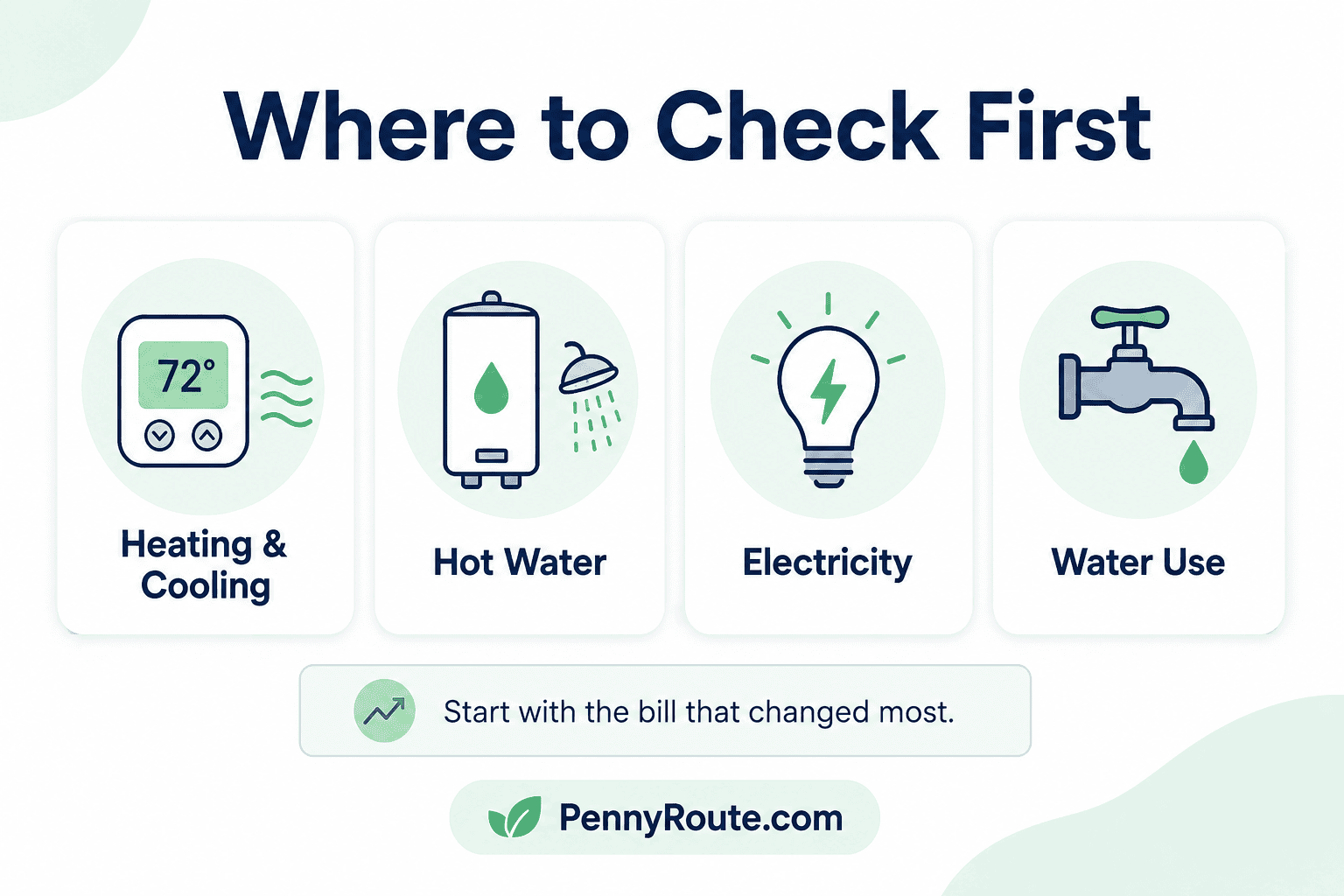
A few small habits can help, but your biggest savings usually come from the parts of your home that use the most energy or water. Start there before worrying about every phone charger or hallway light.
| Utility Bill Driver | Why It Matters | First Fix to Try |
|---|---|---|
| Heating and cooling | Often causes seasonal bill spikes | Adjust thermostat habits, use curtains, clean filters |
| Hot water | Used by showers, laundry, and dishes | Wash with cold water, shorten showers slightly |
| Laundry and dryer use | Repeated loads add up | Run full loads and air-dry when practical |
| Lighting and electronics | Small waste repeats daily | Switch high-use bulbs to LEDs and use power strips |
| Leaks and running toilets | Water waste can continue for weeks unnoticed | Check faucets, toilets, and outdoor taps |
| Older appliances | May use more energy over time | Replace only when the cost and timing make sense |
This gives you a better starting point. Instead of trying twenty changes at once, choose two or three areas that match your actual bills.
If your electric bill jumps every summer, cooling may matter most. If your water bill suddenly increases, check for leaks before changing your laundry routine. If winter gas bills are the problem, heating habits and drafts should move to the top of the list.
Lower Heating and Cooling Costs
Heating and cooling often create the biggest seasonal spikes in utility bills. You do not need to freeze in winter or sweat through summer, but small adjustments can reduce waste.
Adjust the Thermostat Slightly
A small thermostat change can make a noticeable difference over time.
Try adjusting the temperature by one or two degrees first. That is usually easier to stick with than making a big change and then giving up after two days. You can also lower heating or cooling when you are asleep, away from home, or not using certain rooms.
If you use a programmable or smart thermostat, set a schedule that matches your actual routine. The point is to avoid heating or cooling an empty home more than necessary.
Use Curtains, Blinds, and Fans Smarter
Curtains and blinds can help manage indoor temperature without changing the thermostat all day.
In summer, closing blinds during the hottest part of the day can help reduce heat from direct sunlight. In winter, opening curtains when the sun is out and closing them at night may help hold warmth inside.
Ceiling fans can also help if you use them correctly. They cool people, not rooms, so turn them off when you leave. During warmer months, a fan may help you feel comfortable with the thermostat set slightly higher.
Keep Vents, Radiators, and Filters Clear
Blocked airflow makes heating and cooling systems work harder.
Check that furniture, rugs, curtains, or storage boxes are not blocking vents, radiators, or returns. If your system uses filters, replace or clean them based on the manufacturer’s guidance.
Energy.gov’s Energy Saver Guide explains that heating and cooling savings often work best when thermostat habits are paired with home efficiency steps such as air sealing, insulation, and proper system maintenance. That is why heating and cooling deserve attention before smaller savings tricks.
Save on Hot Water, Laundry, and Dishes
Hot water can affect more than one bill. It may show up through water heating, showers, laundry, dishwashing, and everyday cleaning habits.
You do not need to make life uncomfortable. The best changes are usually small routines you can repeat.
Wash Clothes in Cold Water
For many regular loads, cold water is enough and can reduce the energy used for heating water.
Use warm or hot water when it is actually needed, such as for certain stains, bedding, towels, or hygiene-related loads. For everyday clothing, cold water is often the easier default.
Run Full Loads When Practical
Half loads can waste water, electricity, and detergent.
Try to run full loads of laundry and dishes when practical, without overloading the machine. Overloading can make clothes wash poorly or dishes come out dirty, which means you may end up running them again.
Take Slightly Shorter Showers
You do not need to turn every shower into a speed challenge.
Even cutting a few minutes from long showers can reduce hot water use over time. This is especially useful in larger households where multiple people shower daily.
Use Dishwasher Settings Wisely
A dishwasher can be efficient when it is loaded properly and run with full loads.
Use eco or energy-saving settings if your machine has them and they work well for your dishes. Avoid heated dry when you can air-dry instead. That small setting can reduce electricity use without changing much about your routine.
Lower the Water Heater Temperature Carefully
Some households may save by lowering the water heater temperature, but this should be done carefully.
Follow the manufacturer’s guidance and consider safety needs in your household before making changes. If you are unsure, ask a qualified professional rather than guessing. Hot water savings are useful, but they should not come at the cost of safety.
Cut Electricity Waste Around the House
Small electricity habits may not seem like much on their own, but they repeat every day. That is why this section is less about chasing every tiny watt and more about fixing the easy waste that happens often.
Turn Off What You Are Not Using
Start with the obvious habits that are easy to forget.
Turn off lights, fans, televisions, gaming systems, and other devices when they are not being used. Fans are especially easy to leave running, but they only help when someone is in the room.
This is not about walking around the house in the dark. It is about not paying for things that are doing nothing for you.
Unplug Idle Devices or Use Power Strips
Some devices still use small amounts of electricity when they are plugged in but not actively being used.
You do not need to unplug everything after every use. Focus on areas with multiple devices, such as TV stands, desks, chargers, gaming consoles, and kitchen counters. A power strip can make it easier to turn off several devices at once.
This works best for items you do not need running all day.
Switch to LED Bulbs in High-Use Rooms
LED bulbs are one of the simplest low-cost upgrades, especially in rooms where lights stay on often.
Start with the highest-use areas first, such as the kitchen, living room, home office, hallway, or outdoor lights. You do not need to replace every bulb in one weekend.
ENERGY STAR says certified LED bulbs use up to 90% less energy and last much longer than traditional incandescent bulbs, which makes them a practical starting point for lowering lighting costs.
Use Energy-Saving Settings on Devices
Many devices have settings that reduce energy use without much effort.
Check televisions, computers, monitors, printers, game consoles, and appliances for sleep mode, eco mode, brightness settings, or automatic shutoff options. These settings are easy to ignore when you first buy something, but they can help reduce background usage over time.
The best electricity savings are the ones you can repeat without thinking about them every day.
Lower Your Water Bill
A higher water bill is often easier to miss than a higher electric bill because water waste can happen quietly.
A slow drip, running toilet, outdoor tap, or small leak can keep adding to the bill long after you stop thinking about it.
Fix Leaks Quickly
Check faucets, showerheads, under-sink pipes, outdoor taps, and appliance connections.
Even a small leak can waste water over time. If you rent, report leaks to your landlord or property manager as soon as you notice them. If you own your home and the leak is not a simple fix, it may be worth calling a plumber before the problem becomes more expensive.
Watch for Running Toilets
A running toilet can waste a surprising amount of water.
Listen for water running after the toilet should have stopped. You can also check whether the tank refills randomly when nobody has used it. If something seems off, the issue may be a worn flapper, fill valve, or another part that needs attention.
Use Faucet Aerators or Low-Flow Fixtures
Faucet aerators and low-flow showerheads can reduce water use without making daily routines difficult.
EPA WaterSense notes that water-efficient faucets and showerheads can help save water and may also reduce energy used for heating water. That makes them useful if you are trying to lower both water and utility costs.
Use Outdoor Water Carefully
Outdoor water use can raise bills quickly, especially during hot months.
Water lawns or plants during cooler parts of the day when allowed in your area, avoid watering sidewalks or driveways, and check hoses or sprinkler systems for leaks. If you live somewhere with water restrictions, follow local rules first.
For many households, the easiest water savings come from fixing waste before changing every habit. A leak that runs all month can cost more than several small daily choices combined.
Low-Cost Fixes That Can Pay Off
You do not have to start with expensive upgrades to save on utility bills.
In many homes, small fixes can reduce waste, make rooms more comfortable, and help you delay bigger spending until it actually makes sense.
Here are simple low-cost fixes to consider:
| Low-Cost Fix | What It Helps With |
|---|---|
| Draft stoppers | Reduces air leaks under doors |
| Weatherstripping | Helps seal gaps around doors and windows |
| LED bulbs | Lowers lighting costs in high-use rooms |
| Faucet aerators | Reduces water flow without a major fixture change |
| Power strips | Makes it easier to turn off idle devices |
| Clean HVAC filters | Helps airflow and system efficiency |
| Drying rack | Reduces dryer use when practical |
| Outlet and switch plate seals | Helps reduce tiny drafts on exterior walls |
Start with the fixes that match your actual problem.
If your heating bill is high, draft stoppers, weatherstripping, curtains, and filter changes may matter more than replacing light bulbs. If your electric bill is high in summer, cooling habits and appliance use may be more important. If your water bill is the issue, leaks and fixtures should come first.
This is also where a sinking fund can help. If you know you may need a bigger repair, new appliance, or home upgrade later, saving a little at a time can keep that cost from turning into another surprise bill.
Utility Bill Savings for Renters
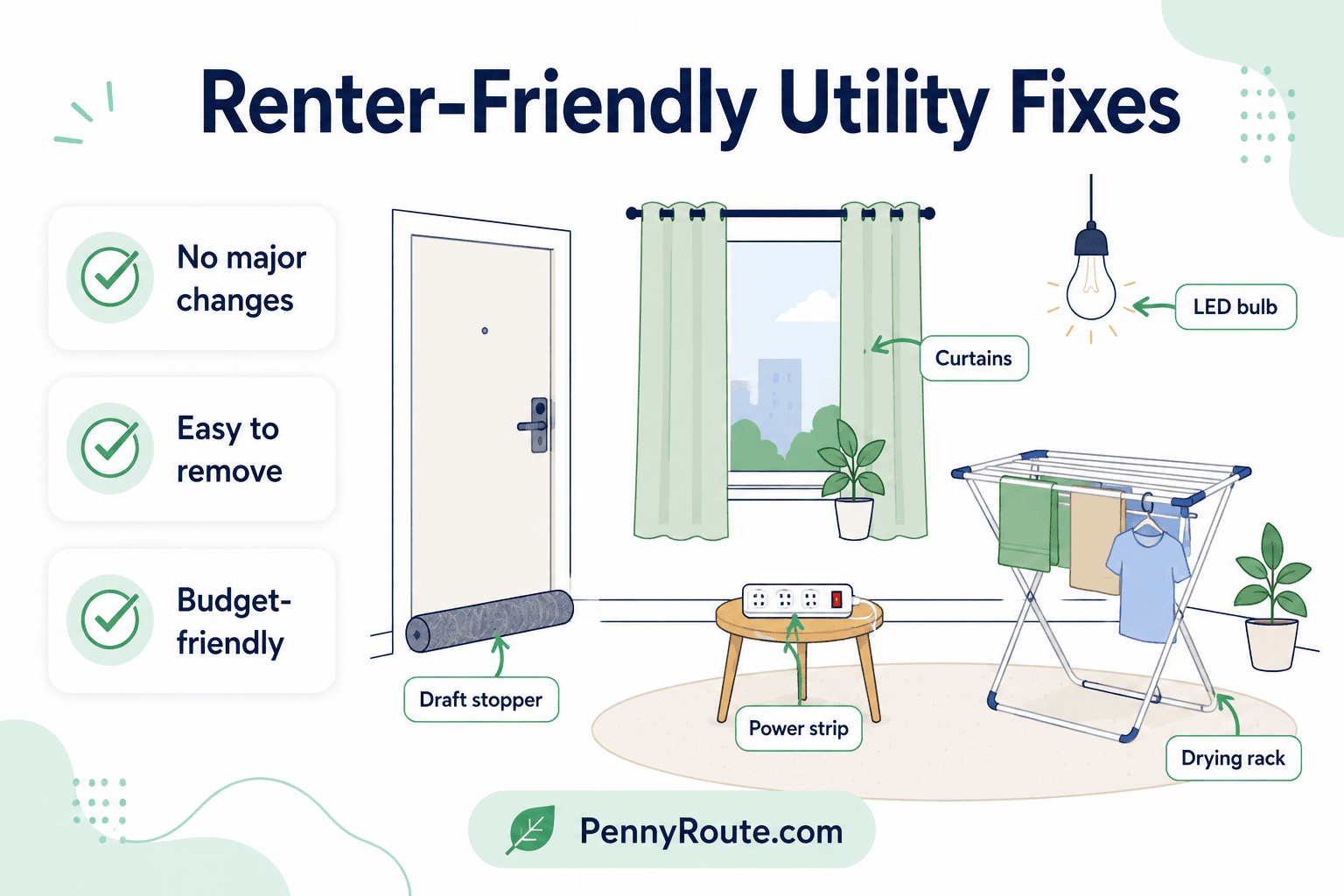
Renters may not be able to change insulation, replace major appliances, or upgrade heating and cooling systems. That does not mean you are stuck with every utility cost.
Focus on changes that are temporary, affordable, and allowed under your rental agreement.
You may be able to:
- use draft stoppers near doors
- add removable weatherstripping if allowed
- use curtains or blinds to manage heat and sunlight
- switch to LED bulbs in fixtures you control
- use power strips for electronics
- report leaks, running toilets, or broken seals quickly
- ask your landlord before changing showerheads, faucets, or thermostat settings
The biggest renter-friendly move is paying attention early. A dripping faucet, running toilet, broken window seal, or weak heating/cooling issue can quietly raise costs if it is ignored.
If utility bills are making the month harder to manage, it may also help to review your bare bones budget so you know which essentials must be covered first before extra spending gets added back in.
Utility Bill Savings for Homeowners
Homeowners usually have more control over utility costs, but that does not mean every upgrade is worth rushing into.
Start with maintenance and simple efficiency fixes before spending money on major projects.
Good homeowner-focused options include:
- scheduling HVAC maintenance when needed
- sealing obvious air leaks around doors, windows, attic spaces, or basements
- improving insulation where your home is losing heating or cooling
- replacing old appliances only when the timing and cost make sense
- checking for utility rebates before buying efficient products
- getting a home energy audit if bills stay high and you cannot find the reason
Bigger upgrades can help, but they should fit your home, budget, and timeline. A new appliance, insulation project, or HVAC upgrade may save money over time, but the upfront cost matters too.
Energy.gov has information on home energy upgrades, rebates, and efficiency improvements, which can be useful if you are comparing bigger projects instead of guessing which one to do first. Try to match the upgrade to the problem you actually have: drafts, old equipment, poor insulation, water waste, or high electricity use.
What Not to Do When Trying to Lower Utility Bills
Saving money on utilities is helpful, but not every “money-saving trick” is worth trying.
Some changes can create safety problems, damage equipment, or cost more than they save. Keep these cautions in mind before making bigger changes around the home.
| Avoid This | Why It Can Be a Problem |
|---|---|
| Guessing with electrical or plumbing changes | Mistakes can be unsafe and expensive to repair |
| Blocking vents, radiators, or returns | Poor airflow can make systems work harder or create safety issues |
| Lowering water heater settings without guidance | Hot water safety needs vary by household and system |
| Buying expensive upgrades without checking usage first | The upgrade may not fix the real source of the bill |
| Ignoring sudden bill spikes | A leak, faulty appliance, or billing issue may keep costing money |
| Skipping manufacturer instructions | Appliances and systems may need specific care |
A smart utility-saving plan should make your home more efficient, not risky or uncomfortable.
When a change involves wiring, gas, plumbing, HVAC equipment, or anything you are unsure about, it is better to get qualified help than to guess. Saving a little on the bill is not worth creating a bigger repair later.
A Simple Utility Bill Savings Plan for This Month
You do not need to fix every utility habit at once. A simple four-week plan can help you test changes without turning your home into a full-time project.
| Week | What to Do |
|---|---|
| Week 1 | Compare your last three to six months of utility bills and look for usage spikes. |
| Week 2 | Focus on heating and cooling habits, including thermostat settings, curtains, fans, vents, and filters. |
| Week 3 | Check hot water, laundry, dishes, leaks, running toilets, and outdoor water use. |
| Week 4 | Switch high-use bulbs to LEDs, use power strips in busy areas, and review what changed. |
At the end of the month, compare your bill usage again if the new bill is available. If not, note which habits were easy to keep and which ones were annoying enough to skip.
The best utility savings are the ones you can repeat. Start with the changes that lower waste without making your home harder to live in. Then use your next bill to decide what is worth keeping, adjusting, or ignoring.
FAQs About Saving on Utility Bills
What is the fastest way to lower utility bills?
The fastest way to lower utility bills is to focus on the biggest bill drivers first, such as heating, cooling, hot water, laundry, leaks, and high-use appliances. Small changes like adjusting the thermostat, washing clothes in cold water, fixing leaks, and switching high-use bulbs to LEDs can be easier to start than expensive upgrades.
How can I lower my electric bill?
To lower your electric bill, start with cooling habits, lighting, appliances, electronics, and anything that runs often. Use fans wisely, turn off unused devices, unplug idle electronics or use power strips, switch high-use bulbs to LEDs, and use energy-saving settings on computers, TVs, and appliances.
How can I lower my gas bill?
To lower your gas bill, focus on heating and hot water. Adjust your thermostat slightly, keep vents and filters clear, seal obvious drafts, use curtains to hold warmth, wash clothes in cold water when practical, and avoid using more hot water than needed.
How can I lower my water bill?
To lower your water bill, check for leaks, running toilets, dripping faucets, outdoor hose leaks, and heavy outdoor watering. You can also use faucet aerators, low-flow fixtures, full laundry loads, and slightly shorter showers to reduce water use without changing your whole routine.
What uses the most electricity in a home?
The biggest electricity users often include heating and cooling systems, water heating, dryers, refrigerators, lighting, electronics, and older appliances. The exact answer depends on your home, climate, appliances, and habits, so checking your bill usage can help you find the biggest problem first.
Does unplugging appliances really save money?
Unplugging appliances can save some money, especially for devices that use standby power, but it usually works best when you focus on groups of electronics. A power strip can make this easier for TV areas, desks, gaming systems, chargers, and small kitchen devices you do not use all day.
Do LED bulbs really lower electric bills?
LED bulbs can help lower electric bills, especially in rooms where lights stay on often. You do not need to replace every bulb at once. Start with high-use areas like the kitchen, living room, hallway, home office, porch, or outdoor lights.
How can renters save on utility bills?
Renters can save on utility bills by using temporary fixes and better daily habits. Draft stoppers, curtains, LED bulbs, power strips, cold-water laundry, full loads, and quick leak reporting can all help. Before changing fixtures, thermostat settings, or anything attached to the property, check your rental agreement or ask your landlord.
Is it cheaper to use the dishwasher or wash dishes by hand?
It depends on the dishwasher, the load size, and how you wash dishes by hand. A modern dishwasher can be efficient when it is fully loaded and used with energy-saving settings. Hand washing may use more hot water if the tap runs the whole time, so the cheaper option depends on your routine.
What should I do if my utility bill suddenly increases?
If your utility bill suddenly increases, compare usage first, not just the dollar amount. Check for leaks, running toilets, extreme weather, rate changes, estimated bills, old appliance problems, or changes in household routine. If the increase does not make sense, contact your utility provider and ask them to review the bill.