A no-spend weekend does not have to mean sitting at home watching the clock. You can still get outside, see friends, keep the kids busy, or enjoy a quiet weekend without adding another round of takeout, shopping, or paid entertainment.
The useful part is having a few good options ready before boredom turns into an unplanned purchase. Some of the best no-spend weekend ideas are simple: use what you already have, take advantage of free places nearby, or make more of activities you would normally overlook.
For the ideas below, “no-spend” means avoiding new discretionary purchases. Necessary expenses still count as necessary, and something you already own or already pay for can still fit if it does not require extra spending that weekend.
Disclaimer: This content is for informational purposes only and does not constitute financial advice. Choose spending and saving decisions that fit your own financial situation.
What Counts as a No-Spend Weekend?
A no-spend weekend usually means pausing new discretionary spending for a set period, often from Friday evening through Sunday. Necessary costs still need to be paid, so the point is not to pretend every expense can stop for two days.
Your essentials might include things like medication, transportation you genuinely need, or another unavoidable cost. Optional purchases such as takeout, shopping, entertainment tickets, and impulse buys are the types of spending you would normally pause.
Activities you already have access to can still fit. Watching a movie through a subscription you already pay for, using supplies you already own, or visiting a free local park does not require a new discretionary purchase that weekend.
For a more structured approach, a no-spend challenge can help you decide what to pause, what still counts as essential, and how long you want the challenge to last.
Choose No-Spend Weekend Ideas That Fit Your Plans
The best option depends on what you actually want from the weekend. A quiet day at home calls for something different from entertaining kids, meeting friends, or simply getting out of the house for a while.
| If you want to… | Start with… |
|---|---|
| Stay home and recharge | At-home ideas |
| Get outside for a while | Outdoor and local activities |
| Spend time with someone | Friends or partner ideas |
| Keep kids occupied | Family activities |
| Finish something useful | Creative or productive ideas |
You do not need to fill every hour. Picking two or three activities that suit your mood, weather, and schedule is often enough to give the weekend some shape without turning it into another spending occasion.
35 No-Spend Weekend Ideas
A good no-spend activity does not need to be elaborate. The best choices are usually things you already enjoy, places you already have access to, or projects you have been meaning to get back to.
Free Things to Do at Home
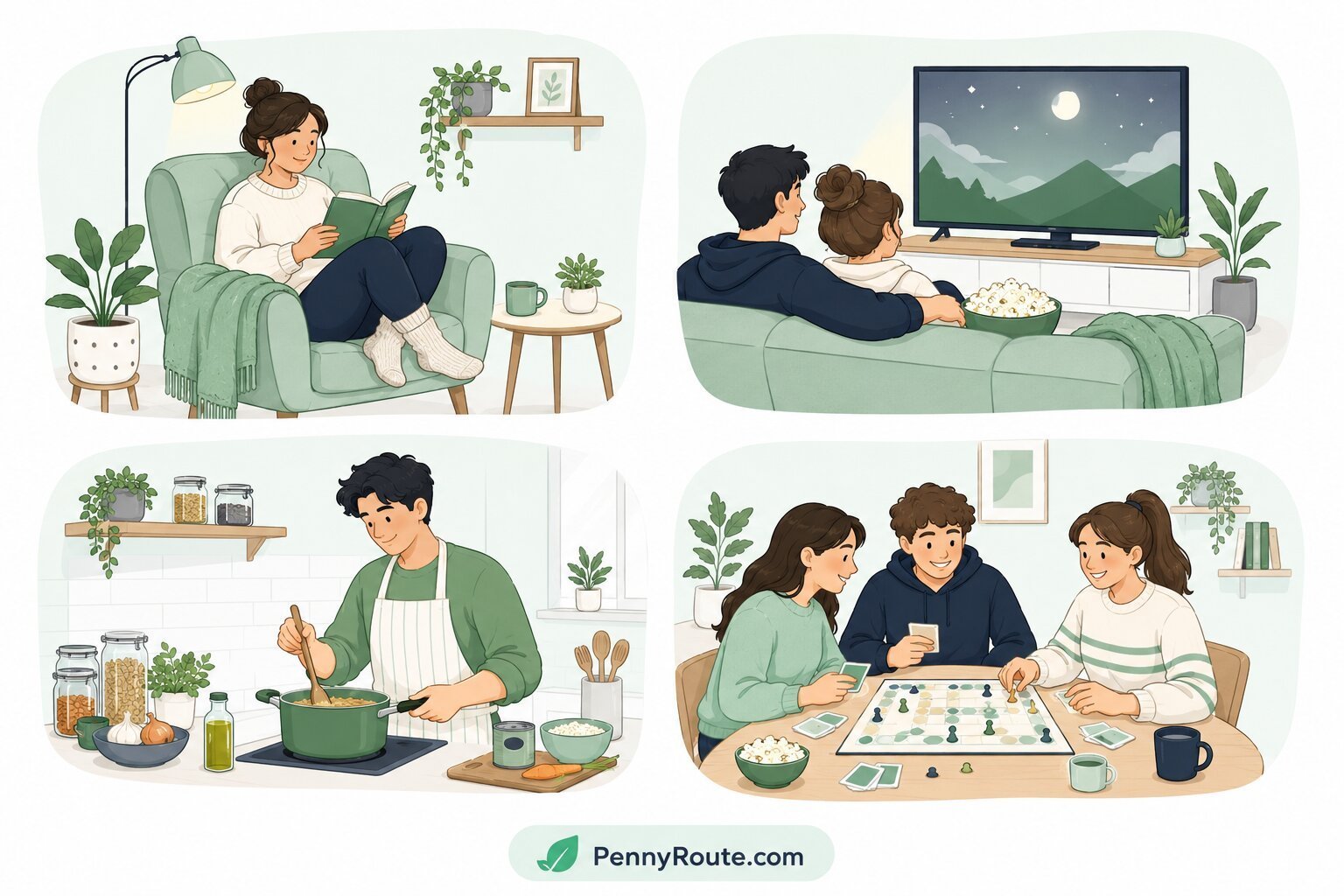
1. Have a movie night with something you already have access to.
Choose a movie or series from a service you already pay for, borrow something from the library, or revisit an old favorite. Make snacks from what is already in the kitchen rather than turning the night into another delivery order.
2. Bring out a board game, card game, or puzzle.
A game you have not played in months can be an easy way to spend a few hours without planning much. If you live alone, a puzzle or solo card game can work just as well.
3. Try a pantry cooking challenge.
Pick a meal using ingredients you already have instead of shopping for a special recipe. It can also help use up food that might otherwise sit forgotten in the pantry, fridge, or freezer.
4. Read or listen to something you already have.
Return to an unfinished book, borrow an ebook or audiobook through your library, or finally open something that has been sitting on your shelf.
5. Spend time on a hobby you already have supplies for.
Drawing, knitting, woodworking, gardening, photography, music, or another existing hobby can easily fill part of the weekend without requiring a new purchase. Use what you already own rather than treating the activity as a reason to buy more supplies.
6. Create a music night at home.
Build a playlist, listen through an album you have been meaning to hear, or take turns choosing songs with someone else. It is simple, but it gives the evening more purpose than leaving music on in the background.
7. Go through old photos and make a simple memory collection.
Sort photos on your phone or computer, choose a few favorites, or put existing printed photos into an album you already own. You can also create a digital folder around a trip, year, or family event without paying for prints or a new photo book.
Free Outdoor and Local Activities
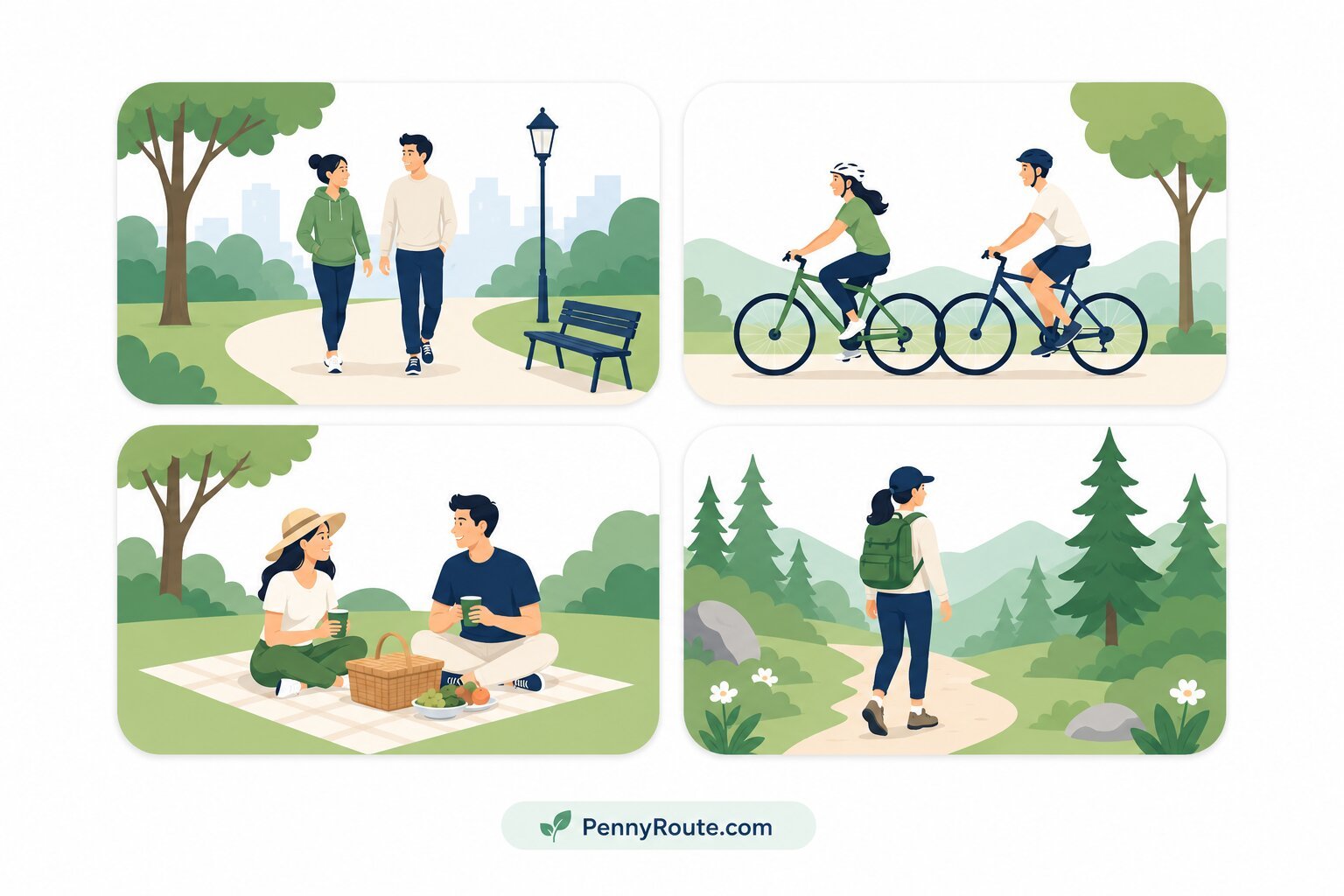
8. Explore a nearby park or public trail.
Choose somewhere close enough that getting there does not create extra cost. A familiar park can still feel different if you try a new route, bring a book, or stay long enough to actually slow down.
9. Take a bike ride using a bike you already own.
Pick a route you have not tried before, or ride somewhere practical such as a park, library, or scenic area. Keep the plan simple so the outing does not turn into paid stops along the way.
10. Pack a picnic from home.
Use food and drinks you already have, then take them to a park, beach, backyard, or another free outdoor spot. It is an easy way to make an ordinary meal feel more like a weekend activity.
11. Visit your public library.
Libraries can offer much more than books, including magazines, digital resources, children’s activities, community programs, and quiet places to spend time. What is available will depend on your local branch.
12. Take a themed photo walk.
Use your phone or camera to look for a theme such as interesting doors, street art, flowers, architecture, colors, or signs. Having something specific to notice makes the walk feel more intentional.
13. Go stargazing.
Choose a clear evening, find a safe spot with less light pollution if possible, and spend some time outside after dark. A free astronomy or sky-map app you already use can add context without turning it into a paid activity.
14. Look for a genuinely free local event.
Community festivals, public performances, museum free-admission periods, gallery openings, college events, and neighborhood activities can add variety without a ticket cost. Confirm admission, reservations, parking, and transportation before assuming the outing will be completely free.
Free Things to Do With Friends or a Partner
15. Have coffee or tea at home.
Invite someone over and use what you already have instead of meeting at a café. The point is the conversation, not recreating a coffee shop at home.
16. Go for a walk-and-talk catch-up.
Choose a park, neighborhood, waterfront, or another free route and use the time to properly catch up. It works especially well when you want something social without needing a bigger plan.
17. Trade skills for an afternoon.
One person might help with basic photography while the other shares a favorite recipe, workout, language tip, or practical skill. Keep it informal and use materials you already own.
18. Hold a swap night.
Bring books, puzzles, games, clothes, or other usable items you no longer want and trade rather than buy something new. Only include things everyone is genuinely happy to part with.
19. Have a bring-what-you-have potluck.
Ask everyone to make or bring something using food they already have. This works best when nobody feels pressured to shop for a special dish just to participate.
20. Bring your own project and spend time together.
Meet at someone’s home and each work on something you already planned to do, such as knitting, sketching, journaling, sorting photos, or another hobby. You get company without needing a paid activity.
21. Create your own trivia or game challenge.
Take turns writing questions, use games you already own, or build a simple competition around music, movies, general knowledge, or inside jokes. A little structure can make an ordinary evening feel more memorable.
No-Spend Weekend Ideas for Families and Kids
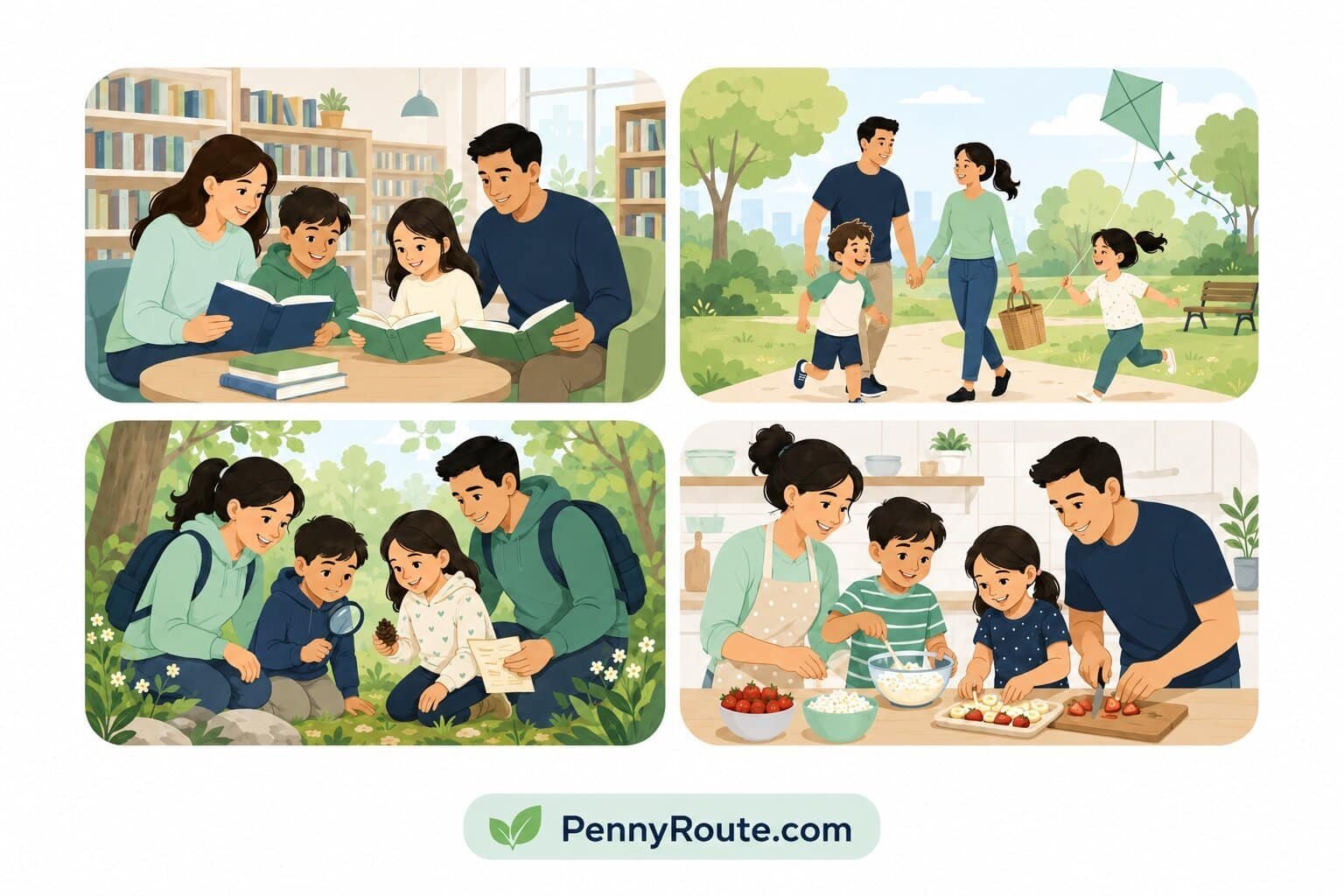
22. Set up a backyard or living-room campout.
Use blankets, pillows, sleeping bags, or a small tent you already own. Add simple snacks, stories, or a flashlight game to make the evening feel different from a normal night at home.
23. Create a scavenger hunt.
Make a short list of things to find around the house, yard, neighborhood, or park. Younger kids can look for colors and shapes, while older kids can handle clues or photo challenges.
24. Build a fort or household obstacle course.
Use cushions, chairs, blankets, boxes, or other safe household items. The setup is often as entertaining as the activity itself, especially when everyone helps design it.
25. Try a family nature bingo or photo challenge.
Look for birds, flowers, clouds, insects, interesting leaves, or other things you can spot outside. A simple homemade checklist gives an ordinary outing a little more purpose.
26. Put on a family talent show or dance night.
Keep it relaxed. Singing, jokes, dancing, impressions, or showing off a small skill all work, and nobody needs to be especially talented for it to be fun.
27. Create your own family games day.
Use simple activities such as paper-airplane contests, sock tosses, timed puzzles, balance challenges, or races using things you already have. Pick a few events rather than trying to organize an elaborate competition.
28. Make up a story, comic, play, or puppet show together.
Use paper, old boxes, toys, or other supplies already at home. Let everyone contribute a character or idea, then turn it into something you can perform, draw, or save afterward.
Creative and Productive No-Spend Ideas
29. Declutter one small area.
Pick a drawer, shelf, closet section, or other space you can realistically finish. Keeping the task small makes it more satisfying than turning the weekend into an exhausting whole-house project.
30. Finish a project you already started.
Return to something half-done, whether that is a craft, repair, writing project, photo album, garden task, or another personal project that has been sitting unfinished.
31. Repair or mend something you already own.
Fix a loose button, patch a small tear, tighten a wobbly piece of furniture, or handle another simple repair using tools or supplies you already have.
32. Organize your digital photos or files.
Delete duplicates, sort photos into folders, rename important documents, or clean up a cluttered desktop. It costs nothing and can make everyday tasks easier later.
33. Plan the Week Ahead Using What You Already Have.
Look at your calendar, upcoming appointments, meals, errands, or household tasks and organize the week without turning the planning session into a shopping list. A little preparation can make Monday easier while still keeping the weekend no-spend.
34. Write, draw, journal, or create something.
Use paper, notebooks, art supplies, or digital tools you already have. The point does not have to be producing something impressive. It can simply be a quiet way to spend part of the weekend.
35. Refresh one room using only what you already own.
Move furniture, swap items between rooms, rearrange shelves, or change how a space is used. A small reset can make a room feel different without buying storage bins, decor, or new furniture.
How to Find Free Things to Do Near You This Weekend
Free activities are easier to find when you know where local events are actually posted. Instead of relying only on social media or whatever happens to appear in search results, check places that regularly publish community calendars.
Good places to look include:
- your public library
- city or county event pages
- parks and recreation departments
- community centers
- local museums and galleries
- colleges or universities with public events
- neighborhood associations or community groups
Libraries are especially useful because many offer free workshops, children’s activities, clubs, talks, and digital resources in addition to books.
Before making plans, confirm whether an event requires advance registration and whether parking, transportation, equipment, or another extra cost is involved. An event with free admission can still turn into a paid outing if the practical details are overlooked.
Build a No-Spend Weekend Without Filling Every Hour
You do not need a packed schedule to make the weekend feel intentional. A few good choices are usually enough.
A simple mix might include one activity that gets you out of the house, one that gives you time with someone else, and one easy option for home. That leaves room to rest without defaulting to spending because nothing was planned.
Example No-Spend Weekend
Friday evening: Movie night at home with snacks you already have.
Saturday: Pack a picnic and visit a nearby park or trail.
Sunday: Meet a friend for a walk, then spend some time finishing a project at home.
If the weather changes or a plan falls through, having one backup idea at home is usually enough. There is no need to turn the weekend into a checklist.
If You Want to Spend a Little
A no-spend weekend is not the only way to keep weekend costs under control. If you would rather allow yourself a small amount for one meal, activity, or outing, decide on that amount before the weekend starts.
That makes it easier to choose what is actually worth paying for without letting a few small extras quietly push the total higher. A fun weekend on a budget works better when you want some flexibility rather than a full pause on discretionary spending.
Make the Weekend Yours
A no-spend weekend does not need dozens of plans to work. Choose a few activities that fit the people you are with, the weather, and the kind of weekend you want, then leave some space to simply enjoy them. Keeping discretionary spending at $0 for the weekend can still leave you with plenty to do.

We cover topics around budgeting, saving, debt, banking, and everyday money decisions. Our focus is on making personal finance easier to understand through clear explanations and examples, while using reliable sources to verify financial information.