Running a business changes how you manage money. What works for personal finances doesn’t always translate well once income, expenses, and taxes are involved.
As your business grows, it’s natural to wonder if one account is enough or if you should separate things to stay organized. Questions like how many business bank accounts should you have or how many business checking accounts should I have often come up at this stage.
There’s no single number that works for every business. But a simple structure can make it much easier to track your income, handle expenses, and stay prepared for taxes without confusion.
Disclaimer: This content is for informational purposes only and does not constitute financial advice. Please consult a qualified professional before making financial decisions.
How Many Business Bank Accounts Should You Have?
Most small businesses can manage well with one to three bank accounts.
If you’re just starting out, one business checking account is usually enough. It keeps your income and expenses in one place and helps you stay organized.
As your business grows, adding one or two more accounts can make things easier to manage. For example, many business owners keep a separate account for taxes or savings so that money is already set aside when needed.
The exact number depends on how complex your business is. A simple setup often works best at the beginning, and you can expand it as your needs change.
Why Businesses Often Use More Than One Account
As your business grows, managing everything through one account can start to feel unclear. Multiple accounts can help bring structure without making things complicated.
- Separating income and expenses
Keeping business income and outgoing payments organized can make it easier to see how your business is performing. - Setting aside money for taxes
Many business owners move a portion of their income into a separate account so it’s ready when taxes are due. - Managing cash flow more clearly
When money has a clear place, it becomes easier to understand what’s available to spend and what needs to be reserved. - Keeping operations organized
If your business has regular expenses or different types of income, separate accounts can make tracking simpler.
The goal isn’t to have more accounts, but to make your business finances easier to follow.
A Simple Business Account Setup That Works
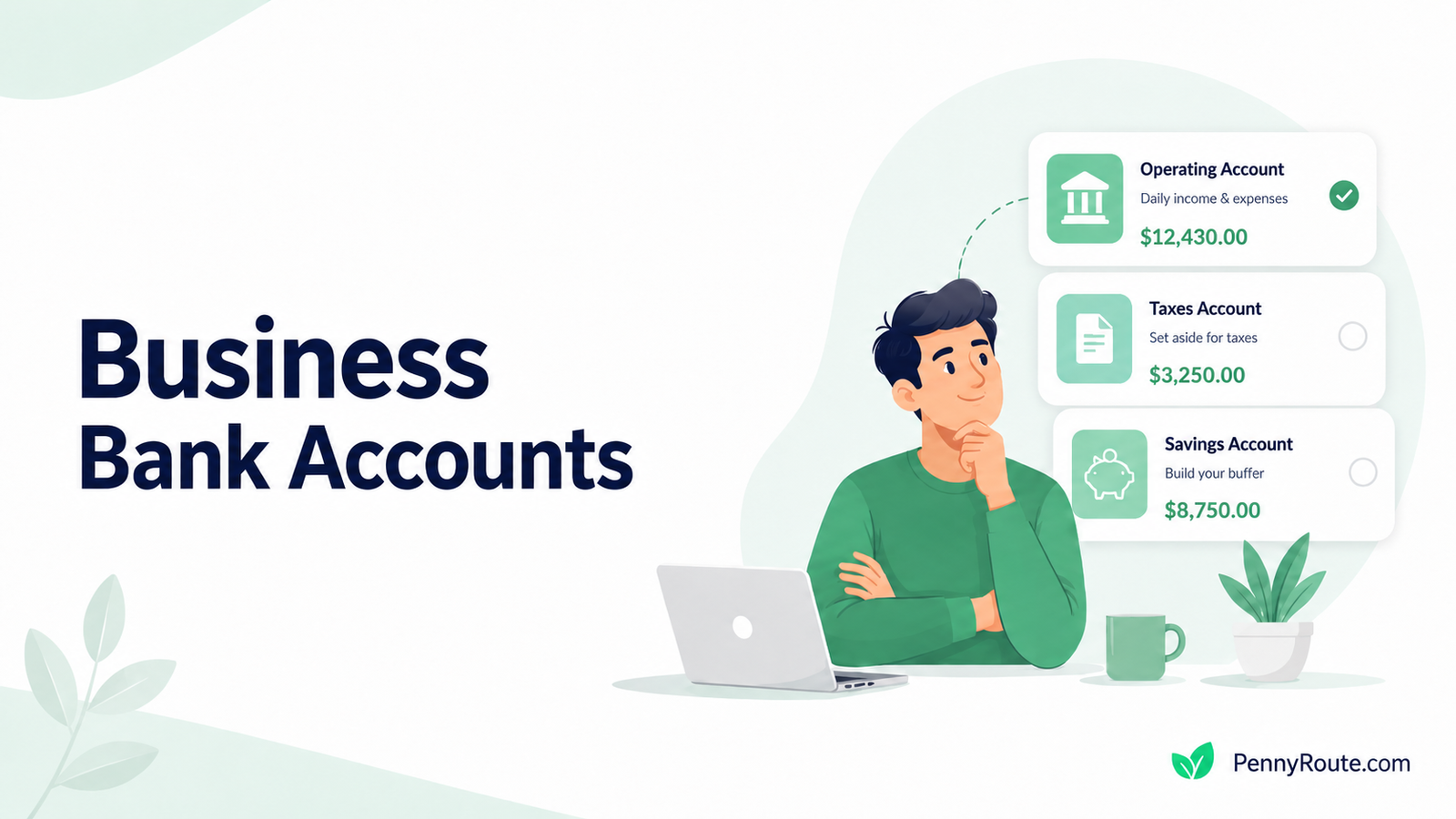
You don’t need a complex system to manage your business finances. A simple setup with a few accounts is usually enough.
Most small businesses can start with:
- One main business checking account
This is where your income comes in and where you pay for everyday expenses like supplies, tools, or services. - One tax account
A separate account to set aside a portion of your income for taxes. This helps you avoid surprises when payments are due. - One savings or reserve account (optional)
This can be used for future expenses, slow months, or business growth.
Each account has a clear purpose. Your main account handles day-to-day activity, while the others help you plan ahead.
As you choose or adjust your setup, it’s a good idea to review your bank’s specific requirements, such as fees, transaction limits, and account features, to make sure it fits your business needs.
Example of a Simple Business Setup
A real example can make this easier to understand.
Let’s say your business brings in about $6,000 a month. Your regular expenses, like tools, software, and services, come to around $2,500.
At the start of the month, you keep your income in your main business account. From there, you move money based on your needs.
You might set aside $1,500 into a separate tax account. This helps make sure you’re prepared when tax payments are due.
That leaves $2,000 for operating costs and a buffer. You might keep $1,500 in your main account for expenses and move $500 into a reserve account for future needs.
Now your setup looks like this:
- Main account → $1,500 (for daily expenses)
- Tax account → $1,500 (set aside for taxes)
- Reserve account → $500 (for future use)
With this structure, you don’t have to guess how much is safe to use. Your accounts already reflect your plan, which makes day-to-day decisions clearer.
When You Might Need More Accounts
As your business grows, your financial setup may need to expand as well.
- You have multiple income streams
If your business earns money from different sources, separate accounts can make it easier to track each one. - You manage payroll or contractors
Keeping a dedicated account for payroll can help ensure payments are handled on time without affecting other expenses. - Your expenses are becoming more complex
As costs increase or vary, separating them into different accounts can improve clarity. - You want better control over cash flow
Additional accounts can help you plan ahead and avoid using money meant for specific purposes.
You don’t need to add accounts all at once. Expanding your setup gradually often works better as your business needs change.
When One Account Is Enough
If your business is still simple, one account can work just fine.
- You’re just starting out
When income and expenses are limited, a single account keeps things easy to manage. - You have low transaction volume
Fewer payments and expenses mean less need to separate money into different places. - Your setup is easy to track
If you can clearly see your income, expenses, and available balance without confusion, adding more accounts may not help.
Starting with one account can keep things straightforward. You can always add more accounts later as your business grows and your needs change.
Business Checking vs Business Savings Accounts
Business checking and savings accounts serve different purposes, and using both can make your setup more effective.
Business checking account
A business checking account is used for your day-to-day operations. This is where your income comes in and where you pay for expenses like supplies, software, rent, or contractor payments.
These accounts are designed for frequent transactions. Many banks offer features such as:
- Debit cards
- Online payments
- Integration with accounting tools
For example, if you run a freelance business, your client payments would come into your checking account, and you would use the same account to pay for tools or services you need.
Business savings account
A business savings account is meant for setting money aside rather than spending it regularly.
Many business owners use it to:
- Save for taxes
- Build a reserve for slower months
- Plan for future investments
For example, if your business earns $6,000 in a month, you might move a portion, such as $1,500, into a savings account to cover upcoming tax payments.
Savings accounts may also earn interest, especially with online banks, though the rate can vary. Some banks limit how often you can withdraw from these accounts, since they are not designed for daily use.
Why using both can help
Using both accounts creates a clear separation between money you can use now and money you need to set aside.
This reduces the chances of:
- Spending money meant for taxes
- Running short during slower months
- Losing track of your actual available balance
A simple two-account setup is often enough for many small businesses to stay organized without adding complexity.
How to Keep Your Business Accounts Simple
A simple setup is easier to manage and more likely to work consistently over time.
- Start with a clear structure
Begin with one main account, and only add more when you have a specific need, such as taxes or savings. - Give each account a defined role
Each account should have one purpose. This helps avoid confusion and makes it easier to track your money. - Move money regularly
Set a routine, such as once a week or once a month, to move money into your tax or savings account. - Avoid adding accounts too quickly
More accounts don’t always mean better organization. Too many can make things harder to manage. - Review your setup over time
As your business grows, your needs may change. Adjust your accounts only when necessary.
Keeping things simple helps you stay consistent and reduces the chances of mistakes.
Common Mistakes to Avoid
Even with a simple setup, a few mistakes can make your business finances harder to manage.
- Mixing personal and business money
Using the same account for both can make tracking expenses difficult and create issues during tax time. - Not setting aside money for taxes
This is one of the most common problems. Without a separate account, it’s easy to spend money that should be reserved. - Opening too many accounts too early
A complex setup can become harder to manage than helpful, especially in the early stages of your business. - Not tracking your cash flow clearly
Even with multiple accounts, you still need a basic understanding of your income and expenses. - Ignoring fees and account requirements
Business accounts may have higher fees or minimum balance rules, so it’s important to review them.
Most of these issues come from overcomplicating things or not having a clear system in place. Keeping your setup simple can help avoid them.
Running a business doesn’t require a complicated banking setup. In most cases, a small number of well-defined accounts is enough to keep your finances organized.
You can start with one account and add more only when there’s a clear need, such as setting aside taxes or building a reserve. This approach keeps your system easy to manage as your business grows.
The goal isn’t to have more accounts. It’s to have a setup that helps you understand your money and stay consistent over time.

PennyRoute Editorial creates beginner-friendly guides on budgeting, saving, expense tracking, cashback apps, side income, and everyday money habits. Our goal is to make personal finance easier to understand with clear explanations, realistic examples, and practical steps.