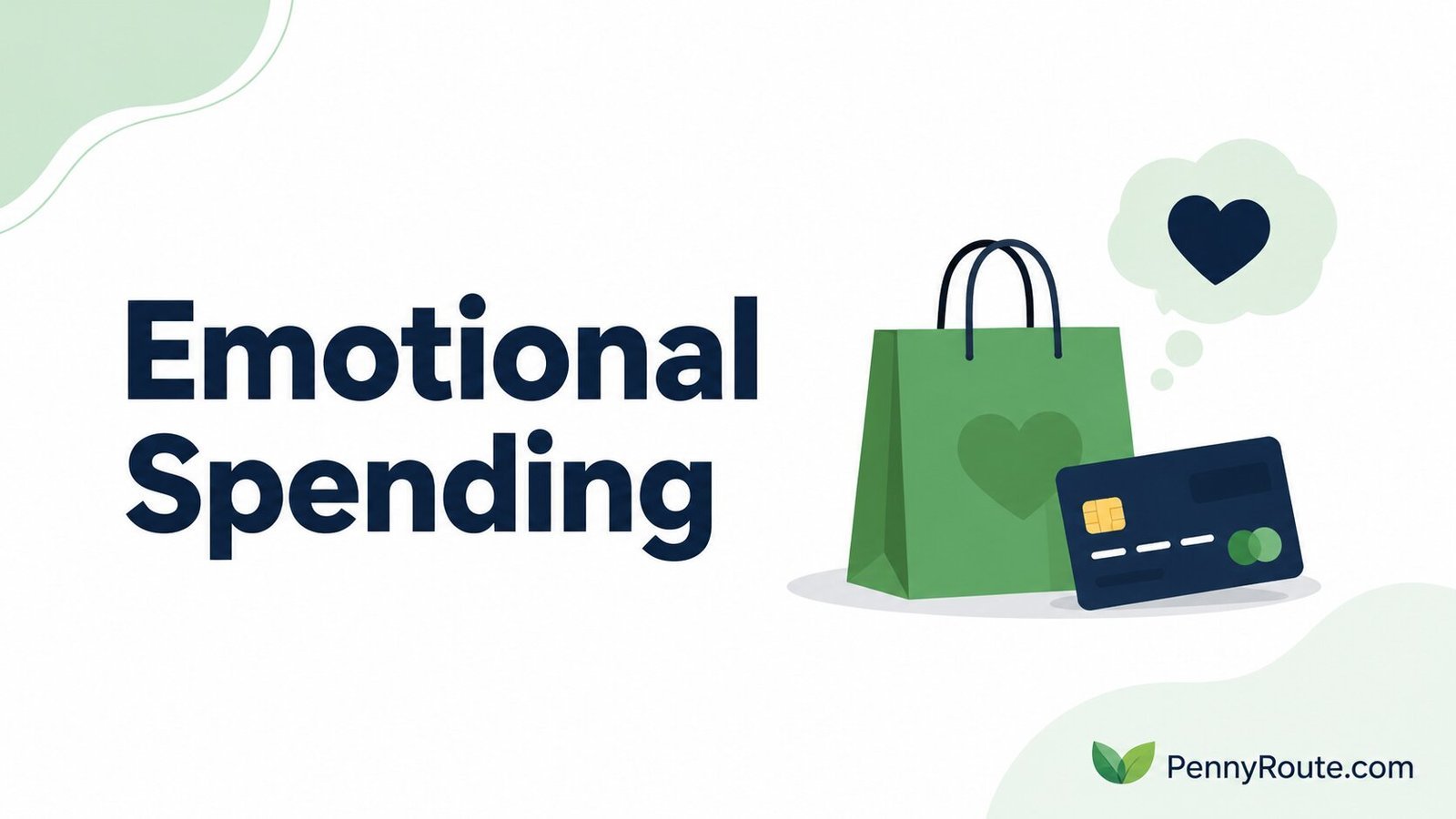
Sometimes a purchase is not really about needing the item. You are stressed, bored, excited, lonely, or simply worn out, and spending offers something you want in that moment, such as comfort, distraction, reward, or a quick lift.
That does not mean every treat or unplanned purchase is a problem. Emotional spending becomes worth paying attention to when the same feelings keep leading to purchases that leave you with regret, less room in your budget, or money pulled away from something you care about more.
Disclaimer: This content is for informational purposes only and does not constitute financial advice. Consider your own financial situation when making spending decisions, and consult a qualified professional when needed.
Quick Overview
- Emotional spending is driven more by how you feel than by what you actually need.
- One emotional purchase is not necessarily a problem. Repeated spending that creates regret or financial pressure is more important to notice.
- The most useful clue is what you hoped the purchase would do for you, such as provide comfort or distraction.
- Changing the pattern is easier when the response matches the emotional need behind the spending.
What Is Emotional Spending?
Emotional spending happens when the urge to buy is being driven mainly by how you feel rather than by a practical need.
That could mean ordering takeout after a draining day, buying something online because you are bored, or spending more than usual to celebrate good news. The purchase itself may be completely ordinary. What makes it emotional spending is the role the purchase is playing in that moment.
It also does not have to be impulsive. You can think about a purchase for days and still be using it mainly for comfort, reward, distraction, or reassurance.
When Does Emotional Spending Become a Problem?
An occasional purchase tied to your mood is not automatically a problem. What matters is whether the same pattern keeps showing up and starts affecting the rest of your money.
It is worth paying attention when you notice things like:
- the same feelings regularly lead to spending,
- purchases leave you with regret or financial pressure afterward,
- money meant for bills, saving, or another priority keeps getting used instead,
- shopping becomes your default response to stress, boredom, loneliness, or excitement.
The pattern matters more than any single purchase. If spending is repeatedly solving an emotional moment while creating a financial problem later, that is the part worth changing.
Emotional Spending Is Usually Trying to Do Something for You
Emotional spending often serves a purpose in the moment. The purchase may be giving you:
- Comfort after stress, sadness, or exhaustion
- Distraction when you are bored or frustrated
- A reward after a hard day or a difficult week
- Connection or belonging when you want to fit in with other people
- A way to celebrate when you are excited or something good has happened
The purchase itself is only part of the pattern. Once you can see what role the spending is playing, it becomes easier to choose a response that actually fits the situation.
Find Your Emotional Spending Pattern
Instead of judging the purchase afterward, look at the sequence around it.
A simple way to do that is to notice four things:
- what was happening before you spent,
- how you were feeling,
- what you hoped the purchase would give you,
- and how you felt once the spending was over.
For example, you might have a draining workday, feel exhausted, order $55 of takeout and extras for relief, then realize the next morning that the money was supposed to cover groceries.
One purchase does not tell you much on its own. But if the same sequence keeps happening, you have a much clearer pattern to work with.
Match the Response to What the Spending Is Doing for You
Once you know what the purchase is giving you emotionally, you have a better chance of finding another response that actually fits the situation.
The same solution will not work for every trigger. Someone spending for comfort needs a different approach from someone spending to celebrate or keep up with friends.
If Spending Gives You Comfort
After a difficult or exhausting day, buying something can become a quick way to make the evening feel better. The problem is that the relief often arrives immediately while the financial consequence shows up later.
Instead of trying to talk yourself out of wanting comfort, find a version that does not automatically turn into a larger purchase.
For example, you might still order dinner after a draining day but skip the extras that usually double the cost. Or you might give yourself 20 minutes to unwind before opening a shopping app and see whether the urge is still as strong.
The aim is not to remove every treat. It is to stop one hard day from quietly becoming an expensive coping routine.
If Spending Feels Like a Reward
“I deserve this” spending often appears after a demanding week, finishing a project, reaching a goal, or simply getting through something difficult.
Rewards are not the problem. The trouble starts when the reward is decided in the moment, because the amount tends to expand with the emotion.
Planning the reward earlier gives you more control without taking away the enjoyment.
For example:
You finish a stressful workweek and normally spend $120 shopping online as a reward. Instead, you decide ahead of time that Friday means a favorite $25 meal or a $30 purchase you have already chosen.
You still get the reward, but the decision was made when you were not relying on spending to change your mood.
If Spending Gives You Something to Do
Boredom spending often starts long before checkout. Browsing itself provides entertainment, and eventually buying becomes the natural ending to the activity.
Trying to stay on a shopping site while telling yourself not to buy anything can make that harder than it needs to be.
When boredom is the trigger, changing what you are doing is often more useful than debating every item in your cart. Step away from shopping for a while and choose something that actually holds your attention.
That could be calling someone, going for a walk, starting a show, cooking, reading, or working on something you already enjoy. The specific activity matters less than breaking the pattern of bored → browse → buy.
If Spending Helps You Feel Included
Emotional spending can also happen because saying no feels uncomfortable.
Maybe friends choose expensive restaurants, coworkers regularly order lunch, or a group trip costs more than you would normally spend. The purchase is partly about the experience, but it may also be about avoiding the feeling of being left out.
Deciding your limit before the social situation takes some of that pressure out of the moment.
Suppose friends suggest a $150 evening out, but you are comfortable spending $60. You could join for dinner and skip the later activity, suggest a less expensive option, or decide that this particular event is worth spending more on while cutting back somewhere else intentionally.
The point is not to match everyone else. It is to make the choice with your own finances in view.
If Excitement Makes Spending Easier
Positive emotions can loosen spending just as quickly as stress.
A bonus, promotion, birthday, tax refund, or other good news can make a purchase seem harmless because the moment feels different from an ordinary day.
Before spending, decide how much of the celebration money you genuinely want to use now and how much you would rather keep for later.
For example, receiving a $1,000 bonus does not mean you have to choose between spending nothing and spending all $1,000. You might decide that $200 is celebration money and leave the rest for another priority.
That still lets the good moment feel special without turning it into a financial decision you would not have made a week earlier.
If You Are Not Sure What You Need
Sometimes the urge arrives before you can clearly name the feeling behind it.
In that case, do not force yourself to come up with the perfect explanation. Give the purchase a little space and ask yourself what you are hoping will be different after you buy it.
Are you hoping to feel calmer? Less bored? More included? Rewarded? Excited?
Even an imperfect answer can tell you whether the purchase is solving a practical need or trying to change how you feel.
Emotional Spending vs. Impulse Buying
Emotional spending and impulse buying can overlap, but they are not the same thing.
Emotional spending is about the reason behind the purchase. The spending is tied to a feeling such as stress, boredom, excitement, or wanting a reward.
Impulse buying is about the speed and planning behind the decision. The purchase happens quickly and was not part of the original plan.
A purchase can be both. For example, you might have a stressful day and buy something online within minutes because it gives you a quick lift. In that case, the emotion explains why you wanted to spend, while the fast, unplanned decision makes it an impulse purchase.
The distinction helps because the response is different. Emotional spending usually starts with understanding the feeling behind the urge, while impulse buying is more about slowing down the purchase itself.
Make Emotional Spending Harder to Do Automatically
Even when you understand the emotion behind the urge, buying can still happen almost on autopilot if shopping is only a tap or click away.
A little friction can help. That might mean removing saved payment details from the sites you use most, turning off retailer notifications, or leaving an item in your cart instead of checking out right away.
The point is not to make every purchase difficult. It is to create just enough space for the emotional urge to settle before money leaves your account.
What to Do After an Emotional Spending Slip
If you have already spent more than you meant to, start with the immediate impact rather than beating yourself up over the purchase.
First, see whether the purchase can reasonably be returned or canceled. If not, look at whether the spending affected bills, groceries, transportation, or another near-term need.
Then use the purchase as a clue. Think back to what was happening just before you spent and what you were hoping the purchase would do for you emotionally.
One slip does not need a full financial reset. The useful next step is understanding whether this was a one-off decision or part of a pattern that keeps repeating.
When Emotional Spending Is Hard to Control
An occasional emotional purchase is one thing. Extra support may be worth considering when spending:
- repeatedly creates debt or makes required payments harder to manage,
- leads to hiding purchases or spending from other people,
- keeps happening even when you have tried to change the pattern,
- regularly takes money away from essentials,
- or is closely tied to emotional distress that is difficult to manage on your own.
Different kinds of support can address different parts of the problem. If debt or day-to-day money management has become difficult, a nonprofit credit counselor can help you review your budget, spending, and debts and work through possible next steps.
If spending feels closely tied to ongoing emotional distress or remains difficult to control despite your efforts to change the pattern, talking with a qualified mental health professional may be helpful.
Start With the Pattern You See Most Often
You do not need to solve every emotional spending trigger at once. Start with the situation that shows up most often and the role spending seems to play in it.
Maybe that means finding another way to unwind after work, planning a reward before a stressful week, or setting a spending limit before a social event. One change that fits the real trigger is more useful than trying to control every purchase through willpower.
Once you understand the role the spending is playing, you have a clearer choice the next time the same trigger appears.