Saving for big expenses is easier when they do not surprise your budget all at once. Car insurance, holiday gifts, school costs, home repairs, and annual subscriptions may not happen every month, but they still show up.
Without a plan, those costs can quickly turn into credit card debt or force you to pull money from savings meant for real emergencies.
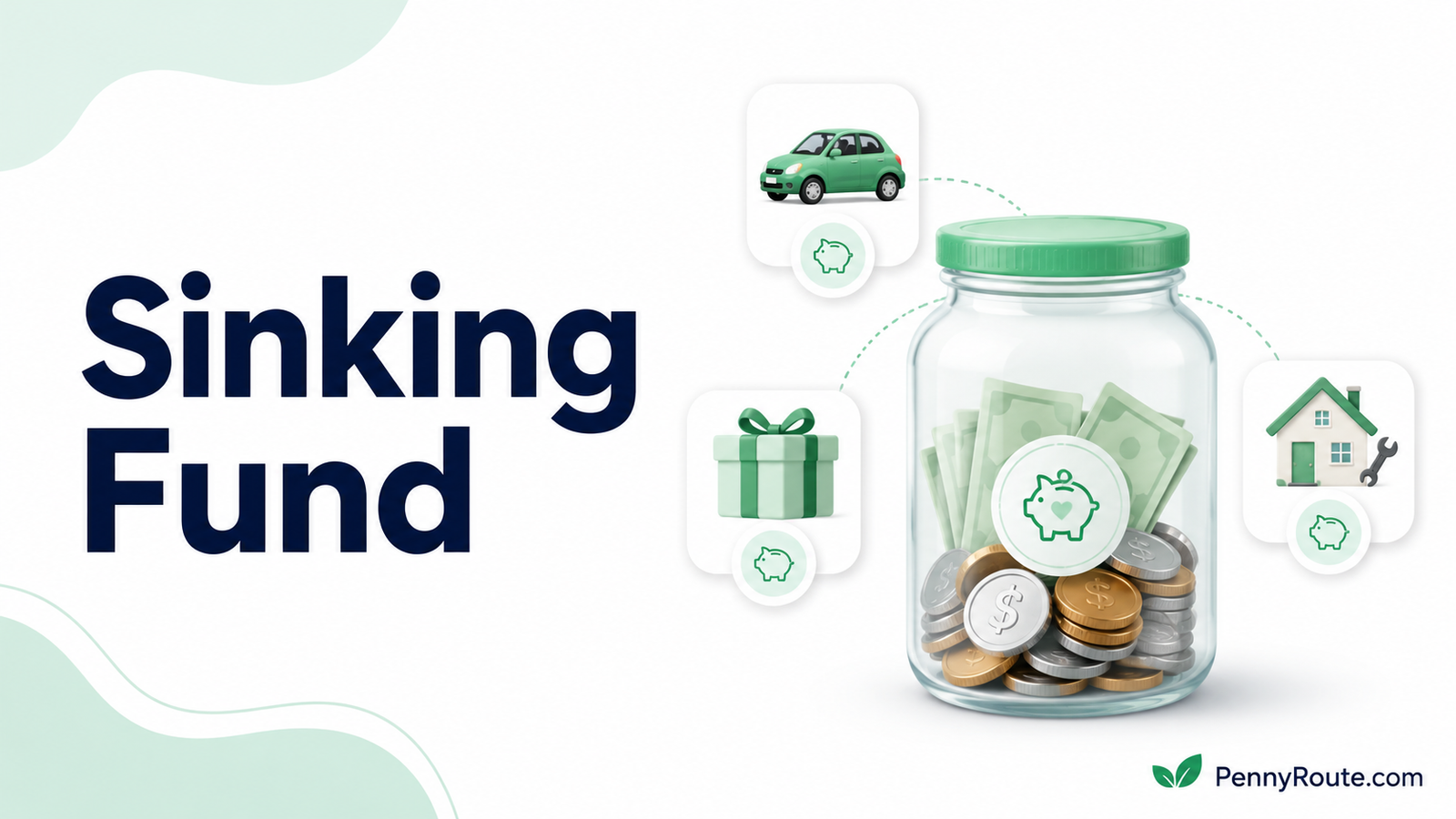
A sinking fund helps you prepare for those planned expenses a little at a time. Instead of scrambling when the bill arrives, you build the money gradually and give each future cost a clear place in your budget.
Disclaimer: This content is for informational purposes only and does not constitute financial advice. Choose savings targets and account options that fit your own financial situation.
Quick Overview
- A sinking fund is money you save little by little for a planned future expense.
- It is usually tied to one clear goal, such as a bill, repair, trip, or seasonal cost.
- The simple formula is: total amount needed ÷ months left = monthly savings amount.
- Common sinking fund examples include car insurance, holiday gifts, annual subscriptions, home repairs, school costs, and travel.
- If you are just starting, one to three sinking funds is usually easier to manage than a long list of categories.
What Is a Sinking Fund?
A sinking fund is money you set aside for a specific expense you know is coming.
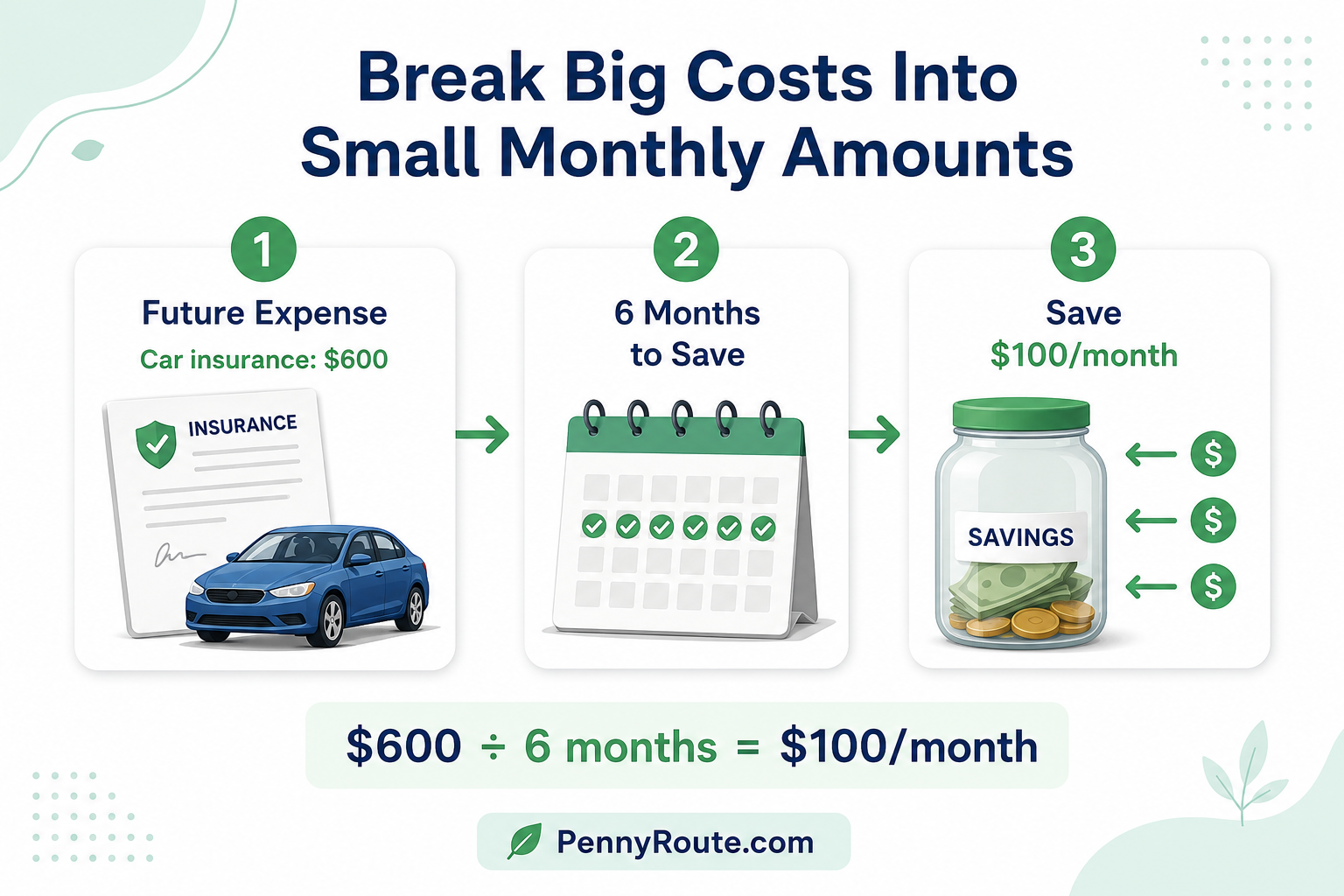
Instead of waiting for the full cost to hit your budget at once, you save smaller amounts over time. For example, if you expect to spend $600 on car insurance in six months, you could save $100 per month until the bill is due.
The important part is that a sinking fund has a clear purpose. It is not just extra money sitting in savings. It is money assigned to a planned cost, such as a yearly bill, holiday spending, home repair, school expense, or upcoming trip.
That makes sinking funds especially useful for expenses that are predictable but not monthly. They help you treat those costs as part of your regular budget before they become a last-minute problem.
How Does a Sinking Fund Work?
A sinking fund works by giving a future expense a place in your budget before the bill arrives.
Instead of treating a yearly bill or seasonal cost as a surprise, you plan for it in smaller pieces. Each time you add money, the future expense becomes less dependent on your next paycheck, credit card, or emergency savings.
For example, a $600 annual bill due in six months would need about $100 per month. When the bill arrives, the money is already waiting instead of competing with rent, groceries, utilities, or other regular expenses.
You can keep each sinking fund separate in your budget, even if the money stays in one savings account. Some people use savings buckets or subaccounts, while others track categories in a spreadsheet, budgeting app, or simple notes page.
The goal is not to make your budget more complicated. It is to give predictable costs a place before they disrupt everything else.
Sinking Fund Formula: How Much to Save Each Month
The easiest sinking fund formula is:
Total amount needed ÷ months left = monthly savings amount
Calculation
This works best for planned expenses with a target amount and a deadline. You do not need a complicated calculator to start. You just need a realistic estimate and enough time to spread the cost out.
For example, if you want to save $720 for holiday spending over 12 months, the math is:
$720 ÷ 12 = $60 per month
Example
Here are a few simple examples:
| Expense | Total Needed | Time Left | Monthly Amount |
|---|---|---|---|
| Car insurance | $600 | 6 months | $100 |
| Holiday spending | $720 | 12 months | $60 |
| Back-to-school costs | $300 | 5 months | $60 |
| Annual subscription | $120 | 12 months | $10 |
| New tires | $800 | 10 months | $80 |
If the monthly amount feels too high, that does not mean the sinking fund failed. It simply means you may need to adjust the timeline, lower the target, save from more than one paycheck, or cover part of the expense another way.
The earlier you start, the smaller each contribution usually needs to be. That is the quiet advantage of a sinking fund: it gives time a job in your budget.
Sinking Fund Examples by Category
A sinking fund can be used for many planned expenses, but it helps to group them instead of creating a separate category for every small cost. The goal is to make your budget easier to manage, not turn it into a spreadsheet maze.
Annual Bills
Annual bills are some of the easiest sinking funds to plan because they usually have a due date.
Common examples include car insurance, property taxes, annual memberships, software renewals, professional fees, and yearly subscriptions. If a bill shows up once or twice a year, a sinking fund can help you spread the cost across several months instead of squeezing it into one paycheck.
Seasonal Expenses
Seasonal costs can feel surprising even when they happen every year.
Holiday gifts, back-to-school shopping, summer activities, winter clothing, birthdays, and family events are all good examples. A separate holiday budget or seasonal sinking fund can keep these costs from blending into everyday spending.
Home and Car Costs
Home and car expenses are often predictable in the bigger picture, even if the exact timing is not always perfect.
You may not know the exact day your tires will need replacing, but you can still expect car maintenance to happen. The same idea applies to appliance repairs, furniture replacement, home maintenance, and smaller household updates. A car repair fund is one example of a sinking fund built around a specific repeat expense.
Family, Health, and Pet Costs
Some costs do not fit neatly into regular monthly bills, but they still deserve a place in your budget.
Examples include dental visits, medical co-pays, kids’ activities, school fees, sports costs, pet care, grooming, and vet visits. These are not always emergencies, but they can still create stress when there is no money set aside.
Fun and Personal Goals
Sinking funds are not only for bills.
They can also help you save for vacations, weddings, concerts, hobbies, new technology, home decor, or a special purchase. A vacation fund, for example, gives travel money a clear purpose before flights, hotels, food, and activities start competing with your regular budget.
The best sinking fund examples are the ones that match your real life. If certain costs keep catching you off guard, they may belong in your sinking fund list. Many of them are the same expenses people forget to budget for until they show up again.
Sinking Fund vs. Emergency Fund vs. Rainy Day Fund
A sinking fund is easy to confuse with an emergency fund or rainy day fund, but each one has a different job.
| Fund Type | Best For | Example |
|---|---|---|
| Sinking fund | Planned future expenses | Car insurance due in six months |
| Rainy day fund | Smaller unexpected costs | A higher utility bill or minor repair |
| Emergency fund | Bigger urgent situations | Job loss, major urgent repair, or income disruption |
A sinking fund is for costs you can see coming. The amount may not be perfect, but the category is expected. Holiday spending, annual bills, school costs, and car maintenance all fit here.
A rainy day fund is usually for smaller surprises that do not happen on a schedule. It can help with things like a small repair, a higher-than-usual bill, or a minor expense that would otherwise disrupt your monthly budget.
An emergency fund is for bigger financial shocks. The Consumer Financial Protection Bureau describes emergency savings as money set aside for emergencies or unexpected expenses, which is why it should not be drained for planned bills.
The simplest way to separate them is this: use a sinking fund for planned expenses, a rainy day fund for smaller surprises, and an emergency fund for serious unexpected situations.
Which Sinking Fund Should You Start First?
You do not need a sinking fund for every possible expense right away. Starting with too many categories can make budgeting feel harder than it needs to be.
Start With a Fixed Due Date
A good first sinking fund is usually an expense with a clear deadline. Car insurance, annual subscriptions, school fees, property taxes, or holiday spending are easier to plan because you can see the due date coming.
Choose Expenses That Usually Create Stress
Next, look at expenses that often push you toward credit cards, last-minute borrowing, or pulling money from regular savings. Car repairs, pet care, dental visits, gifts, and home maintenance may not happen every month, but they can still create pressure when there is no money ready.
Add Flexible Goals Later
After the important costs are covered, you can add more flexible goals, such as travel, furniture, hobbies, or a new phone. These are still valid sinking funds, but they are usually easier to pause, reduce, or delay if your budget is tight.
Pick One Real Problem to Solve
If you are unsure where to begin, choose one expense that has caused stress before. A sinking fund works best when it solves a real budget problem, not when it only looks neat on paper.
How to Start a Sinking Fund Step by Step
Once you know which expense you want to start with, the setup is mostly simple math and a little consistency. The goal is to give that expense a target amount, a deadline, and a regular place in your budget.
Use the Expense You Picked
Start with the planned expense you chose in the previous step. It could be a fixed bill, a stressful repeat cost, or a flexible goal you want to prepare for.
Keep it specific. “Car insurance” is easier to manage than “future bills.” “Holiday gifts” is clearer than “extra spending.” A specific fund is easier to calculate, track, and actually use when the cost arrives.
Estimate the Total Cost
Write down the amount you think you will need. If you are not sure, look at what you spent last year or make a careful estimate based on current prices.
For example, if holiday spending usually lands around $600 to $800, you might set your first target at $700. The number does not have to be perfect, but it should be realistic enough to guide your budget.
Pick a Deadline
A sinking fund works better when it has a timeline. Ask yourself when the money will be needed.
Some deadlines are fixed, such as an insurance renewal or annual fee. Others are flexible, such as a vacation, furniture purchase, or home project. A clear deadline helps you avoid vague saving, where money goes in sometimes but never reaches a real target.
Calculate the Monthly Amount
Use the simple formula:
Total amount needed ÷ months left = monthly savings amount
Formula
If you need $600 in six months, you would save $100 per month. If you get paid every two weeks, you could split that into smaller paycheck amounts.
For example, $100 per month could become about $50 from each paycheck if you are paid twice a month.
Keep the Money Separate
Try not to mix sinking fund money with everyday spending money. When everything sits in checking, it is easy to accidentally spend money that was meant for a future bill.
You can keep the money in a separate savings account, use savings buckets if your bank offers them, or track each fund in your budget. The method matters less than the separation.
Add Money Regularly
Choose a rhythm that fits how you get paid. Some people add money once a month. Others move a smaller amount after each paycheck.
If your budget changes often, adding money on payday may be easier because the fund gets attention before the money disappears into other expenses.
Review the Fund Each Month
Check your sinking fund once a month to see whether the target still makes sense. Prices change, deadlines move, and sometimes your estimate may be too low or too high.
A quick review helps you adjust early instead of discovering the problem when the bill is already due.
Where Should You Keep a Sinking Fund?
A sinking fund should be easy to reach when the expense comes due, but not so easy that you accidentally spend it on everyday purchases.
For most short-term sinking funds, a savings account is usually simpler than keeping the money in checking. Checking accounts are built for bills, debit card purchases, and daily cash flow. A sinking fund needs a little more separation.
You can keep the money in:
- a separate savings account
- savings buckets or subaccounts if your bank offers them
- a high-yield savings account for short-term goals
- a cash envelope for small, near-term expenses
- a budgeting app or spreadsheet if the money is in one account but tracked by category
The best setup is the one you will actually use. If five separate accounts feel annoying, use one savings account and track each sinking fund inside your budget. If you spend too easily when money is grouped together, separate accounts or savings buckets may work better.
For money you may need within the next few months or a year, be careful about putting it into investments. A sinking fund is usually meant for planned spending, not long-term growth. If the market drops right before your car insurance, school bill, or holiday budget is due, the timing can create a problem.
If you keep sinking fund money in a bank savings account, the FDIC explains that deposit insurance protects eligible deposit accounts, including savings accounts, at FDIC-insured banks. That can make a savings account a practical place for short-term money you want to keep separate from daily spending.
The main rule is simple: keep sinking fund money safe, separate, and easy enough to access when the planned expense arrives.
How Many Sinking Funds Should You Have?
You only need as many sinking funds as your budget can realistically handle.
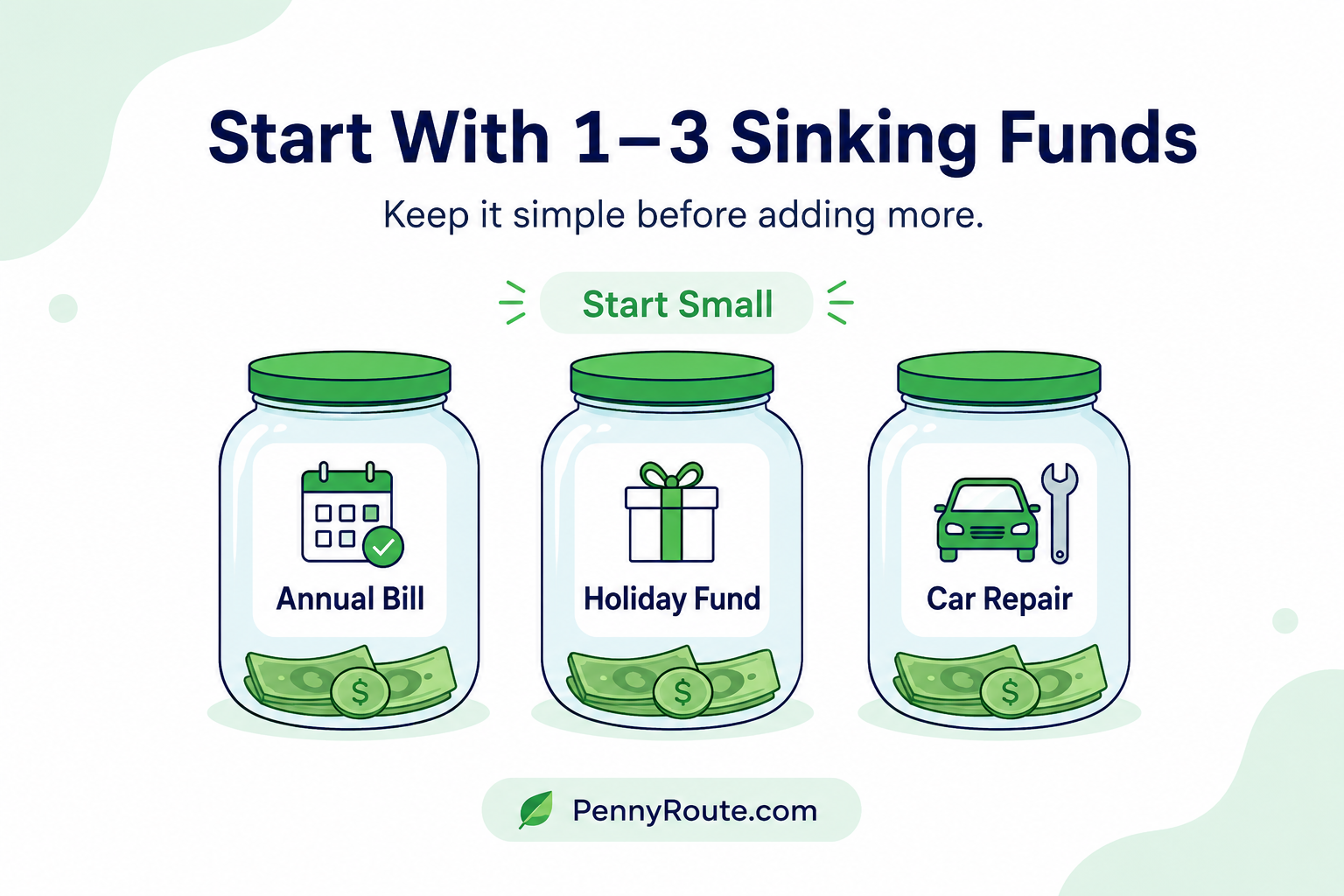
For beginners, one to three sinking funds is usually enough. That might mean one fund for an annual bill, one for car or home costs, and one for a seasonal expense like holidays or back-to-school shopping.
Too many sinking funds can make your budget harder to manage. If you have separate funds for every tiny expense, you may spend more time moving money around than actually improving your budget.
A simple way to decide is to group smaller expenses together. For example, instead of separate funds for birthdays, holiday decor, and small family events, you could create one “seasonal spending” fund. Instead of separate funds for oil changes, tires, and small repairs, you could use one car repair fund.
As your budget gets more comfortable, you can add more specific funds. But in the beginning, simple is better. A sinking fund should make your money easier to manage, not give you another chore.
What If You Cannot Save the Full Amount?
Sometimes the sinking fund math does not fit your budget right away.
For example, if you need $600 in three months, saving $200 per month may be too much. That does not mean you should ignore the expense or give up on the fund. It means the target needs a more realistic plan.
Start by saving what you can. Even $25 or $50 per month can reduce the amount you need later. A partial sinking fund is still useful because it softens the cost before it hits your budget.
You can also adjust the plan by lowering the target, extending the deadline, using extra income, or splitting the cost across more than one paycheck. For flexible goals, such as travel, furniture, or a new phone, delaying the purchase may be the easiest fix.
For fixed bills, focus on reducing the damage. If you cannot save the full amount before the due date, saving part of it can still help you rely less on credit cards or emergency savings.
The goal is progress, not perfect math. A sinking fund works best when it matches your real budget, not an ideal version of it.
A Simple Sinking Fund Plan to Start This Month
You do not need a perfect budget to start a sinking fund. Choose one planned expense, give it a target, and keep the money separate from everyday spending.
Write down the estimated amount, the month it is due, and how much you can set aside from each paycheck or each month.
If the full amount feels too high, start smaller. One annual bill or seasonal cost is enough for your first fund.
Here is a simple starting plan:
| Step | What to Do |
|---|---|
| 1 | Pick one planned expense. |
| 2 | Estimate the total cost. |
| 3 | Write down the deadline. |
| 4 | Divide the amount by the months or paychecks left. |
| 5 | Keep the money separate from everyday spending. |
| 6 | Review the fund once a month. |
The first sinking fund is mostly about building the habit. Once one planned expense feels easier to handle, you can add another fund or adjust your categories to fit your budget better.
FAQs About Sinking Funds
What is an example of a sinking fund?
A common sinking fund example is holiday spending. If you want to spend $720 during the holidays, you could save $60 per month for 12 months. Other examples include car repairs, annual subscriptions, school costs, home maintenance, pet care, travel, and insurance bills.
How do you calculate a sinking fund?
Use this simple formula: Total amount needed ÷ months left = monthly savings amount. If you need $500 in five months, you would save $100 per month.
Is a sinking fund the same as an emergency fund?
No. A sinking fund is for planned expenses you expect, such as annual bills, holiday gifts, or car maintenance. An emergency fund is for larger unexpected situations, such as job loss, income disruption, or urgent repairs. .
How many sinking funds should I have?
If you are new to sinking funds, start with one to three. That is usually enough to make progress without making your budget feel crowded. You can add more later if your budget is comfortable and the categories are easy to manage.
Where should I keep my sinking fund?
A savings account is usually a practical place for short-term sinking funds because it keeps the money separate from everyday spending. The best option is the one that keeps the money clear, safe, and easy to access when the expense comes due.
What should not be a sinking fund?
A sudden emergency should not usually be treated as a sinking fund. Job loss, urgent medical costs, or a major unexpected repair are better suited for emergency savings. A sinking fund works best for costs that are planned, repeatable, or expected, even if the exact amount is not perfect.
Can I start a sinking fund on a low income?
Yes, but it may need to start small. Even saving $10, $20, or $25 at a time can reduce pressure when the expense arrives.