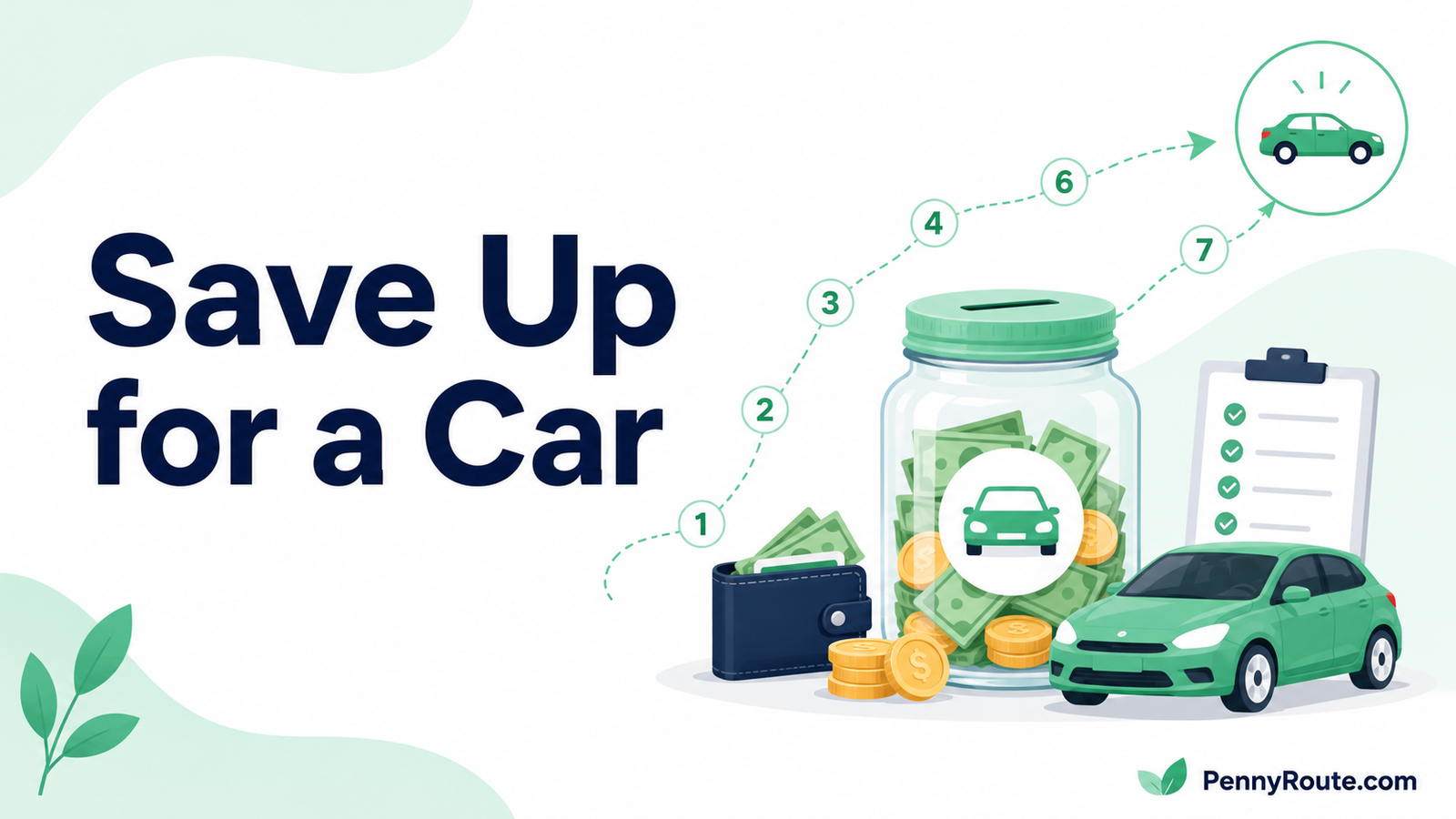
Buying a car takes more planning than saving for the advertised price. Taxes, registration, insurance, inspection costs, and immediate maintenance can increase the amount you need before the vehicle is ready to use.
A complete car savings plan starts by deciding whether you are paying cash or building a down payment. From there, you can estimate the full upfront cost, calculate a realistic monthly contribution, and check whether the ongoing expenses will fit your budget.
The right target should help you buy the car without leaving yourself short for essential bills, repairs, or other financial priorities.
Disclaimer: This content is for informational purposes only and does not constitute financial advice. Please consult a qualified professional before making financial decisions.
Quick Overview
- Decide whether you are saving for the full car price or a down payment.
- Estimate both the upfront purchase costs and the ongoing monthly expenses.
- Set one complete savings target that includes fees, insurance, and a cash cushion.
- Calculate the monthly amount needed based on your timeline.
- Keep the car fund separate from everyday spending and emergency savings.
- Automate contributions and adjust the timeline if the monthly target is not sustainable.
- Review the actual price, financing offer, insurance quote, and repair needs before buying.
Decide Whether You Are Saving for Cash or a Down Payment
Your savings target depends on how you plan to buy the car.
Paying cash requires a larger amount upfront, but it avoids an auto loan. Saving for a down payment lowers the immediate target, though you will still need room in your budget for monthly payments, interest, insurance, and other ownership costs.
| Saving approach | What you need upfront | Main tradeoff |
|---|---|---|
| Pay in cash | Full vehicle price plus taxes, fees, and initial costs | Higher savings target, but no loan payment |
| Make a down payment | Down payment plus taxes, fees, and initial costs | Lower upfront target, but financing increases the total cost |
| Use a large cash contribution | Part of the price plus a smaller loan | Balances a larger upfront payment with lower borrowing |
Saving to Pay Cash
A cash purchase may appeal to you if you want to avoid monthly loan payments and interest.
However, buying with cash does not mean using every dollar available. You may still need money for:
- Taxes, title, and registration
- A pre-purchase inspection
- Insurance
- Immediate maintenance
- Unexpected repairs
- Other household emergencies
A lower-priced used car may reduce the purchase target, but its condition matters. A professional inspection and a separate repair cushion can be especially important when buying an older vehicle.
Saving for a Down Payment
A down payment reduces the amount you need to borrow. A larger down payment may also lower the monthly payment and reduce the interest paid over the life of the loan.
Still, the down payment should not be the only number you consider. Review:
- The vehicle price
- Amount financed
- Annual percentage rate
- Loan term
- Monthly payment
- Total repayment
- Fees and optional add-ons
The Consumer Financial Protection Bureau explains how to compare auto loan offers using the APR, loan term, amount financed, monthly payment, and total cost rather than focusing on the payment alone.
A low monthly payment does not always mean the car is affordable. Extending the loan over more years can reduce the payment while increasing the total interest cost.
Using Cash and Financing Together
You may choose to make a larger cash contribution and finance the remaining amount.
This approach can reduce borrowing without requiring you to delay the purchase until the entire price is saved. The cash contribution should still leave enough money for upfront costs and a reasonable financial cushion.
The best approach is the one that fits both your available savings and the full monthly cost of owning the car.
Younger buyers may need a more specific plan for saving for a first car as a teenager, especially when parents or guardians will share the purchase and ongoing costs.
Estimate the Car You Can Afford
The purchase price is only one part of car affordability. Before setting the savings target, estimate what the vehicle may cost to own each month.
Calculate the Monthly Ownership Cost
A practical estimate may include:
- Auto loan payment, when applicable
- Insurance
- Fuel or charging
- Routine maintenance
- Repair allowance
- Registration or inspection costs
- Parking
- Tolls
- Roadside assistance
Use:
Estimated monthly car cost = loan payment + insurance + fuel or charging + maintenance allowance + other recurring costs
Formula
For example:
| Monthly cost | Estimated amount |
|---|---|
| Loan payment | $320 |
| Insurance | $165 |
| Fuel | $140 |
| Maintenance and repairs | $75 |
| Parking and tolls | $40 |
| Estimated monthly total | $740 |
A $320 loan payment may appear manageable on its own, but the complete monthly cost in this example is closer to $740.
Consumer.gov also recommends looking beyond the vehicle price and planning for costs such as registration fees, sales tax, insurance, fuel, and maintenance.
Get Estimates for the Vehicle You Are Considering
Ownership costs can vary significantly between vehicles with similar purchase prices.
Before choosing a specific model, estimate:
- Insurance premiums
- Fuel economy or charging costs
- Expected maintenance
- Tire and replacement-part prices
- Registration or property taxes, where applicable
- Financing terms
An insurance quote is especially useful because premiums may differ based on the vehicle, driver, location, coverage, and insurer.
Check Whether the Total Fits Your Budget
Compare the estimated monthly car cost with the money left after:
- Housing and utilities
- Food and other essentials
- Minimum debt payments
- Insurance
- Regular savings
- Childcare or family costs
- Other recurring commitments
The car may not fit comfortably if paying for it would require skipping essential bills, relying on credit for routine expenses, or stopping every other savings goal.
You may need to lower the vehicle budget, increase the down payment, extend the savings timeline, or reconsider when to buy. The useful number is not the highest price a lender may approve. It is the total cost your monthly cash flow can support consistently.
Set Your Complete Car Savings Goal
Once you know whether you are paying cash or making a down payment, combine the upfront costs into one target.
Your car savings goal should cover more than the amount paid to the seller or dealer.
Car savings goal = vehicle price or down payment + taxes and fees + insurance setup costs + inspection or immediate maintenance + remaining cash cushion
Savings Goal
Include the Full Upfront Cost
Depending on the purchase, your target may need to include:
- Vehicle price or down payment
- Sales tax
- Title and registration fees
- Dealer or documentation fees
- Pre-purchase inspection
- Insurance deposit or first premium
- Immediate maintenance or repairs
- Required accessories or safety equipment
- Cash you want to keep available after the purchase
Exact costs vary by location, vehicle, seller, insurer, and financing arrangement. Use estimates early in the process, then replace them with confirmed amounts as you get closer to buying.
Example Car Savings Goal
Suppose you plan to finance a car and estimate the following upfront costs:
| Cost | Estimated amount |
|---|---|
| Down payment | $4,000 |
| Taxes, title, and registration | $900 |
| Inspection and immediate maintenance | $350 |
| Insurance setup cost | $250 |
| Cash cushion after purchase | $1,000 |
| Total savings goal | $6,500 |
The $6,500 target gives you a clearer number than saving only for the down payment.
Subtract What You Have Already Saved
If you already have money set aside, subtract it from the full goal.
Remaining savings goal = total car savings goal − amount already saved
Remaining Amount
Using the example above:
$6,500 − $1,500 = $5,000 remaining
Example
That remaining amount is the number you will use to calculate the monthly contribution and estimated timeline.
Calculate Your Monthly Savings and Timeline
After finding the remaining goal, decide how quickly you want to reach it and whether the required monthly amount fits your budget.
Calculate the Monthly Amount Needed
Use:
Monthly savings needed = remaining savings goal ÷ number of months available
Monthly Amount
For example, if you still need $5,000 and want to buy the car in 20 months:
$5,000 ÷ 20 = $250 per month
Example
If you are paid twice a month, that could become two transfers of $125.
Estimate How Long Saving May Take
When you already know how much you can save each month, reverse the calculation:
Estimated months needed = remaining savings goal ÷ monthly savings amount
Reverse Calculation
If you need $5,000 and can save $200 per month:
$5,000 ÷ $200 = 25 months
Example
Round up when the result includes part of a month.
Compare Different Monthly Contributions
| Monthly contribution | Estimated time to save $5,000 |
|---|---|
| $150 | About 34 months |
| $200 | 25 months |
| $250 | 20 months |
| $300 | About 17 months |
| $400 | About 13 months |
This comparison helps you see the tradeoff between the monthly contribution and the purchase timeline.
A higher amount may shorten the wait, but it should not leave you unable to cover essential expenses or other required payments. If the calculated contribution is too high, extend the timeline, lower the vehicle target, or use additional income to close part of the gap.
Account for Irregular Contributions
Bonuses, gifts, tax refunds, or income from selling unused items may shorten the timeline, but avoid relying on money that is uncertain.
Build the regular plan around an amount you can reasonably repeat. Treat one-time deposits as extra progress rather than a requirement for the plan to work.
Keep the Car Fund Separate
A dedicated car fund makes it easier to see your progress and reduces the chance that the money will be absorbed into routine spending.
You do not necessarily need a new bank. A separate savings account, savings bucket, or subaccount can be enough as long as the balance is easy to identify.
Keep It Separate From Your Emergency Fund
A car fund is for a planned purchase. An emergency fund is for unexpected expenses or income disruptions.
Combining them can make the car goal appear fully funded when part of the balance is actually needed for emergencies. It can also leave you without a cushion after the purchase.
For example, if you have $7,000 saved but want to preserve $2,000 for emergencies, only $5,000 should count toward the car goal.
Choose a Safe Place for Short-Term Savings
When you expect to buy within the next few years, prioritize accessibility and stability.
Possible options include:
- A separate savings account
- A high-yield savings account
- A money market deposit account
- A bank savings bucket or subaccount
Review account fees, withdrawal rules, minimum balance requirements, and deposit insurance before choosing where to keep the money.
Investments that can rise or fall in value may not be suitable for a short-term car goal. A market decline shortly before the purchase could reduce the amount available when you need it.
Label the Account Clearly
A simple account name such as “Car Fund” or “Vehicle Down Payment” can make the purpose harder to ignore.
You can also track:
- Current balance
- Remaining amount
- Target date
- Percentage of the goal completed
Keeping these figures visible helps you measure progress without recalculating the plan each time.
Automate Your Car Savings
Automatic transfers can turn the monthly savings target into a routine instead of a decision you have to repeat.
Schedule Transfers Around Payday
Choose a transfer schedule that matches how you receive income.
For example:
- Transfer the full monthly amount after one paycheck.
- Divide the goal between two paychecks.
- Save a fixed amount every week.
- Use a percentage of each payment when income varies.
If your monthly goal is $300 and you are paid twice a month, you could schedule two transfers of $150.
Timing the transfer shortly after payday may reduce the chance that the money is spent elsewhere first.
Keep the Amount Realistic
The automatic amount should leave enough room for essential bills, minimum debt payments, and regular household costs.
If the transfer repeatedly causes an overdraft or has to be reversed, reduce it and adjust the purchase timeline. A smaller amount that stays in place is more useful than an aggressive target that works only occasionally.
Review the Transfer When Your Budget Changes
Revisit the amount after changes such as:
- A raise or reduced work hours
- A rent or insurance increase
- A paid-off debt
- A new recurring expense
- A revised car price or purchase date
You can increase, reduce, or temporarily pause the transfer without abandoning the overall goal. The savings system should adapt to your cash flow rather than compete with it.
Make the Monthly Goal Fit Your Budget
The calculated savings amount may show what you need to save, but a monthly budget determines whether that amount is realistic.
A workable plan should leave room for essential expenses, required payments, and other financial priorities. When the monthly target does not fit, adjust the plan before the car fund begins competing with routine bills.
Review Flexible Spending
Reviewing how you track your expenses can help you identify categories where a modest change could create a repeatable contribution.
Possible areas include:
- Dining out
- Delivery fees
- Entertainment
- Shopping
- Subscriptions
- Convenience purchases
- Optional upgrades or memberships
You do not need to remove every nonessential expense. Focus on one or two changes that can continue for more than a few weeks.
For example, reducing dining and delivery spending by $25 per week could add about $100 per month to the car fund.
Redirect Payments That Have Ended
A payment that disappears from the budget can become part of the car savings plan before the money is absorbed elsewhere.
Examples include:
- A paid-off phone installment
- A completed loan payment
- A canceled membership
- A temporary childcare or school expense
- A subscription you no longer use
If a $60 monthly payment ends, redirecting the same $60 preserves the existing cash-flow pattern while moving the money toward the car.
Test the Amount Before Committing
Consider transferring the planned amount into savings for one or two months before treating the target as permanent.
This trial can show whether the contribution:
- leaves enough for regular bills
- causes checking-account balances to run too low
- depends on credit card use later in the month
- works during both ordinary and expensive weeks
A successful test provides stronger evidence than an estimate based only on one unusually low-spending month.
Adjust the Timeline Instead of Forcing the Amount
When the target does not fit, extending the timeline may be more sustainable than repeatedly falling short.
Suppose you need to save $5,000:
- At $250 per month, the estimated timeline is 20 months.
- At $200 per month, it becomes 25 months.
- At $150 per month, it takes about 34 months.
The slower plan may still be the better choice when it protects essential expenses and prevents new debt.
How to Reach Your Car Savings Goal Faster
A faster timeline usually requires changing one of three things: the vehicle target, the regular contribution, or the amount of extra money added along the way.
The strongest approach is to choose one or two changes that improve the plan without making the rest of your budget unstable.
Lower the Target Carefully
Reducing the amount you need can shorten the timeline immediately.
You might:
- Choose a lower-priced vehicle
- Consider a different model year
- Remove optional features from the wish list
- Expand the search to nearby areas
- Delay a nonessential upgrade
A lower price should not come at the expense of safety, condition, or reliability. Include the cost of an inspection and any likely repairs when comparing cheaper vehicles.
Increase Contributions When Income Rises
A raise, extra shift, or lower monthly bill can create room for a larger transfer.
For example, if your contribution increases from $200 to $275 per month, a $5,000 remaining goal could fall from 25 months to a little over 18 months.
Increase the transfer only after confirming that the additional amount is likely to continue.
Add One-Time Money
Occasional income can move the fund forward without changing the regular monthly plan.
Possible sources include:
- Work bonuses
- Tax refunds
- Gift money
- Rebates
- Overtime pay
- Proceeds from selling unused items
- Side-income payments
Decide in advance how much of each extra payment will go toward the car. For example, you might save 60% of a bonus and keep the rest for other priorities.
Use a Temporary Savings Sprint
A savings sprint is a short period, such as one to three months, when you deliberately reduce selected expenses and send the difference to the car fund.
You might temporarily:
- Pause a membership
- Reduce restaurant spending
- Delay optional purchases
- Choose lower-cost entertainment
- Add a few extra work hours
Set a clear end date before starting. A short, focused effort is usually easier to maintain than an open-ended restriction.
What If You Need a Car Before Reaching the Goal?
Sometimes the purchase cannot wait until the original savings target is complete. A job change, family need, or unreliable vehicle may create a shorter timeline.
The priority is to reduce the gap without committing to a car that strains the rest of your budget.
Reconsider the Vehicle Budget
A lower-priced vehicle may reduce both the upfront amount and the future loan balance.
You could consider:
- An older model in good condition
- A smaller or simpler vehicle
- Fewer optional features
- A lower trim level
- A broader search area
Compare the full cost rather than the price alone. A very cheap vehicle may require immediate repairs, higher fuel spending, or more frequent maintenance.
Review Temporary Transportation Options
A temporary arrangement may give you more time to save and avoid rushing into an expensive purchase.
Depending on what is practical, options may include:
- Public transportation
- Carpooling
- Borrowing a family vehicle
- Cycling or walking for shorter trips
- Combining rides with household members
- Delaying nonessential travel
Even a short extension can increase the down payment or create room for inspection, registration, and insurance costs.
Compare a Smaller Loan Carefully
Financing part of the gap may be an option when the future payments fit comfortably.
Review the actual offer, including:
- APR
- Loan term
- Amount financed
- Monthly payment
- Total interest
- Fees and add-ons
A longer term may lower the monthly payment but increase the total amount paid. Compare offers using the same vehicle price, down payment, and loan term so the differences are easier to evaluate.
Protect Essential Cash
Avoid using money needed for:
- Housing
- Utilities
- Food
- Insurance
- Minimum debt payments
- Childcare
- Basic emergency savings
A car may solve a transportation problem, but draining all available cash can create another problem when the first repair or unrelated expense arrives.
When the original goal is out of reach, revise the vehicle, timeline, or financing amount rather than forcing the purchase into a budget that cannot support it.
Before You Buy: Complete a Final Cost Check
Once you find a specific vehicle, replace estimates with confirmed numbers before agreeing to the purchase.
This final review helps you see whether the car still fits the plan after taxes, insurance, financing, and repair needs are included.
Confirm the Full Purchase Price
Start with the total amount required to complete the purchase, not only the advertised price.
Check:
- Negotiated vehicle price
- Sales tax
- Title and registration
- Dealer or documentation fees
- Delivery charges, where applicable
- Inspection costs
- Optional products or add-ons
Ask for an itemized total so you can identify charges that were not included in the original estimate.
Get the Final Insurance Quote
Insurance estimates can change once the exact vehicle identification number, coverage, deductible, and driver details are entered.
Confirm:
- Premium amount
- Required upfront payment
- Deductible
- Coverage limits
- Payment schedule
- Discounts that were included
Once you have the confirmed quote, you can review practical ways to save money on car insurance without comparing the premium alone.
Use the confirmed premium when reviewing the monthly ownership cost.
Review the Inspection and Immediate Repair Needs
For a used vehicle, a pre-purchase inspection may reveal maintenance or repairs that affect the true cost.
The Federal Trade Commission’s used-car buying guidance also explains the Buyers Guide, warranties, vehicle history reports, inspections, and dealer disclosures to review before purchasing from a dealer.
Consider:
- Tires
- Brakes
- Battery
- Fluids
- Warning lights
- Scheduled maintenance
- Safety-related repairs
A lower purchase price may not be a better deal if the car needs significant work immediately.
Check the Actual Loan Offer
When financing, review the final loan documents rather than relying on an earlier estimate.
Confirm:
- Amount financed
- APR
- Loan term
- Monthly payment
- Total of payments
- Finance charges
- Fees
- Optional add-ons
- Prepayment terms
Make sure the loan details match what you discussed. A change in the rate, term, or financed amount can materially affect the total cost.
Confirm the Cash Remaining After Purchase
Subtract the full upfront cost from the amount you have available.
The remaining cash should still cover:
- Essential bills
- Regular household expenses
- Basic emergency savings
- The first insurance payment
- Expected maintenance
- An early repair, if needed
A car may fit the purchase budget but still leave too little room afterward. The final decision should account for both the cost of buying the vehicle and the financial position you will have once it is yours.
Frequently Asked Questions About Saving for a Car
How much should I save before buying a car?
Save enough to cover the full upfront amount, not only the advertised price or down payment. Your target may include taxes, title and registration, insurance setup costs, an inspection, immediate maintenance, and cash you want to keep available after the purchase.
Is it better to pay cash or make a down payment?
Paying cash avoids loan payments and interest but requires a larger amount upfront. A down payment lowers the immediate savings target, though financing adds monthly payments and borrowing costs. The better option depends on your savings, cash flow, and the actual loan terms available.
How long does it take to save for a car?
Divide your remaining savings goal by the amount you can contribute each month.
Estimated months needed = remaining savings goal ÷ monthly savings amount
For example, saving $250 per month toward a $5,000 remaining goal would take about 20 months.
Where should I keep my car savings?
A separate savings account, high-yield savings account, money market deposit account, or bank savings bucket may work well for a short-term car goal. Review fees, withdrawal rules, minimum balances, and deposit insurance before choosing an account.
Should I use my emergency fund to buy a car?
Using the entire emergency fund may leave you without cash for repairs, medical costs, income loss, or other unexpected expenses. Keep the planned car fund separate from the amount you need for basic emergencies whenever possible.
How can I save for a car on a low income?
Start with a vehicle target that fits your available cash flow, then choose a monthly amount you can repeat. You may need to extend the timeline, reduce the target price, redirect a finished payment, or add occasional income without cutting essential expenses.
What should I do if I need a car sooner?
Consider a lower-priced vehicle, a short delay, temporary transportation, or a smaller carefully reviewed loan. Compare the APR, term, total interest, and full monthly ownership cost before financing the remaining gap.
Can I save for a car while paying off debt?
Yes, but the balance between the two goals depends on your account status, interest rates, minimum payments, transportation needs, and emergency savings. Continue making required payments and avoid setting a car contribution that causes another account to fall behind.