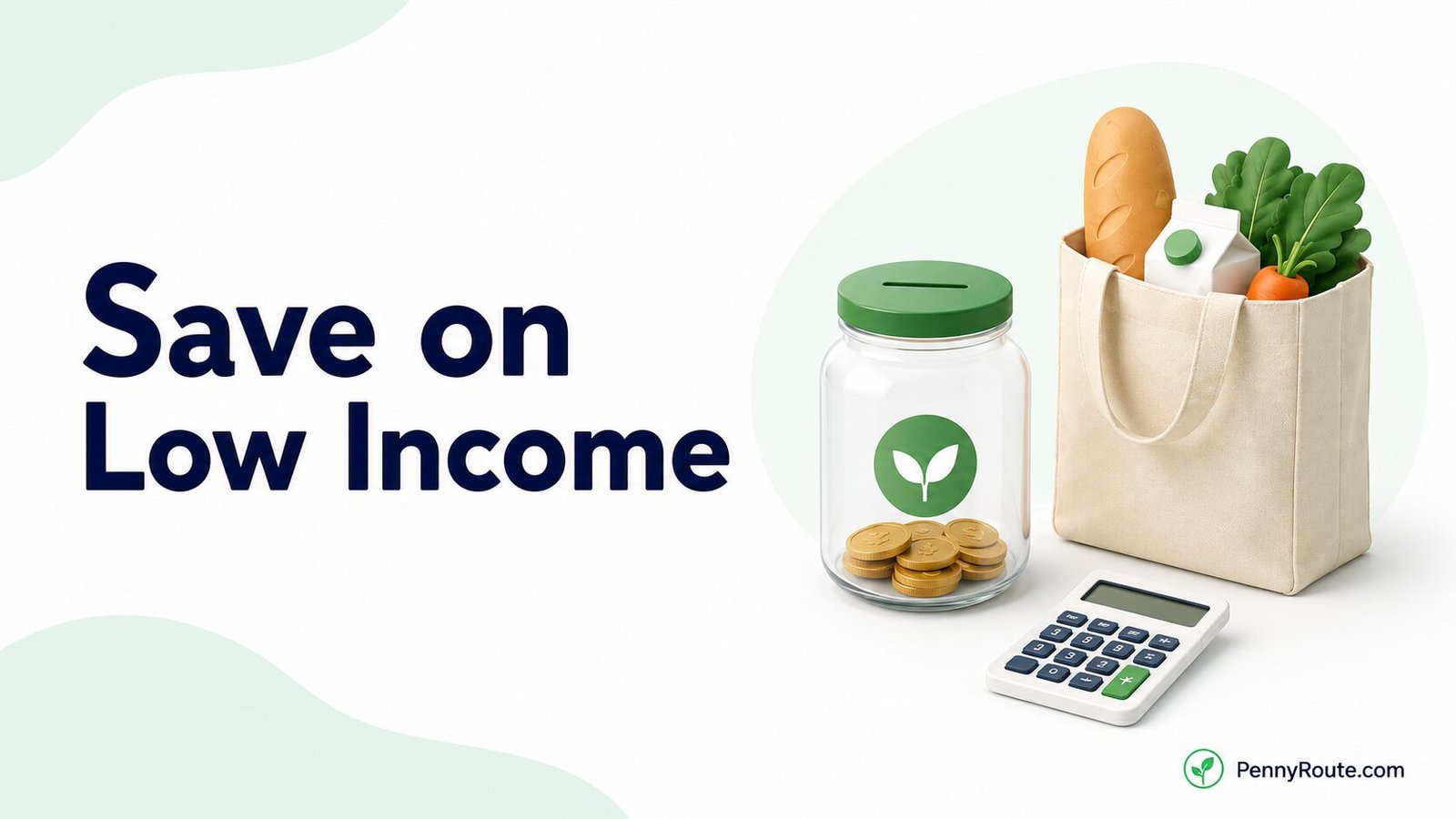
When your income is low, your paycheck often has a job before you even see it. Rent, groceries, utilities, transportation, debt payments, and everyday basics can take most of the money before saving even enters the picture.
That does not mean saving is off the table. It means the starting point has to be smaller, simpler, and more realistic. A few dollars saved, one avoided fee, or one lower monthly bill can create breathing room over time.
Saving money on a low income is not about following perfect money rules. It is about protecting what you need, finding small gaps where you can, and building a little cushion one step at a time.
Disclaimer: This content is for informational purposes only and does not constitute financial advice. Please consult a qualified professional before making financial decisions.
Quick Overview
- Start with the bills that must be paid first, such as housing, food, utilities, transportation, and minimum debt payments.
- Look for small costs that quietly drain your budget, including fees, unused subscriptions, delivery charges, and duplicate services.
- Use a tiny savings goal first. Even $5 or $10 can help you build the habit without putting pressure on your budget.
- Reduce recurring bills before cutting every small comfort, because one lower bill can help every month.
- Use food planning, store brands, and simple repeat meals to make grocery spending more predictable.
- Check for local help or bill assistance before skipping payments or turning to expensive debt.
Can You Really Save Money on a Low Income?
Yes, but the plan has to match your real life.
A low income usually leaves less room for trial and error. You may not be able to save 20% of your income, fill a large emergency fund quickly, or follow a budget that was designed for someone with more breathing room.
That is why the first goal is not a perfect savings rate. The first goal is to create a small gap between what comes in and what goes out.
That gap may start with $5 per paycheck. It may come from avoiding one overdraft fee, canceling one unused subscription, or spending a little less on a repeat expense. Small amounts still matter because they help you stop starting from zero every time something unexpected happens.
If your basic expenses are already higher than your income, saving may not be the first step. In that case, the starting point may be reviewing essential bills, checking for support programs, or finding ways to reduce fixed costs before trying to set money aside.
Start With the Bills That Must Be Paid First
When money is tight, the first step is not cutting random expenses. It is knowing which bills protect your basic needs.
Start by listing the payments that keep your household running:
- Housing, such as rent or mortgage
- Utilities, including electricity, gas, water, and basic phone service
- Groceries and household basics
- Transportation to work, school, appointments, or essential errands
- Insurance payments you need to keep active
- Minimum debt payments
- Childcare or caregiving costs, if they apply
These are your must-pay expenses. They come before savings challenges, extra debt payments, or anything that would make daily life harder if skipped.
Once you know your must-pay amount, compare it with your income for the month or pay period. If you bring home $2,200 and your must-pay bills are $2,050, you are not working with a $2,200 budget. You are working with about $150 of flexible room.
That number matters. It shows what is actually available for savings, small extras, irregular expenses, and irregular bills that do not happen on the same schedule every month.
A simple beginner budget can help you see this more clearly, especially if your spending feels scattered across bills, cards, apps, and cash. The point is not to judge every purchase. It is to stop guessing where your money is going.
Look for the Expenses That Quietly Drain Your Budget
After your must-pay bills are clear, look for the costs that slip through without much notice.
These are not always big purchases. They are often small charges, fees, renewals, or habits that keep pulling money from your account before you get a chance to use it on purpose.
Start with recurring costs because they repeat every month. Check for:
- Subscriptions you no longer use
- Streaming services you forgot were active
- App renewals
- Bank maintenance fees
- Overdraft fees
- Phone plans that cost more than you need
- Internet or insurance bills that may be worth comparing
- Duplicate services, such as two apps doing the same job
One cancelled $12 subscription will not fix everything, but it gives you $12 back every month. That is $144 a year without changing your groceries, transportation, or basic needs.
Then look at everyday leaks. These are the small purchases that are easy to overlook when life is busy:
- Delivery fees
- Convenience store snacks or drinks
- Extra trips that use more gas
- Last-minute takeout
- Late fees
- Small impulse buys while shopping for essentials
This is not about blaming yourself for every dollar. When money is tight, convenience can feel like survival, especially after a long workday or a stressful week.
The goal is to spot one or two leaks you can reduce without making your life harder. For example, keeping one easy meal at home may help you avoid a $25 takeout order. Setting a bill reminder may help you avoid a late fee. Moving to a lower phone plan may free up money every month.
Small savings become more useful when they are connected to a clear purpose. Instead of letting the money disappear somewhere else, send it toward your tiny savings goal.
Use a Tiny Savings Goal First
Saving money on a low income is easier when the first goal is small enough to actually start.
A large emergency fund may be helpful later, but it can also feel out of reach when your budget is already tight. Instead of starting with a goal like “save three months of expenses,” begin with a smaller target that gives you a quick win.
You can build it in stages:
- First $25
- Then $100
- Then $250
- Then $500
- Then one month of essential expenses
This kind of savings ladder gives you progress without asking your budget to do too much at once.
For example, if you save $10 every payday, you could reach $100 in 10 paychecks. That may not sound huge, but it can cover a small bill, a prescription copay, school supplies, part of a utility payment, or a basic car expense without forcing you to borrow.
The first purpose of saving is not to become financially secure overnight. It is to stop every small surprise from becoming a bigger problem.
According to the Consumer Financial Protection Bureau, an emergency fund is money set aside for unplanned expenses or financial emergencies, such as car repairs, medical bills, home repairs, or income changes. That kind of cushion matters even when it starts small.
Once you reach your first tiny savings goal, choose the next level. The habit matters as much as the amount, especially when you are building from a tight starting point.
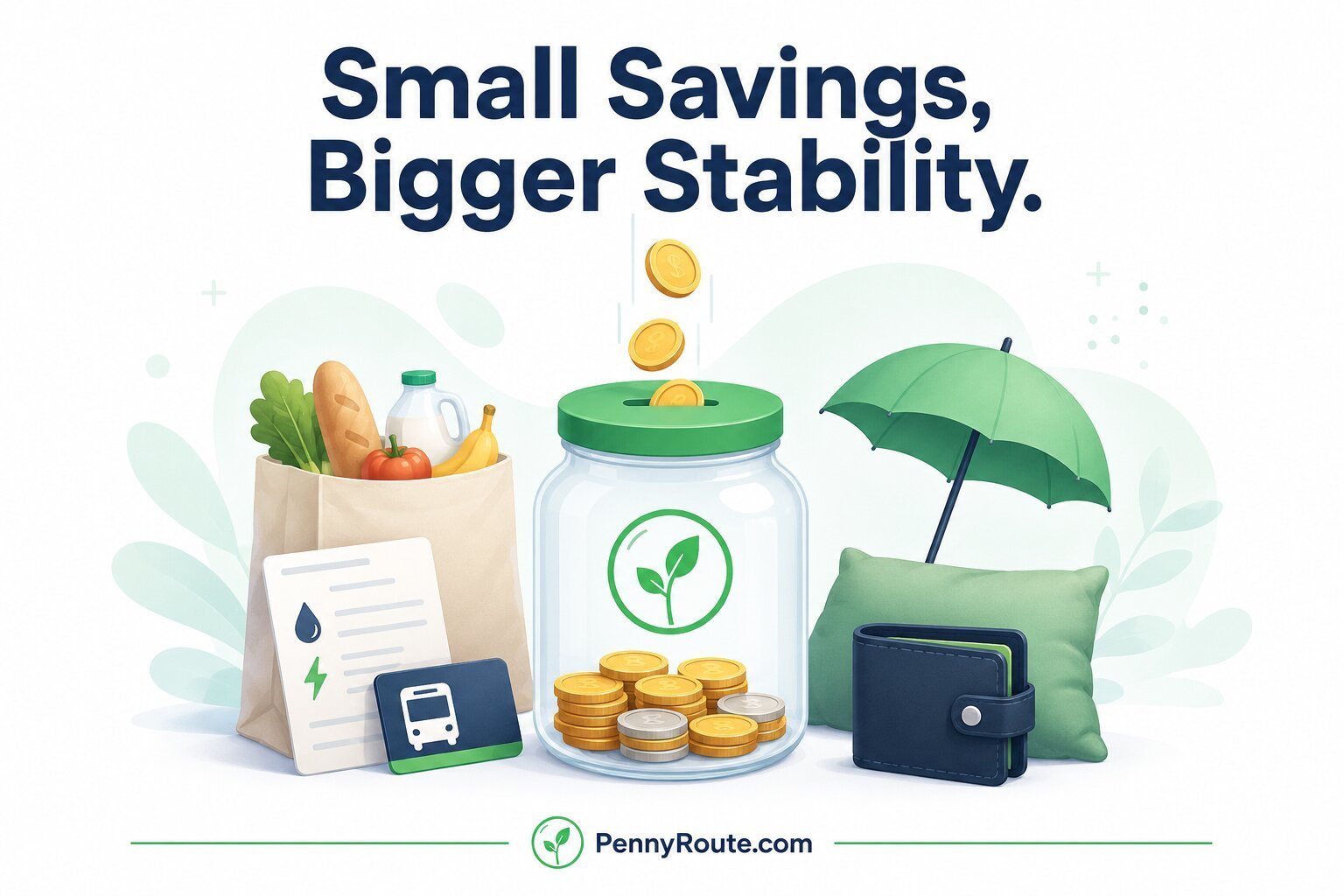
Save the Money Before It Gets Absorbed by Everything Else
When money is limited, savings often disappear because they are treated as whatever is left over. The problem is that there may not be anything left by the end of the week.
A better approach is to move a small amount before the money gets absorbed by bills, errands, groceries, and small emergencies.
This does not have to mean a large automatic transfer. If your checking balance is tight, automatic savings can backfire and cause overdraft problems. Start with an amount that feels safe, such as $2, $5, or $10 after payday.
You can do this in a few simple ways:
- Move a small amount to savings when your paycheck arrives
- Round down your checking balance and save the difference
- Save cash from one skipped purchase
- Move money saved from a cancelled subscription
- Put cashback, refunds, or small rebates into savings instead of spending them
For example, if your account has $483 after bills, you might move $3 to savings and leave $480 in checking. It is small, but it creates the habit of saving on purpose instead of waiting for perfect conditions.
A separate savings account can help because the money is not sitting in the same place as your grocery, gas, or bill money. Even a small wall between spending money and savings can make it harder to use the cushion by accident.
The key is to keep the transfer realistic. Saving $5 consistently is better than moving $50 once, needing it back two days later, and feeling like the plan failed.
Make Food Spending More Predictable
Food is one of the hardest areas to manage on a low income because prices change, schedules get busy, and everyone still needs to eat. Cutting groceries too aggressively can backfire if it leads to more takeout, skipped meals, or last-minute shopping.
A better goal is to make food spending more predictable, so fewer choices have to be made when you are tired, rushed, or already stretched.
Build Meals Around Simple Repeat Items
Start with a few low-cost foods you can use in different ways. Rice, pasta, oats, eggs, beans, potatoes, frozen vegetables, soups, sandwiches, and simple one-pan meals can stretch further than random grocery trips.
These meals do not have to be exciting every time. They just need to be reliable enough to keep you fed without draining the budget.
Before shopping, check what you already have at home. A half bag of rice, frozen vegetables, canned beans, pasta, or eggs can become the base of a meal instead of another item you forget in the back of the kitchen.
Shop With a Short List, Not a Perfect Meal Plan
A short grocery plan can be more useful than a strict meal plan. Instead of planning every breakfast, lunch, and dinner perfectly, choose a few reliable meals for the week and leave room for real life.
Store brands can also help lower food costs without changing what you eat. For basics like oats, rice, pasta, canned goods, bread, frozen vegetables, spices, and cleaning supplies, the cheaper version may work just as well.
The goal is to reduce last-minute decisions. When you know a few meals you can make quickly, you are less likely to rely on takeout because there is “nothing to eat.”
Use Discounts Without Buying More Than You Need
Store apps, coupons, loyalty deals, cash-back apps, and receipt rewards may help lower costs, but only when they support what you already planned to buy.
A discount is not a saving if it pushes you to buy extra food you do not need.
The biggest win is reducing waste. Food that gets thrown away is money that already left your budget. Using leftovers, freezing extra portions, and choosing meals around what you already have can quietly save more than chasing every sale.
Check for Help Before Skipping Bills or Using High-Interest Debt
If your basic bills are taking nearly all of your income, cutting another small expense may not be enough. That does not mean you failed. It may mean your budget needs support before one missed bill turns into late fees, overdrafts, or expensive debt.
Before skipping a utility bill, falling behind on rent, or using a high-interest loan to cover essentials, check whether help is available in your area.
You may be able to find support for:
- Food
- Utilities
- Housing
- Medical costs
- Childcare
- Transportation
- Internet or phone service
- Emergency bill assistance
USAGov’s Benefit Finder can help you search for government benefits and financial help you may qualify for. 211 can also connect people with local help for bills, housing, utilities, food, and medical expenses. These resources are especially useful when you are not sure which program applies to your situation.
It can also help to contact a bill provider before the payment is late. Some utility companies, lenders, medical offices, landlords, and service providers may offer payment plans, due-date changes, hardship options, or temporary arrangements. The earlier you ask, the more options you may have.
This step is not about depending on help forever. It is about protecting your cash flow when the budget is already stretched. If assistance lowers one essential cost, that money may help you keep food in the house, avoid a late fee, or build a small emergency cushion.
When money is tight, the safest option is usually the one that gives you more breathing room next month, not the one that only solves today’s problem.
Be Careful With Debt That Makes Next Month Harder
When you are short on cash, borrowing can look like the only way to get through the week. Sometimes people use credit cards, overdrafts, payday loans, buy now, pay later plans, or personal loans just to cover normal expenses.
The risk is that debt can make next month’s paycheck even tighter.
A $100 shortfall today can turn into a larger problem if fees, interest, or extra payments are added later. That is especially true with high-interest debt, where part of your future income is already committed before the next month begins.
This does not mean every type of borrowing is the same. A payment plan with a utility company, a medical office, or a service provider may be very different from a high-cost loan. The point is to compare the next-month impact before choosing a quick fix.
Before borrowing for a basic bill, ask:
- How much will I owe in total?
- When is the payment due?
- What happens if I cannot pay it back on time?
- Will this create another shortfall next month?
- Is there a lower-cost option, payment plan, or assistance program I can check first?
If debt payments are already taking over your budget, a debt payoff plan may help you see which balances are costing the most and which minimum payments must stay current. For serious debt stress, a nonprofit credit counseling agency may also be able to explain options without pushing you toward another loan.
A Simple Low-Income Savings Plan for This Week
When a money goal feels too big, shrink the next step. You do not need to rebuild your entire budget in one day. You need one small move that makes this week slightly easier to manage.
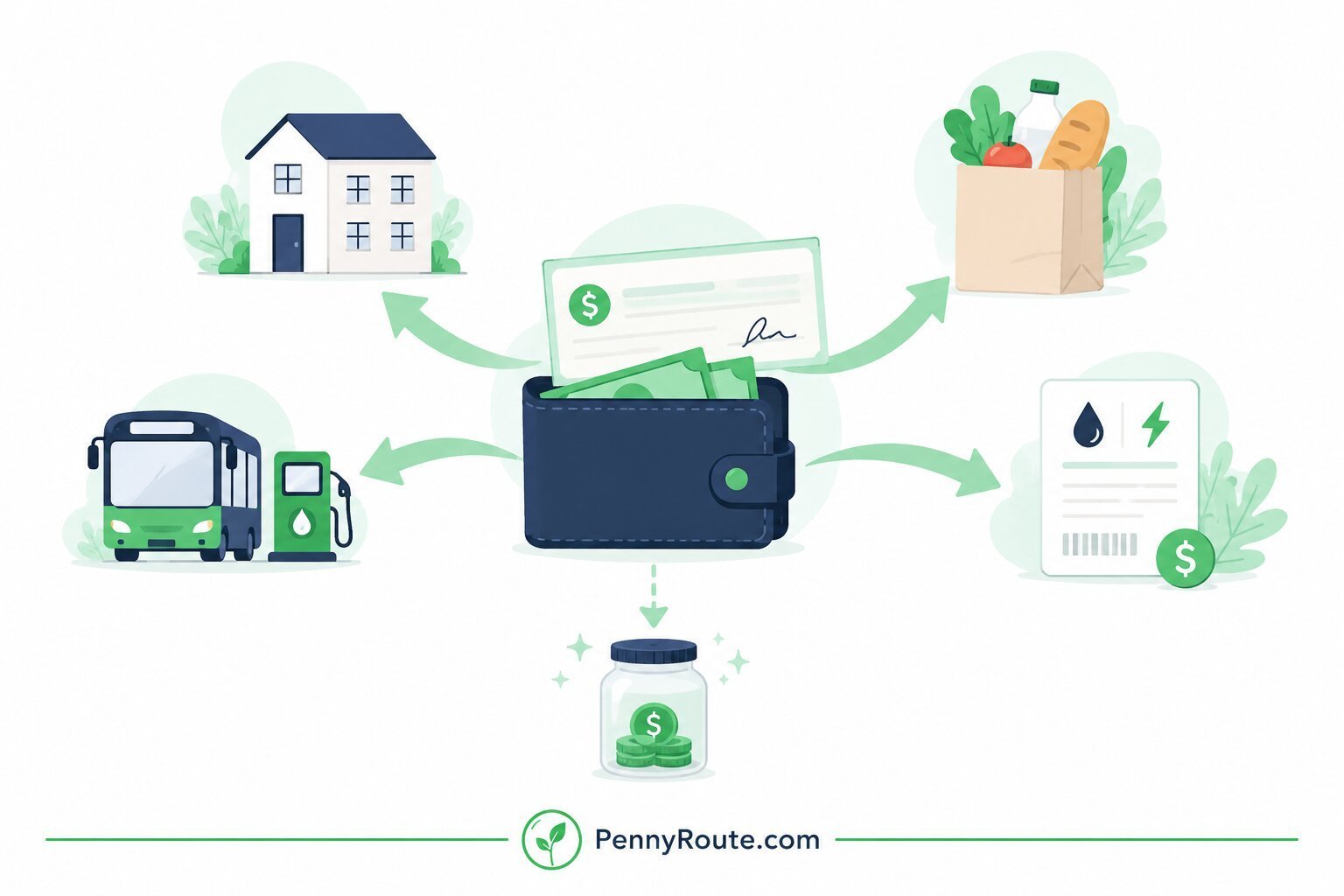
Know What You’re Working With
Start by writing down your must-pay bills for the week, paycheck, or month. Include housing, utilities, food, transportation, minimum debt payments, insurance, childcare, and anything else that protects your basic needs.
Then compare those expenses with the income you expect to receive. This gives you a clearer number to work with instead of guessing from your full paycheck.
If there is money left after essentials, choose a small amount that feels safe to save. If there is nothing left, do not force savings yet. Focus first on lowering one cost, adjusting a bill, or checking whether support is available.
Create One Small Win
Pick one tiny savings target for this week. It might be $5, $10, or the amount you save by avoiding one fee or cancelling one unused subscription.
Move that money before it disappears into everyday spending. You can put it in a savings account, a separate cash envelope, or another safe place that is not mixed with grocery and bill money.
Then choose one repeat cost to review. A lower phone plan, cancelled app renewal, adjusted bill due date, or avoided overdraft fee can give your budget more room without requiring a major lifestyle change.
Make Next Payday Easier
Plan two simple meals before the week gets busy. They do not need to cover every day. The purpose is to reduce one or two last-minute spending decisions when you are tired or short on time.
If your essential bills are still higher than your income, check one support option before the problem grows. That could mean asking about a payment plan, looking for utility assistance, checking food support, or using a local resource like 211.
Before the next payday, take five minutes to review what helped. Did one bill hit too early? Did groceries cost more than expected? Did a small savings transfer work, or was it too much? That quick review gives you a better starting point for the next pay period.
This plan is not meant to be impressive. It is meant to be usable. Saving money on a low income often starts with small repeatable actions, not one huge financial reset.
Common Mistakes to Avoid When Saving on a Low Income
Saving on a low income gets harder when the plan asks too much too quickly. These mistakes are common, and avoiding them can make your progress easier to maintain.
Trying to Save Too Much at Once
A large savings goal may sound motivating, but it can create pressure if your budget is already tight. Start with an amount you can repeat, even if it is only a few dollars per paycheck.
Following Budget Rules Too Strictly
Popular budget rules can be helpful, but they may not fit every low-income household. If housing, food, transportation, and utilities take most of your paycheck, use the rule as a guide, not a grade.
Forgetting Irregular Expenses
Car registration, school supplies, annual renewals, clothing, medical copays, and holiday costs can throw off a tight budget. Even setting aside a small amount for these expenses can make them less stressful when they show up.
Cutting So Much That the Plan Falls Apart
Saving money should not make daily life feel impossible. Look for changes that give you breathing room without removing every small comfort. A plan you can repeat is more useful than one that looks perfect for one week.
Small Savings Still Count
Saving money on a low income may start smaller than you want, but that does not make it meaningless. A few dollars saved, one lower bill, one avoided fee, or one less last-minute expense can give your budget a little more room.
The most helpful plan is the one you can repeat. Start with your must-pay bills, choose one tiny savings goal, and look for small changes that make the next paycheck easier to manage.
You do not have to fix everything at once. Building a little breathing room is still progress, especially when your money is already stretched.
FAQs About Saving Money on a Low Income
How much should I save each month on a low income?
There is no perfect amount. Start with what your budget can safely handle, even if that is $5 or $10 per paycheck. If your essential bills are higher than your income, focus first on lowering costs, adjusting bills, or finding support before forcing savings.
Is saving $5 a week worth it?
Yes. Saving $5 a week adds up to about $260 in a year, but the bigger benefit is the habit. It helps you practice setting money aside before a small emergency, fee, or impulse purchase takes it.
How can I save money if I live paycheck to paycheck?
Start by separating must-pay bills from flexible spending. Then look for one small cost to reduce, one fee to avoid, and one tiny amount to save after payday. If there is no money left after essentials, check for bill assistance, payment plans, or local support before the shortfall grows.
Should I save money or pay off debt first?
Many people try to keep a small emergency cushion while making required debt payments, especially if one unexpected expense could push them further into debt. High-interest debt can be expensive, so it may help to review which balances cost the most before deciding where extra money should go.
What is the best budget method for a low income?
A simple paycheck budget or zero-based budget can work well because it focuses on the money you actually have right now. Strict percentage rules may be harder to follow if rent, food, transportation, and utilities take up most of your income.
What should I do if I cannot save any money?
If there is truly nothing left after basic needs, the issue may not be spending habits. Start by checking whether any essential bills can be lowered, whether due dates can be adjusted, or whether local assistance is available for food, utilities, housing, or medical costs.