A checking account is one of the most common bank accounts for everyday money. It is usually where your paycheck lands, where your bills come out, and where your debit card pulls money from when you buy groceries, gas, or lunch on a busy day.
In simple terms, a checking account helps you receive, spend, withdraw, and manage money you plan to use soon. It is not meant to be complicated, but it does help to understand how it works before fees, overdrafts, or confusing balances catch you off guard.
Think of it as your everyday money hub: useful, convenient, and much easier to manage once you know what each part does.
Disclaimer: This content is for informational purposes only and does not constitute financial advice. Please consult a qualified professional before making financial decisions.
What Is a Checking Account?
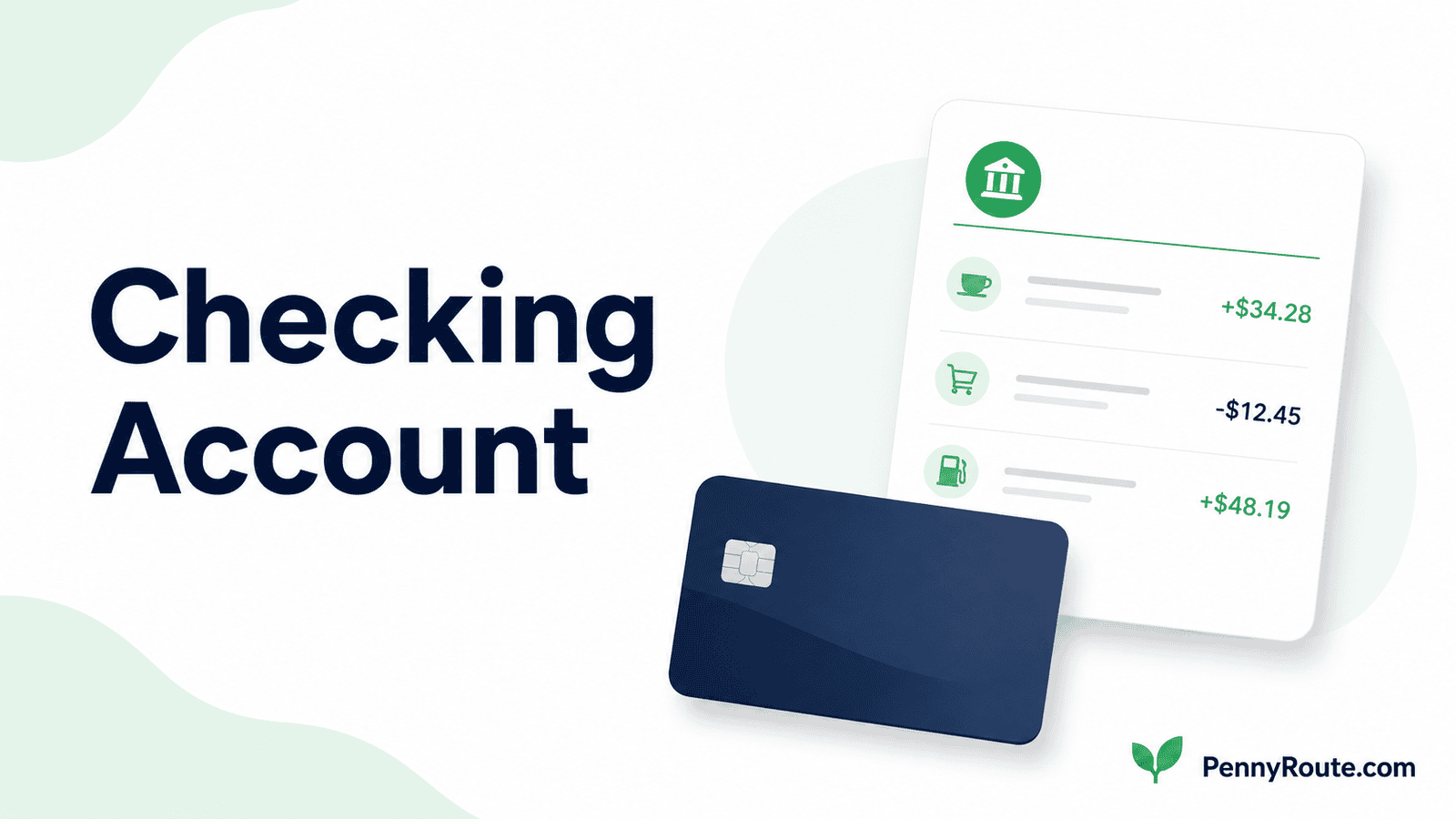
A checking account is a bank or credit union account used for money you plan to spend or access regularly.
You can use it to receive money, pay bills, make debit card purchases, withdraw cash, send transfers, and sometimes write checks. For many people, it is the main account used for day-to-day money.
For example, your paycheck may go into your checking account through direct deposit. Then your rent, phone bill, groceries, gas, and subscriptions may come out of that same account during the month.
If you are new to banking basics, a checking account is one of the first accounts worth understanding.
The word “checking” comes from paper checks, which were once one of the main ways people paid from this type of account. Today, many people use debit cards, mobile banking, online bill pay, and transfers more often than paper checks.
The simple way to think about it: a checking account is for money that moves in and out often.
How Does a Checking Account Work?
A checking account works by letting money come in and go out as you use it.
Money can come into your checking account through direct deposit, bank transfers, cash deposits, check deposits, or mobile check deposit. For example, your paycheck may land in your account every two weeks.
Money can go out when you use your debit card, withdraw cash from an ATM, pay bills, send transfers, write checks, or set up automatic payments.
Your account balance changes as these transactions happen. If you start the day with $800, then spend $60 on groceries and $40 on gas, your balance may drop to $700.
One thing to watch is the difference between your current balance and available balance. Some transactions may still be pending, which means they have not fully cleared yet. That can happen with debit card purchases, checks, deposits, tips, hotel holds, gas station holds, or automatic payments.
A checking account is meant for frequent use, but your bank may still have certain limits. For example, there may be daily ATM withdrawal limits, debit card spending limits, mobile deposit limits, or rules about how long a check deposit takes to become available.
What Is a Checking Account Used For?
A checking account is mainly used for everyday money activity. It helps you receive money, spend money, pay bills, and access cash without carrying everything in your wallet.
You might use a checking account for:
- Receiving your paycheck through direct deposit
- Paying rent, utilities, phone bills, insurance, or subscriptions
- Buying groceries, gas, household items, or everyday basics
- Withdrawing cash from an ATM
- Sending money to another person
- Paying credit card, loan, or other monthly bills
- Setting up automatic payments
- Moving money to savings or another account
For example, if you get paid on Friday, your paycheck may land in your checking account. From there, you might pay your rent, buy groceries, transfer money to savings, and keep the rest available for regular spending.
That is why a checking account is often the center of your day-to-day money routine.
Common Checking Account Features
Most checking accounts come with tools that make everyday money easier to manage. The exact features can vary by bank, credit union, or online bank, but these are the most common ones to know.
Debit card
A debit card lets you spend money from your checking account without writing a check or withdrawing cash first.
The checking account holds your money. The debit card is simply one way to use that money. When you buy groceries, gas, or lunch with your debit card, the money usually comes out of your checking account.
ATM access
Many checking accounts let you use ATMs to withdraw cash, check your balance, or sometimes deposit money.
The main thing to watch is ATM fees. Using your bank’s own ATM network is often cheaper than using an out-of-network ATM.
Online and mobile banking
Online and mobile banking let you manage your checking account from your computer or phone.
You may be able to check your balance, transfer money, deposit checks, pay bills, lock your debit card, and review transactions without visiting a branch.
Direct deposit
Direct deposit lets your paycheck, government benefits, or other regular income go straight into your checking account automatically.
Some banks may also use direct deposit as a way to waive monthly account fees.
Bill pay and automatic payments
Many checking accounts let you pay bills directly from the account.
You can use this for things like rent, utilities, insurance, phone bills, credit card payments, and subscriptions. Just be careful with automatic payments, because they can still come out even if you forget they are scheduled.
Checks
Some checking accounts still let you write paper checks.
You may not use checks often, but they can still be useful for certain rent payments, deposits, gifts, school fees, contractors, or situations where card payments are not accepted.
Routing and account numbers
Your checking account usually has an account number and a routing number.
These numbers help banks identify where money should go. You may need them for direct deposit, transfers, online bill payments, or linking your account to another financial app.
Monthly statements
A checking account statement shows what happened in your account during a set period, usually one month.
It may include deposits, purchases, withdrawals, fees, transfers, and your ending balance. Reviewing statements can help you catch errors, forgotten subscriptions, or charges you do not recognize.
Account alerts
Many banks let you set alerts for low balances, large transactions, deposits, withdrawals, or debit card purchases.
These alerts can help you avoid surprises and spot unusual activity early. Think of them as small money reminders that do not judge you for buying takeout.
Different Kinds of checking accounts
Checking accounts all serve the same basic purpose: they help you manage money you use often. But the features, fees, and requirements can look different depending on the type of account.
Here are the common types you may come across.
Standard checking account
A standard checking account is the everyday option many people use for regular banking.
It usually lets you receive direct deposit, use a debit card, pay bills, withdraw cash, transfer money, and sometimes write checks.
This can be a good fit if you want a simple account for paychecks, bills, and daily spending.
Free checking account
A free checking account usually means there is no monthly maintenance fee, or the fee is easy to avoid.
Still, “free” does not always mean every service is free. You may still be charged for things like overdrafts, out-of-network ATMs, paper statements, wire transfers, or replacement cards.
Student checking account
A student checking account is designed for students or younger account holders.
These accounts often have lower fees, easier balance requirements, or beginner-friendly features. Some student accounts may change into regular checking accounts after a certain age or after graduation.
Online checking account
An online checking account is offered by an online bank or financial institution instead of a traditional branch-based bank.
These accounts may have lower fees, helpful mobile features, and access to large ATM networks. The tradeoff is that cash deposits, in-person support, or branch services may be less convenient.
Interest-bearing checking account
An interest-bearing checking account pays interest on the money in the account.
That sounds useful, but the interest rate may be low or may require a higher balance. Before choosing one, check the fees carefully. A monthly fee can easily cancel out a small amount of interest.
Joint checking account
A joint checking account is shared by two or more people, such as spouses, partners, roommates, or family members.
Everyone listed on the account may be able to deposit, withdraw, and spend money from it. This can make shared bills easier, but it also works best when everyone agrees on clear rules.
Second-chance checking account
A second-chance checking account is designed for people who have had trouble opening a regular checking account because of past banking issues.
These accounts may have more limits or fees, but they can help someone rebuild their banking history and move toward a regular account later.
Common Checking Account Fees to Watch For
A checking account can be convenient, but some accounts come with fees. The good news is that many fees can be avoided if you know what to look for before opening the account.
Monthly maintenance fee
A monthly maintenance fee is a regular fee some banks charge just for keeping the account open.
Some banks waive this fee if you meet certain rules, such as receiving direct deposit, keeping a minimum balance, or making a certain number of debit card transactions.
Minimum balance fee
Some checking accounts require you to keep a certain amount of money in the account.
If your balance drops below that amount, the bank may charge a fee or stop waiving the monthly maintenance fee. This can be frustrating if your income changes from month to month.
ATM fees
ATM fees can happen when you use an out-of-network ATM.
In some cases, you may pay a fee to the ATM owner and another fee to your own bank. To avoid this, check your bank’s ATM network before withdrawing cash.
Overdraft fee
An overdraft can happen when more money leaves your checking account than you have available.
For example, if you have $40 in your account and a $55 payment goes through, your account may be overdrawn. Depending on your bank and settings, the transaction may be declined, covered with a fee, or paid using linked overdraft protection.
Paper statement fee
Some banks charge a fee if you choose mailed paper statements instead of online statements.
If you are comfortable using online banking, paperless statements may help you avoid this small but annoying fee.
Stop payment fee
A stop payment fee may apply if you ask the bank to block a check or payment before it goes through.
This can be useful in certain situations, but it is not usually free.
How to avoid checking account fees
Before opening a checking account, read the fee schedule. It is not the most exciting reading material, but neither is paying $12 a month for no reason.
A few simple ways to avoid common fees include:
- Choose a no-fee checking account when possible
- Use in-network ATMs
- Set up direct deposit if it waives the monthly fee
- Turn on low-balance alerts
- Review overdraft settings
- Avoid accounts with minimum balance rules you cannot comfortably meet
- Choose paperless statements if paper statements cost extra
Is Money in a Checking Account Safe?
Money in a checking account can be safe when the account is held at an insured bank or credit union.
In the U.S., checking accounts at FDIC-insured banks are generally protected by deposit insurance. Credit union accounts may be protected by NCUA insurance if the credit union is federally insured. This protection matters if the bank or credit union fails.
That said, deposit insurance does not mean every problem is automatically covered. It does not protect you from overspending, overdraft fees, scams, or someone getting access to your debit card or online banking login.
To keep your checking account safer:
- Use a strong password for online banking
- Turn on two-factor authentication if available
- Set transaction alerts
- Review your account activity regularly
- Report unknown charges quickly
- Avoid sharing your debit card PIN or login details
- Be careful with links in emails or texts that claim to be from your bank
A checking account is safer than carrying large amounts of cash, but it still needs basic protection. Think of it like locking your front door: simple, boring, and very worth doing.
Checking Account vs Savings Account: The Simple Difference
A checking account is mainly for money you plan to use soon. A savings account is mainly for money you want to set aside for later.
For example, your checking account may handle your paycheck, bills, debit card purchases, ATM withdrawals, and everyday spending. Your savings account may hold your emergency fund, vacation fund, car repair fund, or other savings goals.
The easiest way to remember it:
- Checking account: everyday money
- Savings account: money for later
Both can be useful, but they do different jobs. For a deeper breakdown, you can read the article on checking vs savings accounts.
How Much Money Should You Keep in a Checking Account?
A checking account is useful, but you do not need to keep all your money there.
A simple rule is to keep enough in checking for your regular bills, everyday spending, and a small buffer. The buffer helps protect you from timing issues, forgotten payments, or a bill hitting your account earlier than expected.
For example, you may keep enough for:
- Rent or mortgage
- Utilities
- Groceries
- Gas or transportation
- Insurance
- Subscriptions
- Credit card or loan payments
- A small cushion for surprise timing issues
The exact amount depends on your monthly expenses and how steady your income is. Someone with predictable paychecks may need a smaller buffer than someone with irregular income.
Try not to keep too much extra in checking if it makes your money easier to spend or keeps it from working toward savings goals.
How to Choose a Checking Account
Choosing a checking account does not have to be complicated. The main goal is to find an account that is easy to use, low-cost, and fits how you actually manage money.
Before opening one, check for:
- No monthly fee, or an easy way to waive it
- FDIC or NCUA insurance
- Free in-network ATM access
- Low or no opening deposit
- Good online and mobile banking
- Direct deposit support
- Clear overdraft rules
- No confusing minimum balance requirement
- Helpful customer support
- Branch access, if you prefer in-person banking
Also think about your habits. If you rarely use cash, an online checking account may work well. If you deposit cash often or like face-to-face help, a local bank or credit union may be more convenient.
The best checking account is not always the one with the most features. It is the one that lets you handle everyday money without unnecessary fees or extra hassle.
How to Open a Checking Account
Opening a checking account is usually simple. You can often do it online, in a bank branch, or through a credit union.
The basic process looks like this:
- Choose a bank, credit union, or online bank.
- Pick the checking account that fits your needs.
- Provide your personal information.
- Verify your identity.
- Make an opening deposit if the account requires one.
- Set up online banking, a debit card, and direct deposit.
You may need:
- Government-issued ID
- Name, date of birth, and address
- Phone number and email address
- Social Security number, tax ID, or similar identification number depending on the country and bank
- Opening deposit, if required
- Parent or guardian information if you are under the required age to open an account alone
Some checking accounts can be opened with $0, while others may require a small opening deposit. The rules vary, so check the requirements before you start.
Once the account is open, take a few minutes to set it up properly. A checking account is easier to manage when your debit card, alerts, online banking, and direct deposit are ready from the beginning.
What to Do After You Open a Checking Account
Once your checking account is open, a few small setup steps can make it much easier to use.
Start with the basics:
- Activate your debit card
- Set up online and mobile banking
- Create a strong password
- Turn on account alerts
- Set up direct deposit if you get paid through payroll
- Add bill payments carefully
- Review your overdraft settings
- Save your routing and account numbers somewhere secure
- Read the fee schedule
Account alerts are especially helpful. A low-balance alert can warn you before your account gets too close to zero, and transaction alerts can help you spot charges you do not recognize.
It is also smart to add a small buffer if you can. Even $50 or $100 can help protect you from awkward timing issues, like a subscription renewing the day before payday.
When a Checking Account May Not Be Enough
A checking account is useful for everyday money, but it is not meant to do every financial job by itself.
For example, a checking account can help you receive income, pay bills, use a debit card, and withdraw cash. But it will not automatically tell you where your money should go each month. For that, you may still need to make a simple budget.
A checking account also may not be the best place for long-term savings. Money for an emergency fund, vacation, car repair, or other savings goals may be easier to manage in a separate savings account.
A checking account usually will not build credit by itself either. Using a debit card is not the same as using a credit card, because you are spending your own money instead of borrowing and repaying money.
The simple way to think about it: a checking account helps you move money. A budget, savings plan, and credit-building habits help you give that money a bigger purpose.
The Simple Way to Think About a Checking Account
A checking account is your everyday money hub.
It is where everyday money comes in, goes out, and stays easy to access.
It works best with a little structure: low fees, clear balance tracking, helpful alerts, and a small buffer if you can manage one.
A checking account will not manage your money for you, but it can make daily money tasks much easier once you know how to use it.
FAQs About Checking Accounts
Is a checking account the same as a debit card?
No. A checking account is the bank account that holds your money. A debit card is one tool you can use to spend or withdraw money from that account.
Can you save money in a checking account?
Yes, you can keep savings in a checking account, but it may not be the best place for money you want to set aside. Checking accounts are usually better for everyday spending, while savings accounts are better for money you do not plan to use right away.
Does a checking account earn interest?
Some checking accounts earn interest, but many earn little or none. If an account does pay interest, check the fees and balance requirements before choosing it.
Can opening a checking account affect your credit score?
Opening a checking account usually does not directly affect your credit score. However, some banks may review your banking history before approving you.
What happens if I spend more than I have in checking?
The transaction may be declined, or the bank may cover it and charge an overdraft fee, depending on your account settings. Some accounts also let you link another account for overdraft protection.
Do I need a checking account?
You may not legally need one, but a checking account can make everyday money tasks easier. It can help with direct deposit, bill payments, debit card purchases, ATM withdrawals, and tracking your spending.
Is a checking account safe?
A checking account can be safe when it is held at an insured bank or credit union. You still need to protect your debit card, PIN, password, and online banking access.
What is the difference between a checking account and a current account?
In the U.S. and Canada, “checking account” is commonly used for an everyday transaction account. In the UK and some other countries, a similar account is usually called a current account.
How much money do you need to open a checking account?
It depends on the bank or credit union. Some checking accounts can be opened with $0, while others require a small opening deposit.
Can you have more than one checking account?
Yes, you can have more than one checking account. Some people use separate checking accounts for bills, personal spending, shared expenses, or business income. Just make sure you can manage any fees or balance requirements.