Paying several debts at once can make progress hard to see. You may send money out every month without getting the satisfaction of watching one balance finally disappear.
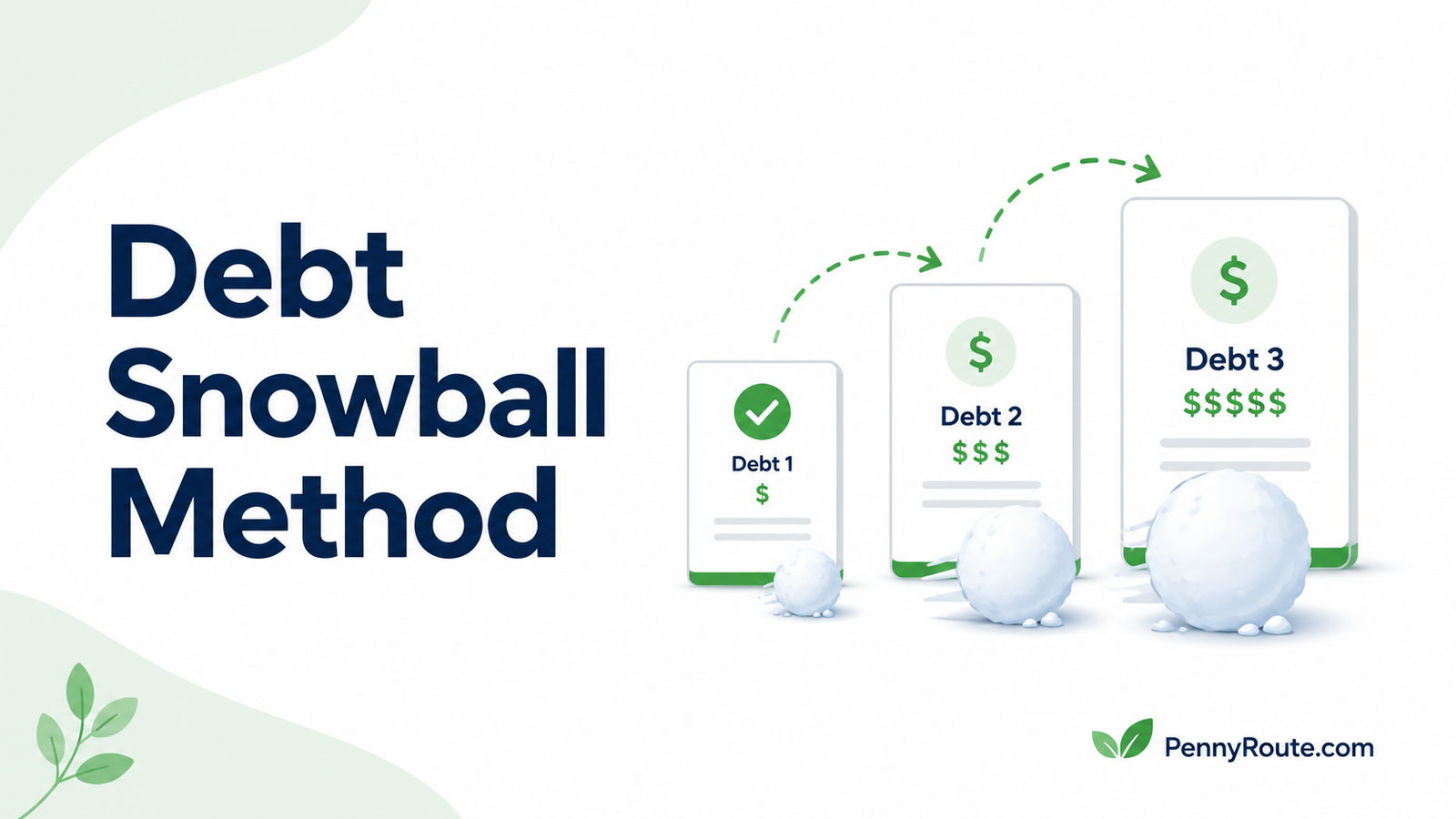
The debt snowball method gives your extra payment one clear target: the smallest balance. Once that debt is gone, you add its payment to the next-smallest balance and keep going.
The tradeoff is straightforward. You may reach an earlier payoff milestone, but you can pay more interest than you would by targeting the highest interest rate first.
Disclaimer: This content is for informational purposes only and does not constitute financial, legal, tax, or credit advice. Debt balances, interest charges, account status, and repayment options vary. Consider speaking with a qualified professional when needed.
Quick Overview
- Order your debts from the smallest balance to the largest.
- Keep making the required payment on every other debt.
- Send all available extra payoff money to the smallest balance.
- When that debt reaches zero, roll its full payment into the next one.
What Is the Debt Snowball Method?
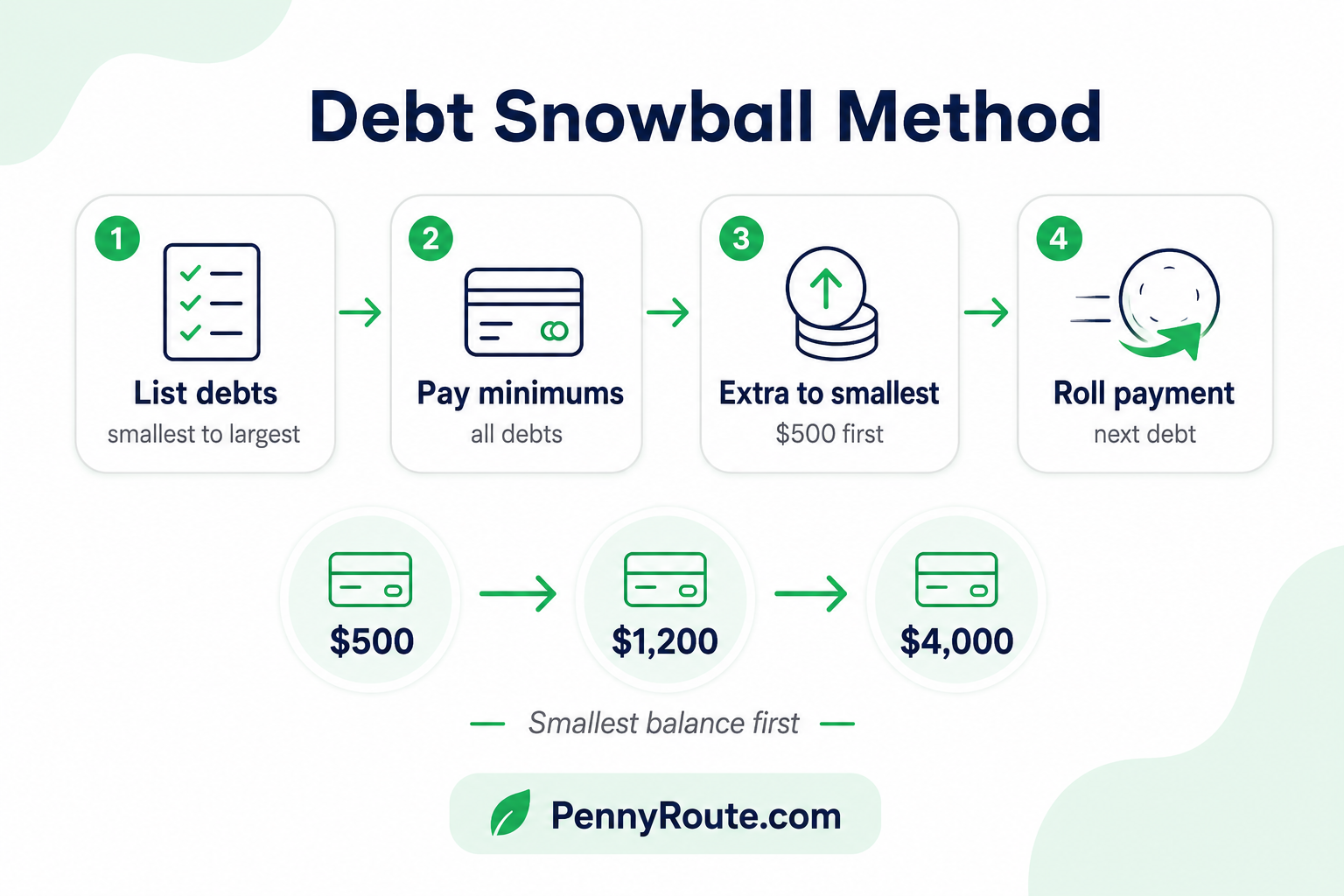
The debt snowball method is a payoff strategy that ranks debts by balance, from smallest to largest.
You keep making the required payments on every debt, then put any available extra money toward the smallest balance. After that debt is paid off, its payment joins the payment on the next-smallest debt.
That is what creates the snowball.
The basic setup is to keep required payments going on the other debts while directing extra money to the smallest balance first.
The snowball prioritizes early balance payoffs rather than minimizing interest cost. If a high-rate debt sits farther down the list, it continues charging interest while you work through smaller balances.
How to Use the Debt Snowball Method
You only need a clear debt list, one target, and an extra amount that fits your budget.
1. List the Debts You Plan to Include
For each debt, record:
- current balance;
- required minimum payment;
- interest rate;
- due date;
- account status.
Balances determine the normal snowball order, but the other details still matter. You need to know that required payments are manageable and whether any account needs more urgent attention.
2. Rank the Debts From Smallest to Largest
Ignore the interest rate when setting the normal snowball order.
For example:
| Debt | Balance | Minimum payment |
|---|---|---|
| Store card | $450 | $35 |
| Credit Card A | $1,600 | $60 |
| Medical bill | $2,800 | $90 |
| Personal loan | $6,500 | $210 |
The $450 store card becomes the first target because it has the smallest balance.
If two balances are nearly identical, choosing the higher-interest debt is a reasonable tie-breaker. After that, stick with the target unless something meaningful changes.
3. Keep the Other Required Payments Current
Continue making the required payment on every non-target debt.
The snowball is meant to direct extra money, not take money away from another required payment.
If sending extra to the smallest balance would make another account late, the extra payment is too aggressive for the current budget.
4. Send Your Extra Money to the Smallest Debt
Suppose your budget leaves $250 per month beyond the required debt payments.
The store card receives:
$35 minimum payment + $250 extra = $285 per month
First Target Payment
The other debts continue receiving their required payments.
Concentrating the extra $250 on one target is what allows the first balance to disappear sooner.
5. Roll the Payment Into the Next Debt
Once the store card reaches zero, roll the amount you were paying on it into Credit Card A.
Keep doing the same thing as each balance is cleared. The payment directed at your target gets larger even though the original $250 extra stays the same.
The example below shows how that works across all four debts.
Debt Snowball Example: How the Payment Grows
Using the same debts and the same $250 monthly extra payment:
| Payoff stage | Target debt | Monthly target payment |
|---|---|---|
| First | Store card | $285 |
| Second | Credit Card A | $345 |
| Third | Medical bill | $435 |
| Fourth | Personal loan | $645 |
Here is where those amounts come from:
- Store card: $35 minimum + $250 extra = $285
- Credit Card A: $60 minimum + $285 rolled forward = $345
- Medical bill: $90 minimum + $345 rolled forward = $435
- Personal loan: $210 minimum + $435 rolled forward = $645
The snowball does not magically create more income. It keeps previously committed debt payments working toward the next balance instead of letting them disappear into the rest of the budget.
In this example, the original $250 extra payment eventually helps create a $645 monthly payment toward the final debt without requiring another $395 of new monthly income.
Why Small Payoffs Can Help You Keep Going
The snowball’s main appeal is not that smaller debts are cheaper. It is that they can give you earlier completion points.
That can matter in a few practical ways.
You Reach a Payoff Milestone Earlier
A $450 balance can usually reach zero sooner than a $6,500 balance when both receive the same extra payment.
For someone facing several debts, getting one balance to zero can make a long payoff plan feel less open-ended.
There Are Fewer Active Debt Payments to Manage
Each debt that stays at zero removes one required payment from the active payoff plan.
You still need to monitor an open account if it can receive new charges or fees, but that debt is no longer competing for part of your monthly payoff budget.
The Next Target Is Already Decided
Once the order is set, extra payoff money goes to the smallest remaining balance.
You do not have to decide every month whether to split the extra money across several debts or switch targets based on whichever balance feels most frustrating at the time.
There is some evidence behind the idea of small wins. One study using consumer debt data found that people who eliminated a larger share of their debt accounts were more likely to eliminate their debt overall. The size of the balances they cleared did not show the same relationship.
The researchers suggested that completing smaller subgoals may help people keep going. The study shows an association rather than proving that the snowball will work better for everyone, so interest cost still belongs in the decision.
Debt Snowball vs. Debt Avalanche
The debt snowball and debt avalanche use the same basic structure: keep the required payments going and focus extra money on one target.
They choose that target differently.
| Debt snowball | Debt avalanche |
|---|---|
| Starts with the smallest balance | Starts with the highest APR |
| Prioritizes an earlier balance payoff | Prioritizes reducing interest cost |
| Can leave higher-rate debt waiting longer | Targets costly debt sooner |
| May result in more interest overall | Can reduce interest cost when other factors are equal |
Neither method changes the fact that required payments still need to be made on the other debts.
If the difference matters for your debt list, comparing debt snowball vs. debt avalanche can show how payoff timing and interest cost may change depending on which debt you target first.
When the Smallest Balance Should Not Come First
The snowball gives you a simple order once your debts are stable.
Balance size should not override a more urgent problem.
You may need to deal with another debt first when:
- a required payment is already past due;
- a secured debt threatens housing or transportation you rely on;
- a promotional or deferred-interest deadline could materially increase the cost;
- an account has an immediate legal or collection deadline;
- required minimum payments no longer fit your budget.
Suppose the smallest balance is a $600 store card that is current, while an auto loan you rely on for transportation is seriously past due. The store card may be first in the snowball order, but bringing the auto loan under control can be more urgent.
Once the immediate issue is handled, you can return to the snowball.
When several debts have different consequences, which debt to pay off first depends on more than balance size or APR alone.
Can You Use the Debt Snowball With a Small Extra Payment?
Yes. The method does not require a $250 or $500 monthly extra payment.
If you have only $25 beyond your required payments, that $25 can still go to the smallest balance.
The first payoff will simply take longer.
A smaller amount that fits your budget is more useful than an aggressive target that leaves you short for groceries, utilities, transportation, or another required payment.
If you want to increase the extra amount later, look for changes that actually fit your cash flow rather than forcing a number into the budget. Broader strategies for paying off debt faster can help you find places to increase the payment without changing the snowball itself.
What If There Is No Extra Money?
If essential expenses and required debt payments currently use all of your available money, there is no extra snowball payment to direct.
Do not skip another bill simply to manufacture one.
If your budget currently allows only minimum credit-card payments, stabilizing cash flow comes before choosing a snowball target.
Two Details to Check Once You Start
Once the snowball is running, there are two practical details worth watching.
Check How Extra Payments Are Applied
How an extra payment affects the balance can vary by debt and lender.
It may first cover accrued interest or fees before reducing principal, and some lenders may also advance the next payment due date.
Check the account terms or payment instructions and confirm the result on your next statement rather than assuming the extra payment worked exactly as expected.
Avoid Rebuilding the Balance You Are Paying Off
Continuing to add new purchases to a target credit card makes the payoff line harder to move.
If possible, stop using the balance you are actively trying to eliminate unless the purchase is genuinely necessary and already accounted for in your budget.
Keep the Snowball Simple
Once the plan is working, there is little benefit in constantly changing the order. Keep the required payments current, direct your available extra money to the target debt, and roll that payment forward when the balance reaches zero.
If you want to see how a different monthly amount could affect your payoff timeline, the debt payoff calculator can compare the snowball and avalanche and estimate interest and payoff timing.