Business checking and personal checking accounts handle many of the same everyday transactions, but they are meant for different money.
A personal checking account holds your income and covers household spending. A business checking account is built to receive business revenue, pay business expenses, and keep those transactions separate from your personal finances.
That separation becomes more important when client payments arrive regularly, business expenses are harder to track, or the account needs features such as cash deposits, employee access, merchant services, or accounting connections.
The right choice depends on how the business is structured, how money moves through it, and whether using a personal account is still giving you a clear and reliable financial record.
Disclaimer: This content is for informational purposes only and does not constitute financial, legal, tax, or business advice. Banking requirements, account terms, business-entity rules, and tax obligations vary. Consult a qualified professional when guidance is needed for your situation.
Business Checking vs. Personal Checking at a Glance
| Feature | Personal Checking | Business Checking |
|---|---|---|
| Main purpose | Personal income and household spending | Business revenue and operating expenses |
| Account name | Usually opened in an individual’s name | May be opened in the name of a sole proprietor, DBA, partnership, LLC, corporation, or other eligible business |
| Common features | Debit card, checks, bill pay, transfers, and ATM access | Similar everyday features, plus possible merchant tools, employee access, accounting integrations, and business payment services |
| Fees | Often simpler and easier to waive | May include monthly fees, transaction allowances, cash-deposit limits, or service charges |
| Transaction activity | Designed mainly for household banking | Better suited to regular business deposits, payments, transfers, and cash handling |
| Account access | Usually limited to the owner or joint account holders | May support partners, employees, bookkeepers, or controlled user roles |
| Recordkeeping | Personal transactions appear on the same statements | Business activity stays in a separate transaction history |
| Opening requirements | Personal identification and an opening deposit, when required | Personal identification plus business documents that vary by structure and bank |
The basic banking functions are similar. The meaningful differences appear in who owns the account, what activity the bank allows, how transactions are recorded, and which business services are available.
What Business and Personal Checking Have in Common
Business and personal checking accounts handle many of the same everyday transactions.
Both may allow you to:
- Receive deposits
- Pay bills
- Write checks
- Use a debit card
- Send ACH transfers
- Receive wire transfers
- Withdraw cash
- Manage the account online or through a mobile app
That overlap is why a personal account can seem sufficient at first, especially when a side hustle has only a few payments each month.
The difference is not simply what the account can do. It is who the account is meant to serve, what type of activity the bank permits, and whether the account can support the way the business actually receives and spends money.
The Differences That Matter in Daily Business Use
Business and personal checking look similar during a basic transfer or debit-card purchase. The difference becomes clearer when the account needs to accept business-name payments, handle heavier activity, give someone else controlled access, or connect with business tools.
Account Ownership and Naming
A personal checking account is usually opened in an individual’s name. A business checking account may be opened for a sole proprietor, DBA, partnership, LLC, corporation, or another eligible business.
That difference matters when customers pay the business rather than the owner personally.
For example, a client may write a check to the business name. Depositing it into a personal account can be difficult when the payee name does not match the account title.
The account title should make it clear whether the money belongs to the individual or the business. It does not create a legal entity, but it helps the banking records match the business structure.
Transaction Volume and Cash Deposits
Business checking accounts are more likely to support frequent deposits, vendor payments, customer refunds, payroll, and other recurring business transactions.
The right level of service depends on how the business operates. A freelance editor receiving two ACH payments each month has very different needs from a café depositing cash six days a week.
A cash-heavy business should review:
- Branch or ATM deposit access
- Monthly cash-deposit allowances
- Excess cash-processing fees
- Deposit availability
A mostly digital business may care more about ACH limits, transfer speed, and online banking reliability.
For a cash-heavy business, a low monthly fee means little if routine deposits trigger extra charges. A business that rarely handles cash has little reason to pay for services it will not use.
Employee, Partner, and Bookkeeper Access
A personal checking account is usually designed for the owner or joint account holders. That setup becomes limiting when someone else needs access to help run the business.
Business accounts may offer:
- Additional signers or account owners
- Employee debit cards with spending limits
- View-only access for bookkeepers
- Approval controls for payments
The available permissions vary by bank. Some accounts allow detailed user roles, while others offer only full access or no access.
Sharing a personal banking password is not a safe substitute. It can expose household transactions, weaken account security, and make it harder to identify who approved a payment.
A solo owner may not need these controls. They become valuable as soon as someone else handles purchases, payroll, deposits, or bookkeeping.
Customer Payments and Merchant Services
Regular customer payments often create needs that personal checking accounts are not designed to handle.
A business account may support:
- Checks payable to the business
- ACH and card-processing deposits
- Merchant or invoicing connections
- Refund and chargeback activity
This matters when customers expect to pay the business rather than send money to the owner personally.
A payment processor such as Stripe, PayPal, or Square does not replace a bank account. The processor collects customer payments, while the checking account holds the deposited funds and supports expenses, transfers, payroll, and withdrawals.
A consultant paid through ACH does not need the same setup as a store handling card settlements, cash, refunds, and chargebacks. The useful features are the ones tied to the business’s actual payment flow.
Accounting and Financial Records
Business checking gives the bookkeeping system a cleaner source of transaction data.
Many accounts connect with accounting software, invoicing platforms, payroll systems, or expense-management tools. These connections can reduce manual entry, but they do not remove the need to review transactions and categorize them correctly.
Clear account data helps when you need to:
- Reconcile monthly activity
- Review cash flow and financial reports
- Share records with an accountant or bookkeeper
- Provide statements for tax preparation or financing
Receipts, invoices, and other supporting records are still important. A bank feed can show that money moved, but it does not always explain the business purpose of the transaction.
Can You Use a Personal Checking Account for Business?
A freelancer or sole proprietor may be able to use a personal checking account for business activity, but the bank’s rules and the nature of the business both matter.
Start With the Bank’s Terms
Some banks restrict business activity in personal accounts.
An account may accept an occasional client payment without a problem, but regular deposits, checks written to a business name, cash activity, or merchant payments may fall outside the account’s permitted use.
Review the account agreement rather than assuming that a transaction is allowed simply because the bank processed it.
The Business Structure Matters
A sole proprietorship is not legally separate from its owner, so using personal checking is sometimes possible when the bank allows it.
The situation is different for an LLC, corporation, or partnership. Money belonging to the entity should generally flow through an account opened for that business rather than through an owner’s personal banking.
A separate business account does not create the legal entity or its protections. It helps the banking activity stay consistent with the structure already in place.
When Personal Checking Is No Longer a Good Fit
Personal checking becomes less practical when:
- Business income and expenses occur regularly
- Clients pay the business name
- Transactions are difficult to separate at tax time
- Another person needs access to the account
- The business needs cash deposits or merchant services
- The bank does not permit business use
An occasional side-hustle payment is different from steady business activity. Once the account is regularly receiving revenue and paying business costs, dedicated business checking usually provides a cleaner and more suitable setup.
Why Separating Business and Personal Accounts Matters
A separate business account gives the balance and transaction history a clearer meaning. Business income enters the account, business costs leave it, and personal activity does not distort the picture.
A More Reliable View of Cash Flow
Mixed accounts can make the business look healthier or weaker than it really is.
A personal deposit may appear to increase business income, while a household purchase can make business spending look unusually high. The account balance then reflects two financial lives rather than the condition of the business.
With separate accounts, it becomes easier to answer practical questions:
- Is the business covering its regular expenses?
- Are customer payments arriving on time?
- Is enough cash available for upcoming obligations?
- How much money can the owner withdraw without leaving the business short?
The balance becomes more useful because it reflects business activity rather than a mixture of business and household money.
Cleaner Tax Documentation
A separate account also gives you a cleaner starting point when preparing tax records.
Business deposits and payments are easier to identify without first removing groceries, household bills, and personal transfers. This reduces the chance of overlooking income or confusing a personal purchase with a business expense.
Separation does not make an expense deductible. The transaction still needs to meet the applicable tax rules, and receipts, invoices, mileage records, or other supporting documents may still be required.
The IRS recommends keeping business checking separate from personal checking because organized records make reported income and expenses easier to support.
How Business Structure Changes the Answer
The right account setup depends partly on who legally owns the business money.
For someone working alone, the line between the owner and the business is less formal. Once the business has its own entity or several owners, the banking setup needs to reflect that structure more clearly.
Freelancers and Sole Proprietors
A freelancer or sole proprietor is not legally separate from the business. Even so, that does not automatically make a personal checking account the best place for regular business activity.
The bank must allow business use, and the account needs to handle payments made to the owner’s business or trade name. A dedicated business account usually becomes more practical once client payments and expenses are happening consistently.
The main benefit is not legal protection. It is having one account that clearly shows what came in and went out for the business.
LLCs and Corporations
An LLC or corporation should generally use an account opened in the entity’s name.
That keeps customer payments, operating costs, owner contributions, and withdrawals connected to the business rather than mixed into an owner’s personal banking.
The bank account does not create the entity or its legal protections. It helps the financial records stay consistent with the structure that already exists.
Partnerships
A partnership should use an account owned by the partnership, not the personal account of one partner.
The account also needs to reflect how the partners have agreed to manage the money. That includes who can approve payments, make deposits, view statements, and withdraw funds.
Using one partner’s personal account for shared business activity can make it harder to tell which money belongs to the partnership and how each partner’s contributions or distributions were handled.
As ownership becomes more formal or involves more people, the account title and access rules matter more.
Do Business Checking Accounts Cost More?
Sometimes, but not always.
Some business checking accounts charge a monthly maintenance fee or set limits on transactions, cash deposits, wires, or other services. Others have no monthly fee but still charge once the business goes beyond certain activity levels.
That means the real cost depends on how the account will be used.
A freelancer receiving a few ACH payments each month may pay very little. A cash-heavy business making frequent deposits, sending wires, or processing a high number of transactions may face more charges.
Common costs to review include:
- Monthly maintenance fees
- Minimum-balance requirements
- Transaction allowances
- Cash-deposit limits
- ACH and wire fees
- Check and bill-pay charges
- Overdraft or returned-payment fees
- Fees for additional debit cards or users
- Charges for accounting or payment integrations
A business account advertised as “free” is not always the lowest-cost option. It may waive the monthly fee but charge for the activity the business uses most.
A fee-free account can still become expensive if the business regularly exceeds its transaction or cash-deposit limits.
The best comparison is not simply personal checking versus business checking. It is the total cost of the account based on the way the business receives money, pays expenses, and handles cash.
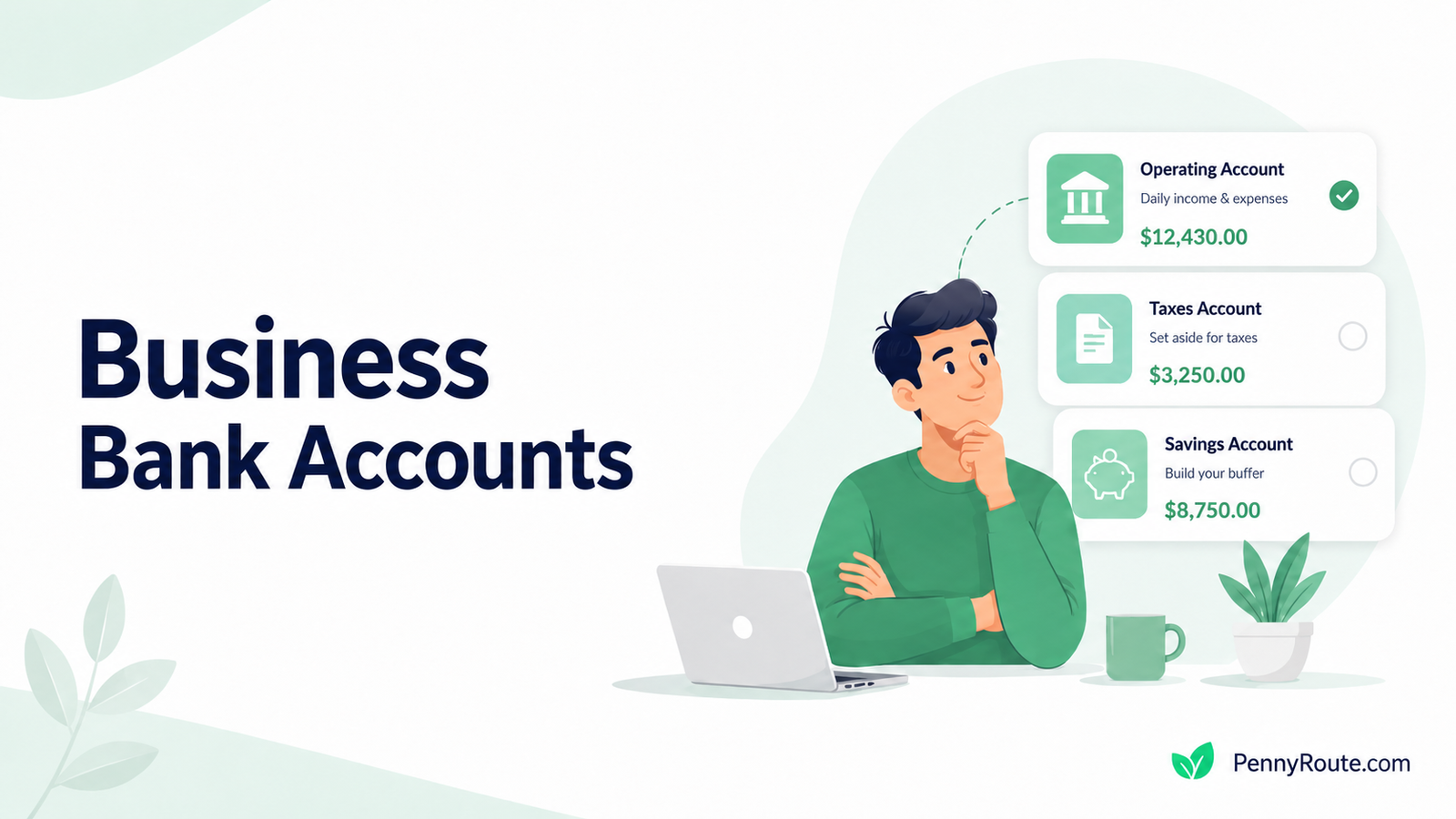
How Many Business Bank Accounts Do You Need?
A simple business may need only one business checking account. Additional accounts become useful when they separate a real responsibility, protect money from everyday spending, or reduce operational risk.
There is no ideal number for every business. The right setup depends on how the business gets paid, what it needs to fund, and whether more accounts make the finances easier to manage.
One Operating Account
One business checking account may be enough for a freelancer, consultant, or small business with straightforward income and expenses.
That account can receive customer payments, cover regular bills, pay contractors, and handle owner withdrawals. If the transaction history remains clear and the business is easy to reconcile, adding more accounts may create work without solving a problem.
A Tax or Reserve Account
A second account may help when part of the balance should not be used for normal operating costs.
For example, money set aside for estimated taxes or slower months can be moved out of the main checking balance. That separation makes it less likely to be spent accidentally.
The extra account does not determine how much tax is owed or replace tax planning. It simply creates a clearer boundary around money that has a different purpose.
Payroll or Controlled-Spending Accounts
A separate account may also make sense when payroll or employee spending needs tighter control.
Some businesses prefer to fund payroll from its own account so the required amount is easier to protect before payday. Others use separate accounts or cards for departments, locations, or employees with limited spending authority.
This setup is most useful when it improves approval, visibility, or funding discipline. It is not necessary for every business with one employee.
Separate Businesses or Legal Entities
Different businesses or legal entities should generally keep separate banking records.
Running two LLCs, partnerships, or corporations through one account can make ownership, income, expenses, and reporting harder to follow. It also creates confusion about which entity paid or received each transaction.
Even when the same person owns both businesses, each entity should usually have an account that matches its own name and activity.
A Second Banking Relationship
Using another bank may help when one institution does not meet every need.
A second relationship may provide:
- Better cash-deposit access
- Higher transfer limits
- Faster wires or ACH services
- Operational backup during an outage or account restriction
- Additional deposit-insurance capacity for larger balances
That backup only adds value when the account is active, accessible, and worth the extra administration.
The best number of business bank accounts is the smallest number that keeps responsibilities clear without scattering money across accounts that do not serve a distinct purpose.
What to Compare Before Choosing Business Checking
A business checking account should fit the way the business actually moves money. The right choice for a freelance designer may be a poor fit for a restaurant, contractor, or online store.
Start with the activity the account needs to handle, then compare the fees and features attached to that activity.
How the Business Gets Paid
The account should support the payment methods customers use most often.
That may include:
- ACH transfers
- Checks
- Card-processing deposits
- Cash
- Domestic or international wires
- Transfers from payment processors
A business paid mainly through ACH may care most about incoming transfer reliability and clear deposit records. A cash-heavy business needs convenient branch access, reasonable cash-deposit limits, and predictable processing fees.
How the Business Pays Others
Look at how money leaves the account as well.
A business may need to pay:
- Vendors
- Contractors
- Employees
- Taxes
- Rent and utilities
- Software providers
- International suppliers
The account should support the payment methods used regularly, whether that means bill pay, ACH, checks, debit cards, payroll connections, or wires.
Fees matter here because an account with no monthly charge may still become expensive if every outgoing ACH or wire carries a separate cost.
How Much Activity the Account Handles
Estimate the normal monthly volume rather than choosing around one unusually busy or quiet month.
Review:
- Number of deposits
- Number of outgoing payments
- Cash deposited
- Average balance
- ACH and wire activity
- Debit card purchases
Some accounts include a monthly allowance and charge after it is exceeded. Others offer unlimited electronic transactions but place tighter limits on cash deposits or in-branch activity.
A small cushion above the current level can help the account remain useful as the business grows.
Who Needs Access
An owner working alone may need only one debit card and one login.
A business with partners, employees, or outside bookkeeping may need:
- Multiple signers
- Employee cards
- Spending limits
- Approval controls
- View-only access
- Downloadable statements and transaction files
Access should be broad enough for people to do their jobs without giving everyone full control over the account.
Which Tools Need to Connect
The account may need to work with accounting software, payroll, invoicing, expense management, or merchant services.
A smooth connection can reduce manual entry and make reconciliation easier. It is still worth checking how the integration works in practice, including whether transactions sync automatically, how often data updates, and whether extra fees apply.
The general factors involved when you choose a checking account still matter too, including monthly fees, overdraft terms, digital reliability, customer support, and ATM or branch access.
The best business account is not the one with the longest feature list. It is the one that handles the business’s normal activity without adding unnecessary cost or friction.
When to Move From Personal to Business Checking
The switch usually makes sense when business activity stops being occasional and starts becoming part of your regular financial routine.
You do not need to wait until the business is large. The better timing is when the personal account begins creating limits, confusion, or extra work.
Common signs include:
- Customer payments arrive regularly
- Business expenses are difficult to separate from household spending
- Clients write checks to the business name
- The bank’s personal-account terms do not allow business activity
- You form an LLC, corporation, or partnership
- A partner, employee, or bookkeeper needs controlled access
- Cash deposits, merchant services, or higher transaction limits become important
- Bookkeeping reports no longer give you a clear picture of the business
The Small Business Administration recommends opening a business bank account when you are ready to accept or spend money as the business. For a small side hustle, that point may come after activity becomes consistent rather than after the first payment.
Open the new account before redirecting every transaction. Then move customer payments, automatic bills, payment processors, invoices, and bookkeeping connections in a controlled order so new business activity begins flowing through the right account.
FDIC Insurance for Business and Personal Accounts
FDIC coverage depends on who owns the account and how the deposits are categorized. A business label alone does not create a separate insurance limit.
The standard limit is generally $250,000 per depositor, per FDIC-insured bank, for each ownership category.
Sole Proprietorships
A sole proprietorship is treated as part of the owner for FDIC insurance purposes. The FDIC generally combines sole-proprietorship deposits with the owner’s other single-owner deposits held at the same insured bank.
For example:
- $80,000 in personal savings
- $40,000 in personal checking
- $160,000 in a sole-proprietorship account
The combined balance is $280,000. The business account does not receive its own separate $250,000 limit simply because it is used for business.
Corporations and Partnerships
A corporation or partnership may receive separate coverage from the personal deposits of its owners. Under the FDIC rules for corporation and partnership accounts, deposits owned by the same business at one insured bank are generally combined when coverage is calculated.
The business’s accounts at the same bank are generally added together. That means an operating account, payroll account, and reserve account owned by the same company do not each receive their own $250,000 limit.
When business balances become large, focus on the account owner, the ownership category, and the bank holding the money rather than the number of accounts.
Choose the Account That Fits the Business
Business checking should make the business easier to understand and manage.
The account should reflect how money comes in, how expenses are paid, and who needs access. It does not need every available feature, but it should support the activity the business handles regularly.
For occasional side income, a personal account may remain workable if the bank allows it and the records stay clear. Once the business operates consistently or through a formal entity, dedicated business checking is usually the more sensible foundation.