If you can only make minimum credit card payments right now, the balance may still be manageable, but paying it down can take much longer than you expect. Interest can continue adding to the amount you owe while only a small part of each payment reduces the balance.
The first priority is not to force a larger payment that leaves you short for rent, groceries, utilities, or other essentials. Instead, understand what your minimum payment covers, check what your statement says about payoff time, and see whether there is realistic room to reduce new charges or pay a little more.
If even the minimum payment is becoming difficult to afford, that is a different situation and deserves attention before the account falls further behind.
Disclaimer: This content is for informational purposes only and does not constitute financial advice. Credit card terms and payment options vary by issuer and account. Consult a qualified professional when needed.
- Paying at least the required minimum by the due date helps you avoid a missed payment for that billing cycle when the account is otherwise current.
- Making only minimum payments can mean a much longer payoff period and more interest over time.
- Your credit card statement can show an estimate of how long minimum-only repayment may take and what a three-year payoff could require.
- If you cannot afford the minimum itself, contact the card issuer promptly to ask what payment options may be available.
What Does the Minimum Payment on a Credit Card Mean?
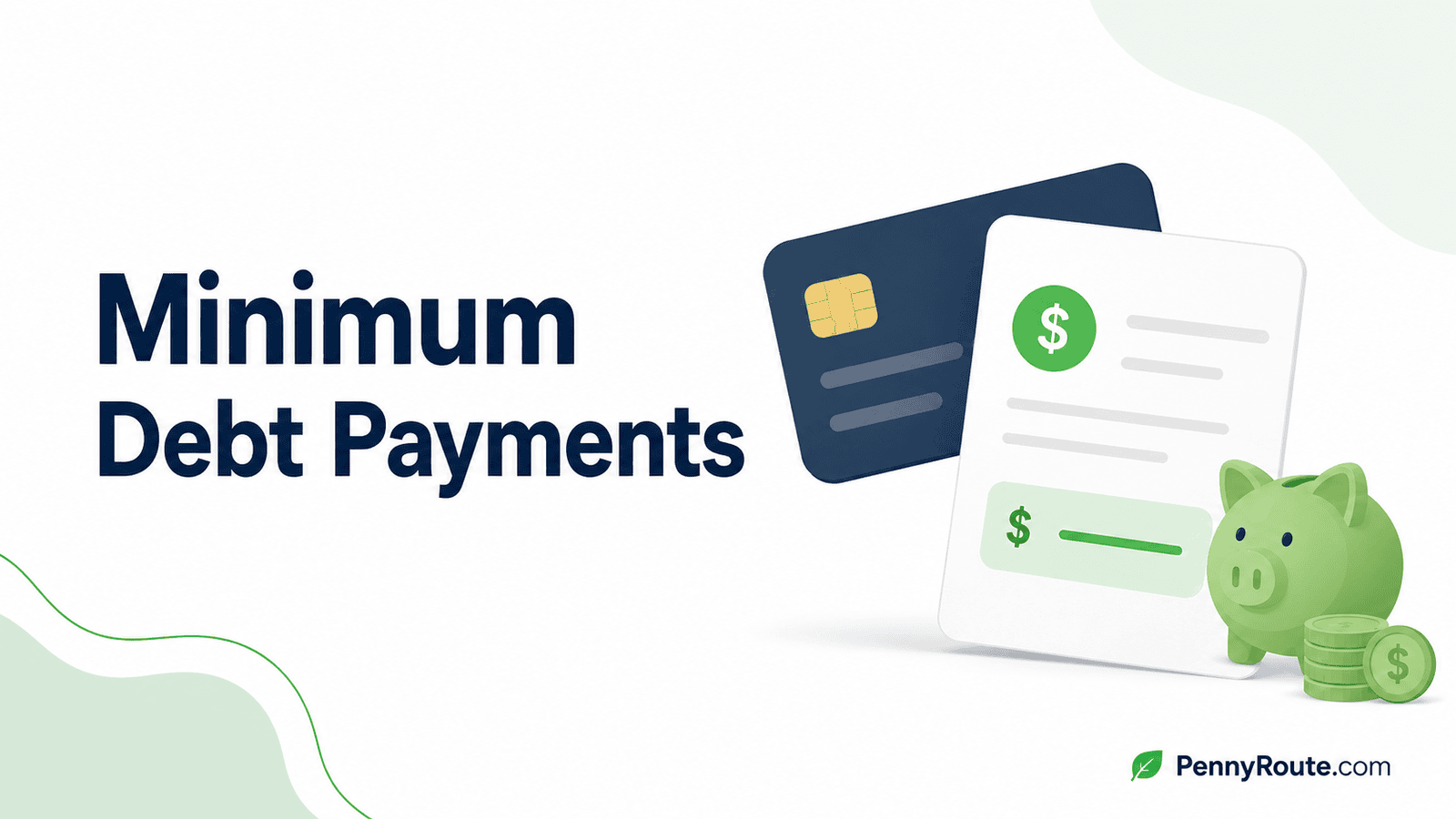
The minimum payment is the smallest amount your credit card issuer requires you to pay by the due date for that billing cycle.
It is not the amount needed to pay off the balance quickly. Depending on the card, the minimum may be calculated as a percentage of the balance, a fixed minimum amount, or a combination that also includes interest, fees, or past-due amounts.
Your required minimum can change from month to month as the balance and account activity change, so check the amount shown on your current statement rather than assuming it will stay the same.
If the account is otherwise current, paying at least the required minimum by the due date generally helps you avoid a missed payment for that billing cycle. Any unpaid balance can continue accruing interest according to the card’s terms.
What Happens If You Only Make the Minimum Payment?
Making the minimum payment keeps you from missing the required payment for that billing cycle, but it usually does not reduce the balance quickly.
Interest can continue to accrue on the unpaid balance, and only part of each payment may go toward reducing what you owe. As the balance comes down, the required minimum may also decrease, which can stretch repayment over a much longer period if you continue paying only that amount.
The result is that you can stay current on the account while still carrying the debt for years and paying significantly more in interest than if you were able to pay above the minimum.
That does not mean you should stretch your budget to make a larger payment you cannot afford. If the minimum is all you can manage right now, staying current is still an important first step.
Check the Minimum Payment Warning on Your Statement
Your credit card statement can give you a much clearer picture of what minimum-only payments may cost over time.
For most consumer credit card accounts, federal rules require a Minimum Payment Warning on periodic statements. It generally shows:
- An estimate of how long it could take to repay the current balance if you make only minimum payments
- The estimated total amount you would pay under that minimum-payment path
- A monthly payment estimate that could repay the current balance in about three years, when that disclosure applies
- The estimated savings from using that three-year payment instead of making only minimum payments
These estimates are based on the balance and assumptions shown on the statement, including that you do not add new charges. Your actual payoff can differ if your balance, interest rate, fees, or payments change.
Minimum-Payment Payoff Estimate
Look for the part of your statement showing how many years it may take to repay the current balance if you continue making only the minimum.
The number can be surprisingly long because minimum payments may decrease as the balance falls. This is one of the quickest ways to see why staying current and paying off the debt are two different things.
Three-Year Payment Estimate
When applicable, the statement may also show an estimated monthly amount that would repay the current balance in about three years.
You are not required to pay that three-year amount. It is a comparison that helps you see how a larger monthly payment could affect payoff time and total interest. Federal rules do not require the three-year comparison in every billing-cycle situation, including when the minimum-payment payoff estimate is already three years or less.
If Minimum Payments Are All You Can Afford Right Now
If you can make every required minimum payment but do not have room to pay extra, focus first on keeping the accounts current and protecting essential expenses.
Then look at the statement payoff estimate so you understand what minimum-only repayment may mean for that card. The number is useful because it gives you a realistic baseline rather than leaving the payoff timeline unclear.
From there, look for small changes that do not create another financial problem. That might mean reducing new charges, freeing up a modest amount in the budget, or using occasional extra money toward the balance.
You do not need to force a larger payment if doing so would leave you short for rent, food, utilities, transportation, or other necessities. The first priority is making the payment plan sustainable enough that you do not have to rely on the card again immediately.
Reduce New Charges Where You Can
If new purchases keep being added to the card while you are making only minimum payments, the balance may fall very slowly or continue growing.
Where possible, move everyday spending to checking, debit, cash, or another payment method that does not add to the credit card balance.
You do not need to change every payment at once. Start with the categories that are creating the most new charges, such as groceries, gas, subscriptions, or online shopping. If you are trying to stop using credit cards while paying off debt, making the card less convenient for routine spending can help reduce the chance of replacing the balance you just paid down.
What If You Can Pay a Little More Than the Minimum?
If your essentials and required payments are covered, even a modest amount above the minimum can help reduce the balance sooner.
You do not need to wait until you can make a large extra payment. Adding a consistent amount each month can shorten the payoff period and reduce the interest you pay over time.
Before increasing the payment, make sure the extra amount will not leave you short for necessities or force you to put new expenses back on the card.
If your statement shows a three-year payment estimate, you can use that as a reference point. You do not have to match it exactly. The useful part is seeing how a payment above the minimum changes the payoff timeline.
What If You Cannot Afford the Minimum Payment?
If the minimum payment itself no longer fits your budget, the situation is different from simply being unable to pay extra.
Start by protecting essential expenses such as housing, food, utilities, transportation, and insurance. Then check exactly how much is due, when the payment is due, and whether the account is already past due.
Contact the card issuer as soon as you know you may not be able to make the required payment. Explain what you can realistically afford and ask whether any payment assistance or hardship options are available.
Avoid waiting until several payments have been missed before reaching out. The available options can vary by issuer and account, so it is better to find out what applies to your situation directly.
When Minimum Payments Signal a Bigger Cash-Flow Problem
If minimum credit card payments regularly use up most of the money left after essential expenses, the problem may be bigger than the payment amount itself.
Look at whether:
- Necessary expenses are taking most of your take-home income
- Several debt minimums are competing for the same limited cash
- New expenses keep going back on the credit card
- Your income has become lower or less predictable
- The minimum payment is becoming harder to make each month
In that situation, squeezing a few extra dollars toward the card may not be the most useful first move. Start by identifying how large the monthly shortfall is and which expenses or payments are creating the most pressure.
Once your regular cash flow has enough room to cover essentials and required payments consistently, you can focus more on speeding up the payoff.
Give Yourself a Realistic Next Step
If minimum payments are all you can manage right now, start with the part you can control: keep required payments current when possible, reduce new charges where you can, and use the payoff information on your statement to understand the path ahead.
You do not need to force a faster payoff before your budget has room for it. When your cash flow improves, you can increase the payment from there.