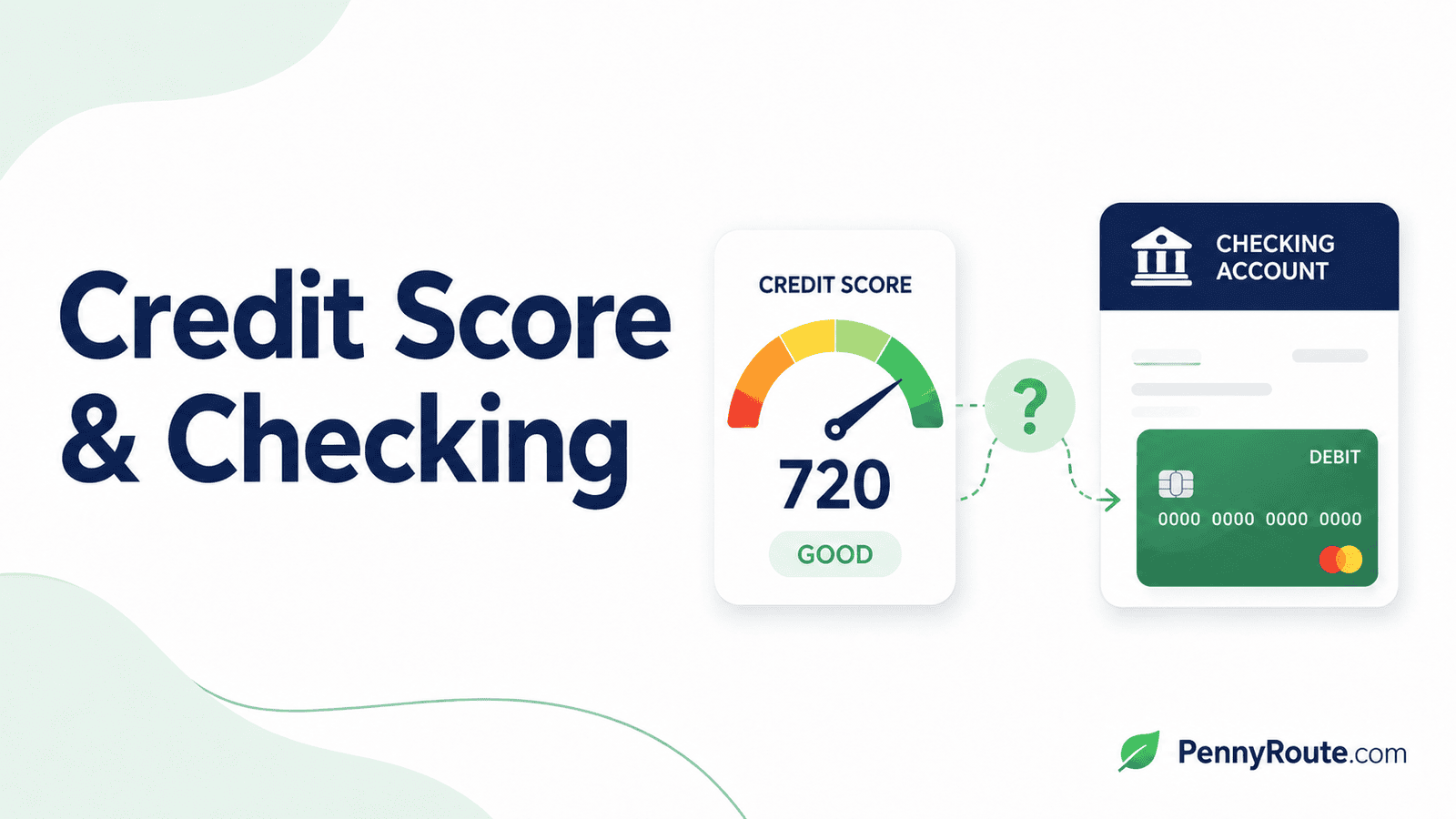
Bad credit does not automatically prevent you from opening a checking account. Standard checking accounts hold and move your money, so banks usually do not require a particular credit score in the same way a lender would for a loan or credit card.
However, approval is not always automatic. A bank or credit union may review your previous banking history, verify your identity, and apply its own account-opening policies. An unpaid balance, an involuntary account closure, suspected fraud, or inaccurate information in a checking-account consumer report can create problems even when your credit score is not the main issue.
Finding out what the institution reviewed can help you choose the right next step, whether that means correcting an error, resolving an old balance, applying for a lower-risk account, or comparing options at another institution.
Disclaimer: This content is for informational purposes only and does not constitute financial, legal, or credit advice. Account requirements, screening practices, and approval decisions vary by financial institution and individual circumstances.
Quick Overview
- You can usually open a checking account even with bad or limited credit.
- Most standard checking accounts do not require a minimum credit score.
- Banks may review a checking-account consumer report when evaluating your application.
- Unpaid balances, involuntary closures, suspected fraud, or identity-verification problems can affect approval.
- A denial notice can help you identify which reporting company supplied the information.
- Second-chance or lower-risk accounts may provide another way to access banking services.
Can You Open a Checking Account With Bad Credit?
You can generally open a checking account with bad credit because a standard checking account is a deposit product rather than a form of borrowing.
You are placing your own money into the account and using it for debit card purchases, bill payments, withdrawals, checks, and transfers. That is different from applying for a loan or credit card, where the lender evaluates your ability to repay borrowed money.
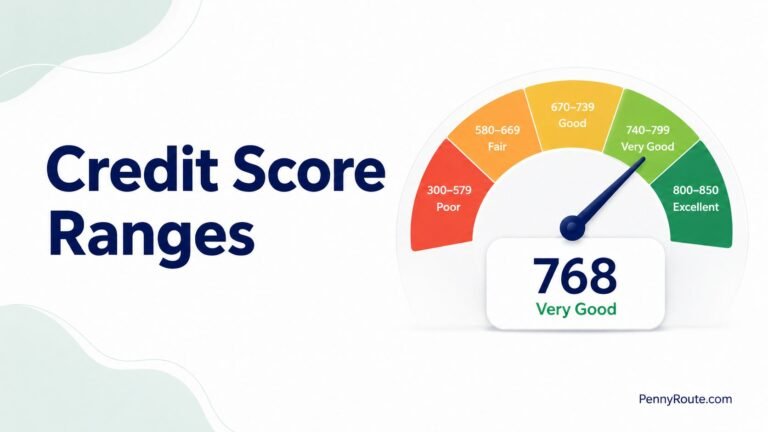
For this reason, there is usually no universal minimum credit score required to open a checking account. A low score or limited credit history does not automatically mean your application will be denied.
Some institutions may still review traditional credit information, particularly when an application includes an overdraft line of credit or another borrowing feature. That is separate from the standard checking account itself.
Opening a standard deposit account usually does not affect your score, although an optional overdraft line of credit or another borrowing feature can change how opening a bank account affects your credit score.
What Banks May Review When You Apply
Banks and credit unions need enough information to confirm your identity, evaluate the application, and decide which accounts they are willing to offer.
The review process can involve more than one source.
Identity and Application Information
The institution may verify details such as your:
- Legal name
- Date of birth
- Current address
- Social Security number or another accepted identification number
- Government-issued identification
- Contact information
A mismatch between the information on your application and the institution’s records can delay or prevent approval.
For example, an old address, a misspelled name, an identification document that has expired, or information connected to an identity-theft alert may require additional verification.
This does not necessarily mean the bank considers you financially risky. It can simply mean the institution cannot confirm that the application is accurate and belongs to you.
Checking-Account Consumer Reports
A bank may review a specialty consumer report containing information about your previous checking or savings accounts.
These reports may include:
- Previous deposit-account applications
- Account openings and closures
- Unpaid negative balances
- Involuntary account closures
- Returned checks
- Suspected fraud or account misuse
- Information connected to joint accounts
ChexSystems and Early Warning Services are two companies that provide checking-account reporting services, although institutions may use other reporting companies or their own internal records.
Banks use these reports to help decide whether to approve an account and which type of account to offer.
Traditional Credit Reports
Some banks and credit unions may also review a traditional credit report.
That does not mean every institution requires good credit for a checking account. A traditional credit report is more likely to matter when:
- The account includes a credit feature.
- The institution uses credit information as part of its broader risk process.
- You apply for an overdraft line of credit at the same time.
- You request another lending product alongside the checking account.
If your application is declined, ask the institution which report or policy affected the decision rather than assuming your credit score was responsible.
Credit Score vs. Banking History
Your credit history and banking history describe different parts of your financial activity.
| Factor | Credit history | Banking history |
|---|---|---|
| Main purpose | Shows how you have handled borrowed money | Shows how you have handled deposit accounts |
| Common records | Credit cards, loans, balances, payment history, collections, and credit inquiries | Account openings, closures, unpaid balances, returned checks, and suspected account misuse |
| Common reporting companies | Equifax, Experian, and TransUnion | ChexSystems, Early Warning Services, and other specialty reporting companies |
| Relevance to checking-account approval | May be reviewed by some institutions | Often more directly connected to deposit-account eligibility |
| Does it guarantee approval or denial? | No | No |
Someone can have a low credit score and a clean banking history. Another person can have strong credit but an unpaid balance from a previously closed checking account.
A bank may treat those situations differently because the records describe different risks.
Your credit score is mainly designed to help lenders evaluate borrowing behavior. A checking-account consumer report can show whether previous deposit accounts were left overdrawn, closed involuntarily, or connected to suspected misuse.
That distinction is why improving your credit score alone may not resolve a checking-account denial. You first need to identify which record or policy caused the problem.
Why a Checking-Account Application May Be Denied
A denial does not always mean you have bad credit. Several application, identity, and banking-history issues can affect the decision.
An Unpaid Negative Balance
A previous checking account may have closed while overdrawn because of transactions, fees, returned payments, or other account activity.
If the balance remains unpaid, the former bank can report it to a checking-account reporting company. A new institution may view the outstanding amount as a sign that another account could present similar risk.
The amount does not have to be large to create an issue. Each institution sets its own policies for evaluating unpaid balances.
An Involuntary Account Closure
An involuntary closure occurs when the financial institution closes the account rather than the customer choosing to close it.
This can happen because of:
- A negative balance that remains unpaid
- Repeated overdrafts
- Returned checks
- Violations of the account agreement
- Activity the institution considers suspicious
The reason for the closure matters. A report that simply lists a closed account is not the same as one showing an unpaid balance or suspected fraud.
Suspected Fraud or Account Misuse
A checking-account report may contain information related to suspected fraud, identity concerns, altered checks, disputed deposits, or other unusual activity.
A fraud-related entry can make approval more difficult because institutions may treat it more seriously than an ordinary unpaid balance.
However, the information may be incomplete, inaccurate, or connected to identity theft. Review the report before assuming the entry is correct.
Problems Connected to a Joint Account
Negative information from a joint account can affect more than one account holder.
For example, another owner might overdraw the account, write checks without sufficient funds, or leave the account unpaid. The resulting history can still appear in a report connected to both owners.
Review joint-account entries carefully because activity caused by another account holder can still appear in a report connected to you.
Identity or Application Problems
An institution may be unable to approve an account when it cannot verify information in the application.
Possible issues include:
- A name or address mismatch
- Missing or expired identification
- An incomplete application
- A frozen consumer report
- Information linked to identity theft
- An identification number that cannot be verified
Ask which detail needs clarification before submitting several new applications with the same unresolved problem.
The Bank’s Internal Eligibility Policies
Banks and credit unions set their own account-opening standards.
One institution may decline an applicant because of an unpaid balance, while another may approve a restricted or lower-risk account. Some may consider how old the reported information is, whether the balance has been paid, or what type of issue appears on the report.
A denial from one institution does not automatically mean every bank or credit union will make the same decision.
First Find Out What Actually Caused the Denial
The right response depends on why the application was declined.
| What happened | Practical next step |
|---|---|
| The notice names a checking-account reporting company | Request a copy of the report and review the information |
| The report includes an account you do not recognize | Dispute the entry and check for signs of identity theft |
| The report lists an inaccurate balance or closure reason | Dispute it with the reporting company and the institution that supplied the information |
| The report accurately lists an unpaid balance | Contact the previous institution and ask how the balance can be resolved |
| The bank could not verify your identity | Ask which document or application detail needs correction |
| The institution declined its standard account | Ask whether it offers a second-chance or lower-risk account |
| One bank declined the application based on its policies | Compare eligibility requirements at another bank or credit union |
Do not begin by repeatedly applying elsewhere without knowing what happened. The same unresolved report entry or identity mismatch could affect the next application.
What to Do If You Are Denied a Checking Account
A denial can be frustrating, but it also provides information you can use.
1. Read the Denial Notice
When a bank bases its decision on information from a consumer reporting company, it should provide an adverse-action notice.
The notice generally identifies:
- The reporting company used
- The company’s contact information
- Your right to request a copy of the report
- Your right to dispute inaccurate information
The reporting company does not make the final approval decision. It supplies information that the bank uses alongside its own policies.
2. Request the Relevant Report
Use the company named in the notice rather than assuming the institution used ChexSystems.
You can request a checking-account consumer report when:
- A report contributed to an account denial
- You want to review your banking history
- You suspect identity theft or inaccurate reporting
- You have had difficulty opening or managing an account
The CFPB’s list of checking-account reporting companies provides contact details for requesting a report from the company identified in your denial notice. ChexSystems also allows consumers to request a disclosure through its consumer portal.
3. Review Every Entry
Check the report carefully for:
- Your name and identifying information
- Banks or credit unions you recognize
- Account-opening and closure dates
- Reported balances
- Closure reasons
- Duplicate records
- Joint accounts
- Accounts you did not open
- Information that should have been updated
A correct institution name does not guarantee that every other detail is accurate.
4. Dispute Inaccurate or Incomplete Information
If you find an error, dispute it with both:
- The checking-account reporting company
- The bank or credit union that supplied the information
Include supporting records when available, such as:
- Account statements
- Payment confirmations
- Closure letters
- Identity-theft reports
- Correspondence with the institution
- Proof that the account does not belong to you
The CFPB recommends filing disputes with both the reporting company and the institution that furnished the information.
5. Address Accurate Unpaid Balances
If the report accurately shows money owed to a former bank, contact that institution before making a payment.
Ask:
- How much is currently owed?
- Does the balance include additional fees?
- Who currently owns or collects the debt?
- How will payment be reflected in the institution’s records?
- Will the bank update the reporting company?
- Can the institution provide written confirmation after payment?
Paying the balance does not guarantee that another bank will approve your application or that the record will immediately disappear. It can, however, allow the report to be updated to show that the balance was resolved.
Keep copies of all receipts, settlement letters, and written confirmations.
6. Ask About Other Account Options
If the institution will not approve its standard account, ask whether it offers:
- A second-chance checking account
- A checkless account
- A lower-risk account without overdraft features
- A prepaid account with banking functions
- An account that can later be upgraded
Compare the account’s costs and limitations before accepting it. Easier approval does not automatically make the account affordable or suitable.
Checking-Account Options When Approval Is Difficult
Being declined for one account does not mean you must remain outside the banking system.
Second-Chance Checking Accounts
A second-chance checking account is designed for people who have had previous banking problems and cannot qualify for a standard account.
These accounts may include:
- A monthly maintenance fee
- Limited or no paper checks
- Restricted overdraft access
- Required direct deposit
- Fewer account features
- A review period before an upgrade becomes available
Second-chance accounts are generally reduced-service, reduced-fee accounts intended for people whose banking history makes it difficult to open a regular account.
The name can be misleading. “Second chance” does not always mean the account is cheap, and it does not guarantee approval.
Lower-Risk Accounts
Some institutions offer accounts designed to prevent overdrafts and reduce the chance of another negative balance.
These accounts may:
- Decline transactions when funds are unavailable
- Exclude paper checks
- Avoid traditional overdraft services
- Charge a predictable monthly fee
- Provide a debit card and online bill payment
A lower-risk account is not necessarily marketed as a second-chance product. It may simply be a basic checking account with fewer ways to overdraw.
Other Banks and Credit Unions
Institutions do not all use the same reports or apply the same approval standards.
A community bank, credit union, online bank, or another national bank may evaluate your application differently. Before applying, ask:
- Whether the institution uses a checking-account reporting company
- Whether it offers accounts for applicants with previous banking problems
- Whether there is an unpaid-balance limit
- Whether a paid record is treated differently from an unpaid one
- Which documents are required
- Whether membership requirements apply
Avoid submitting several applications in quick succession without checking basic eligibility first.
How to Compare a Second-Chance or Lower-Risk Account
An account that is easier to open can still become expensive if its fees or restrictions do not match how you manage money.
| Feature | What to check |
|---|---|
| Monthly fee | The amount and whether it can be waived |
| Opening deposit | How much money is required to activate the account |
| Overdraft policy | Whether transactions are declined or fees can still occur |
| Debit card | Whether one is included and what replacement fees apply |
| ATM access | Network availability and out-of-network charges |
| Direct deposit | Whether it is optional or required |
| Online bill pay | Whether the feature is included |
| Paper checks | Whether checks are available or the account is checkless |
| Cash deposits | Where and how cash can be added |
| Upgrade path | Whether responsible use can lead to a standard account |
| Closure rules | What activity or balance could result in closure |
Focus first on the services you actually need.
For example, a checkless account may work well when you mainly use direct deposit, a debit card, and electronic bill payments. It may be inconvenient if your landlord or another regular expense requires paper checks.
The same comparison factors used when you choose a checking account still matter here, especially monthly fees, ATM access, overdraft rules, minimum deposits, and account restrictions.
Can You Reapply for a Standard Checking Account Later?
You may be able to qualify for a standard checking account after correcting an error, resolving an unpaid balance, or establishing a stronger recent banking record.
There is no universal waiting period that guarantees approval.
Before reapplying:
- Confirm that disputes have been completed.
- Request an updated copy of the relevant report.
- Check whether a paid balance is shown correctly.
- Keep proof that the old account was settled.
- Ask the new institution about its eligibility standards.
- Review whether your current account offers an upgrade.
Some second-chance accounts provide a possible upgrade after a period of responsible use. Others remain separate products and require a new application.
Ask what the institution requires rather than relying on a general timeline.
How to Reduce Problems With Future Applications
Once you open an account, a few practical habits can help protect your banking history:
- Review your balance before scheduling payments.
- Set alerts for low balances and large transactions.
- Understand whether overdrafts are declined or covered.
- Update your contact information promptly.
- Monitor joint accounts you share with another person.
- Report unauthorized transactions quickly.
- Keep records when paying or closing an account.
- Confirm that an account has reached zero before closure.
- Review your banking report after identity theft or an unexplained denial.
The focus is not perfect account management. It is preventing a manageable problem from turning into an unpaid balance, involuntary closure, or inaccurate record that affects a future application.
Summary
Bad credit alone usually does not close the door to a checking account. The more important issue may be your banking history, identity information, or the institution’s eligibility policies. If an application is denied, use the notice to identify what was reviewed, correct any errors, address accurate unresolved balances, and compare lower-risk accounts that provide the services you need.